Why Container Gardening Works for Small Spaces
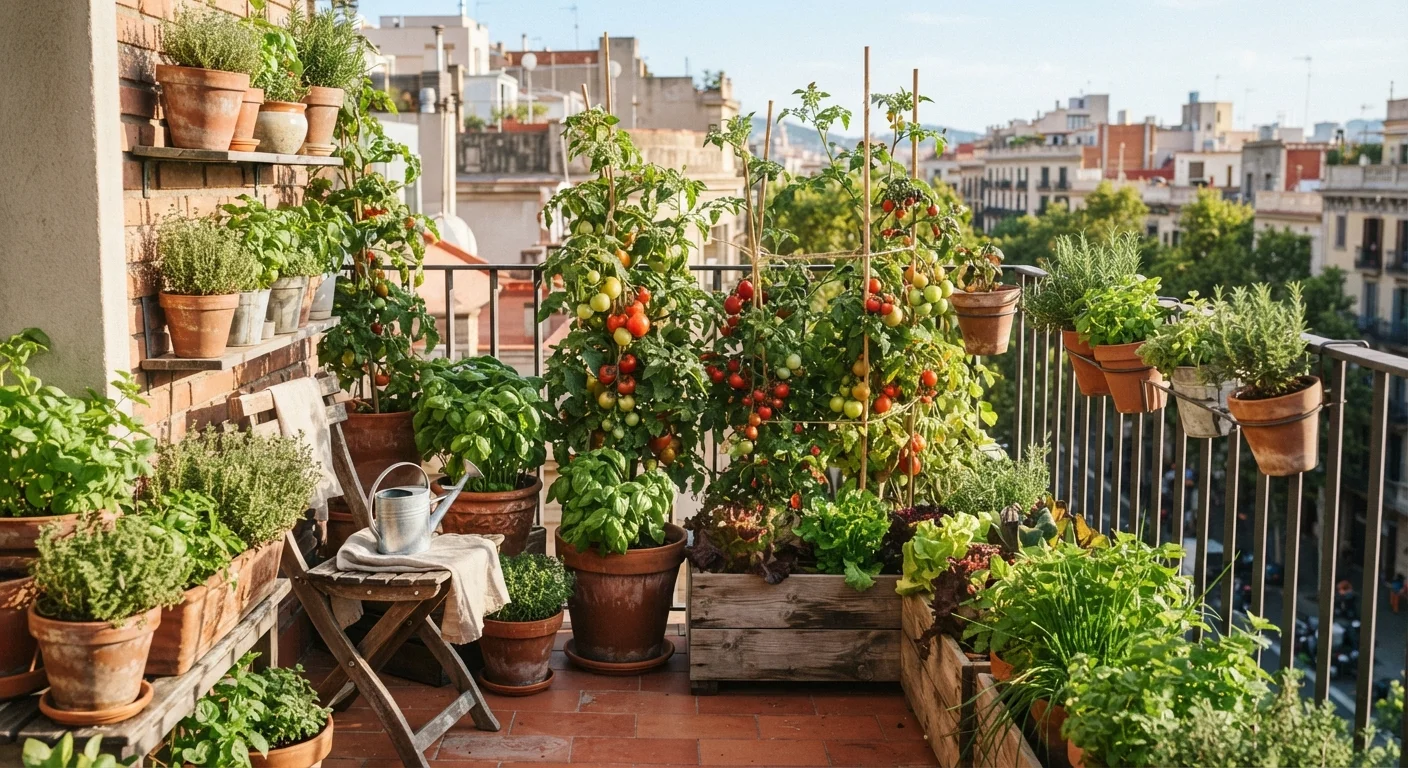
A balcony, patio, or even a sunny stairwell landing can support a productive edible garden. Container gardening sidesteps the biggest barriers to traditional growing - no ground access required, no large plot to prepare, and full control over soil quality from the start. You can move pots to follow the sun, protect them from frost, and scale up or down one container at a time.
If you're just beginning to think about outdoor growing, our guide for first-season gardeners covers the foundational mindset shifts that apply whether you're working with ground soil or pots. For a fuller picture of how containers compare with other setups, see our raised beds vs. in-ground planting comparison.
80%
US households with outdoor space under 500 sq ft
Industry surveys suggest the majority of urban renters and condo owners have access only to a balcony or small patio for outdoor growing.
5 gallons
Minimum container size for tomatoes
University extension services commonly recommend at least a 5-gallon pot for determinate tomato varieties to prevent root-bound stress.
2x faster
Containers dry out vs. garden beds
The smaller root zone and all-sided air exposure of containers cause soil moisture to deplete at roughly twice the rate of in-ground planting, particularly in warm weather.
Choosing the Right Containers
Container choice affects root health, moisture retention, and how heavy your setup gets - an important consideration for balconies with weight limits.
- Size matters: Most vegetables need at least 10-12 inches of depth. Tomatoes and peppers want a minimum 5-gallon container; larger is better. Shallow 6-inch pots suit herbs like basil and thyme adequately.
- Drainage holes are non-negotiable: Roots sitting in standing water will rot. If you love a decorative pot without holes, use it as a cachepot (outer sleeve) and keep a drilled liner inside.
- Material trade-offs: Terracotta is breathable and attractive but dries out quickly and is heavy. Plastic holds moisture longer and is lightweight - practical for balconies. Fabric grow bags promote air pruning of roots and drain well but need more frequent watering.
Group containers together rather than spacing them far apart. Clustering pots raises local humidity around the plants and slows individual pot moisture loss on hot days.
Evapotranspiration from neighboring plants creates a slightly more humid microclimate, which is particularly beneficial for moisture-loving crops like basil and lettuce.
Place a layer of coarse gravel or broken pot shards at the base of a deep container before adding potting mix. This keeps the drainage hole clear without blocking water flow.
Drainage holes can become partially obstructed by compacted soil over time; a coarse barrier layer maintains the channel and prevents standing water at the root zone.
Before purchasing, check your balcony's load-bearing capacity with your building manager if you plan a large number of heavy containers. Wet soil adds significant weight.
Soil Mixes and Drainage Essentials
Never fill containers with soil dug from a garden bed. Outdoor soil compacts under the confined conditions of a pot, cutting off oxygen to roots and making watering uneven. Instead, start with a quality potting mix (sometimes labeled container mix) - these are formulated to stay loose and drain well in pots.
To improve performance further, consider amending your potting mix:
- Perlite (volcanic glass particles): Improves aeration and drainage - a 10-20% addition works well.
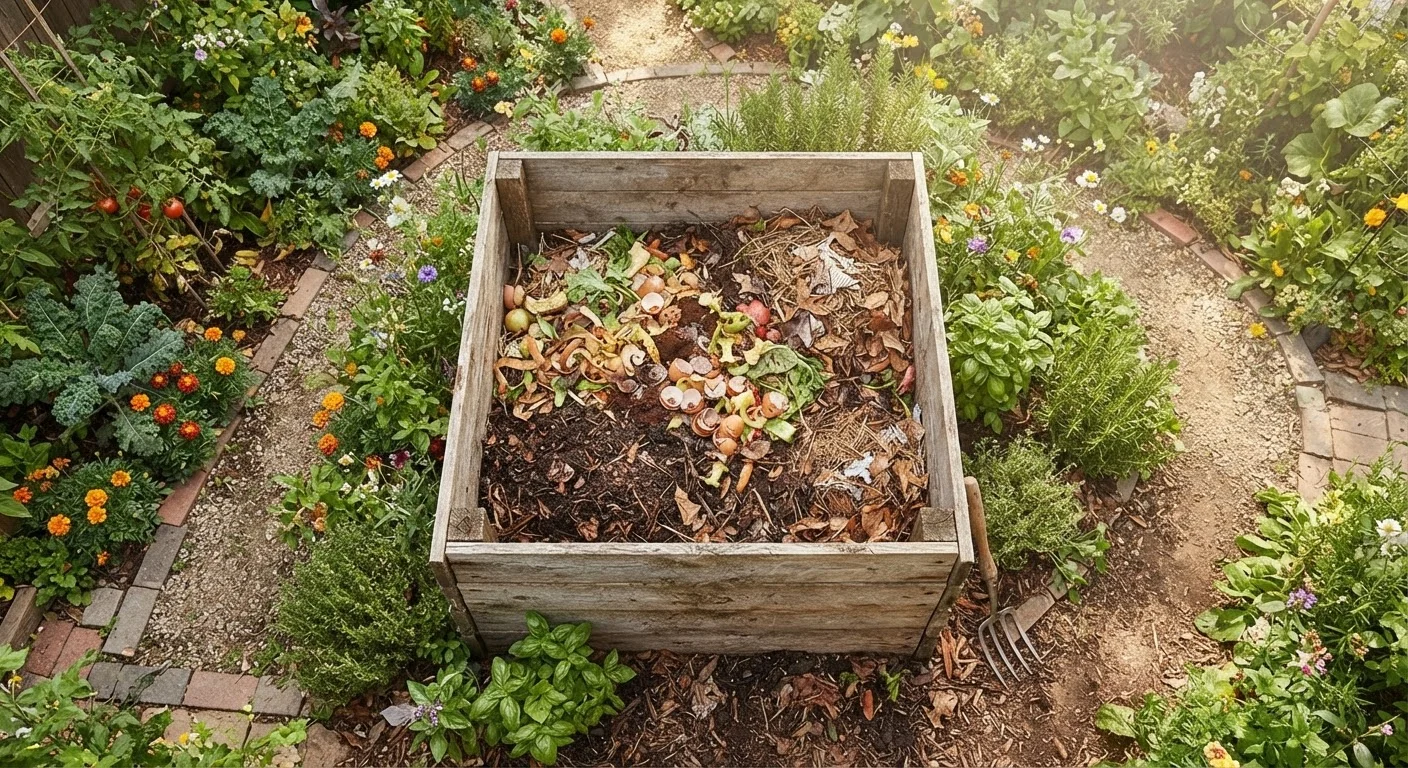
- Compost: A small portion of finished compost boosts nutrients and beneficial microbial activity. Our home composting guide explains how to produce your own.
- Coir (coconut fiber): Retains moisture without compacting - useful in hot or dry climates.
Refresh Potting Mix Between Seasons
Before replanting a container for a new season, remove the spent potting mix, loosen any root debris, and blend in roughly 20-30% fresh mix along with a small amount of compost. This restores both structure and nutrients without the cost of fully replacing the container medium each year.
Avoid mixes marketed as "moisture control" for vegetable growing - they tend to stay too wet for edibles and can invite root disease.
Best Vegetables and Herbs for Pots
Not every crop suits container life, but a wide range performs excellently when given the right pot size and sun exposure.
High-Performing Vegetables
- Lettuce and salad greens: Shallow-rooted, fast-maturing, and productive in 8-inch pots. Ideal for partial shade.
- Cherry tomatoes: Compact or patio varieties (look for terms like "bush" or "determinate" on seed packets) produce reliably in 5-gallon or larger containers with full sun.
- Peppers: Thrive in the same conditions as tomatoes and stay compact enough for most patios.
- Radishes and green onions: Quick-turnover crops that share containers with slower plants.
- Kale and chard: Deep-rooted but productive over a long season; use at least a 12-inch-deep pot.
Reliable Herbs
- Basil: Loves heat and full sun; grows well alongside tomatoes.
- Mint: Tolerates partial shade but spreads aggressively - always keep it in its own pot.
- Chives, parsley, and cilantro: Compact, productive, and tolerant of less-than-ideal light conditions.
- Rosemary and thyme: Drought-tolerant and long-lived in well-drained containers.
If your outdoor space gets limited direct sun, explore the plants that thrive in shade article for edible options suited to shadier spots.
Watering, Feeding, and Seasonal Care
Containers dry out significantly faster than garden beds because their root zone is small and exposed on all sides to air and heat. During warm weather, most vegetable containers need checking daily and watering every one to two days. Push your finger an inch into the soil - if it feels dry at that depth, water thoroughly until it drains from the bottom holes.
Feeding: Nutrients leach out with every watering. A balanced liquid fertilizer applied roughly every two weeks during the growing season helps maintain steady growth. Slow-release granular fertilizers mixed into the potting medium at planting can reduce the frequency of liquid feeding.
For seasonal timing - when to start seeds, when to shift pots indoors, and what to do in each quarter - our seasonal garden task guide provides a structured calendar. If you're planning the broader outdoor area around your containers, the outdoor living space checklist walks through turning a bare patio into a functional retreat step by step.
Watch for Salt Buildup in Pots
Frequent fertilizing can cause mineral salts to accumulate in the potting mix, appearing as a white crust on the soil surface or container rim. Flush containers thoroughly with water every few weeks - water deeply until it runs clear from the drainage holes - to carry excess salts out of the root zone. Persistent buildup can damage roots and inhibit nutrient uptake.
Common Mistakes and How to Avoid Them
Most container gardening setbacks trace back to a handful of predictable errors:
- Overcrowding containers
- Fitting too many plants into one pot creates competition for water, nutrients, and light. Follow spacing recommendations on seed packets even when working in pots.
- Underwatering - then overwatering to compensate
- Erratic watering stresses plants and causes problems like blossom end rot in tomatoes. Consistent, thorough watering beats irregular drenching.
- Skipping fertilizer entirely
- Potting mix nutrients deplete within six to eight weeks. Without supplemental feeding, growth stalls noticeably mid-season.
- Wrong sun assessment
- Count actual hours of direct sun your space receives at peak summer - many balconies get less than expected due to overhangs or neighboring buildings. Match crops to your real conditions, not ideal ones.
- Reusing old potting mix without refreshing it
- After a growing season, potting mix loses structure and nutrients. Add fresh mix and compost before replanting, or replace it entirely.
This article is for general informational and educational purposes. Always verify local building codes and weight limits before making significant structural changes to a balcony or outdoor space.