Why Getting the Type Right Matters
Moisture damage is one of the most misdiagnosed home problems homeowners face - not because it's rare, but because different types produce overlapping symptoms: stained walls, peeling paint, a musty smell, and the appearance of mold. Reaching for a can of damp-seal paint or blasting a dehumidifier without understanding what's actually happening is a common and costly mistake.
There are three primary categories of moisture problems in homes: condensation, penetrating damp, and rising damp. Each has a distinct mechanism, location pattern, and solution. Once you can read the signs correctly, you're in a far better position to fix the problem rather than just manage the symptoms.
See also: Reading Your Home: Early Warning Signs of Hidden Damage for a broader look at what your home's surfaces may be telling you.
Condensation: The Most Common Culprit
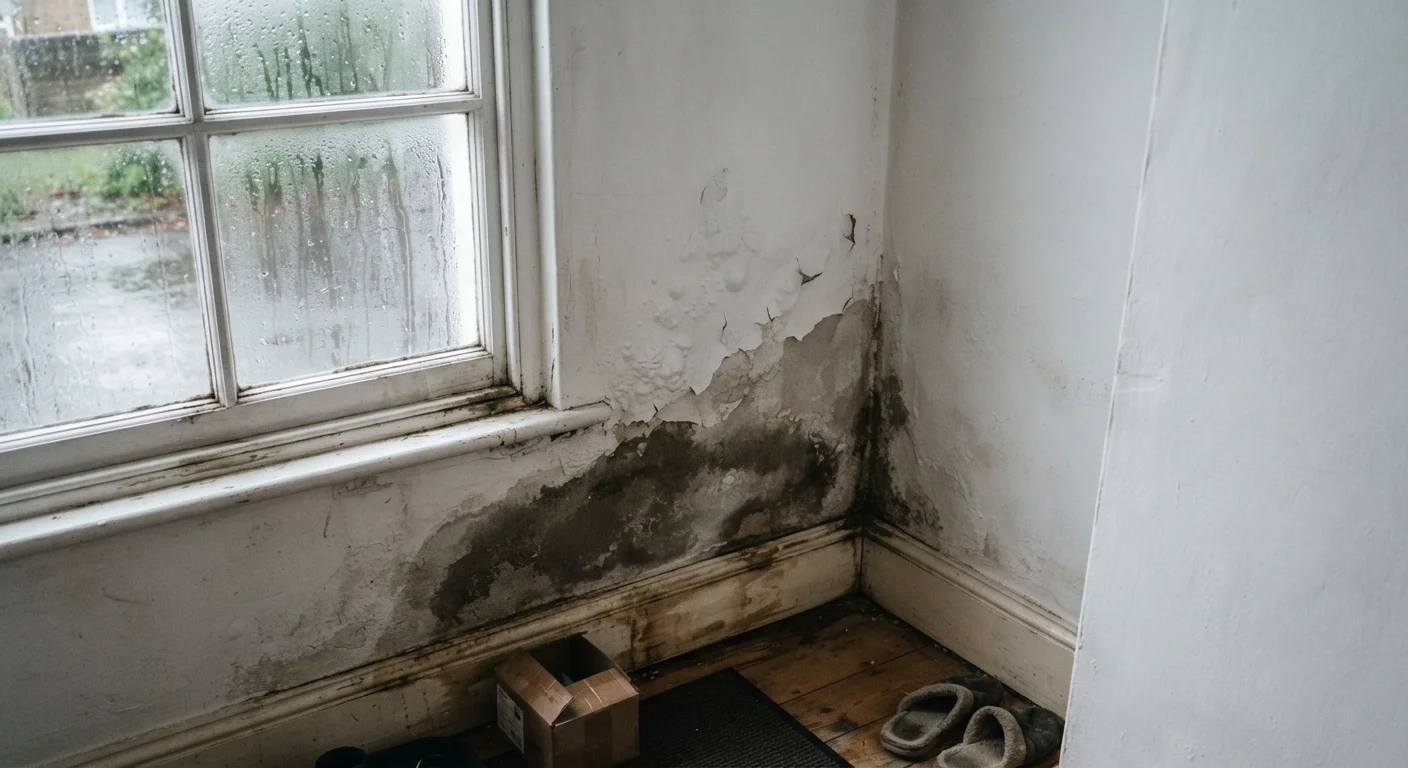
Condensation forms when warm, moisture-laden air contacts a cold surface and the water vapor turns to liquid. Windows, exterior walls, and cold corners behind furniture are typical locations. In kitchens and bathrooms it can be dramatic - think dripping windows after a shower - but it also develops slowly and silently behind wardrobes pushed against outside walls.
Key identifiers of condensation:
- Appears on cold surfaces, particularly in winter
- Wipes away but returns quickly
- Associated with black mold in corners and around window frames
- Worse in rooms with poor airflow or high humidity (kitchens, bathrooms, bedrooms)
The fix targets both sides of the equation: reduce moisture generation and improve ventilation. Extractor fans in bathrooms and kitchens, trickle vents on windows, and habits like covering pots while cooking make a measurable difference. Improving wall insulation reduces cold surface temperature, which in turn reduces the likelihood of condensation forming.
Reduce Condensation With Daily Habits
Ventilating a bathroom for at least 20 minutes after showering and keeping lids on pots while cooking can noticeably reduce the moisture load in your home. Cross-ventilating by opening windows briefly - even in winter - helps exchange humid indoor air for drier outside air. Moving furniture a few inches away from cold exterior walls also helps prevent the hidden mold patches that often go unnoticed until they're extensive.
Penetrating Damp: Water Coming In from Outside
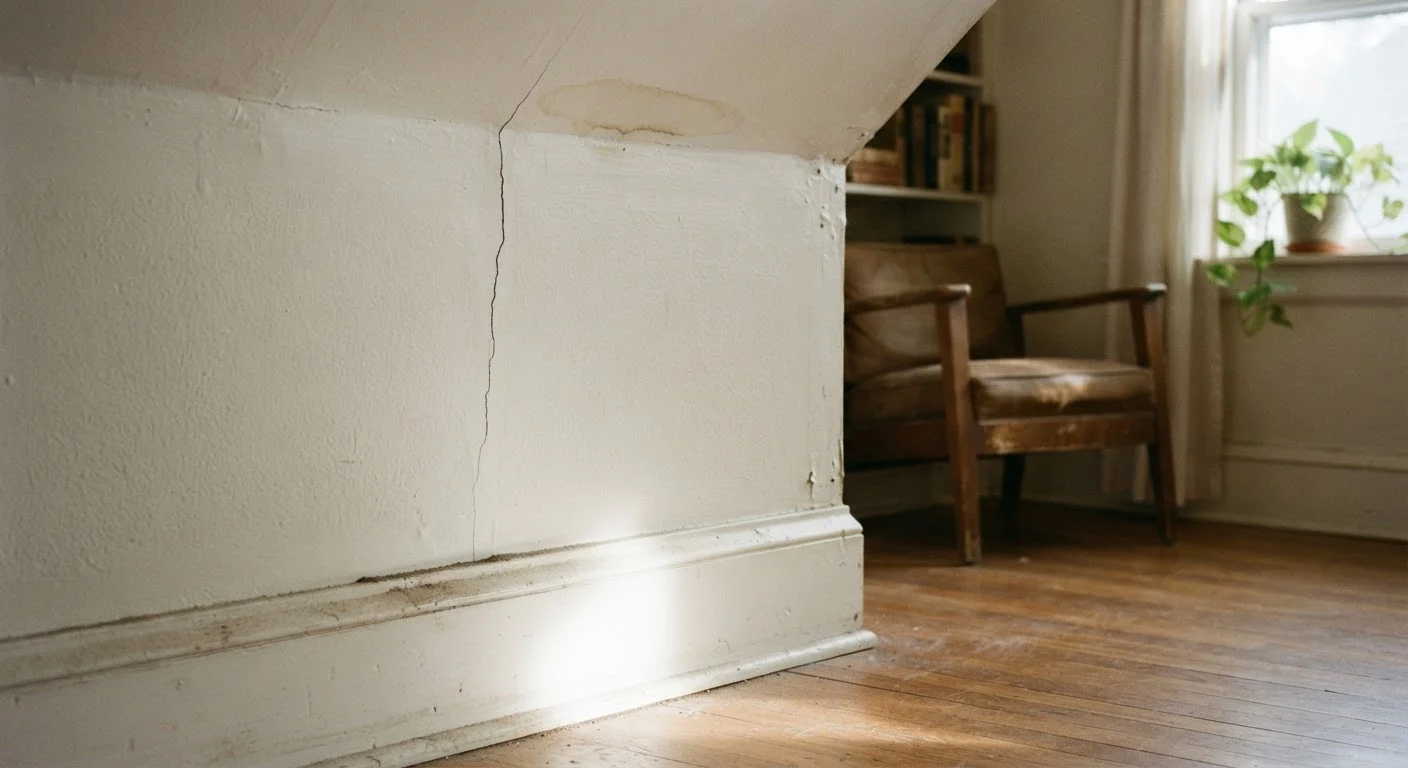
Penetrating damp occurs when rainwater finds a pathway through the building fabric - through cracked mortar, damaged pointing, failed window seals, blocked or broken gutters, or a compromised roof. Unlike condensation, it is directly linked to rainfall and tends to appear as a spreading wet patch that grows during or after heavy rain.
Key identifiers of penetrating damp:
- Staining on interior walls that corresponds to rainfall events
- Patches on upper floors, around chimneys, or below windows
- Damp spots that feel cold and wet to the touch even in heated rooms
- No consistent pattern of cold-surface contact
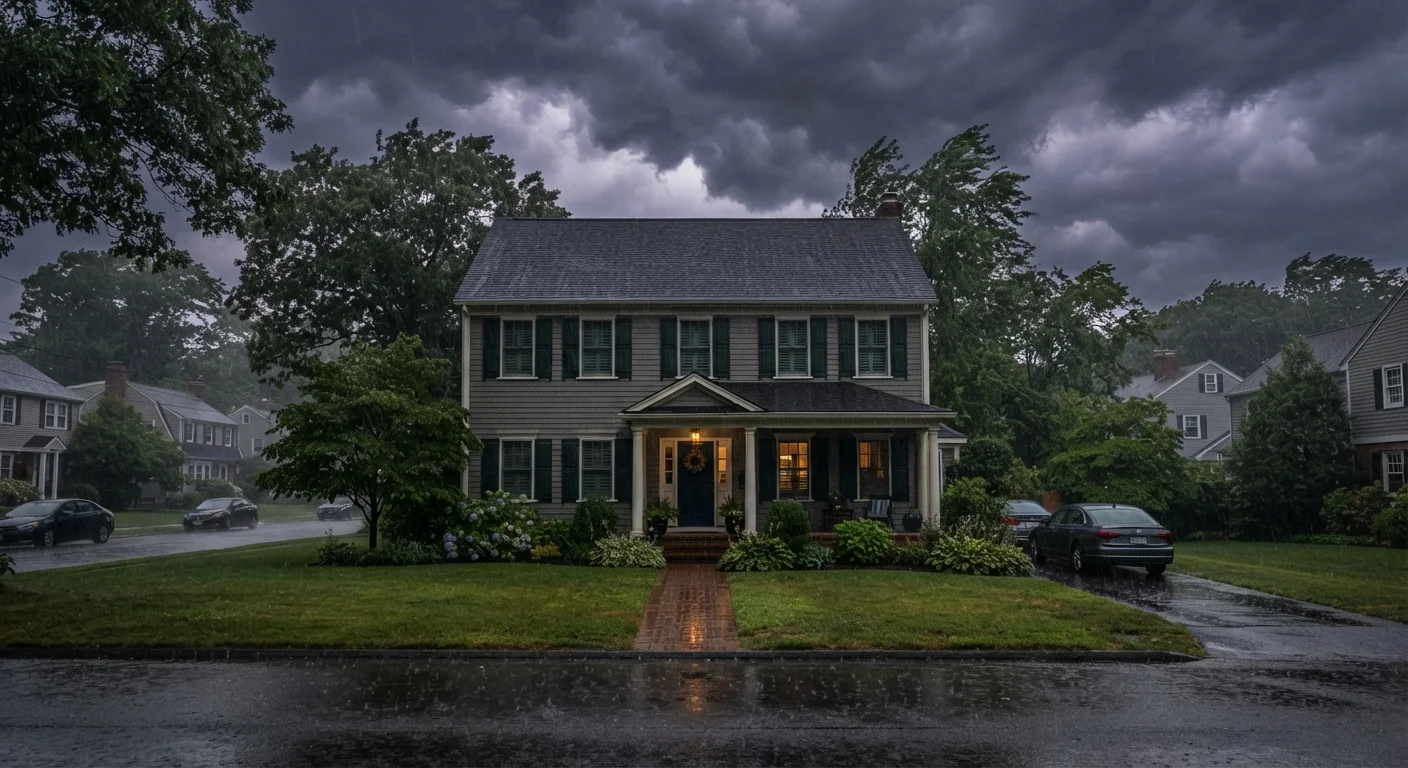
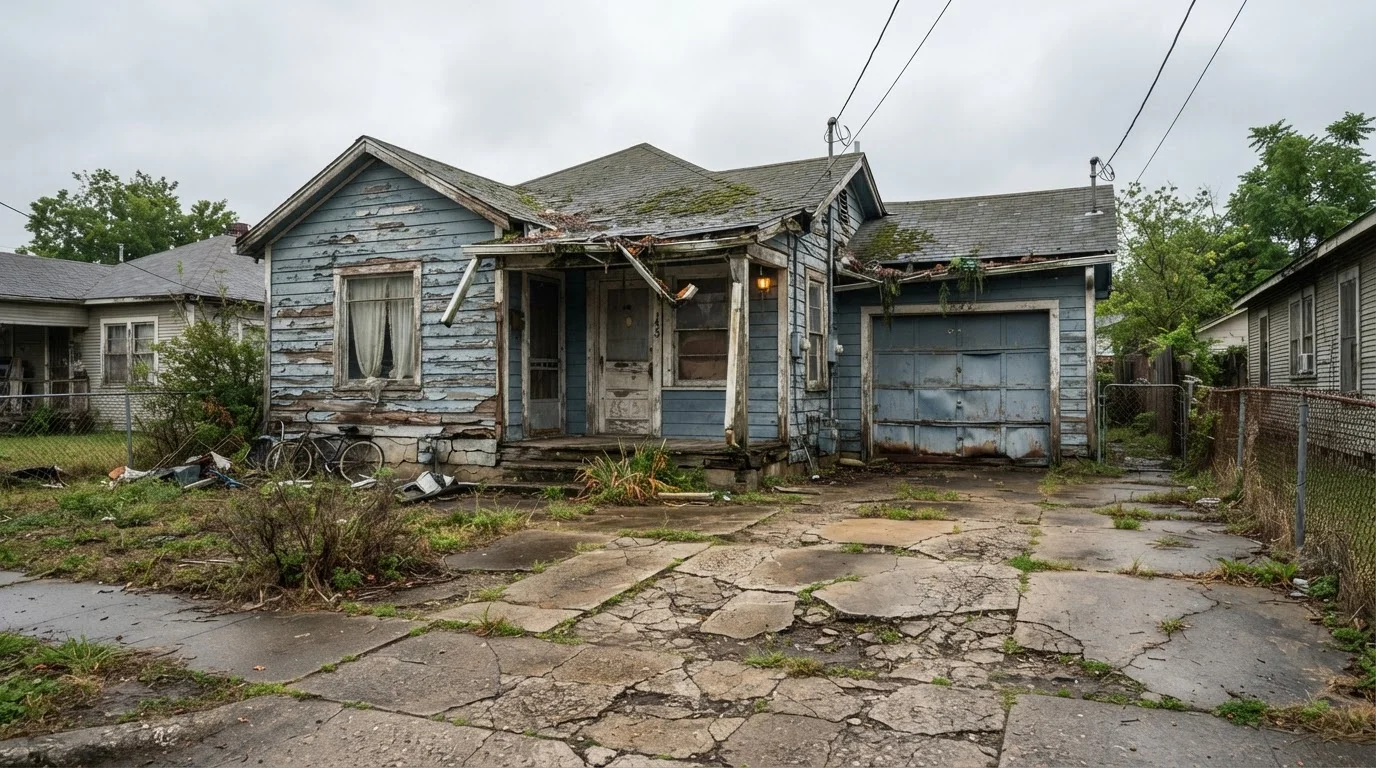
The fix is always structural: find and seal the entry point. Common causes include missing or cracked mortar joints, overflowing gutters depositing water at the wall base, and flat roof membranes that have lifted or cracked. Many of these inspections and repairs are DIY-accessible - clearing and realigning gutters, for example - but roof and chimney work often warrants a professional. Preparing Your Home for Extreme Weather covers preventive maintenance that reduces penetrating damp risk.
Check Gutters Before Diagnosing the Wall
A surprising number of penetrating damp cases trace back to gutters that are blocked, sagging, or have a joint that has separated. Water overflowing at the same point every rain event saturates the wall directly below. Before calling in a damp specialist, inspect your gutters during or immediately after rainfall to see where water is actually going.
Rising Damp: Moisture From the Ground Up
Rising damp is the least common of the three but often the most misunderstood - partly because it's frequently over-diagnosed by companies selling chemical injection treatments. True rising damp occurs when ground moisture travels upward through porous masonry via capillary action. It's limited by physics to roughly 1 meter above floor level, which is one of its clearest diagnostic markers.
Key identifiers of rising damp:
- A horizontal tide mark or staining band near the base of a wall, typically not exceeding 1 meter
- White crystalline deposits (efflorescence) left behind as water evaporates through the wall
- Damaged skirting boards and plaster at low levels
- A persistent earthy or musty smell that doesn't respond to ventilation
~1 m
Maximum height of true rising damp
Capillary action in standard masonry cannot typically draw ground moisture higher than about 1 meter - a useful physical limit for diagnosis.
Up to 20 L
Daily moisture generated per household
A typical home produces significant water vapor daily through cooking, bathing, breathing, and drying laundry - the primary driver of condensation problems.
70%+
Damp cases attributed to condensation
Building science research consistently indicates the large majority of reported damp problems in modern homes are condensation-related rather than structural moisture ingress.
Most homes built after the early twentieth century include a damp-proof course (DPC) - a horizontal barrier, typically bitumen felt or slate, built into the masonry - that blocks upward moisture travel. Rising damp usually indicates the DPC has failed, was bridged (by raised soil or paving outside), or was never installed. This is generally not a DIY fix; a building surveyor can confirm the diagnosis and recommend whether a replacement DPC, chemical injection, or improved external drainage is the right approach. Attempting surface-only treatments without fixing the source typically leads to recurring problems and hidden structural damage.
Unresolved moisture problems of any type can become expensive fast - as explored in The Real Cost of Skipping Routine Home Maintenance.
“The single most common error in damp diagnosis is treating the wall rather than the building. Walls don't cause damp - they respond to it. Find where the water is coming from, and the wall will recover.”
— Joseph Lstiburek, Building scientist and principal of Building Science Corporation