Why the Introduction Process Matters
Bringing a new pet home is exciting - but for your resident animals, it can feel like a territorial intrusion. Animals communicate stress through body language, and a rushed introduction can create fear responses that take weeks or months to undo. Understanding why a structured approach works is the first step toward a peaceful multi-pet household.
Resident pets have established routines, scent boundaries, and a sense of security in their space. A new arrival disrupts all three at once. By slowing the process down and giving animals a chance to adjust at their own pace, you reduce competition, anxiety, and the likelihood of aggression. For a deeper look at species-specific strategies, see our room-by-room introduction guide.
What you will need
Step-by-Step: How to Introduce a New Pet Safely
Follow these steps in order. Moving too quickly is the most common mistake owners make - resist the urge to rush toward face-to-face contact before earlier stages are complete.
Set Up a Dedicated Space for the New Pet
Before the new animal arrives, prepare a separate room with everything it needs: food, water, a litter box or bedding, and hiding spots if appropriate. This space is the new pet's home base and should be off-limits to resident animals initially. Keep the door closed to prevent any unsupervised contact.
Begin Scent Swapping
Before any visual contact, exchange scent between animals. Rub a soft cloth on the new pet's face and body, then place it near the resident animal's resting area - and vice versa. Repeat this daily for three to five days. Allow each animal to investigate the scent freely without forcing contact.
Feed Animals on Opposite Sides of a Closed Door
Place each animal's food bowl near the door separating them - far enough away that neither is too stressed to eat. Over several days, gradually move the bowls closer to the door. This builds a positive association: the smell of the other animal predicts something good (mealtime).
Allow Visual Contact Through a Barrier
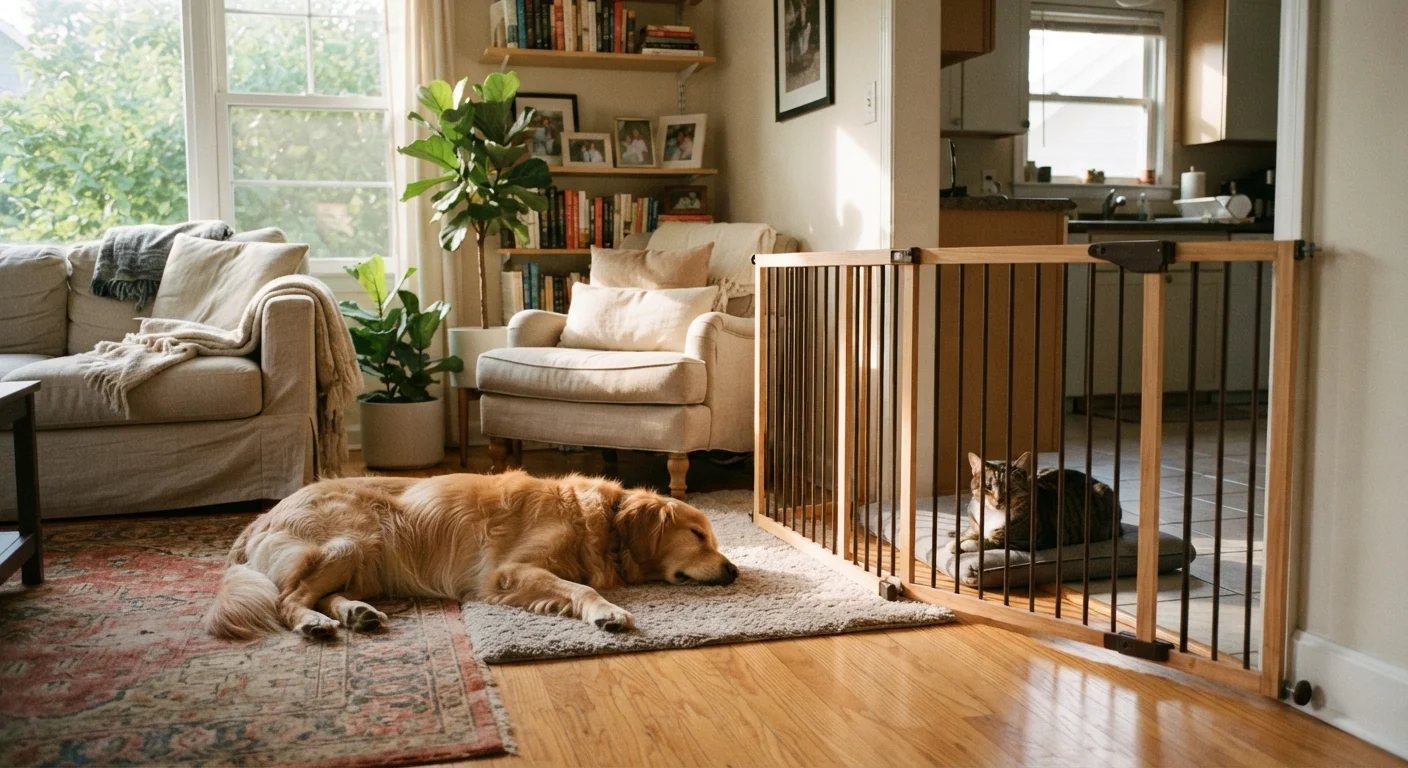
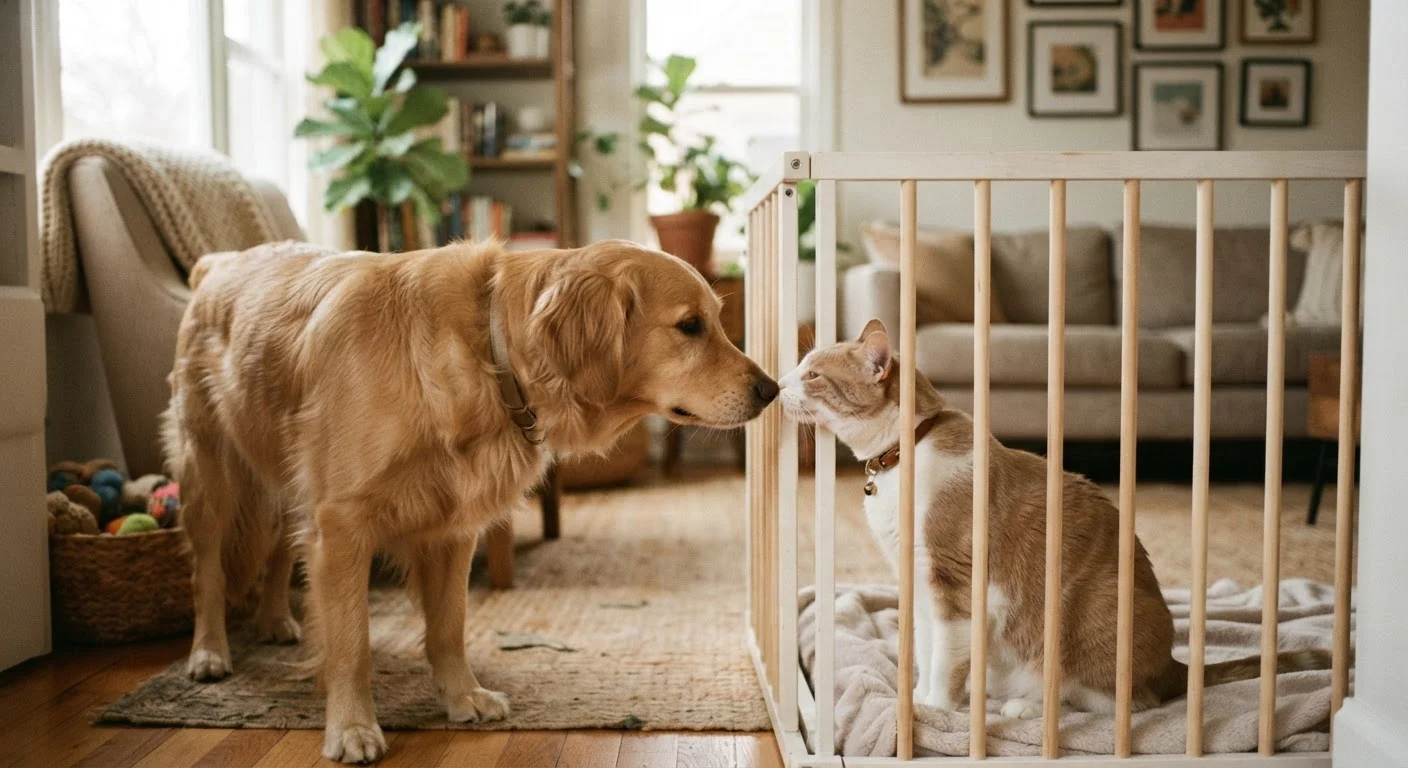
Once both animals are calm and eating normally near the door, introduce visual contact using a baby gate, cracked door, or exercise pen. Keep sessions short - five to ten minutes - and stay calm and present. Reward relaxed behavior with treats and quiet praise on both sides of the barrier.
Arrange Controlled Face-to-Face Meetings
Only move to direct contact when both animals consistently show relaxed, curious body language at the barrier. For dogs, keep the resident dog on a leash with a calm handler. Allow the new pet to move freely. Keep the first sessions brief and end on a positive note before tension escalates. Gradually increase duration as comfort grows.
Supervise All Shared Space Time
Do not leave animals unsupervised together until you are confident in their relationship - this typically takes several weeks to a few months depending on the animals involved. When you cannot supervise, separate them using gates or closed doors. Gradually extend unsupervised time as trust builds.
Patience Is the Most Effective Tool
Most multi-pet households reach a stable, comfortable dynamic - but timelines vary widely. A cat-to-cat introduction might take two to four weeks; a cat-to-dog introduction can take months. Progress is rarely linear, and small setbacks are normal. Keeping expectations realistic helps you stay consistent rather than rushing ahead prematurely.
Managing the Adjustment Period
Even after a successful introduction, the first few weeks require careful supervision. Continue to give each animal dedicated one-on-one time with you so no one feels displaced. Feed animals in separate areas to prevent resource guarding, and provide multiple water bowls, litter boxes (for cats, one per cat plus one extra), and resting spots throughout the home.
Watch for signs that an animal is consistently stressed - hiding, refusing food, over-grooming, or persistent aggression. These signals mean the pace needs to slow down, not speed up. If behavior escalates or you notice ongoing distress, a veterinarian or certified animal behaviorist can assess the situation and recommend a tailored plan. To understand what normal adjustment looks like versus a warning sign, our guide on pet behavior for first-time owners covers the key differences clearly.
Do Not Punish Fear-Based Behavior
Growling, hissing, or retreating are normal stress responses - they are communication, not bad behavior. Punishing these signals can cause an animal to suppress warnings and react more suddenly in the future. Instead, increase distance between animals and slow the introduction pace. If aggression is occurring, pause all shared time and seek professional guidance.
This article is for general informational purposes only. For behavioral concerns or signs of aggression, consult a qualified veterinarian or certified animal behaviorist.