Why Dental Disease Goes Unnoticed
Pets are remarkably good at hiding discomfort. Unlike humans, dogs and cats rarely stop eating or visibly complain when their mouths hurt - a behavior that traces back to survival instincts in the wild. As a result, owners often don't realize there is a problem until dental disease has already progressed significantly.
This is compounded by the fact that early periodontal disease produces few obvious symptoms. A pet may have inflamed gums, significant tartar buildup, and early bone loss - all without any visible behavioral change. By the time symptoms like bad breath, drooling, or reluctance to eat appear, disease is often in a moderate to advanced stage.
Understanding these subtle warning signs is part of being a well-prepared owner. Our guide on signs your pet may be unwell that are easy to miss covers other commonly overlooked health cues worth knowing.
Dental Disease Can Look Like Normal Aging
Many owners attribute bad breath, changes in chewing habits, or reduced energy to their pet simply 'getting older.' While some changes are age-related, oral pain and infection are not a normal part of aging - they are treatable conditions. If you notice any of these changes, a veterinary evaluation is the appropriate next step.
How Periodontal Disease Develops
Dental disease follows a predictable progression. It starts with plaque - a soft, sticky film of bacteria that forms on tooth surfaces after eating. If plaque is not removed through brushing or chewing, it mineralizes into tartar (also called calculus), a hard deposit that cannot be brushed away at home.
Tartar accumulation irritates the gumline, leading to gingivitis - the earliest, reversible stage characterized by red, swollen gums. Left untreated, the infection spreads below the gumline, destroying the ligaments and bone that anchor teeth in place. This is true periodontal disease, and the damage it causes to bone and tissue is largely irreversible.
~80%
Dogs over three with some periodontal disease
The American Veterinary Dental College estimates that the majority of dogs and cats show signs of periodontal disease by age three.
Stage 1-4
Veterinary grading scale for dental disease severity
Veterinarians use a standardized four-stage grading system; only Stage 1 (gingivitis) is considered fully reversible with proper treatment.
Daily
Recommended tooth brushing frequency for pets
Veterinary dental specialists consider daily brushing the single most effective home-care strategy for preventing plaque and tartar buildup.
Smaller dog breeds and flat-faced (brachycephalic) cats and dogs are particularly prone to dental disease because their teeth are often crowded, creating more surfaces where plaque accumulates and less natural self-cleaning occurs through chewing.
The Systemic Health Connection
Dental disease is not just a mouth problem. Chronic gum infections create a persistent source of bacteria that can enter the bloodstream - a process called bacteremia. Over time, this bacterial exposure has been associated with inflammation and damage in organs including the kidneys, liver, and heart.
Research in veterinary medicine suggests links between severe periodontal disease and certain forms of kidney disease and heart valve changes in dogs, though the causal relationship is still being studied. What is clear is that treating oral disease is part of comprehensive preventive health care, not a cosmetic concern.
“Periodontal disease is the most prevalent disease we diagnose in our patients - and the most underappreciated by pet owners. The mouth is the gateway to the rest of the body.”
— Jan Bellows, Board-certified veterinary dentist and past president of the American Veterinary Dental College
This systemic dimension is one reason veterinarians increasingly emphasize dental health as a pillar of routine wellness - alongside weight management and parasite prevention. For context on how interconnected these issues can be, see our overview of pet obesity risks and contributing factors.
Prevention: What Actually Works
The most effective strategy for preventing periodontal disease is daily tooth brushing. Using a soft-bristled pet toothbrush and pet-safe toothpaste, gentle brushing removes plaque before it hardens into tartar. Most pets can be gradually desensitized to this routine - starting with finger rubbing and working up to full brushing over days or weeks.
Start Dental Habits Early for Best Results
The earlier you introduce tooth brushing to puppies and kittens, the more readily they accept it as a normal part of their routine. Even if your pet is older, it is not too late to begin - go slowly, use positive reinforcement, and ask your veterinarian for a demonstration at your next visit.
For pets that strongly resist brushing, veterinary-approved dental chews, water additives, and prescription dental diets may help reduce plaque accumulation, though none replace the effectiveness of brushing. Look for products carrying the Veterinary Oral Health Council (VOHC) seal, which indicates evidence-based efficacy.
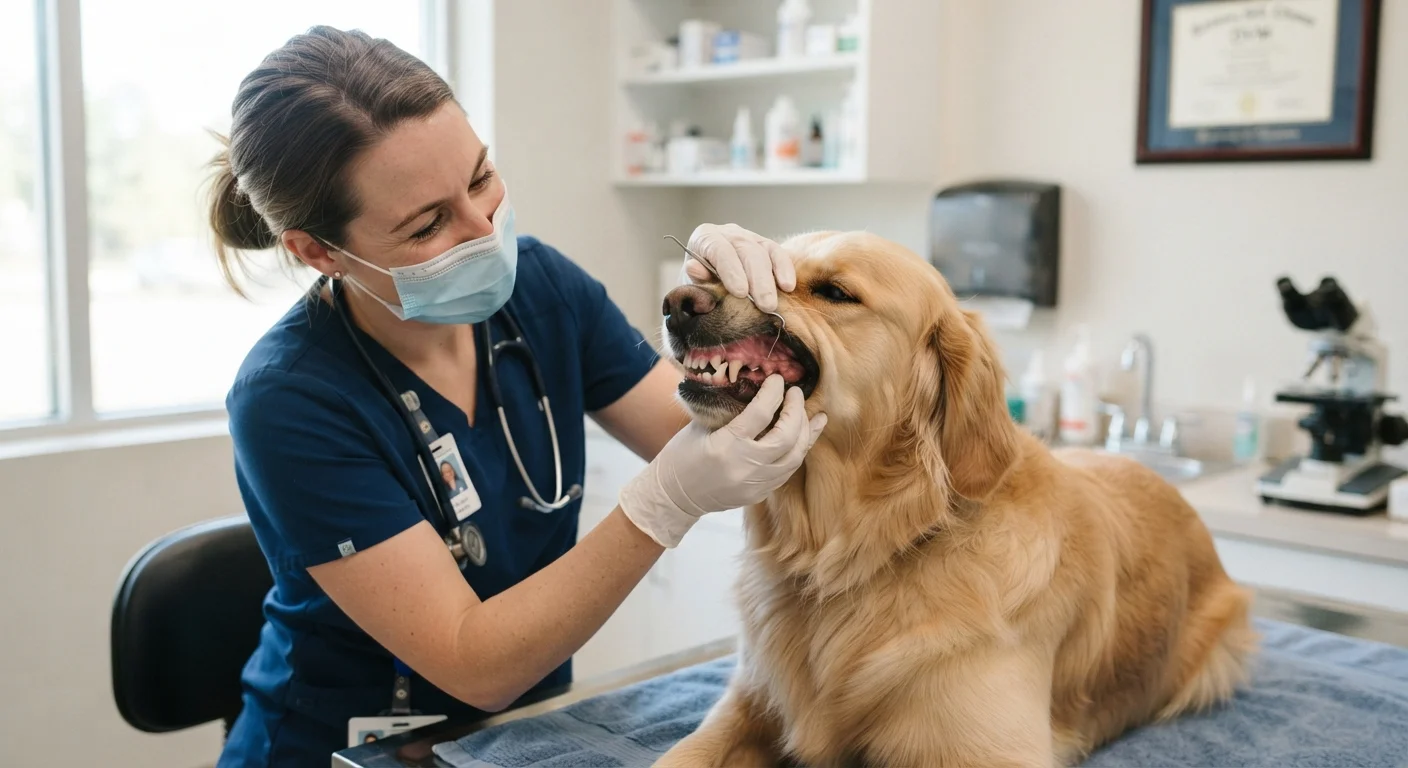
Professional dental cleanings performed under general anesthesia remain the only way to thoroughly clean below the gumline and accurately assess bone and tooth health. These are recommended on a schedule determined by your veterinarian based on your pet's individual risk profile. Routine dental care fits within the broader framework of pet care basics every owner should understand.
This article is for general informational purposes only and does not constitute veterinary medical advice. Always consult a licensed veterinarian for guidance specific to your pet's health needs.