
Why Your Budgeting Method Matters
Most people know they should budget. Far fewer stick with it. One underappreciated reason: the method doesn't fit the person. A system that feels intuitive to one household can feel oppressively complicated to another. Understanding the mechanics and tradeoffs of each major approach - before you commit - saves a lot of frustration.
This comparison covers four widely used methods: the Envelope Method, Zero-Based Budgeting, Pay Yourself First, and the 50/30/20 Rule. If you're just getting started, our guide to building your first budget covers foundational mindset alongside method. For a comprehensive deep-dive, see Building a Budget That Survives Real Life.
| Envelope Method | Zero-Based Budgeting | Pay Yourself First | 50/30/20 Rule | |
|---|---|---|---|---|
| Time commitment | Moderate - ongoing category tracking | High - monthly plan + regular reconciliation | Low - set up automation once | Low - three broad categories only |
| Best for | Category overspenders | Detail-oriented planners | Consistent savers | Beginners and simplicity seekers |
| Savings priority | Depends on how envelopes are set | Explicit - assigned like any expense | Very high - savings come first | Structured - 20% target built in |
| Flexibility | Low - hard category limits | Low to moderate - requires re-budgeting | High - remainder is discretionary | High - broad buckets allow variation |
| Requires expense tracking | Yes - category by category | Yes - every dollar tracked | No - only savings transfer | Minimal - bucket-level only |
| Works with irregular income | Challenging | Difficult without adjustment | Yes - automate a percentage | Moderate - percentages adapt |
The Four Methods Explained
Envelope Method
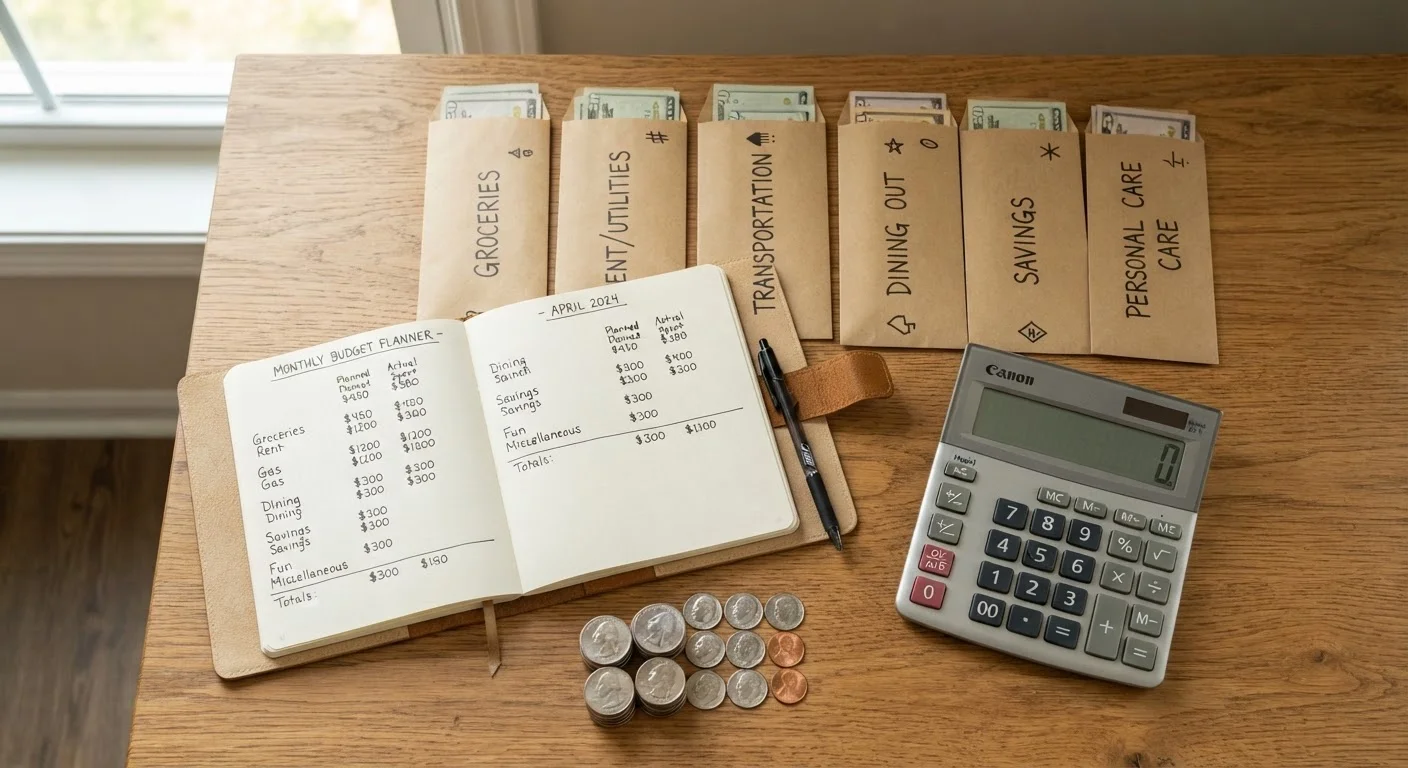
You divide cash into physical envelopes - one per spending category (groceries, gas, entertainment). When an envelope is empty, spending in that category stops for the month. It creates an immediate, tangible spending limit. Digitally, apps replicate this with virtual envelopes. For a deeper look at how this classic technique holds up today, see Envelope Budgeting in the Digital Age.
Zero-Based Budgeting
Every dollar of income is assigned a job - expenses, savings, debt repayment - until the budget reaches zero. You're not spending every dollar; you're allocating every dollar. This method requires listing all anticipated expenses at the start of each month and reconciling regularly. It's the most labor-intensive of the four but leaves no money unaccounted for.
Pay Yourself First
Savings are treated as a non-negotiable expense paid immediately when income arrives - before any discretionary spending. Automating transfers to a savings or retirement account removes the temptation to spend that money first. The remainder covers living expenses without strict categorization. This method is especially powerful for those trying to build an emergency fund or accelerate retirement contributions.
50/30/20 Rule
After-tax income is divided into three buckets: 50% toward needs (housing, utilities, groceries), 30% toward wants (dining, entertainment, subscriptions), and 20% toward savings and debt repayment. The simplicity is the point - there's no granular category tracking, just three broad guardrails. It's a useful structure for those exploring whether to prioritize an emergency fund or debt payoff within their 20% allocation.
Start with One Method, Not a Hybrid
It's tempting to blend approaches immediately, but starting with a single method for at least 60 days gives you real data on what's working and what isn't. Once you understand your actual spending patterns, combining elements becomes much more effective. Mixing too early often leads to abandoning structure altogether.
Choosing the Right Fit - and Combining Methods
No method has to be followed in pure form. Many people adopt Pay Yourself First as a baseline - automating savings on payday - then apply envelope-style limits to one or two categories where they routinely overspend. Others use zero-based budgeting for three months to understand their actual spending patterns, then relax into the 50/30/20 framework once they have a clearer picture.
Households managing shared finances may find structure especially important. Our overview of approaches to shared household finances covers how different budgeting frameworks translate when more than one income or spending style is involved.
~74%
Americans living paycheck to paycheck
Various surveys over recent years consistently show the majority of U.S. adults have little financial buffer between income and expenses.
1 in 3
Adults with no written or tracked budget
Polling from personal finance research groups suggests a significant share of Americans manage spending informally without a structured system.
The practical test is simple: which method will you actually run consistently three months from now? Start with the approach that matches your current behavior - not an idealized version of yourself. A good budget is one you'll maintain, adjust when life changes, and return to after slip-ups. The Everyday Money Moves hub has additional guidance on building durable financial habits alongside your chosen method.
This article provides general financial education and is not personalized financial advice. Consult a qualified financial professional for guidance specific to your situation.