
Why Most Budgets Fail Before March
Most people approach budgeting the way they approach New Year's resolutions: with ambition in January and disappointment by spring. The failure usually isn't a lack of willpower - it's that the budget was built on unrealistic assumptions from the start.
A budget fails when it ignores irregular expenses (car registration, annual subscriptions), underestimates variable costs like groceries and utilities, or doesn't leave breathing room for the unexpected. The result is a plan that looks perfect on paper and collapses the moment real life intrudes.
This guide is designed differently. It walks through each stage of building a budget that accounts for how money actually moves in and out of your life - and how to adjust it when circumstances change. Whether you're budgeting for the first time or rebuilding after a financial disruption, the principles here are grounded in practical money management, not idealized scenarios.
Budgeting Alone Won't Fix a Cash Flow Gap
If your essential expenses consistently exceed your income, no budgeting method can close that gap on its own. In that case, the priority shifts to increasing income, reducing fixed obligations (such as refinancing debt or renegotiating bills), or both. A budget is a management tool, not a solution to structural financial shortfalls.
This article provides general financial education and is not personalized financial advice. For decisions specific to your situation, consult a licensed financial professional.
Step 1 - Know Your Real Take-Home Income
The single most common budgeting mistake is building a spending plan around gross income - the number on your offer letter - rather than what actually lands in your bank account each pay period.
Your net income is what remains after federal and state taxes, Social Security, Medicare, health insurance premiums, and any retirement contributions are deducted. For salaried employees, this number is stable and easy to verify. For freelancers, gig workers, or anyone with variable income, the calculation requires more care.
If your income fluctuates, financial planners commonly recommend using your lowest reliable monthly income - sometimes called a floor income - as your budget baseline. Any additional earnings in better months can be directed toward savings or debt payoff rather than routine spending. This approach builds a natural cushion without requiring you to predict the unpredictable.
74%
Americans living paycheck to paycheck
A 2023 LendingClub report found roughly three in four Americans report spending all or most of their monthly income, underscoring how little margin most households actually operate with.
$1,400
Median monthly non-housing spending
Bureau of Labor Statistics Consumer Expenditure data shows that food, transportation, and healthcare alone account for a substantial portion of take-home pay for middle-income households.
3-6 months
Recommended emergency fund target
This widely cited guideline from financial planning organizations represents essential living expenses, not total income.
For households with multiple income sources, list each separately. Combining everything into one lump figure makes it harder to understand the impact if one source disappears.
Step 2 - Map Every Expense Category
Before setting any spending limits, spend one full month tracking where your money actually goes - not where you think it goes. Most people are surprised by what they find.
Expenses fall into two broad categories:
- Fixed expenses: Rent or mortgage, car payment, insurance premiums, loan minimums - amounts that are the same each month.
- Variable expenses: Groceries, gas, utilities, dining out, clothing - amounts that shift month to month.
A third category is easy to miss: irregular expenses. These include annual or semi-annual costs like car registration, holiday gifts, school fees, or medical deductibles. Divide each by 12 and include that monthly fraction in your budget. Ignoring them is why budgets blow up at predictable times of year.
Track Before You Limit
Resist setting spending caps until you have at least one month of real spending data. Limits set on assumptions - rather than actual behavior - are almost always inaccurate and demoralizing to maintain. Let the data inform the plan, not the other way around.
Reviewing three to six months of bank and credit card statements - rather than just one - gives a more accurate picture of your true spending patterns, especially for irregular costs.
Step 3 - Choose a Budgeting Method That Fits You
Once you know your income and expense baseline, you need a structure to organize them. Several well-established methods exist, each with different tradeoffs.
The 50/30/20 rule allocates 50% of net income to needs, 30% to wants, and 20% to savings and debt repayment. It's simple and flexible, making it a good starting framework - though the percentages may need adjustment based on cost of living.
The zero-based budget assigns every dollar a job until income minus expenses equals zero. It requires more tracking but offers precise control over spending categories.
The pay yourself first method automates savings transfers immediately after each paycheck, then spends whatever remains. It prioritizes savings discipline over granular expense control.
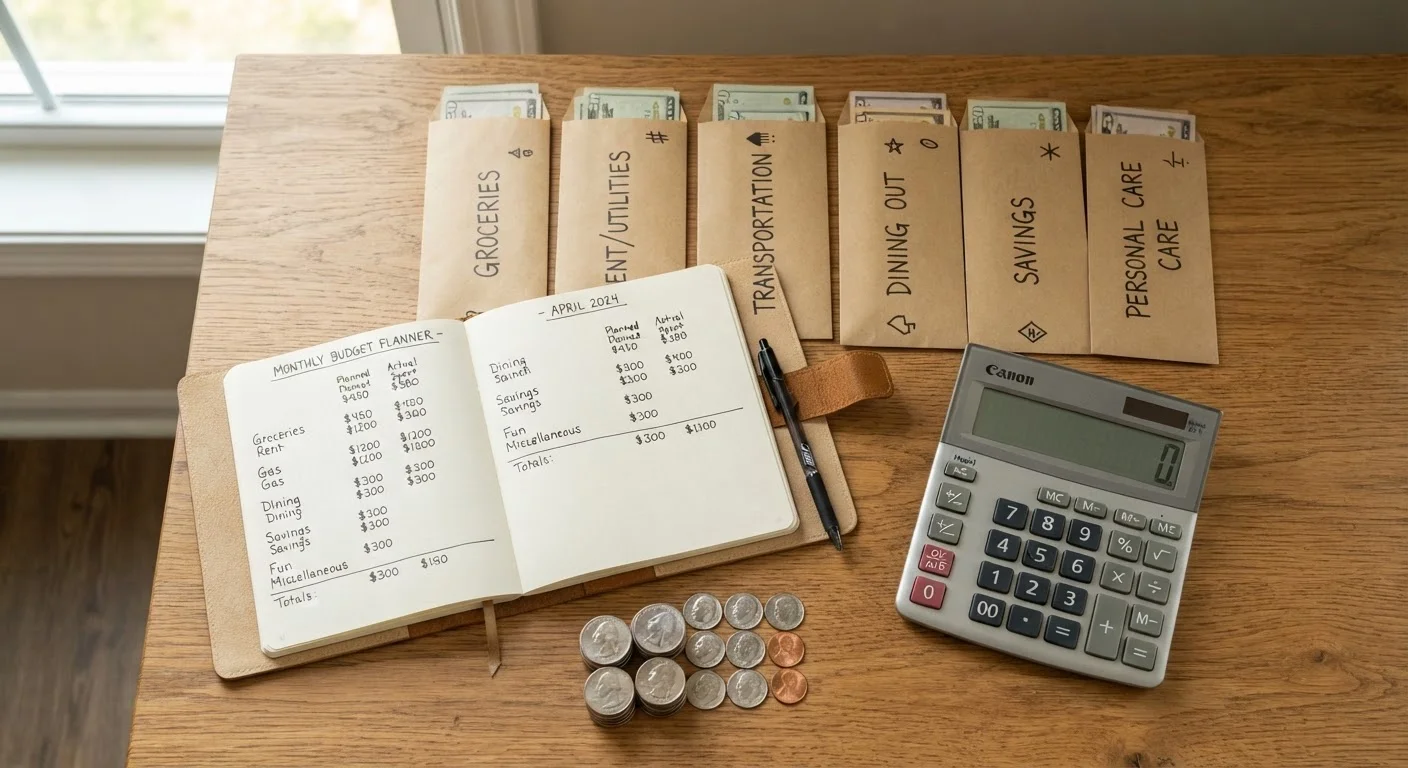
The envelope method - traditionally using cash, now available digitally - allocates set amounts to spending categories. When the envelope is empty, spending in that category stops.
For a detailed comparison of these approaches and help choosing the right one, see Budgeting Approaches Compared. There is no universally correct method - the best one is the one you'll actually maintain.
Automate your savings transfer on the same day your paycheck arrives - before you see the money in your checking account. Out of sight, out of mind is a feature, not a bug.
Behavioral research consistently shows that removing the decision point from saving - making it automatic - significantly increases the likelihood that saving actually happens.
When categorizing expenses, split 'groceries' and 'dining out' into separate line items. Combining them masks one of the most common areas where spending quietly overruns a budget.
Granular expense tracking exposes patterns that broad categories obscure, making it far easier to identify where adjustments will have the most impact.
Step 4 - Build In Flexibility for Real Life
A budget with no margin is a budget that will break. Two structural elements protect it from real-life disruption: a buffer category and an emergency fund.
A monthly buffer - even $50 to $100 - is a named budget line for small, unplanned costs: a copay, a parking ticket, a friend's birthday dinner. It prevents these minor surprises from cascading into overdrafts or credit card debt.
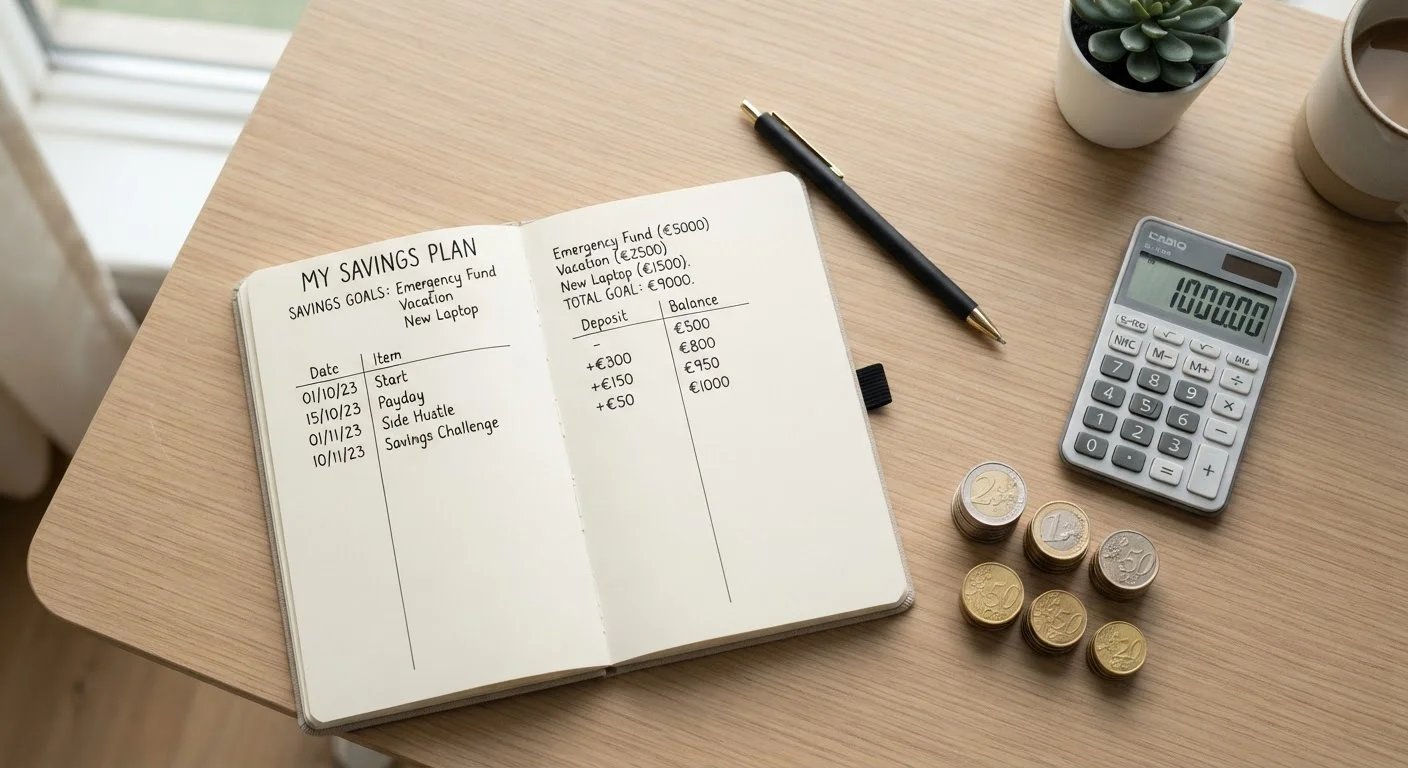
An emergency fund covers larger disruptions: job loss, a car repair, a medical bill. Most financial guidance suggests targeting three to six months of essential expenses, held in a liquid, accessible account. The exact timeline to reach that goal will vary by income and circumstances - what matters is treating it as a non-negotiable budget component rather than an aspirational afterthought.
For a broader look at building savings alongside managing debt, Saving and Debt Management: A Comprehensive Overview covers the core principles in depth.
Don't Drain Your Emergency Fund Routine
An emergency fund exists for genuine financial emergencies - unexpected job loss, a medical crisis, a critical home repair - not for predictable irregular expenses. Conflating the two leaves you exposed when a true emergency arrives. Keep these two buckets separate and clearly defined in your budget.
Step 5 - Review, Adjust, and Stay the Course
A budget is not a set-it-and-forget-it document. Monthly reviews - ideally 15 to 20 minutes at the end of each month - turn it from a static plan into an active financial tool.
During each review, compare actual spending to budgeted amounts in every category. Where you overspent, ask why: was the category limit unrealistic, or did a one-time event inflate the number? Adjust limits going forward based on what you actually learn, not what you wish were true.
Life changes - a raise, a job loss, a new baby, a move - require a full budget rebuild, not just a line-item tweak. Treat each major change as an opportunity to re-examine your baseline income, expense categories, and financial priorities from the ground up.
For daily habits that support a consistent budgeting practice, the Everyday Money Moves hub offers practical guidance. And if you're building savings habits alongside your budget, the Saving & Debt hub covers the full range of strategies for managing what you owe while growing what you keep.
“The goal of a budget isn't to restrict your life - it's to give every dollar a purpose so that your spending reflects your actual priorities, not just your impulses.”
— Bola Sokunbi, Certified financial education instructor and founder of Clever Girl Finance
This article is for general informational and educational purposes only and does not constitute personalized financial, tax, or legal advice. Individual financial situations vary. Consult a qualified financial professional before making decisions about your specific circumstances.