Soil Control and Drainage
Soil quality is where raised beds have a clear structural advantage. When you build a raised bed, you fill it with a custom blend - typically a mix of topsoil, compost, and an aerating material like perlite or aged bark. This means plants start in optimized conditions regardless of what lies beneath. If you're planning your first garden, skipping the guesswork of native soil testing can save considerable time and frustration.
In-ground planting is more dependent on what you already have. Sandy soils drain too quickly and shed nutrients; dense clay soils become waterlogged and compacted. Both can be improved with organic matter over time, but meaningful results often take multiple seasons. That said, in-ground soil has one advantage raised beds can't replicate at scale: it connects directly to the subsoil, which supports deep root development and the natural water table.
On drainage specifically, raised beds win in most situations. Elevated soil drains faster after heavy rain, reducing root rot risk and allowing earlier planting in wet springs. However, this same quality means raised beds can dry out faster during summer heat waves, increasing watering frequency.
| Criterion | Raised Beds | In-Ground Planting |
|---|---|---|
| Soil Control | Full control - you choose the mix | Dependent on native soil quality |
| Drainage | Excellent; drains quickly | Variable; depends on soil type |
| Upfront Cost | Higher - materials and fill needed | Lower - minimal setup required |
| Weed Pressure | Lower in early seasons | Higher; more exposure to weeds |
| Crop Size Suitability | Best for compact, contained crops | Better for large or deep-rooted plants |
| Physical Accessibility | Easier - reduces bending and kneeling | Requires more ground-level work |
| Season Extension | Soil warms earlier in spring | Slower to warm; season starts later |
| Scalability | Limited by cost and space | Easier to expand over a larger area |
Upfront Cost and Long-Term Investment
In-ground planting is the lower-cost entry point. If your soil is workable, you may need only a few bags of compost and basic tools to get started. Costs rise if you need significant amendment - lime for acidic soil, sulfur for alkaline, or bulk compost to improve structure - but these are still typically less than building a bed from scratch.
Raised beds involve upfront costs for framing materials (untreated cedar and pine are common choices), hardware, and fill soil. A single 4×8-foot bed can run anywhere from modest to substantial depending on material choices and local pricing. However, that investment tends to pay off in reduced weeding time, better yields, and less replanting due to poor soil. Over several years, the math can balance out - especially in gardens where native soil would require repeated amendment regardless.
6-8 weeks
Earlier planting possible in raised beds
Raised bed soil can warm up meaningfully faster than surrounding ground, allowing earlier planting in cooler climates - though exact timing varies by region and season.
Up to 50%
Potential reduction in weeding time
University extension programs and experienced growers commonly note that raised beds with proper base barriers can cut weed management effort significantly compared to open in-ground plots.
If cost is a real constraint, it's worth reading up on basic budgeting strategies before committing to either approach. Starting small - one raised bed or a modest in-ground plot - lets you learn before expanding.
Maintenance, Weeds, and Seasonal Care
Weeding is one of the most practical differences between the two methods. Raised beds, especially those built over landscape fabric or cardboard, dramatically reduce weed pressure in the first few seasons. A defined perimeter also makes it easier to spot and pull interlopers early. In-ground plots are more exposed to wind-dispersed weed seeds, soil-borne roots, and edge encroachment from surrounding lawn or groundcover.
Both methods require regular watering, but raised beds often benefit from drip irrigation systems due to their faster drainage. In-ground beds can rely more on natural rainfall, particularly in regions with consistent summer rain. Mulching is effective in both systems for retaining moisture and suppressing weeds.
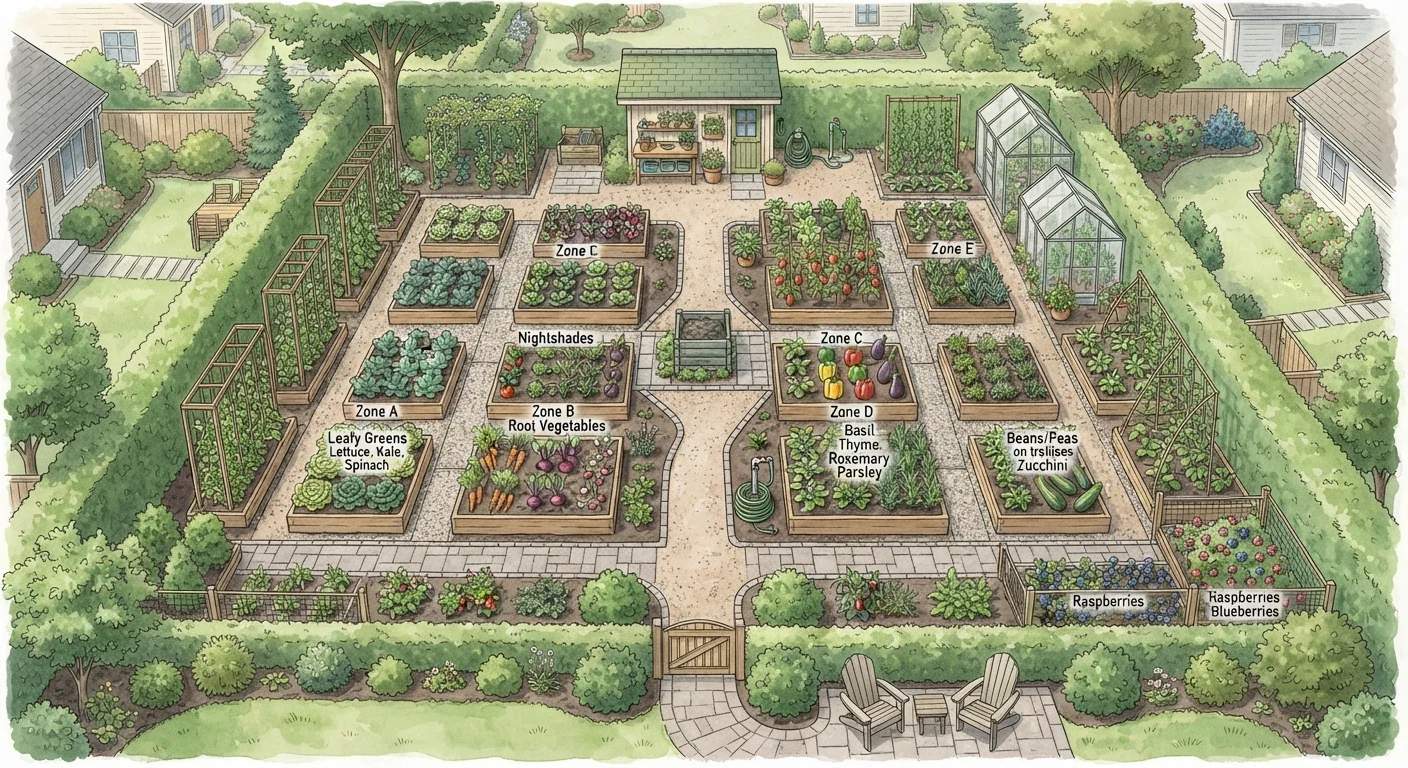
Thoughtful layout decisions matter in both cases. Our guide to garden layout principles covers how spacing and pathways reduce the ongoing workload across seasons - principles that apply whether you're working in beds or rows.
One maintenance consideration specific to in-ground plots: crop rotation is easier to implement when you have more open ground to work with. Moving plant families between zones each year reduces disease buildup and soil depletion - something more logistically complex in smaller, fixed raised beds.
You Don't Have to Choose Just One
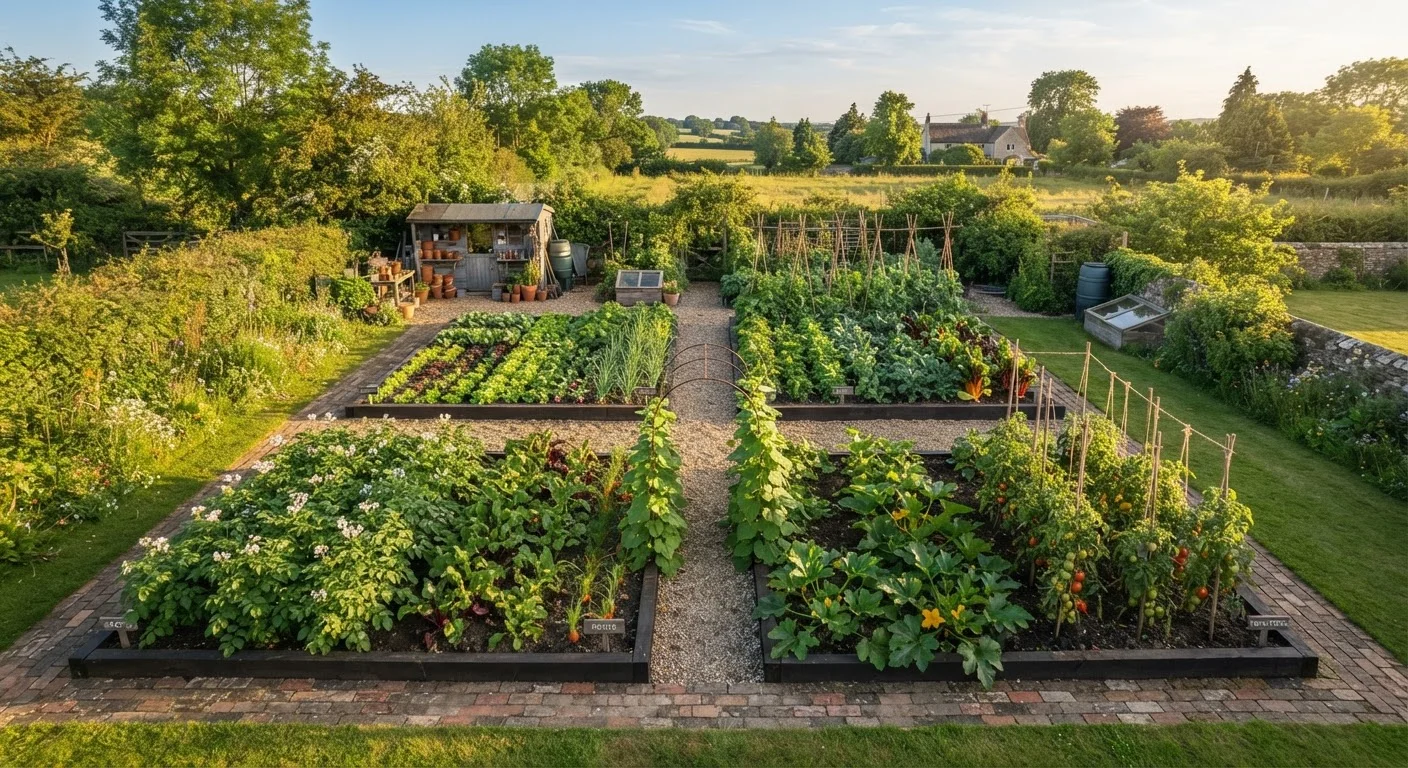
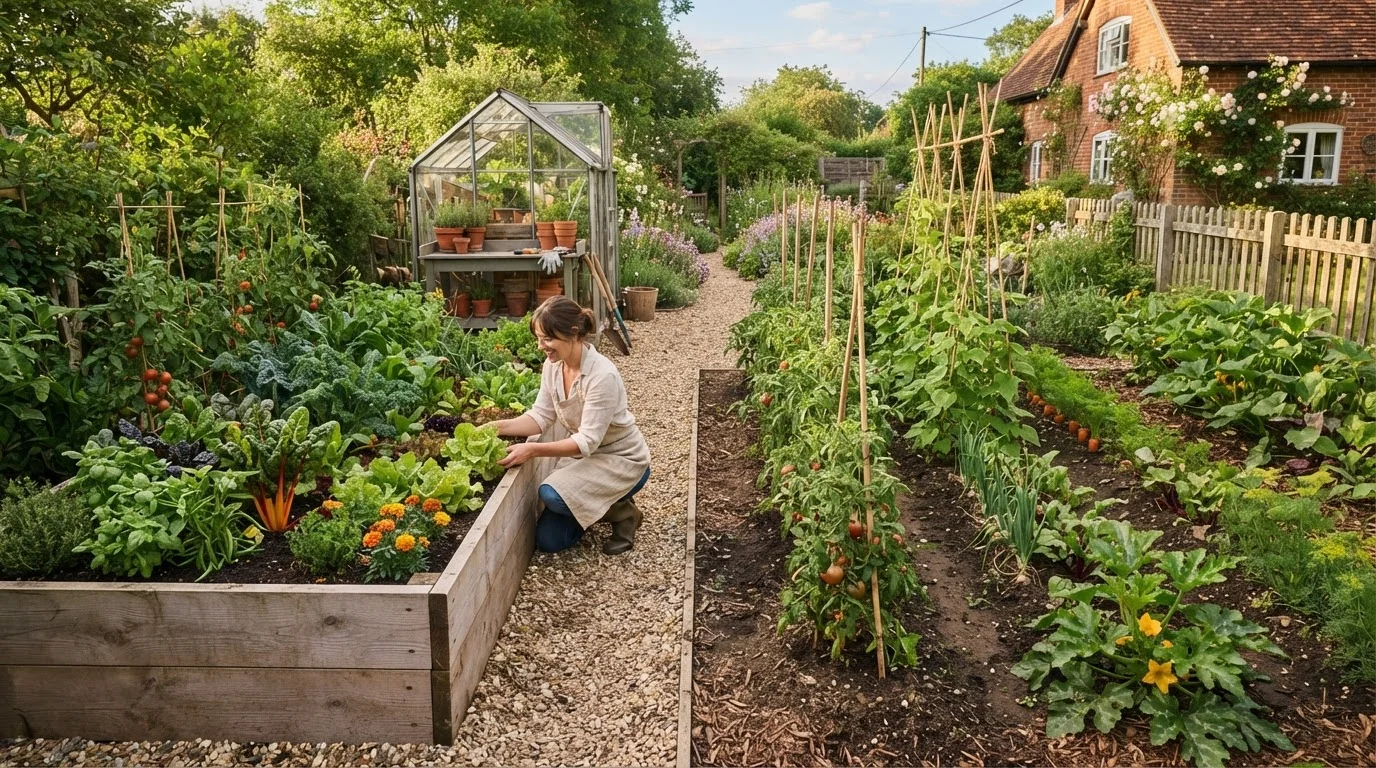
Many experienced gardeners use raised beds and in-ground plots in parallel. Raised beds handle herbs, greens, and high-value vegetables while in-ground areas accommodate sprawling squash, corn, or perennial plantings. Treating the two methods as complementary rather than competing often produces the most practical, productive garden layout overall.
Which Crops Suit Each Method
Raised beds excel for compact, high-value crops: salad greens, herbs, radishes, bush beans, peppers, and determinate tomatoes all thrive in the contained, enriched environment. The ability to fine-tune soil pH and texture also makes raised beds ideal for crops with specific requirements, like blueberries (which prefer acidic conditions) or carrots (which need deep, loose, stone-free soil).
In-ground planting is better suited to large, sprawling, or deep-rooted crops. Corn, winter squash, melons, asparagus, and most fruit trees need either more lateral room or deeper root runs than a standard raised bed can accommodate. If you're planning a mixed garden that evolves each season, understanding how annuals and perennials differ will help you match plant types to whichever method you choose.
For gardeners with very limited outdoor space - a balcony or small patio - neither raised beds nor in-ground plots may be the right fit. Container gardening is a practical third path worth exploring in that context.