Why a Seasonal Garden Calendar Pays Off
Most garden problems - overgrown shrubs, pest outbreaks, poor harvests - trace back to missed timing rather than a lack of skill. Plants follow biological rhythms, and the tasks you do in March directly affect what you're managing in August. A quarterly framework turns that complexity into a manageable routine.
This reference covers the core jobs for each quarter of the year. Because climates vary considerably across the US, treat these as general guides and adjust by two to four weeks depending on your USDA hardiness zone. If you're building a garden from the ground up, our first-season garden guide covers the foundational decisions you'll want to make before diving into a seasonal routine.
| Best time to test soil | Early spring or late autumn (University cooperative extension services) |
| Ideal soil pH for most vegetables | 6.0-7.0 (USDA general guidance) |
| Mulch depth recommended | 2-3 inches |
| Weekly water target (established plants) | ~1 inch per week |
| Spring bulb planting window | 6-8 weeks before ground freezes |
| Seed starting lead time (tomatoes, peppers) | 6-8 weeks before last frost |
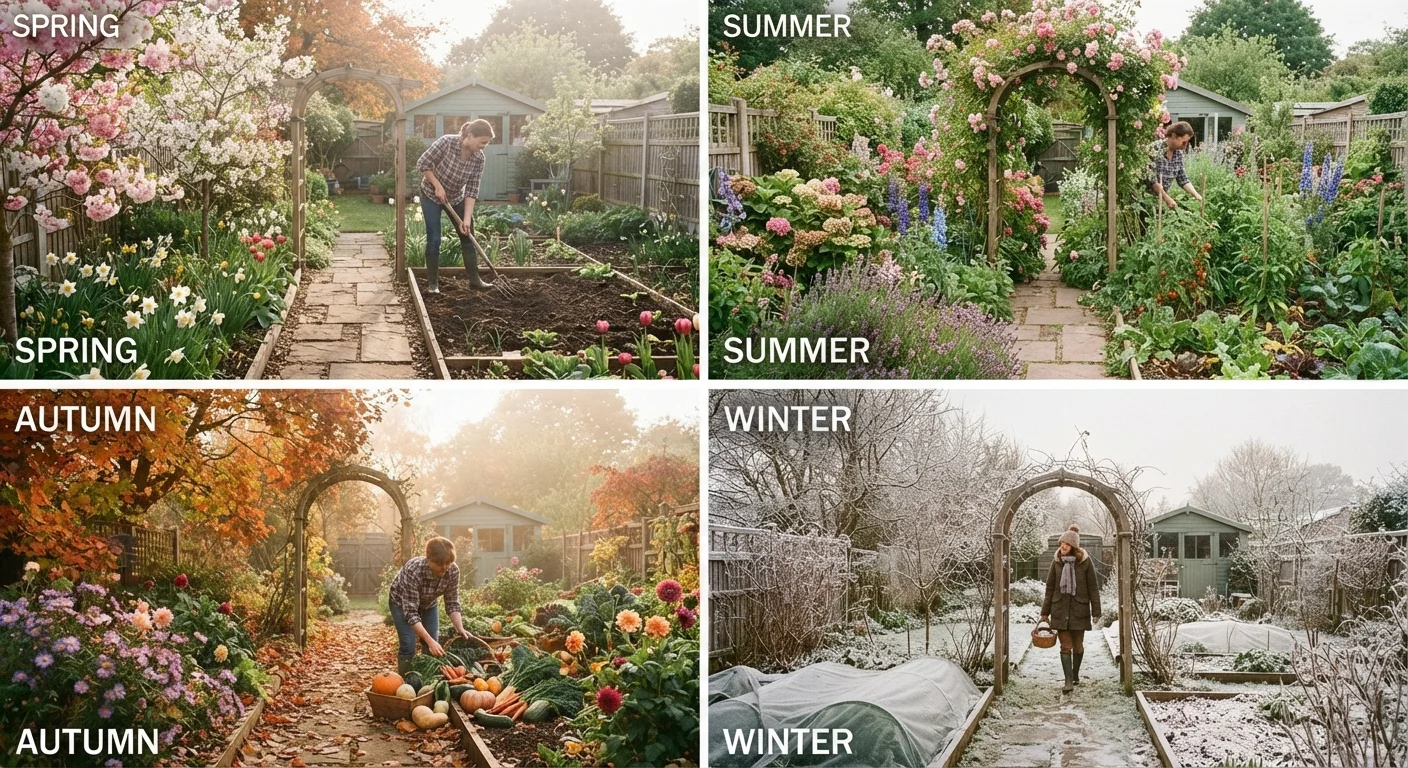
Spring (March-May): Preparation and Planting
Spring is the highest-leverage quarter. Work done now sets the conditions for the rest of the growing season.
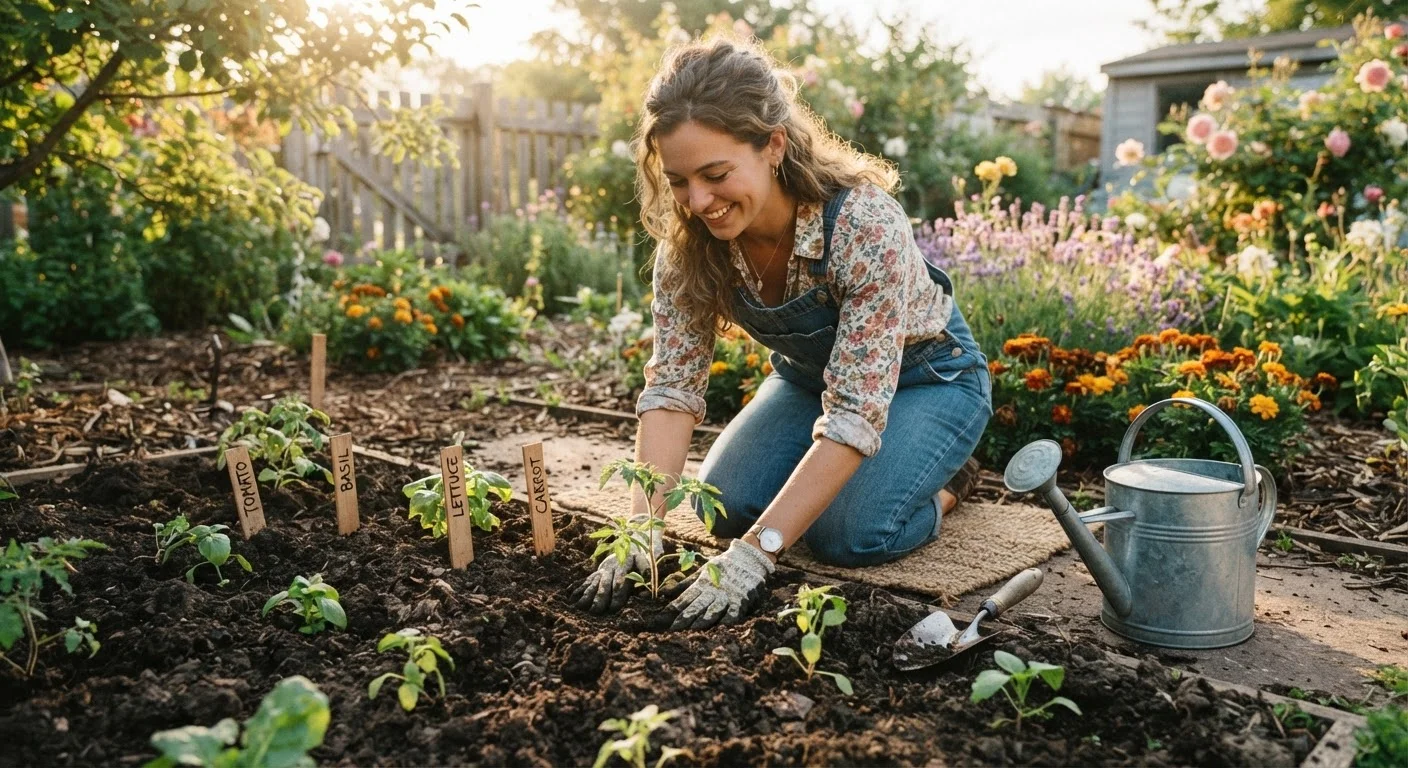
- Test and amend soil. Use a basic pH test kit to check soil acidity. Most vegetables and ornamentals prefer a pH between 6.0 and 7.0. Incorporate compost to improve structure and nutrients.
- Clean up winter debris. Remove dead plant matter to reduce overwintering habitat for pests and fungal spores.
- Divide perennials. Early spring, before new growth is more than a few inches tall, is the right window to divide crowded clumps and reinvigorate them. Pairing annuals with perennials strategically is worth thinking through - see our guide to annuals and perennials.
- Start seeds indoors. Tomatoes, peppers, and eggplants need 6-8 weeks of indoor growing before the last frost date.
- Apply pre-emergent weed control. Doing this before soil temperatures reach 55°F can prevent crabgrass and other summer weeds from establishing.
Summer (June-August): Maintenance and Monitoring
Summer shifts the focus from planting to tending. Heat and growth accelerate everything - including weeds and pests.
- Water deeply and consistently. Most established plants need about one inch of water per week. Water at the base of plants in early morning to limit fungal pressure.
- Mulch around beds. A 2-3 inch layer of organic mulch conserves moisture, moderates soil temperature, and suppresses weeds simultaneously.
- Deadhead and prune. Removing spent blooms on flowering plants encourages continued production. Lightly prune hedges and shrubs after the first flush of growth.
- Harvest regularly. Zucchini, beans, and cucumbers become less productive if fruits are left to mature on the plant. Pick frequently to signal the plant to keep producing.
- Scout for pests. Check the undersides of leaves weekly. Early intervention - hand-picking, row covers, or targeted organic treatments - is far more effective than reactive measures later.
Deadheading
The practice of removing spent or faded flowers from a plant. This redirects the plant's energy from seed production back into new blooms, extending the flowering period.
Pre-emergent herbicide
A weed control product applied before weed seeds germinate. It creates a barrier in the soil that prevents seedlings from establishing, rather than killing existing weeds.
Hardiness zone
A geographic classification system (established by the USDA) that indicates average annual minimum winter temperatures. Used to determine which plants are likely to survive winter in a given region.
Overseeding
The process of spreading grass seed over an existing lawn without tearing up the turf. It fills in thin or bare patches and improves overall lawn density.
Perennial
A plant that lives for more than two years, returning each growing season from its root system. Examples include hostas, daylilies, and coneflowers.
Autumn (September-November): Wind-Down and Soil Investment
Autumn is underestimated. The work you put in now strengthens next year's garden more than almost anything done in spring.
- Plant spring bulbs. Tulips, daffodils, and alliums need a cold period to bloom. Plant them 6-8 weeks before the ground freezes.
- Cut back perennials selectively. Leave ornamental grasses and seed heads standing through winter - they provide structure and wildlife habitat. Cut back diseased foliage promptly.
- Build or turn compost. Add fallen leaves, garden trimmings, and kitchen scraps. A well-managed pile breaks down over winter into usable compost by spring.
- Aerate and overseed lawn areas. Early autumn is the best window for cool-season grasses to establish before dormancy.
- Put tools away properly. Clean, sharpen, and oil metal tools before storage. A five-minute task now prevents rust and replacement costs later.
Adjust Timing for Your Climate Zone
The task windows described in this article reflect general US temperate conditions. Gardeners in warmer southern zones may start spring tasks 4-6 weeks earlier, while those in colder northern zones may finish autumn tasks earlier as well. Check your local USDA plant hardiness zone and consult your nearest cooperative extension service for region-specific timing guidance.
Winter (December-February): Planning and Light Maintenance
Winter isn't a pause - it's a planning season. With less physical demand outdoors, it's the best time to think strategically.
- Review and order seeds. Seed catalogs typically arrive in January. Order early, as popular varieties sell out. Rotate crops on paper before the season begins.
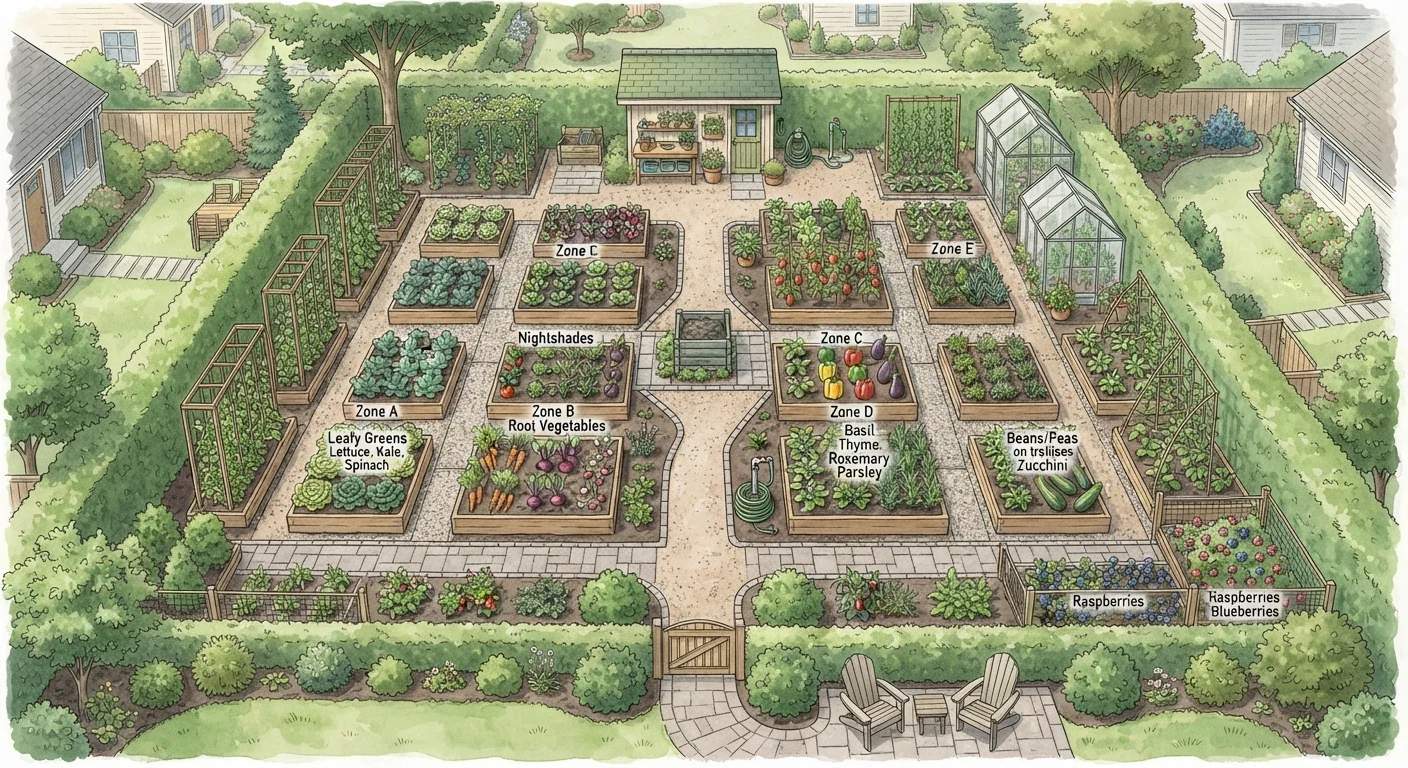
- Evaluate your layout. Consider whether paths, beds, and zones are working efficiently. Thoughtful layout changes made in winter reduce labor through every future season - our garden layout principles guide explains the decisions that matter most.
- Protect vulnerable plants. Apply burlap wraps or frost cloth to borderline-hardy shrubs. Potted plants should be moved to a sheltered location or insulated with bubble wrap.
- Maintain tools and equipment. Sharpen pruners and loppers, replace worn gloves, and service any power equipment before the spring rush.
Keeping a garden journal through winter - noting what worked, what failed, and what you want to try - is one of the most practical habits experienced gardeners develop. The same seasonal discipline applies indoors: our seasonal declutter audit is a useful companion for tackling what's accumulated inside the house during colder months.
USDA Plant Hardiness Zone Map
The official USDA interactive map helps you identify your hardiness zone so you can time planting, frost protection, and seasonal tasks accurately for your location.
Cooperative Extension Service Finder
Land-grant university extension offices across the US offer free, region-specific gardening calendars, soil testing services, and pest identification resources tailored to your state.
Garden Journal Template
A structured seasonal journal helps you track what was planted where, how it performed, and what to adjust - an invaluable reference that improves with every year of use.