Why Routine Maintenance Matters from Day One
Owning a car comes with a predictable truth: what you ignore today becomes an expensive repair tomorrow. For new drivers, building a maintenance mindset early is one of the most financially sound habits you can develop. Vehicles are complex mechanical systems, but most of what keeps them healthy is straightforward and repeatable.
Routine upkeep also has direct safety implications. Worn tyres, low brake fluid, or a failing battery don't just cost money - they put you and others at risk on the road. As you settle into car ownership, understanding what your vehicle needs and when is as important as knowing how to drive it.
It's worth acknowledging that some running costs - tyre replacement, scheduled services, inspection fees - can catch new owners off guard. For a fuller picture of what to budget for, see our guide on running costs that catch new car owners off guard.
Owner's manual
The booklet supplied with your vehicle that contains manufacturer specifications, service schedules, and operating instructions specific to your car's make and model.
Service interval
The recommended mileage or time period between scheduled maintenance tasks, set by the vehicle manufacturer to keep components working correctly.
Tread depth
The measurement of the grooves on your tyre surface. Adequate tread depth allows water to escape from under the tyre and maintains grip on wet roads.
Dipstick
A long metal rod inserted into the engine that allows you to check the oil level and condition without any specialist tools.
Coolant
A fluid (also called antifreeze) that circulates through the engine to regulate temperature, preventing both overheating in summer and freezing in winter.
Timing belt
A rubber belt inside the engine that synchronises the movement of internal components. Failure can cause severe engine damage, so replacement at the manufacturer's recommended interval is critical.
The Checks You Can Do Yourself
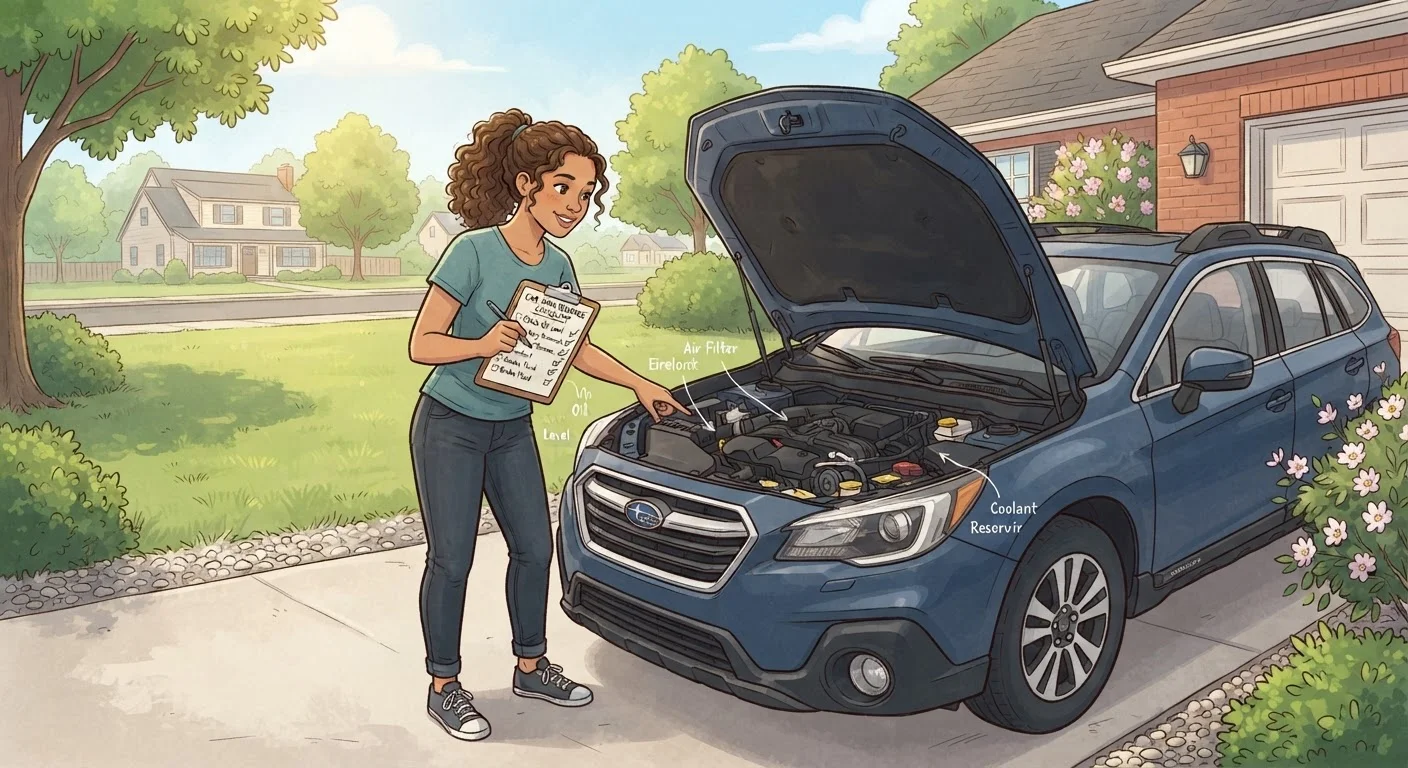
Many fundamental checks require no specialist tools and can be done in your driveway in under ten minutes. Doing them regularly - ideally monthly or before any long trip - gives you an early warning system against problems that worsen quietly.
Fluids
- Engine oil: Pull the dipstick with the engine cold, wipe it clean, reinsert, and check the level. Oil should sit between the minimum and maximum marks and appear amber to dark brown. Black, gritty oil is a sign it's due for a change.
- Coolant: Check the reservoir (never open the radiator cap on a hot engine). The level should sit between the MIN and MAX lines.
- Windshield washer fluid: Keep this topped up - visibility is a direct safety issue.
- Brake fluid: Visible through the semi-transparent reservoir. If it's consistently low, have a mechanic inspect for leaks.
Tyres
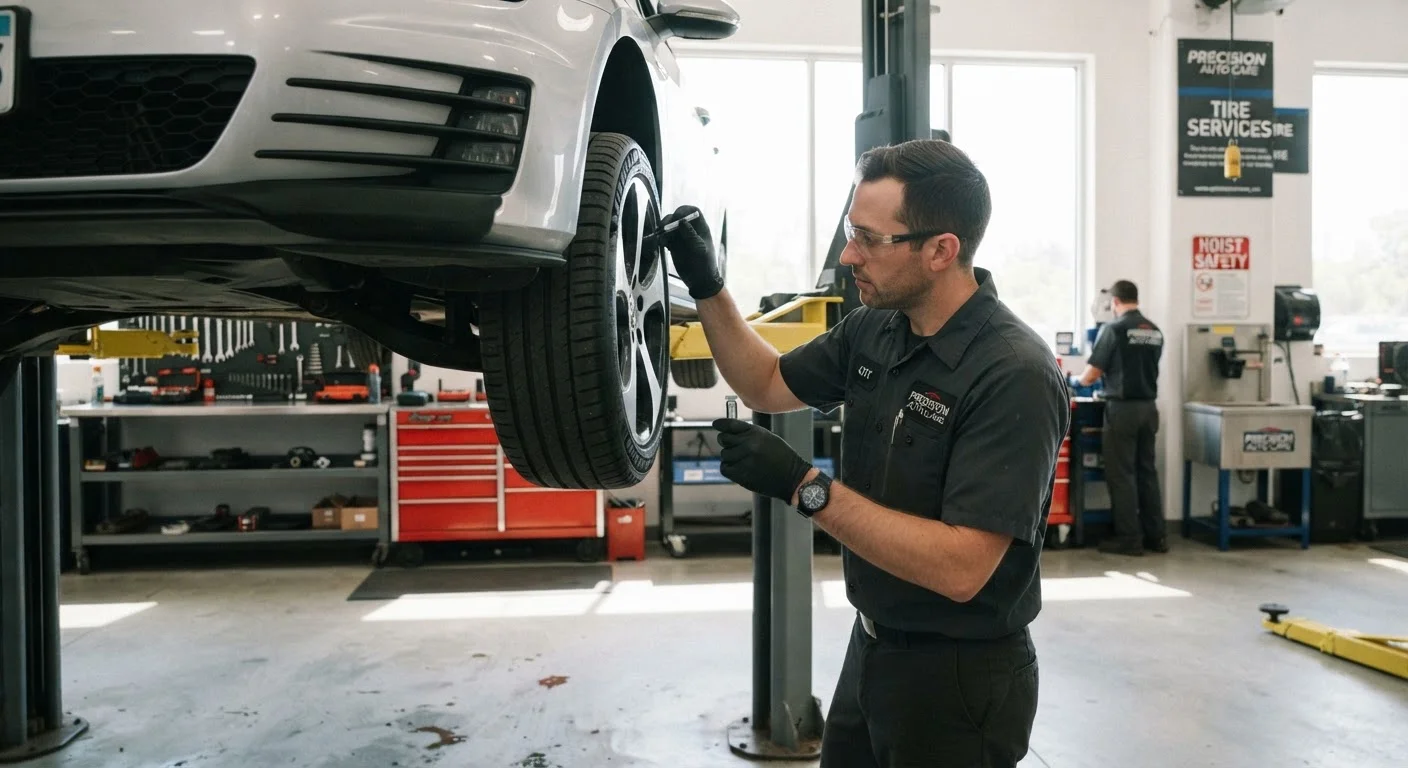
Check tyre pressure monthly using a gauge - incorrect pressure affects handling, fuel economy, and wear life. Your recommended PSI is printed on a sticker inside the driver's door jamb, not on the tyre sidewall. Also inspect tread depth and look for cracks or bulges. For a deeper explanation of tyre services, our article on tyre rotation, balancing, and alignment breaks down three jobs that are easily confused.
Lights and Wipers
Walk around your car periodically to confirm all exterior lights are working. Replace wiper blades when they start smearing - typically once a year or when performance drops. Before any journey, a quick walkthrough is good practice; our pre-trip safety walkthrough provides a reliable checklist.
Make Monthly Checks a Routine
Pick the same day each month - the first of the month works well - to run through your basic checks: oil level, tyre pressure, all fluid reservoirs, and exterior lights. This takes less than 15 minutes and ensures nothing drifts unnoticed between annual services.
Understanding Service Intervals
Beyond the checks you do yourself, your vehicle has scheduled service milestones that require a qualified mechanic. These are not suggestions - they are engineering requirements set by the manufacturer to keep components functioning within safe tolerances.
Your owner's manual is the definitive source. It will specify intervals for oil changes, air filter replacement, spark plugs, transmission fluid, timing belt or chain inspection, and more. These intervals are often expressed as a mileage figure or a time period, whichever comes first.
| Service | Typical Interval | DIY or Mechanic? |
|---|---|---|
| Oil & filter change | 5,000-10,000 miles / 12 months | Either |
| Tyre rotation | Every 5,000-7,500 miles | Either |
| Air filter replacement | 15,000-30,000 miles | Either |
| Brake inspection | Annually or as needed | Mechanic |
| Timing belt replacement | 60,000-100,000 miles (varies) | Mechanic |
If you're unsure what a service report means or how to read an inspection result, our guide to reading your vehicle inspection report explains every section in plain language. And for insight into how your driving habits affect wear, see how driving habits quietly accelerate vehicle wear.
Don't Delay on Brake or Tyre Issues
Brakes and tyres are your primary safety systems. If you notice squealing or grinding from the brakes, pulling to one side, or visible tyre damage, don't wait until your next scheduled service. Have the vehicle inspected by a qualified mechanic promptly. These are not issues to monitor and revisit - they require immediate attention.
Building Habits That Protect Your Car Long-Term
Consistent, low-effort habits are more valuable than occasional intensive attention. The drivers whose cars stay reliable longest are generally those who check things regularly, act on early warning signs, and keep records of what's been done.
Start a maintenance log - a simple notebook or a notes app works fine. Record the date, mileage, and what was checked or serviced each time. This log becomes useful when talking to mechanics, and it supports resale value by demonstrating the car has been cared for. Our article on keeping a maintenance log explains why the paper trail matters more than most drivers realise.
It's also worth understanding what mechanics wish their customers knew. Clear, specific descriptions of symptoms - when a noise occurs, under what conditions, and how long it's been happening - lead to faster, more accurate diagnoses. Our piece on what mechanics wish customers understood covers this from the workshop floor perspective.
Finally, be aware that your driving style has a direct mechanical cost. Hard braking, rapid acceleration, and frequent short trips all accelerate wear on brakes, tyres, and the engine itself. Learning to drive smoothly isn't just a safety virtue - it genuinely extends how long your components last. For new drivers looking to avoid broader first-year mistakes, what new drivers get wrong in their first year is a useful companion read.