Why a Pre-Trip Check Belongs in Every Driver's Routine
Most vehicle incidents don't begin on the highway - they begin in the driveway, with a problem that was already there and went unnoticed. A burned-out brake light, an underinflated tire, or a rear window fogged solid can be the difference between an uneventful drive and a serious situation. The good news: a structured walkround takes under five minutes and dramatically raises the floor of your road safety.
This checklist is designed for everyday use - short commutes, school runs, and weekend trips alike. It's not reserved for long-distance travel. Hazards don't discriminate by distance. For a broader foundation in vehicle upkeep, see our introduction to car maintenance for new drivers. And if concepts like stopping distance or blind spots feel unfamiliar, the road safety terminology guide is a useful companion read.
Work through the groups below in order - exterior first, then interior - so nothing gets skipped.
Tire Pressure Gauge
Accurately measures PSI in each tire so you can confirm inflation matches the vehicle manufacturer's specification (found on the door jamb sticker).
Penny (or Tread Depth Gauge)
Used to perform a quick field test of remaining tire tread depth before a trip.
Microfiber Cloth or Ice Scraper
Clears condensation, frost, or debris from windows to restore full visibility before driving.
Flashlight or Phone Torch
Helps you inspect tire sidewalls, under-hood fluid levels, and lights when checking in low-light conditions.
The Full Pre-Trip Checklist
These checks are grouped by where you'll be standing or sitting when you do them. Move through them in sequence for the fastest, most complete walkround.
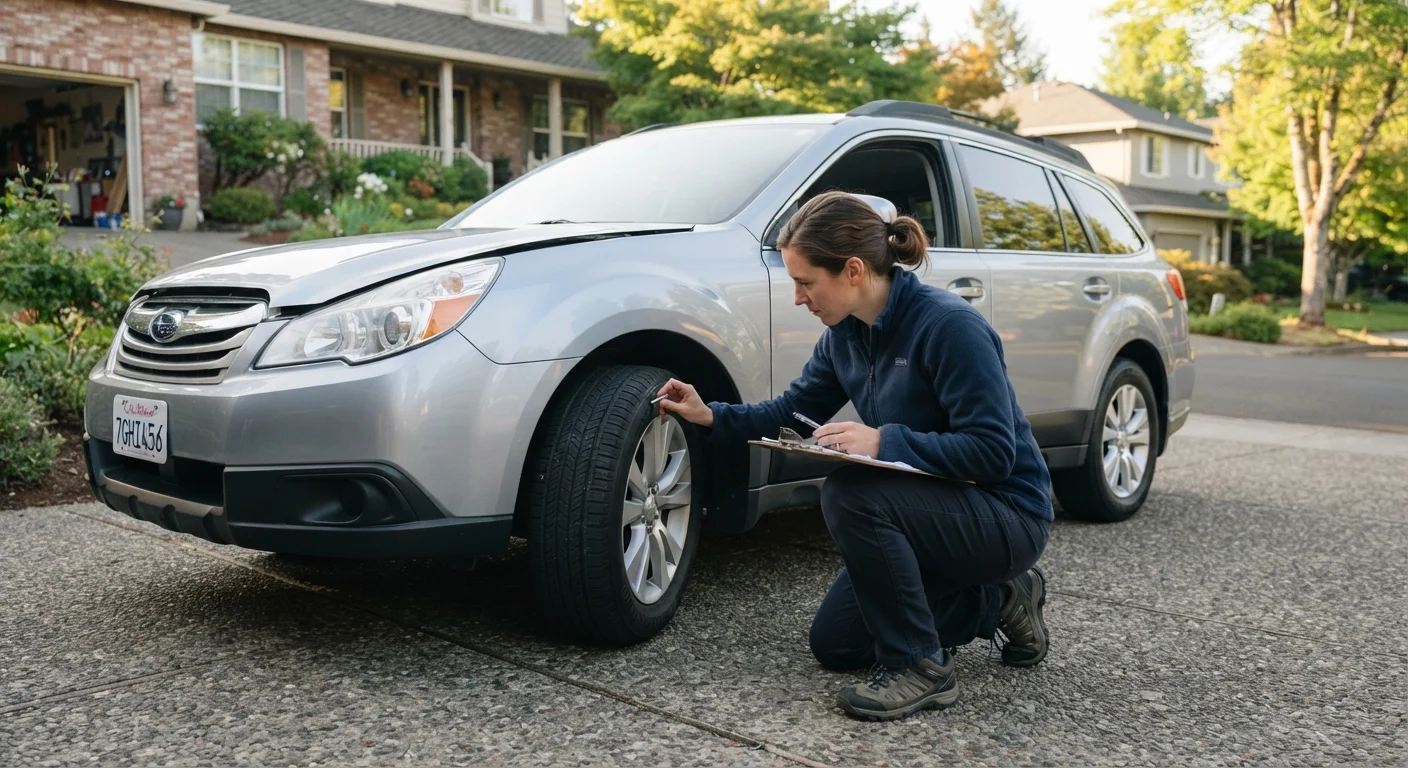
Tires
Lights
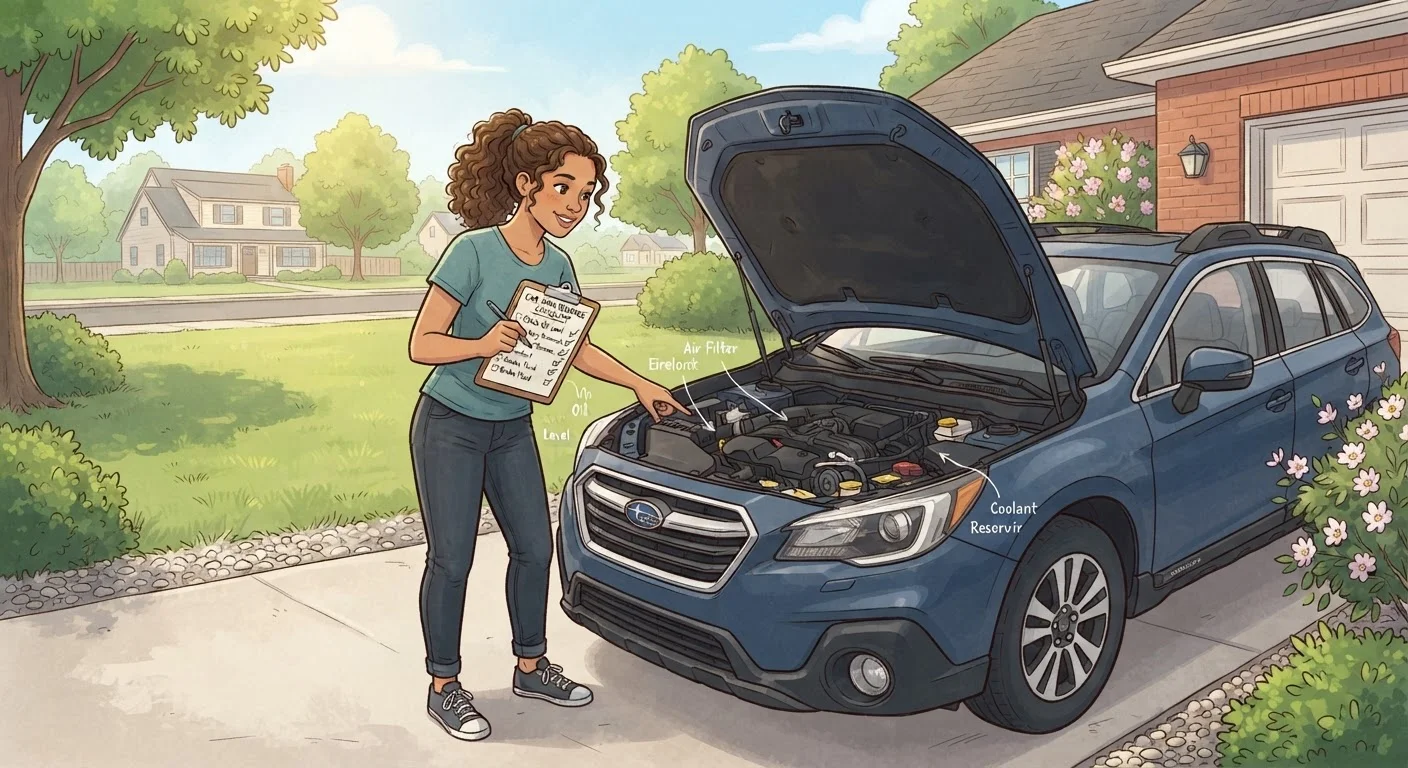
Fluid Levels
Visibility
Mirror and Seat Adjustment
Cabin Readiness
Don't Skip the Rear and Sides
Many drivers do a cursory front-of-car check and consider themselves done. Brake lights and rear tires are statistically among the most failure-prone components - and the ones least visible to the driver from the seat. Make the full perimeter walkround non-negotiable, even when you're in a hurry.
Building this habit connects directly to broader defensive driving principles - anticipating problems before they emerge is the core of both. Drivers who maintain proper following distances also benefit most from vehicles in confirmed good condition; explore why your following distance is probably too short for the physics behind that claim.
Making It a Habit Without Making It a Chore
The most effective pre-trip routines are brief, consistent, and tied to a trigger - the act of picking up your keys, for example. Research in habit formation consistently shows that attaching a new behaviour to an existing cue accelerates automaticity. Within a few weeks of deliberate repetition, the walkround becomes reflexive rather than effortful.
A few practical tips for staying consistent:
- Do the exterior check while the engine warms up - you're already outside, and it costs you no extra time.
- Keep a tire pressure gauge in your glove box - removing the friction of finding tools prevents skipped checks.
- Use the same sequence every time - front-left, front-right, rear-right, rear-left, then back inside. Consistency prevents omissions.
Cold Weather Changes Everything
In freezing temperatures, tire pressure drops, wiper blades can bond to glass, and fluid viscosities change. In winter conditions, add at least two to three minutes to your walkround: fully clear all glass, double-check tire pressure against the door-jamb specification, and confirm washer fluid is rated for sub-freezing temperatures. Driving with impaired visibility or significantly underinflated tires in winter dramatically elevates risk.
Your car is part of a broader ownership responsibility. Explore the car maintenance hub for guidance on scheduled service intervals, fluid checks, and the upkeep tasks that keep your pre-trip checks consistently passing.