
What Happens in the Brain When You're Sleep-Deprived
Sleep is not passive rest - it is the brain's maintenance window. During adequate sleep, the brain consolidates memory, clears metabolic waste, and restores the neural networks that govern attention, reaction speed, and complex judgment. When that process is cut short, those systems go to work impaired.
The prefrontal cortex - the region responsible for executive function, risk assessment, and impulse control - is particularly vulnerable to sleep loss. Research in sleep neuroscience consistently shows that even one night of poor sleep can reduce activity in this region, causing drivers to make slower, less accurate decisions while simultaneously feeling more confident about those decisions. That combination is especially dangerous on the road.
Fatigue also disrupts the brain's ability to filter irrelevant information, meaning that a tired driver's attention is more easily captured by minor distractions and less likely to be directed toward genuine hazards. For a deeper look at how attention drives safety, see our guide on distraction behind the wheel.
Circadian Rhythm Plays a Significant Role
The brain does not respond to sleepiness uniformly across the day. Circadian rhythms - the body's internal 24-hour clock - create predictable low-alertness windows, most notably between 2 a.m. and 6 a.m. and again in the early-to-mid afternoon. Driving during these windows amplifies fatigue risk even in people who feel reasonably rested, and is a key reason overnight driving carries disproportionately high crash rates.
Microsleeps: The Invisible Danger
One of the most alarming phenomena associated with fatigued driving is the microsleep - an involuntary episode in which the brain briefly disengages from conscious wakefulness for anywhere from one to ten seconds. During a microsleep, the driver's eyes may remain open, giving no outward sign that the brain has essentially gone offline.
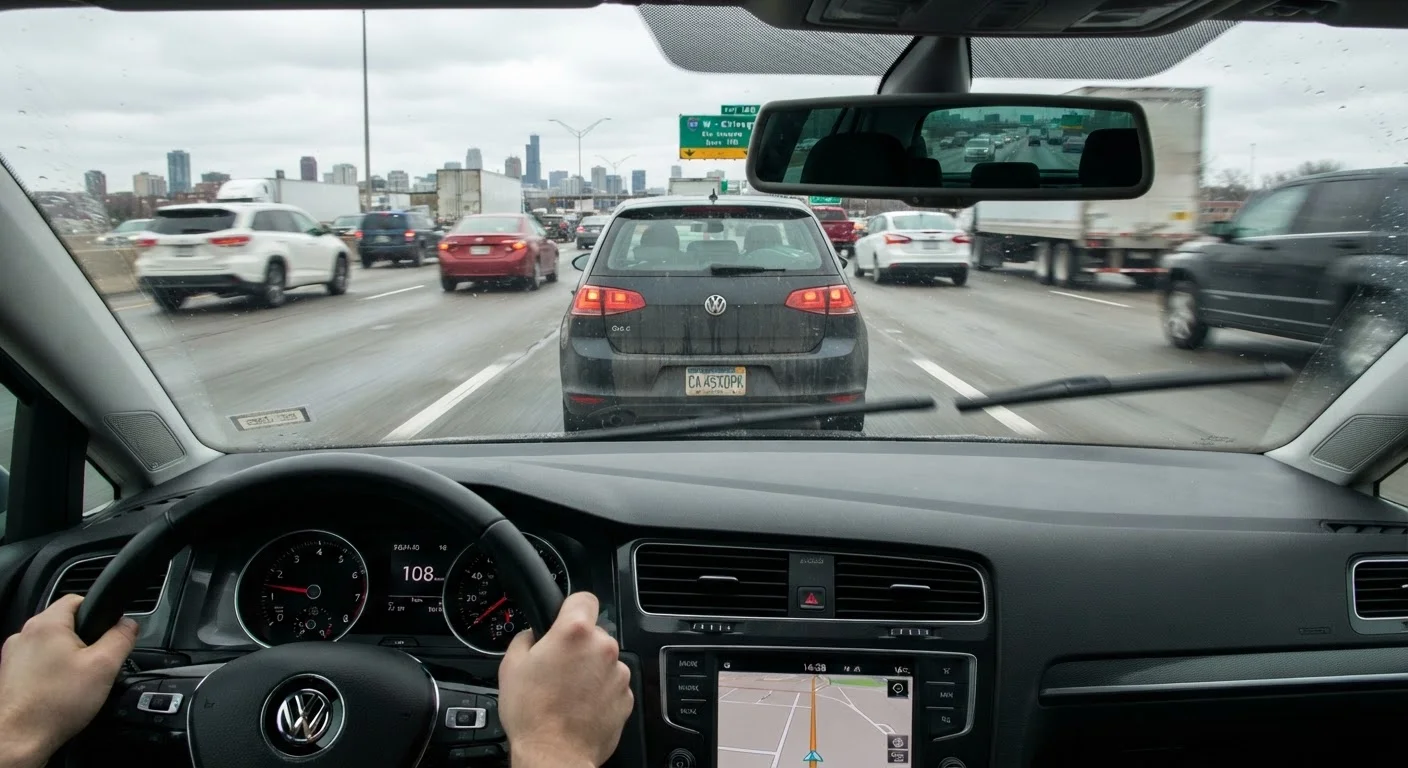
At highway speeds, even a two-second microsleep means a vehicle travels nearly 180 feet with no active driver input. There is no braking, no steering correction, no hazard response. The driver typically has no memory of the lapse at all.
Microsleeps are not random - they are the brain's overriding attempt to get the rest it needs. Fatigue-suppression strategies like loud music, opening a window, or gripping the wheel tighter do not prevent them. Only adequate sleep does. This reality is directly relevant to the risks discussed in our article on following distance: a delayed or absent reaction dramatically shrinks the margin that following distance is designed to provide.
~100,000
Annual drowsy-driving crashes estimated by NHTSA
The National Highway Traffic Safety Administration has estimated approximately 100,000 police-reported crashes per year involve drowsy driving, though the true figure is thought to be significantly higher due to underreporting.
180 ft
Distance covered during a 2-second microsleep at 60 mph
At typical highway speeds, a two-second lapse in consciousness - with no braking or steering input - moves a vehicle roughly the length of six car lengths with zero driver control.
17-19 hrs
Hours awake linked to alcohol-equivalent impairment
Multiple sleep research studies have found that cognitive performance after 17-19 consecutive waking hours can resemble impairment at blood-alcohol levels at or above 0.05%-0.10%.
The Alcohol Comparison - and Why It Matters
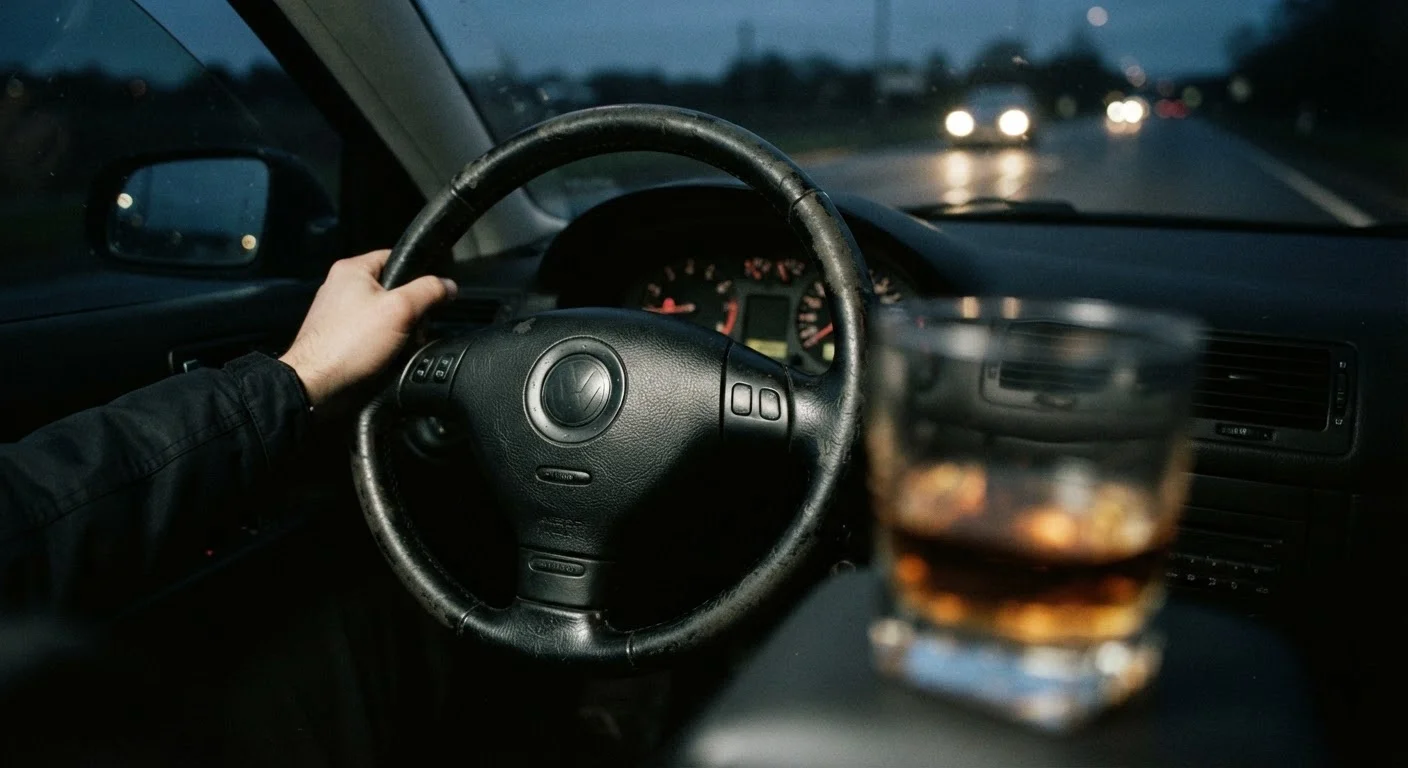
Researchers have quantified fatigued driving impairment in terms that are easy to compare: after roughly 17-19 hours without sleep, cognitive performance can deteriorate to levels consistent with blood-alcohol concentrations at or above the legal limit in most U.S. states. This parallel is not rhetorical - it reflects measurable changes in reaction time and decision-making speed documented in controlled studies.
The comparison matters because most drivers recognize that drunk driving is unacceptable, yet the same drivers routinely dismiss their own fatigue as manageable. The brain impairments are real and measurable in both cases. For a related look at how other impairments are misunderstood, see our piece on drink driving myths.
“Drowsiness is the last thing you remember before falling asleep at the wheel. You can't fight sleep forever - and on a highway, you shouldn't try.”
— National Sleep Foundation, U.S. nonprofit dedicated to sleep health education and research
Building Habits That Protect You
Because fatigue impairs self-awareness, the most effective safeguards are built before you get behind the wheel - not during the drive. The most reliable strategy is straightforward: prioritize seven to nine hours of sleep before any significant drive, and plan long journeys to include scheduled rest stops every two hours or 100 miles.
If you notice warning signs - yawning repeatedly, difficulty focusing, lane drift, or memory gaps about the last few miles - the appropriate response is to exit safely, stop, and rest. A 20-minute nap in a safe location is among the few short-term interventions shown to produce meaningful, if temporary, alertness restoration.
Understanding fatigue fits naturally within a broader approach to risk reduction. Our guides on defensive driving and staying alert on long trips extend these principles into practical, trip-by-trip habits. Fatigue also compounds the risks specific to darkness; night driving habits covers that overlap in detail.
Plan Rest Into the Route Before You Leave
Scheduling stops every two hours or 100 miles - whichever comes first - reduces the chance that fatigue builds unnoticed into dangerous territory. If you feel genuinely drowsy before a stop is due, pull off safely at the earliest opportunity. Arriving late is always preferable to the alternative.