The Gap That Saves You - And Why It's Almost Never Big Enough
Ask most drivers how much space they leave behind the car ahead, and they'll say they're being safe. The uncomfortable truth, backed by traffic safety data, is that the majority of drivers routinely follow too closely. Rear-end collisions account for roughly 29% of all reported crashes in the United States, according to NHTSA data - and inadequate following distance is a primary contributing factor.
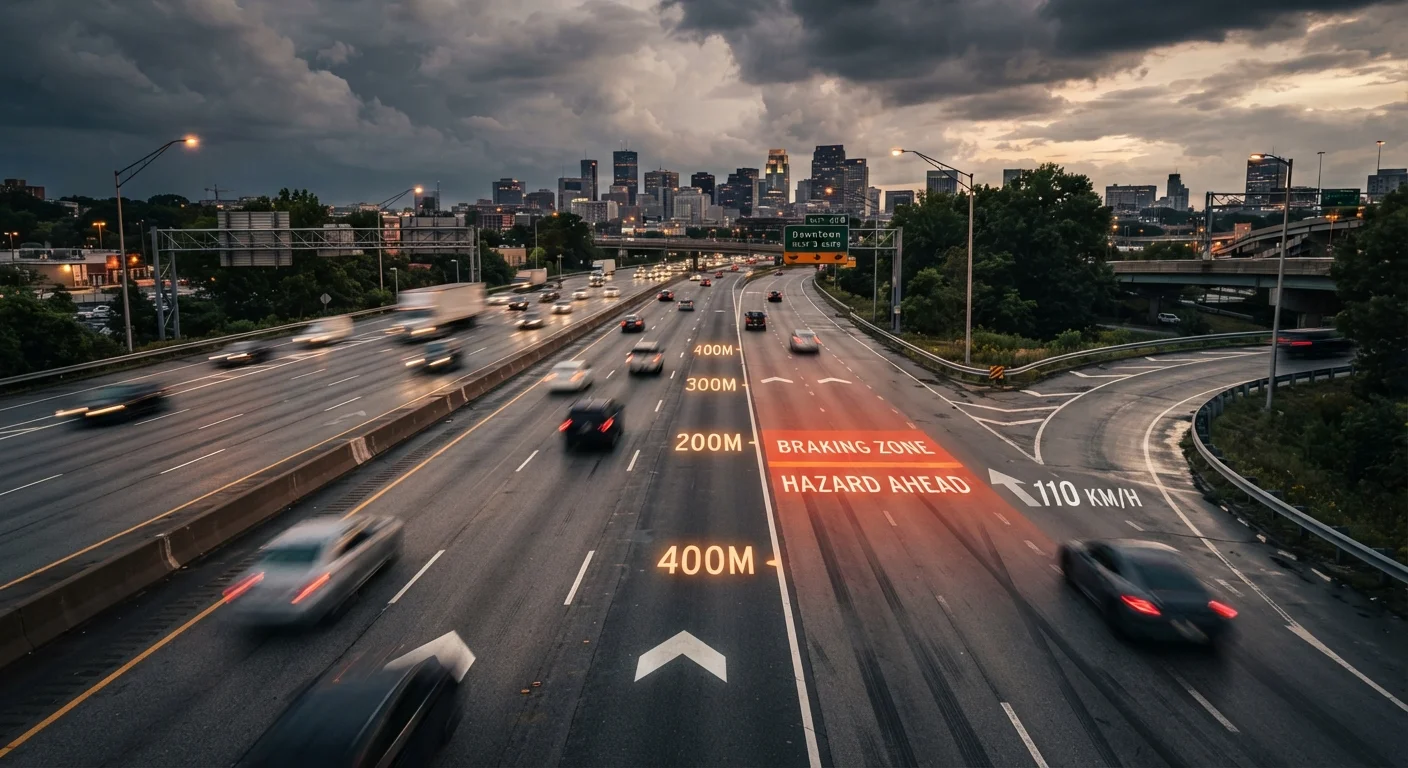
The physics are unforgiving. At 60 mph, your vehicle travels 88 feet every single second. Factor in a typical human reaction time of 1.5 seconds before your foot even reaches the brake, and you've already covered more than 130 feet before deceleration begins. Braking distance on top of that can easily push total stopping distance beyond 300 feet - nearly the length of a football field.
Understanding how speed affects stopping distance is the first step toward appreciating why the gap you think is safe probably isn't. For a plain-language breakdown of key terms like reaction time and stopping distance, see our road safety terminology guide.
Common Following Distance Mistakes - and How to Fix Them
These are the most frequent errors drivers make when it comes to managing space on the road.
Using a one-car-length rule instead of a time-based gap.
Why it happens: Many drivers were informally taught to leave one car length per 10 mph, but this is imprecise and breaks down at highway speeds where the actual distance covered before stopping is far greater.
Closing the gap to block other drivers from merging.
Why it happens: Drivers often feel that maintaining a visible gap is an open invitation for someone to cut in, so they deliberately reduce space as a defensive social move.
Failing to adjust following distance when speed increases.
Why it happens: Drivers who feel comfortable at 40 mph often forget that the same subjective sense of space becomes dangerously inadequate at 70 mph, because stopping distance grows with the square of speed, not linearly.
Ignoring the cumulative effect of reaction time.
Why it happens: Drivers tend to think of braking as instantaneous, underestimating the 1-2 seconds of perception and reaction that occur before the vehicle even begins to slow.
Maintaining highway-style gaps in congested stop-and-go traffic.
Why it happens: In slow traffic, drivers often follow extremely closely because the car ahead is moving slowly, creating a false sense that stopping quickly is easy - while ignoring that multiple cars ahead can chain-react unexpectedly.
Building better habits starts with awareness. If you'd like to strengthen your overall approach to space and hazard management, our guide to defensive driving principles offers a practical framework.
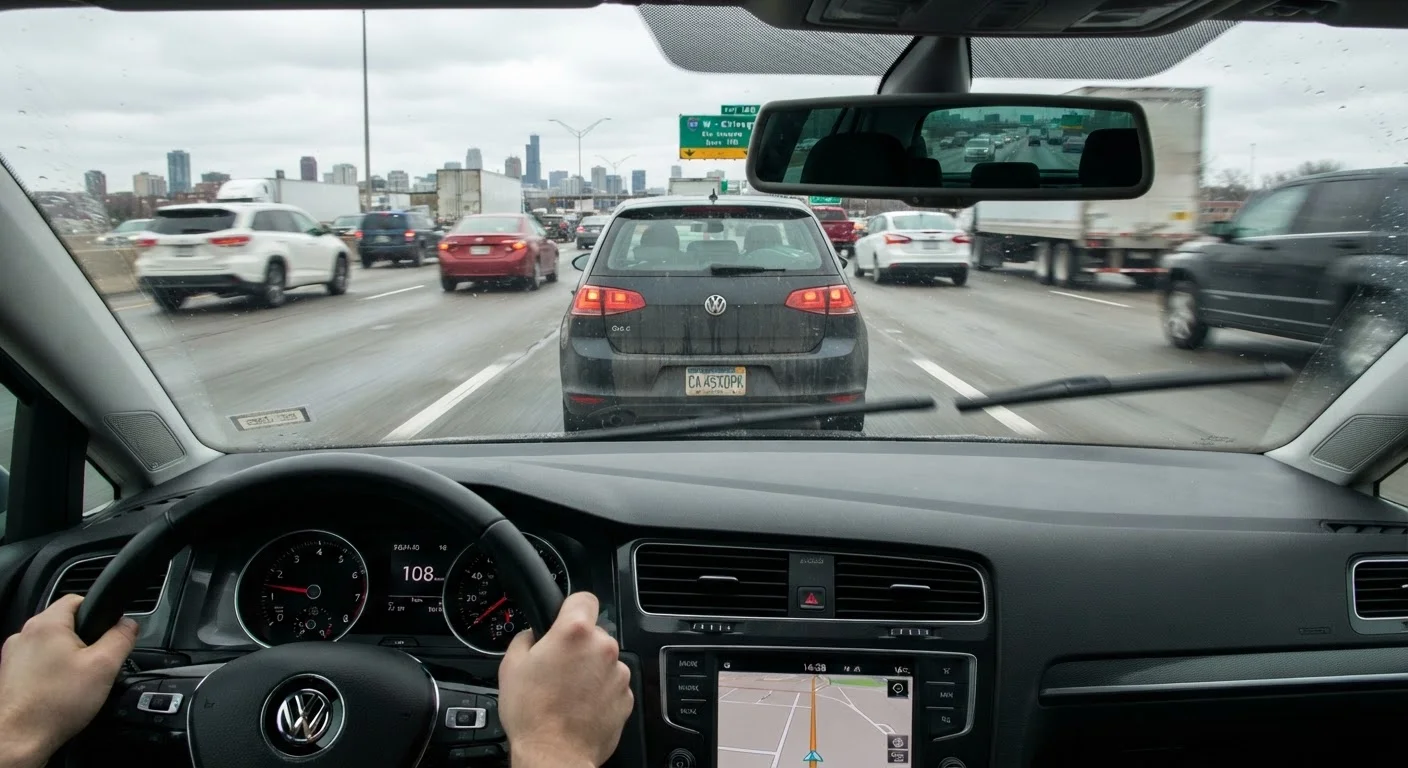
Tailgating in Heavy Traffic Is Especially Dangerous
In congested conditions, chain-reaction crashes are a serious risk. If the car immediately behind you hasn't left adequate space and you're following too closely, a sudden stop can trigger a multi-vehicle pile-up. Maintaining your following distance protects not just you, but everyone around you.
Conditions That Demand Even More Space
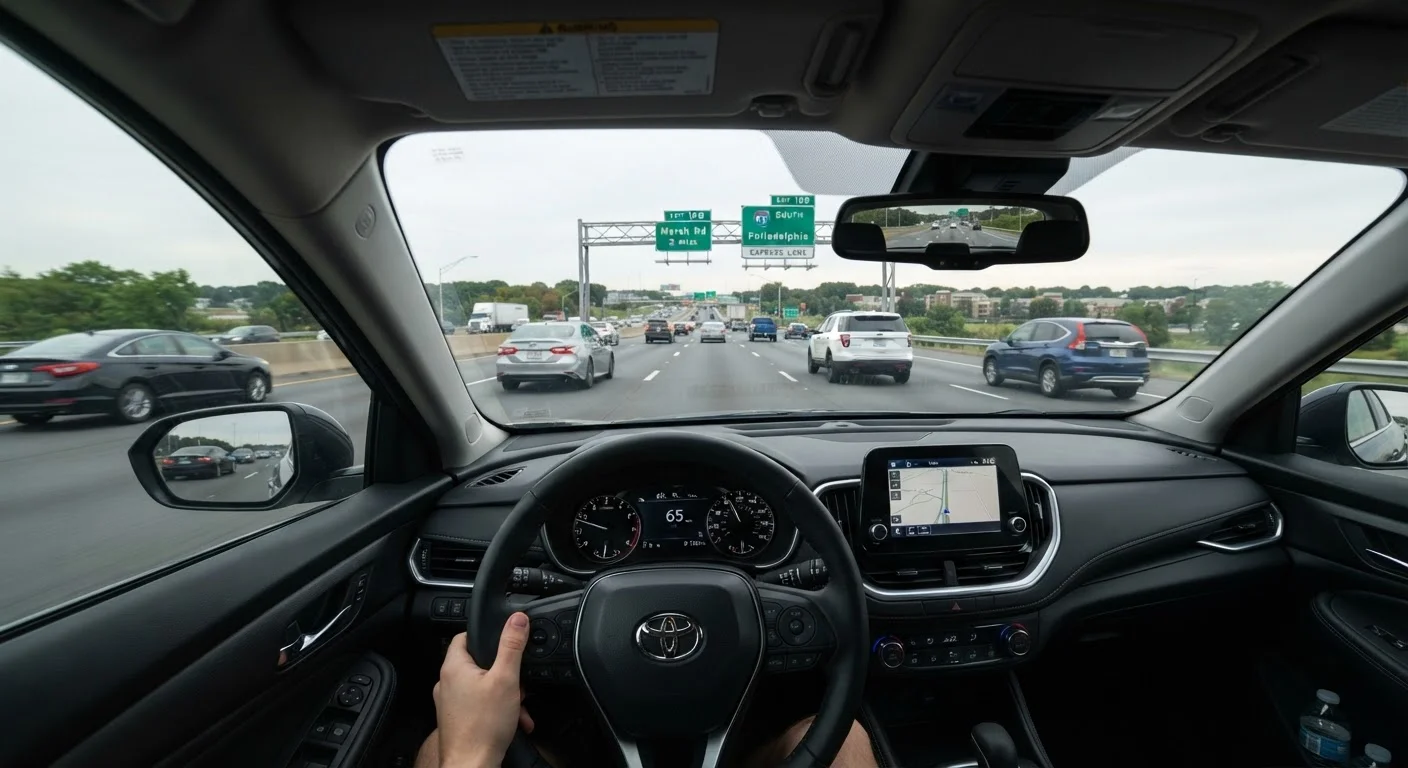
The three-second rule - choosing a fixed point and ensuring the car ahead passes it at least three seconds before you do - is a useful baseline in dry, clear conditions at moderate speeds. But several common scenarios require you to extend that gap considerably.
- Wet or icy roads: Braking distances can double or triple on slippery surfaces. Increase your following distance to at least four to six seconds when roads are wet, and much more on ice or snow.
- Driving a heavy vehicle: Trucks, SUVs, and loaded vehicles require significantly more stopping distance than the average sedan. If you've recently switched vehicles, recalibrate your sense of space accordingly.
- Following large trucks: Semi-trucks take far longer to stop and create visual blind spots that eliminate your warning time if traffic suddenly slows ahead of them.
- Driving fatigued: Fatigue slows perception and reaction, meaning the gap you'd handle safely when alert may not be enough when tired. Our article on how fatigue impairs driving explains the cognitive mechanics in detail.
~29%
Of all U.S. crashes that are rear-end collisions
According to NHTSA crash data, rear-end collisions are consistently among the most common crash types on U.S. roads.
300+ ft
Typical stopping distance at 60 mph
At 60 mph, combined reaction distance and braking distance on dry pavement can exceed 300 feet for the average passenger vehicle.
One practical check before any trip: use our pre-trip safety walkthrough to make sure your vehicle and mindset are both ready for the road.
No Margin Means No Recovery Time
Following distance is not a courtesy - it is your only buffer between a near-miss and a collision. Once a hazard appears, physics takes over. No amount of skill or experience can compress the time your vehicle physically needs to stop. The only variable fully in your control before a crisis begins is the space you choose to maintain.