Why Night Driving Is Genuinely More Dangerous
Roughly half of all traffic fatalities occur at night, despite night hours accounting for far less total driving time. That disproportionate risk isn't just about reduced lighting - it's the combination of compressed visibility range, impaired depth perception, slower pupil adaptation, and a higher likelihood of encountering fatigued or impaired drivers. Understanding what's actually working against you after dark is the first step to countering it.
Your eyes can only gather a fraction of the visual information in darkness that they collect in daylight. Peripheral vision narrows. Contrast sensitivity drops. And the glare from oncoming headlights - particularly from modern LED and HID systems - can temporarily blind you for several seconds after the vehicle passes. These aren't minor inconveniences; they're genuine hazards that demand adjusted habits. See how the risks compare across different environments in our piece on motorway versus urban driving risk profiles.
~50%
Traffic deaths occurring at night
According to the National Safety Council, roughly half of all traffic fatalities in the US occur at night despite far fewer miles driven in darkness.
3×
Higher nighttime pedestrian fatality risk
NHTSA data consistently shows pedestrians are approximately three times more likely to be killed by a vehicle at night than during daylight hours.
Core Habits That Reduce Nighttime Risk
The practices below aren't theoretical - they address the specific, documented vulnerabilities of night driving. Adopted consistently, they can meaningfully close the safety gap between daylight and darkness.
Reduce your speed to stay within your actual sight distance.
Headlights on a standard low-beam setting illuminate roughly 160-200 feet ahead, but stopping distance at 55 mph can exceed 300 feet. Driving faster than your headlights allow means you may not have enough space to stop before reaching a hazard you can see. Adjusting speed to match your true sight range is one of the highest-impact changes you can make.
Increase your following distance to at least four seconds after dark.
Reaction time doesn't change at night, but the events you need to react to become visible later - giving you less time to respond. Adding following distance creates the buffer that compensates for compressed visibility and potentially slower hazard recognition.
Keep headlights, taillights, and windshield clean and properly aimed.
Dirty or misaligned headlights can reduce effective illumination by up to 50%, while a hazy windshield turns every oncoming light into a glare event. These are simple maintenance items with an outsized effect on how much of the road you can actually see. For a full pre-trip checklist, see our guide before you pull out of the driveway.
Use high beams on unlit roads - and dim them correctly for oncoming traffic.
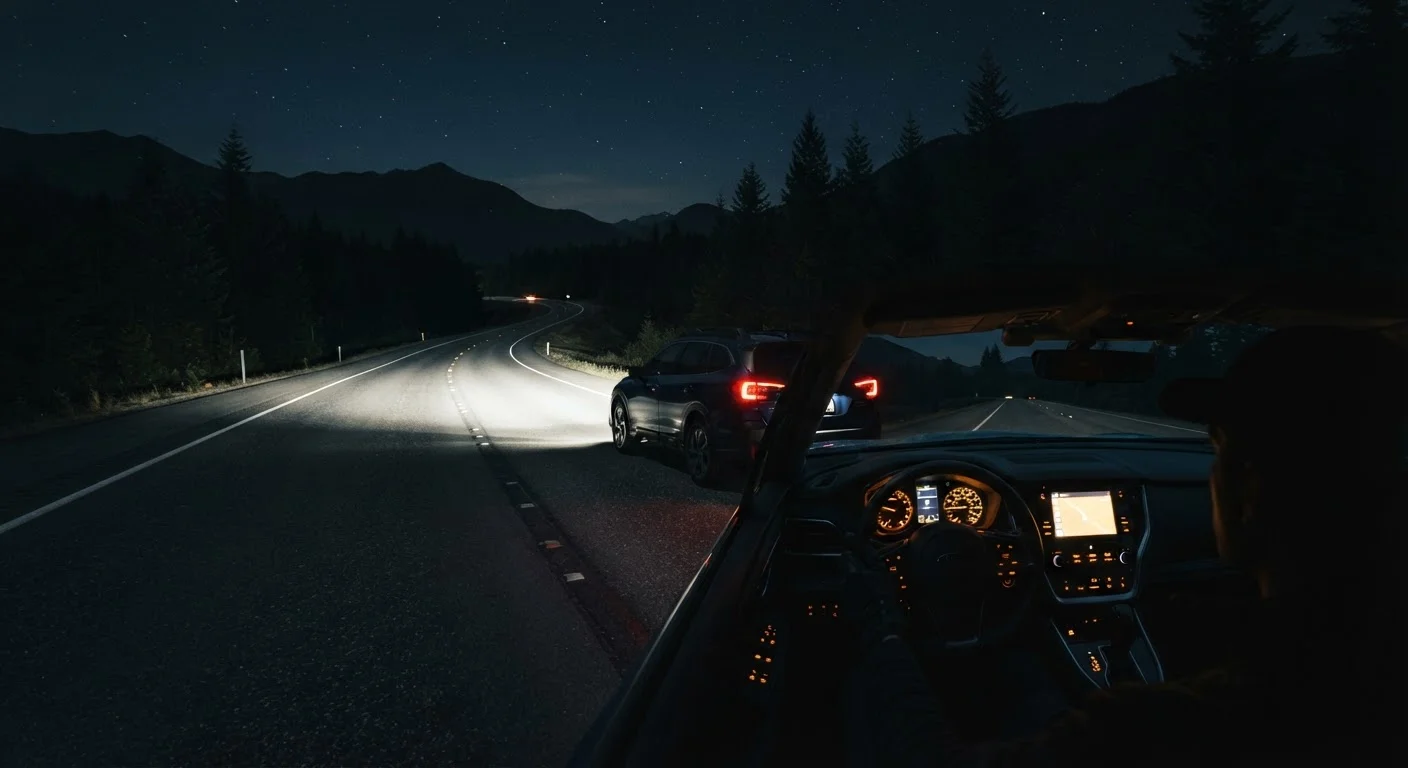
High beams extend your sight range dramatically on rural or unlit roads, yet many drivers underuse them out of habit. The legal and courtesy rule is straightforward: switch to low beams when an oncoming vehicle is within roughly 500 feet, or when following another vehicle closely. Failing to dim for oncoming drivers creates glare that temporarily blinds them - a hazard you have the power to prevent.
Avoid driving at night after drinking any alcohol.
Alcohol impairs the visual processing and reaction speed that night driving already stresses. Its effect on contrast sensitivity and glare recovery is compounded after dark, making the combination significantly more dangerous than either factor alone. There is no safe threshold for combining alcohol with night driving. Our article on common drink driving myths addresses why popular assumptions about alcohol tolerance are wrong.
Watch for pedestrians, cyclists, and animals at road margins.
These hazards are disproportionately concentrated at night, yet they're the hardest to detect - dark clothing, no reflectors, and unpredictable movement all contribute. Scanning the edges of the road actively, rather than focusing only on the center, helps you identify and respond to these threats earlier.
Managing Fatigue: The Hidden Night Multiplier
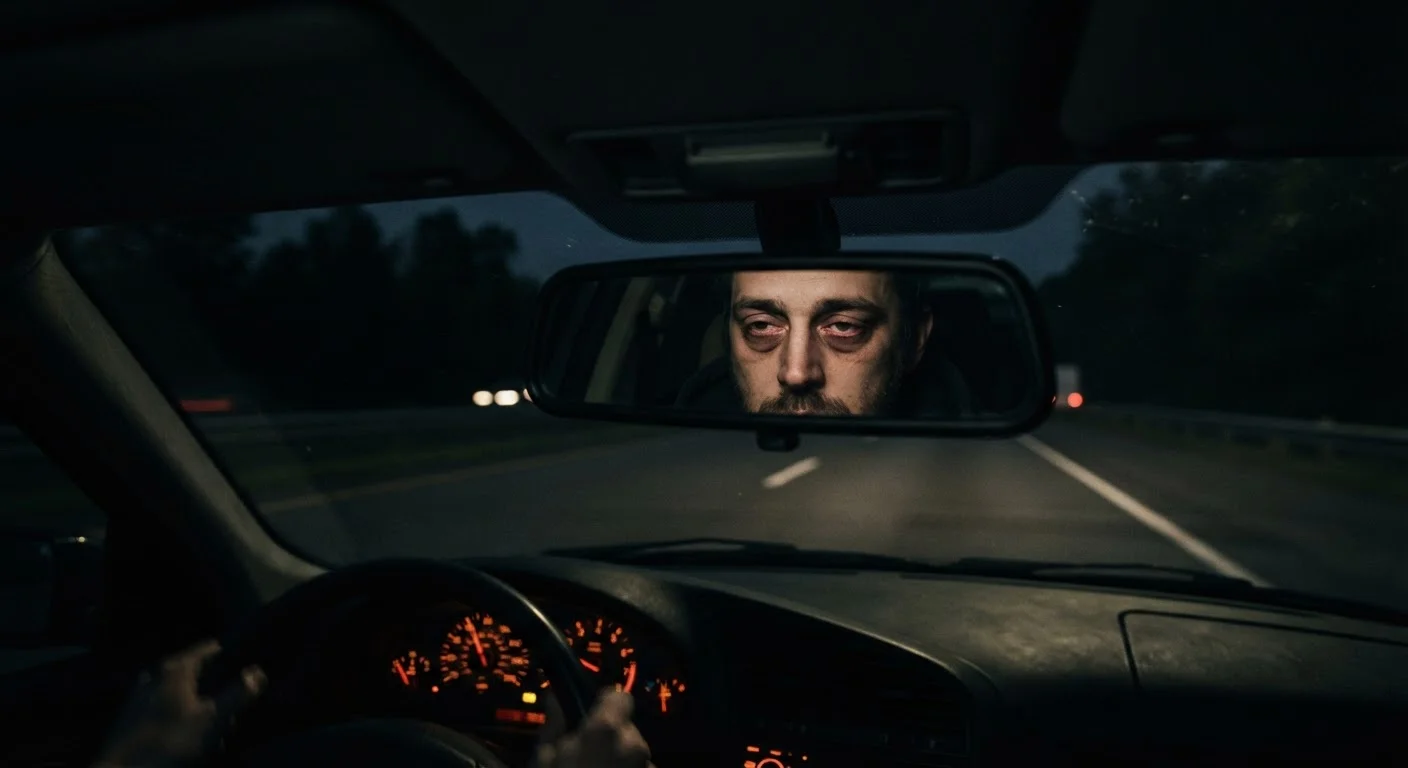
Fatigue is dangerous at any hour, but it's especially treacherous after dark. Your circadian rhythm naturally pushes toward sleep in the late evening and early morning hours - meaning your body is biochemically primed to lose alertness precisely when you need it most. Drowsy driving impairs reaction time, judgment, and hazard detection in ways that parallel alcohol impairment. For a detailed breakdown of what's happening neurologically, see why tired drivers are so dangerous.
The fix is not caffeine alone. Coffee can temporarily mask the subjective feeling of sleepiness without restoring reaction time or judgment. If you feel yourself drifting, the only reliable remedy is rest. On long nighttime runs, apply the same principles covered in our guide to staying alert on extended road trips: plan rest stops, drive with a companion when possible, and never push through severe fatigue.
Plan Your Departure Time Around Fatigue Risk
If possible, schedule long night drives to begin before your usual peak-fatigue window - typically between midnight and 6 a.m. Even shifting a departure an hour or two earlier can keep you on the road during hours when your alertness is naturally higher. If your schedule doesn't allow it, build in a planned rest stop midway rather than relying on willpower alone.
Reducing Distraction and Managing Glare
Darkness amplifies the cost of every distraction. When visual information is already scarce, diverting attention to a phone or dashboard screen narrows your effective field of awareness to near-zero. At night, even brief manual or cognitive distractions carry heavier consequences than they would in daylight. Our breakdown of which driving distractions carry the highest risk is worth reviewing before any night trip.
Glare management is equally important. When an oncoming vehicle has bright headlights, shift your gaze to the right edge of your lane rather than looking directly at the source. Dim your instrument cluster slightly so your eyes adapt better to the dark road. Keep your windshield clean - inside and out - since interior haze scatters oncoming light into a broad, blinding wash. These small adjustments protect the night vision you've worked to maintain.