What Defensive Driving Actually Means
Defensive driving is frequently misunderstood as cautious, tentative, or passive behaviour. In reality, it is an active, deliberate approach to operating a vehicle - one where the driver constantly evaluates conditions, anticipates potential hazards, and maintains enough margin to respond before a situation becomes an emergency.
The core idea is simple: you cannot control the behaviour of other road users, road conditions, or unexpected events, but you can control how prepared you are to deal with them. A defensive driver assumes that other vehicles may behave unpredictably, that road surfaces can change, and that conditions are never fully static.
This is very different from reactive driving - where a driver responds only once a problem has already appeared. By the time a hazard is obvious, a reactive driver is already behind the curve. Understanding key terms like stopping distance, reaction time, and blind spots is foundational here; our road safety terminology guide explains these concepts in plain language.
Defensive driving
An approach to driving that focuses on anticipating hazards and maintaining adequate margin to respond, rather than simply reacting once a problem has emerged.
Following distance
The gap maintained between your vehicle and the one directly ahead, measured in seconds or car lengths, that determines how much time you have to brake or manoeuvre safely.
Hazard perception
The ability to notice cues in the road environment - such as a vehicle's position, pedestrian behaviour, or road surface - that indicate a risk may be developing.
Scanning
The habit of continuously moving your eyes across mirrors, ahead, and the surrounding environment rather than fixing your gaze on one point, which is essential for situational awareness.
Escape route
A clear space or path around your vehicle that you deliberately preserve so you have somewhere to steer if an emergency develops.
Reaction time
The time between perceiving a hazard and physically beginning to respond; it is affected by fatigue, distraction, speed, and driver alertness.
The Core Principles in Practice
Defensive driving rests on a handful of consistent principles that work together. They are not complex, but they require deliberate practice to become habitual:
- Anticipate, don't just observe. Look for cues - a car drifting in its lane, a pedestrian stepping toward the curb, brake lights appearing far ahead - and mentally prepare your response before you need it.
- Maintain an escape route. Always position your vehicle so you have somewhere to go if a hazard materialises. This often means avoiding being boxed in or driving alongside another vehicle longer than necessary.
- Communicate clearly. Use signals early and consistently so other road users can predict your movements. Hesitation and ambiguity create the conditions for collisions.
- Control your attention. Defensive driving demands genuine focus. Distracted driving - whether from a phone, conversation, or fatigue - strips away the awareness that makes every other principle possible.
Build the habit gradually
You don't need to overhaul your entire driving style at once. Pick one principle - such as extending your following distance - and practise it consciously for a week. Once it feels natural, add another. Habits built incrementally tend to stick far better than wholesale behaviour changes attempted all at once.
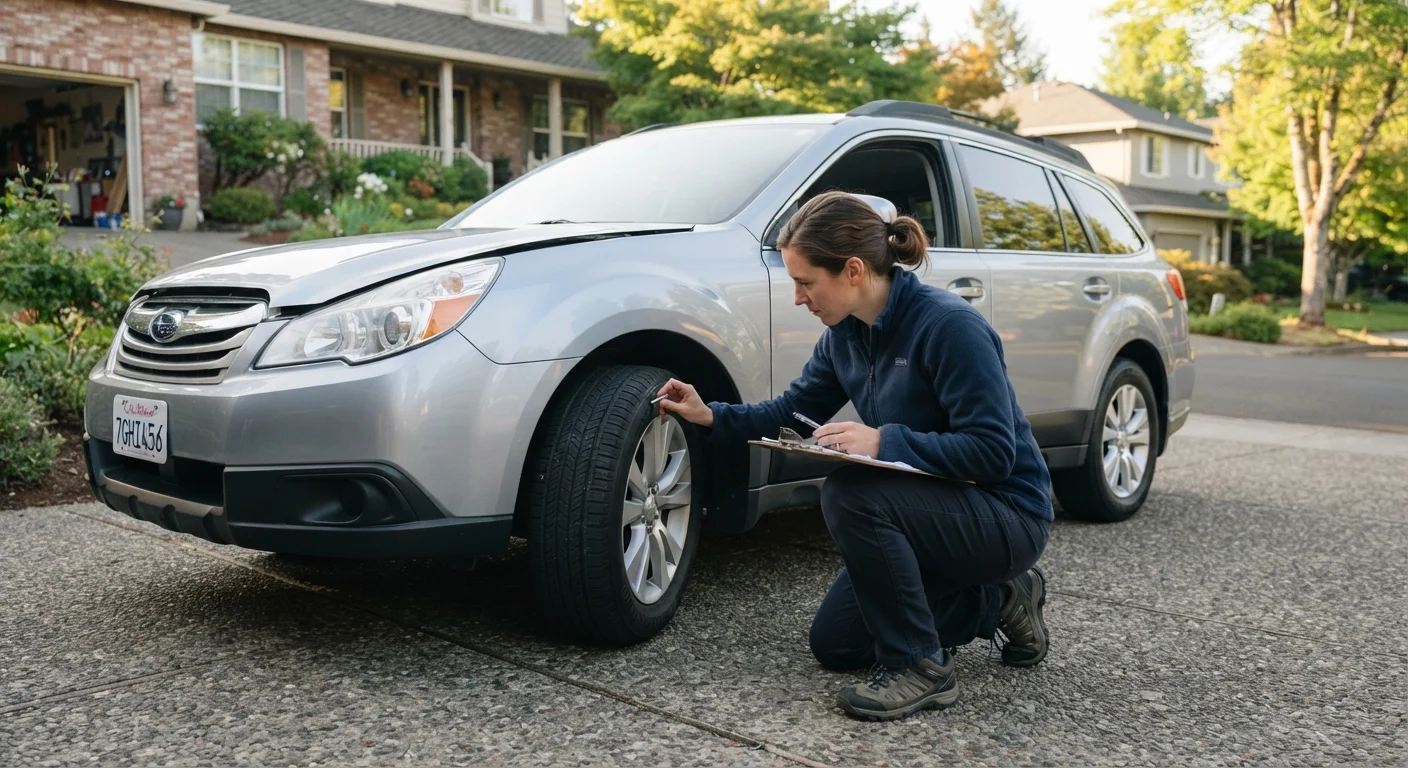
Good habits before you even start the engine also matter. A pre-trip safety walkthrough - checking mirrors, lights, and visibility - is itself a defensive act.
Managing Space and Speed
Space and speed are the two variables most directly within a driver's control, and managing them well is where defensive driving delivers its clearest benefits.
Following distance is consistently underestimated by drivers. Many people drive far closer to the car ahead than physics and reaction time allow for - leaving no margin if that vehicle brakes suddenly. The three-second rule is a practical minimum: in adverse weather, extend it further. Wet roads dramatically increase stopping distances, a reality detailed in our guide to driving in rain.
Speed management goes beyond posted limits. Speed should reflect road conditions, traffic density, visibility, and your own alertness. Driving at the limit on a wet, foggy motorway at night is not defensive - it is optimistic. A defensive driver adjusts their speed to match the margin they actually have, not the margin they assume they have.
Tailgating is more dangerous than it feels
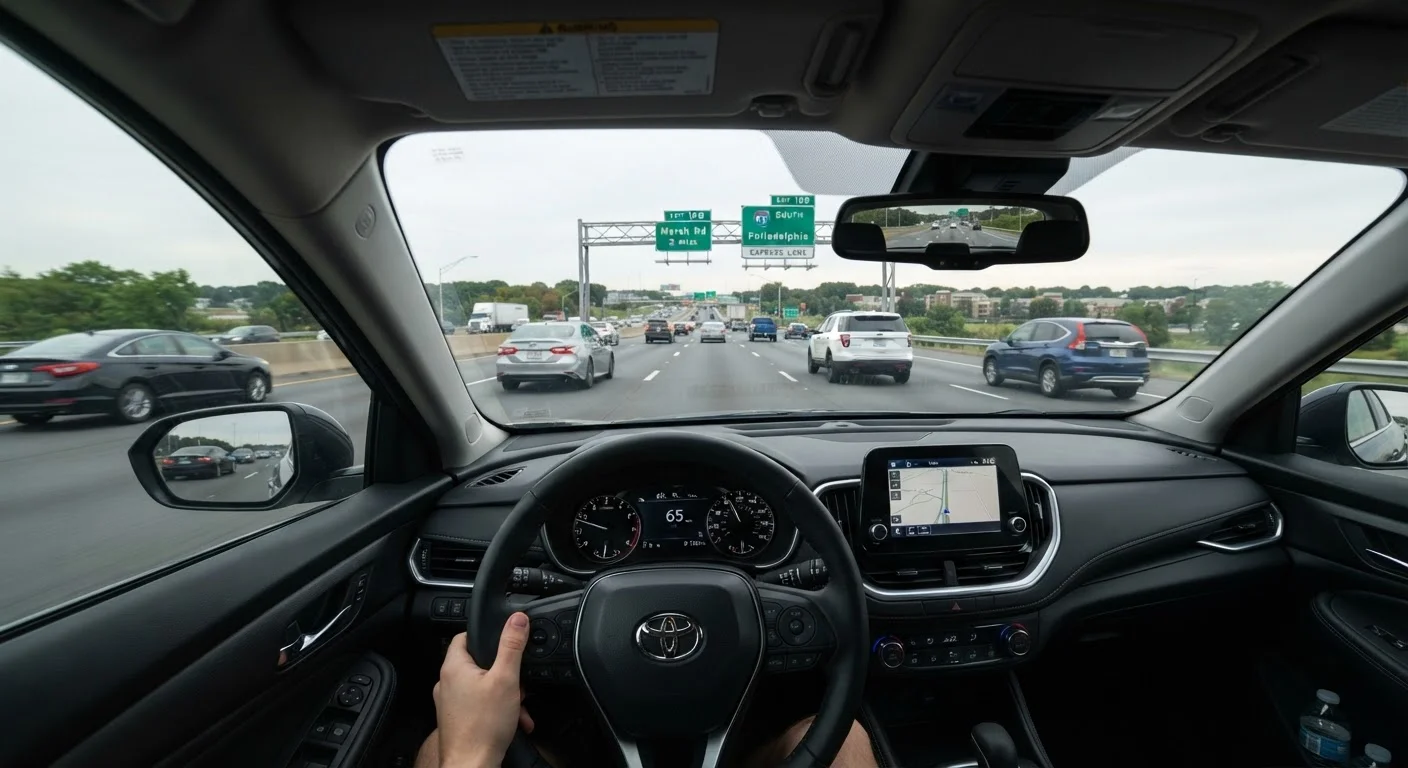
At 60 mph, a vehicle travels roughly 88 feet per second. Even an alert driver needs at least one to one-and-a-half seconds of reaction time before their foot even reaches the brake. Driving just one car length behind another vehicle at highway speeds leaves essentially no margin for error - a common cause of rear-end collisions that drivers consistently underestimate.
Reading Traffic Before It Moves
One of the most powerful defensive skills is learning to read traffic as a system rather than a collection of individual vehicles. Traffic has patterns: compression waves, merging pressure points, intersection conflicts, and lane behaviour that can all be anticipated with practice.
Effective scanning means your eyes should be moving constantly - checking mirrors every five to eight seconds, looking well ahead (not just at the car directly in front), and monitoring your peripheral environment for pedestrians, cyclists, and side-street activity. Fixating on a single point is a warning sign of deteriorating focus.
Understanding how different road environments change the nature of hazards is equally important. Our article on motorway versus urban driving risk breaks down how to adapt your scanning and positioning strategy by environment. For a deeper treatment of situational awareness as a skill, see reading traffic before it moves.
Why Defensive Driving Reduces Risk
The logic behind defensive driving is fundamentally probabilistic. No technique eliminates all risk - crashes can and do involve factors beyond any driver's control. But defensive driving consistently reduces the frequency and severity of incidents by expanding the window of time available to respond.
When you maintain adequate space, scan well ahead, communicate your intentions, and manage your own alertness, you are building layers of protection. Each layer independently reduces the chance that a single error - yours or someone else's - results in a collision.
Driver state is a factor that is easy to overlook. Fatigue impairs the very faculties defensive driving depends on: attention, judgment, and reaction speed. Our article on drowsy driving explains the cognitive mechanisms in detail and why drivers routinely underestimate how impaired they are.
Ultimately, defensive driving is a mindset as much as a skill set. It means accepting that unpredictability is a constant feature of road environments, and choosing to treat that reality as something to prepare for - not ignore.