Why These Two Environments Demand Different Thinking
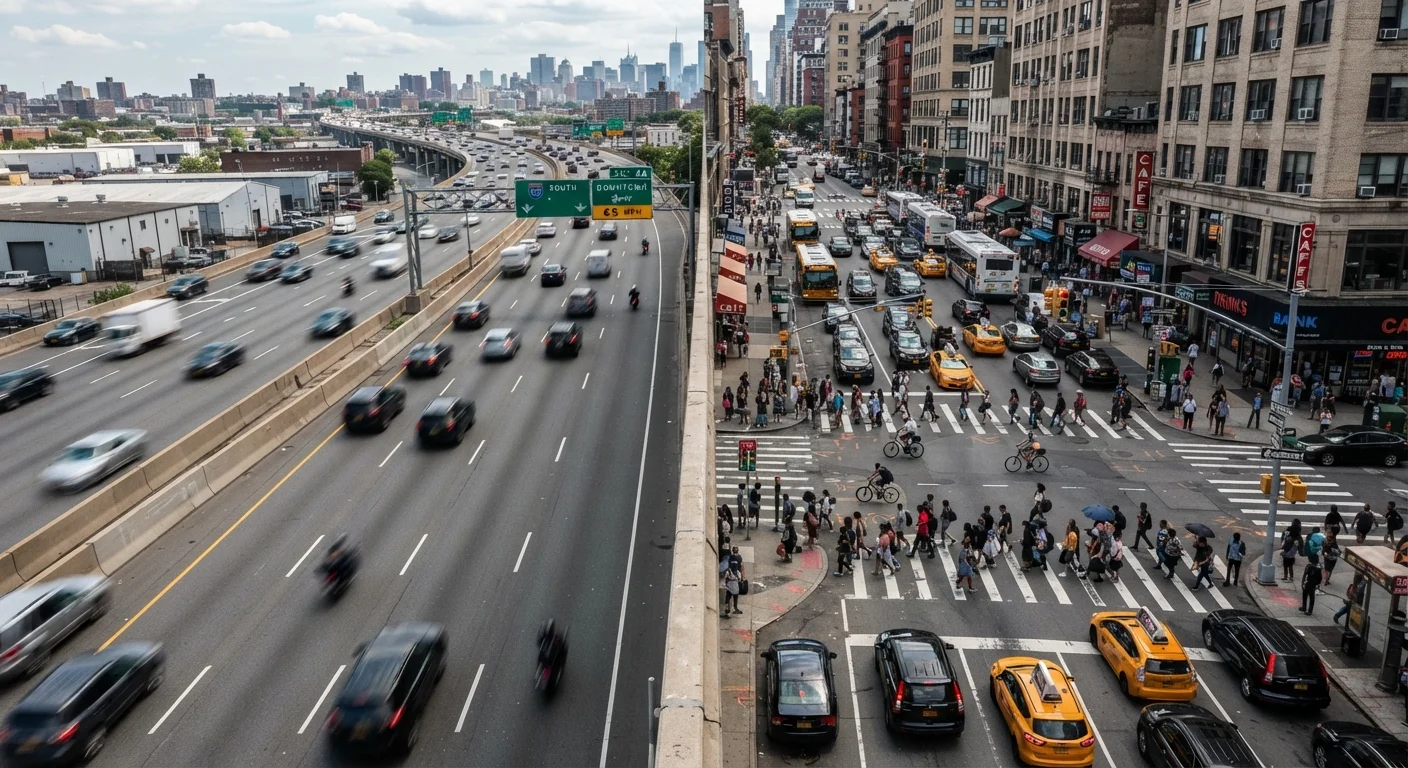
Most drivers move between motorways and city streets without consciously shifting their mental approach. That's a mistake. Motorway and urban driving involve fundamentally different risk profiles - not simply different speed limits. Understanding what makes each environment dangerous on its own terms is the foundation of genuinely safer driving.
To get grounded in the language of road safety before going further, the road safety glossary covers key concepts like stopping distance, reaction time, and blind spots in plain language. These terms matter differently depending on where you're driving.
| Criterion | Motorway Driving | Urban Driving |
|---|---|---|
| Typical speed range | 55-80+ mph | 15-45 mph |
| Crash frequency | Lower per mile driven | Higher per mile driven |
| Crash severity | Typically higher | Typically lower |
| Primary hazard types | Tailgating, fatigue, lane changes | Pedestrians, cyclists, intersections |
| Key attention demand | Sustained vigilance over time | Rapid scanning across hazard types |
| Stopping distance at typical speed | 315+ feet at 70 mph | 75-120 feet at 30-40 mph |
| Dominant human factor | Fatigue and inattention | Distraction and overconfidence |
The Motorway Risk Profile: Speed, Severity, and Sustained Attention
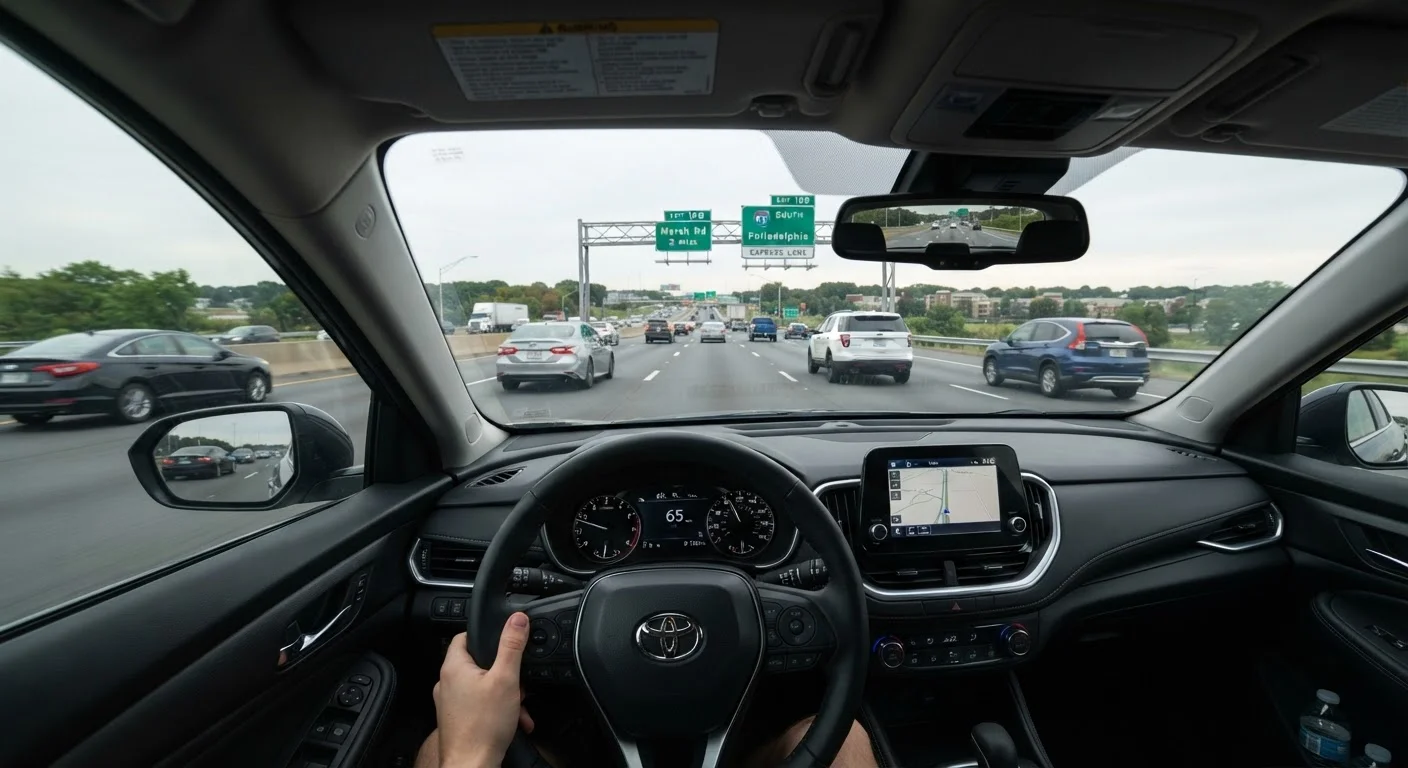
Motorways carry a counterintuitive reputation: they feel safer because traffic flows in one direction, junctions are controlled, and pedestrians are absent. Statistically, motorway fatality rates per mile driven are lower than urban roads. But when crashes do occur at motorway speeds, the consequences are almost always serious.
The physics are unforgiving. At 70 mph, a typical car's stopping distance - including reaction time - can exceed 315 feet (roughly 24 car lengths). At 80 mph, that figure climbs further still. Tailgating, which is endemic on US interstates and UK motorways alike, eliminates the margin entirely.
315+ ft
Stopping distance at 70 mph
The Highway Code and NHTSA guidance both indicate that total stopping distance at motorway speeds - reaction time plus braking - can exceed 315 feet in ideal conditions.
~50%
Of road fatalities occur on urban roads
Despite lower individual crash severity, urban roads account for roughly half of all US road fatalities annually, according to NHTSA data, due to sheer incident volume.
95%+
Pedestrian survival rate at 20 mph
Research consistently shows pedestrian survival rates exceed 95% when struck at 20 mph, dropping sharply as speeds increase toward and beyond 30 mph.
The subtler motorway danger is cognitive fatigue. Monotonous high-speed driving reduces alertness faster than most drivers expect. Studies on drowsy driving consistently show that micro-sleeps of even two to three seconds at motorway speeds can be fatal before a driver even perceives the threat. Taking a break every two hours on long journeys is one of the most evidence-supported habits in road safety.
Inattention and lane-change errors - often linked to distraction - account for a significant share of motorway incidents. The principles of defensive driving are particularly well-suited to motorway conditions: maintaining a generous following gap, anticipating lane changes early, and never assuming other drivers will signal.
The Urban Risk Profile: Frequency, Complexity, and Vulnerable Road Users
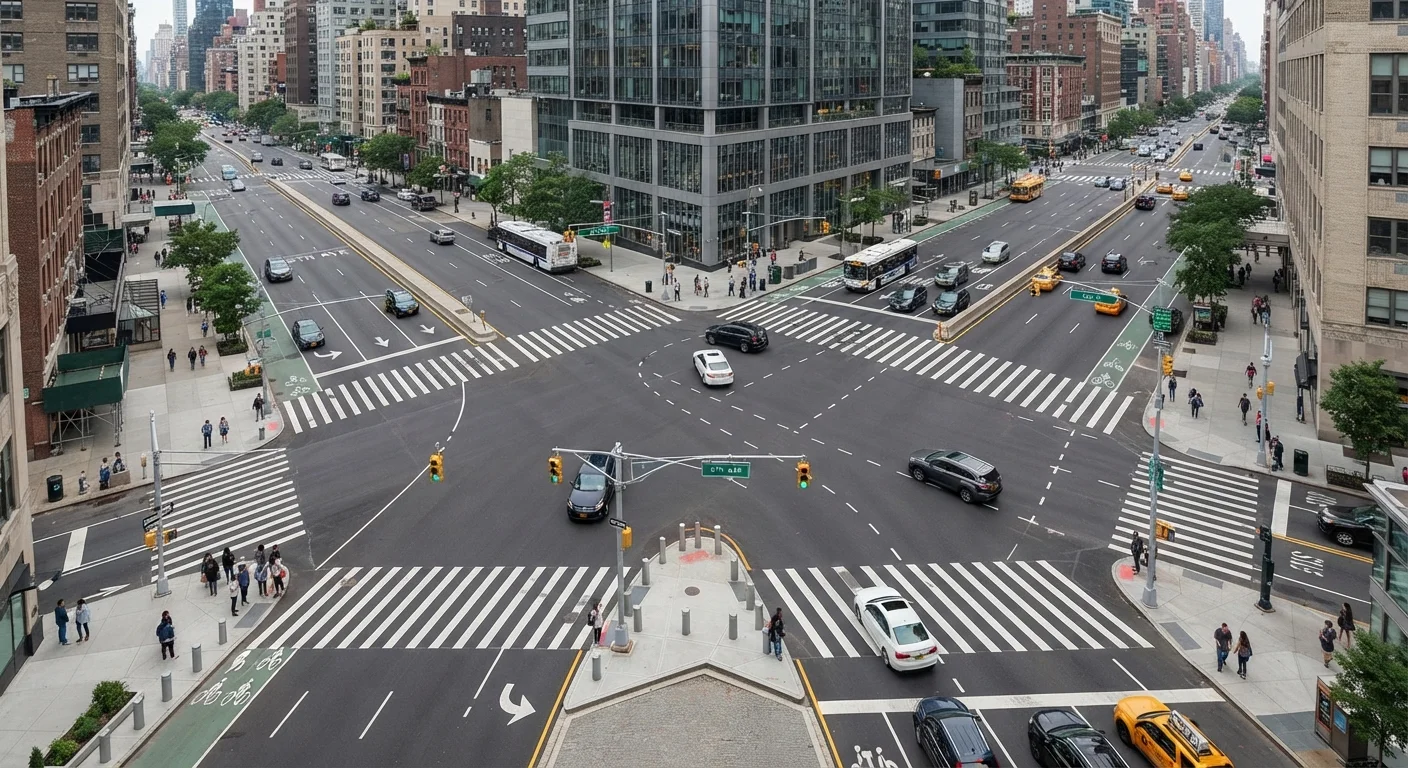
City driving inverts the motorway risk equation. Speeds are lower, but the volume and variety of hazards is dramatically higher. Pedestrians - including children and older adults - step off kerbs unpredictably. Cyclists occupy lanes, filter through gaps, and are frequently in a driver's blind spot. Delivery vehicles double-park. Traffic signals, stop signs, and uncontrolled intersections demand constant attention.
The result is that urban roads account for a disproportionate share of total road casualties, even though individual incidents tend to be less lethal than motorway crashes. Intersection collisions and pedestrian strikes are the dominant incident types in most US cities. A driver travelling at 30 mph who strikes a pedestrian gives them roughly a 45% chance of survival; at 20 mph, that rises to over 95% - illustrating why speed management in residential zones is not merely a legal obligation but a life-saving one.
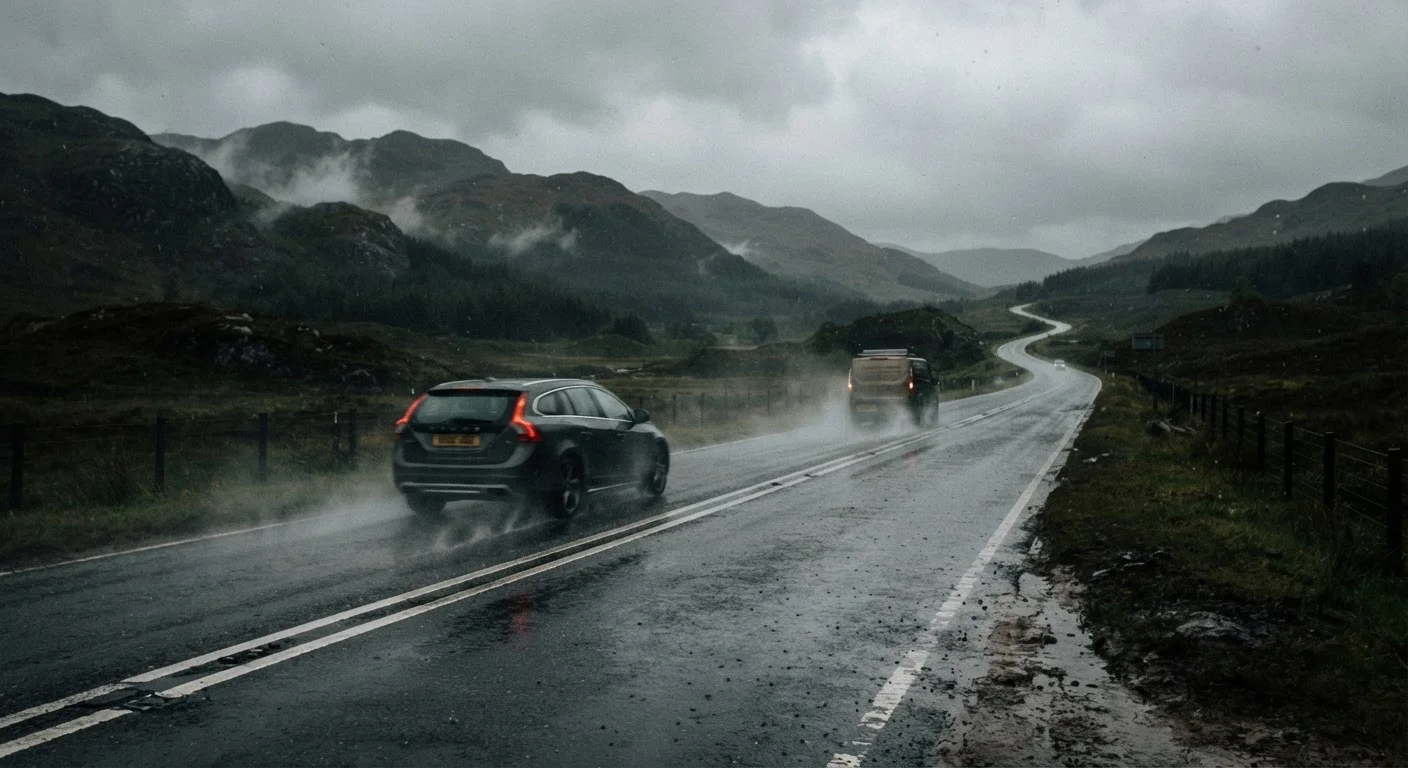
Scan patterns matter enormously in cities. Effective urban drivers develop a habit of checking mirrors frequently, anticipating door openings from parked cars, and reading the body language of pedestrians near crossings - skills that compound over time into dramatically lower incident rates. If wet conditions are also a factor, the adjustments needed for wet urban roads become even more critical, as braking distances increase sharply on slick city surfaces.
Intersection Crashes: The Urban Hotspot
NHTSA data indicates that intersections are the location of a significant proportion of urban road incidents in the United States each year. Many of these involve drivers misjudging gaps, failing to yield, or proceeding through stale green lights. Treating every intersection as a potential conflict point - even when you have right of way - is one of the most effective urban driving habits you can develop.
Adapting Your Habits to Each Environment
The core shift between motorway and urban driving is the type of attention required. Motorway driving calls for sustained, vigilant concentration over long periods - resisting the lull of repetition. Urban driving calls for active, switching attention - rapid scanning across multiple hazard types in rapid succession.
For motorway safety, the highest-impact habits are: maintaining at least a two-second following gap in good conditions (extend to four or more seconds in rain or at night), planning overtakes early rather than reacting impulsively, and scheduling rest stops before fatigue sets in rather than pushing through. If you drive at night or in adverse weather on motorways, the margin for error shrinks further - night driving habits and severe weather techniques deserve separate attention.
For urban safety, the priority habits are: slowing to below the posted limit near schools, parks, and busy pedestrian areas; treating every parked car as a potential door hazard; and never assuming right-of-way at uncontrolled intersections even when you technically have it. Expecting the unexpected isn't timidity - it's the practical application of defensive driving principles to an environment that actively rewards anticipation.
Both environments, ultimately, reward the same underlying disposition: a driver who remains actively engaged, honestly assesses their own alertness, and adjusts their behaviour to the conditions - not just the speed limit sign.