Why Terminology Matters Behind the Wheel
Road safety isn't just about reflexes - it's about understanding the concepts that explain why certain behaviors are dangerous and others are not. When a driver knows what stopping distance actually means, or can recognize a blind spot before it becomes a close call, they make better decisions without having to think through each one from scratch.
This reference guide defines the core terms that underpin safe driving practice in plain, accessible language. Use it to sharpen your own understanding or as a foundation before diving into more advanced topics like defensive driving principles.
Stopping Distance
The total distance a vehicle travels from the moment a driver perceives a hazard to when the vehicle comes to a complete stop. It is the sum of thinking distance (reaction phase) and braking distance.
Thinking Distance
The distance a vehicle covers between a driver perceiving a hazard and physically applying the brakes. It is directly proportional to speed and significantly affected by driver alertness.
Braking Distance
The distance traveled after brakes are applied until the vehicle stops. It increases with the square of speed, meaning doubling speed quadruples braking distance.
Reaction Time
The elapsed time between a driver recognizing a hazard and initiating a physical response such as braking or steering. Average alert reaction time is approximately 1.5 seconds; fatigue and distraction increase it.
Blind Spot
An area around a vehicle that is not visible to the driver through windows or standard mirror positioning. Rear quarters are the most common blind spots and must be checked with a head turn before lane changes.
Following Distance
The time-based gap maintained between a driver's vehicle and the vehicle ahead. A minimum of three seconds is recommended in normal conditions, with more required in rain, fog, or heavy loads.
Situational Awareness
A driver's continuous, real-time understanding of their surroundings - including the position, speed, and likely behavior of other road users. It is built through active scanning and experience.
Road Camber
The lateral (side-to-side) slope of a road surface, typically designed to channel rainwater away from the travel lanes. Camber affects vehicle handling, especially in wet conditions or bends.
Aquaplaning (Hydroplaning)
A condition in which a layer of water between the tire and the road surface causes the tire to lose contact with the pavement, resulting in a sudden and significant loss of steering and braking control.
Hazard Perception
The cognitive skill of identifying potential dangers in the road environment early enough to respond safely. It encompasses scanning, anticipation, and interpretation of cues from other road users and conditions.
Oversteer / Understeer
Oversteer occurs when the rear of a vehicle slides outward in a turn; understeer occurs when the front loses grip and the vehicle travels wider than intended. Both indicate the vehicle is approaching the limits of traction.
Traction
The grip between a vehicle's tires and the road surface that enables acceleration, braking, and steering. Traction is reduced by water, ice, worn tires, and high speeds.
Key Metrics and Physics Every Driver Should Know
Safe driving is grounded in physics. The numbers behind speed, distance, and braking aren't abstract - they determine whether a vehicle stops in time or doesn't.
| Average Reaction Time | ~1.5 seconds (alert driver) (Commonly cited in driver education research) |
| Stopping Distance at 60 mph | Approximately 240 feet on dry pavement (Based on standard driver training guidelines) |
| Recommended Following Distance | 3 seconds minimum in dry conditions (Widely referenced in US driver safety education) |
| Braking Distance Relationship to Speed | Increases with the square of speed (Basic physics of kinetic energy) |
| Blind Spot Check Method | Brief head turn (shoulder check) before lane changes (Standard guidance across US driver training programs) |
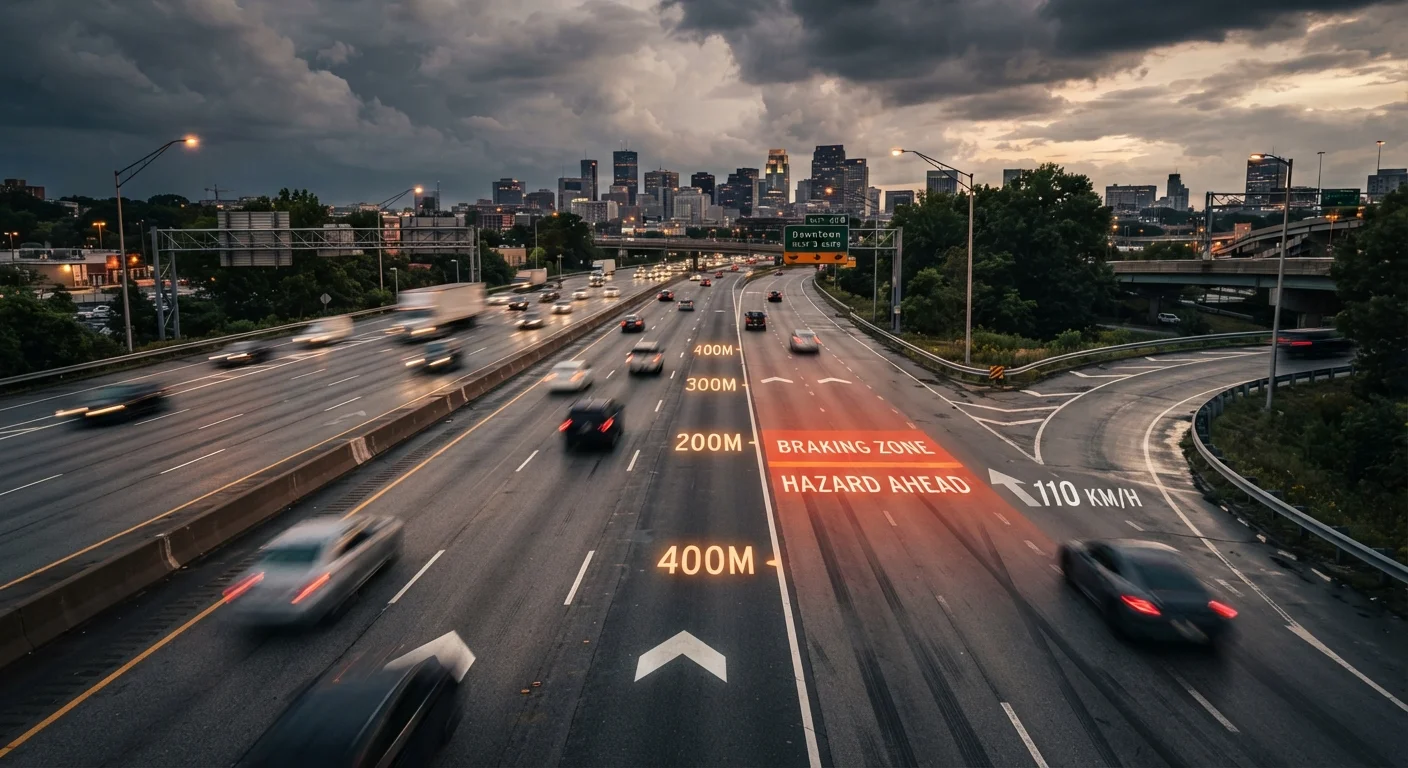
Stopping distance is one of the most frequently misunderstood concepts on the road. It combines two phases: thinking distance (how far the car travels while the driver reacts) and braking distance (how far the car travels once the brakes are applied). At 60 mph on a dry road, total stopping distance can exceed 240 feet - nearly 18 car lengths. Speed amplifies this dramatically because braking distance increases with the square of speed, not linearly. For a detailed breakdown of the numbers, see how speed affects stopping distance.
Reaction time - typically 1.5 seconds for an alert driver - is the window between perceiving a hazard and physically acting on it. Fatigue, distraction, and impairment all stretch this window, sometimes critically. Even a half-second of additional delay at 60 mph adds another 44 feet of travel before the brakes engage.
~240 ft
Stopping distance at 60 mph on dry road
Represents approximately 18 car lengths - a figure many drivers underestimate based on driver education data.
44 ft
Extra distance covered per half-second of delayed reaction at 60 mph
Illustrates why fatigue and distraction so significantly increase crash risk at highway speeds.
4×
Braking distance increase when speed doubles
A direct result of kinetic energy physics: doubling speed quadruples the energy that brakes must dissipate.
Visibility, Space, and Hazard Recognition
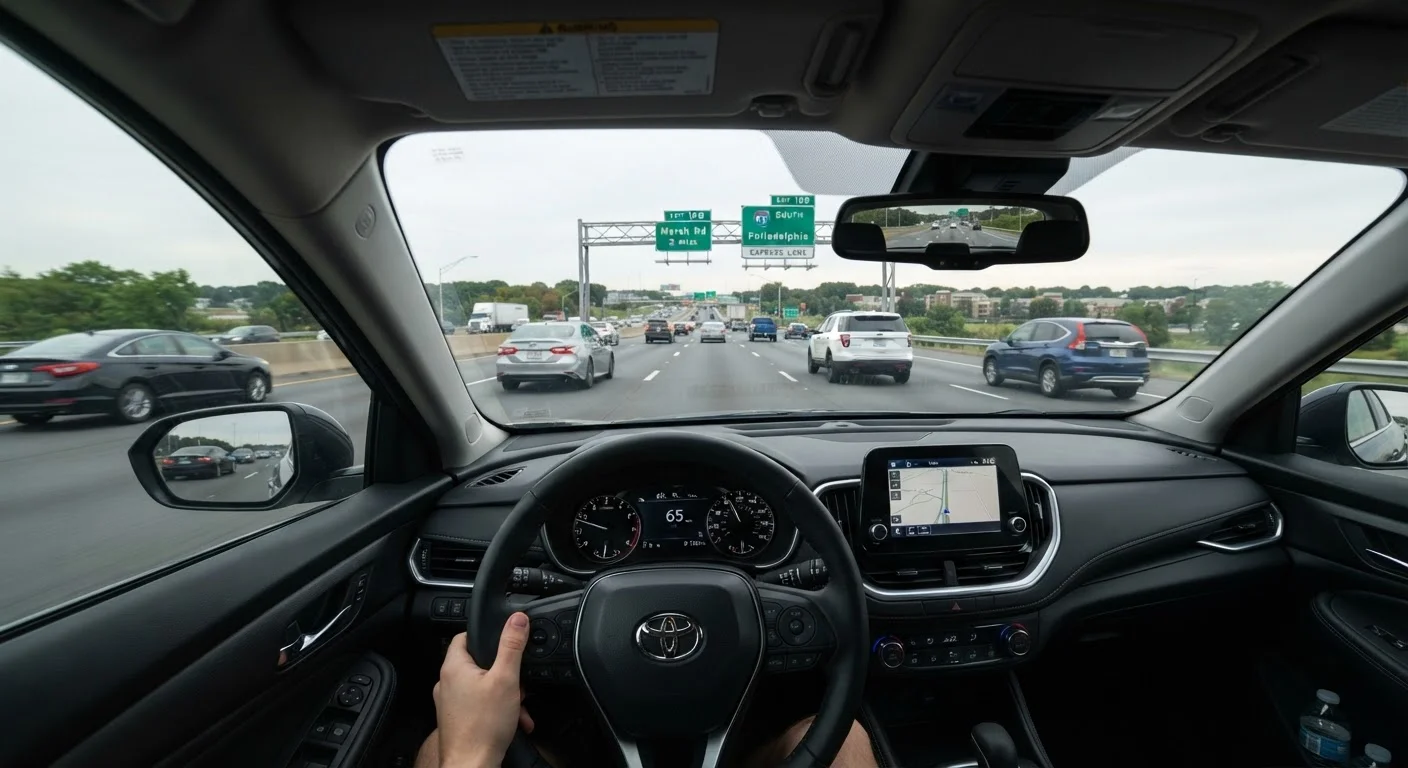
Understanding how visibility and space management work together is central to hazard avoidance. A blind spot is any area around a vehicle that the driver cannot see directly through windows or mirrors - typically on each rear quarter. Checking blind spots by briefly turning the head before lane changes is a basic but critical habit.
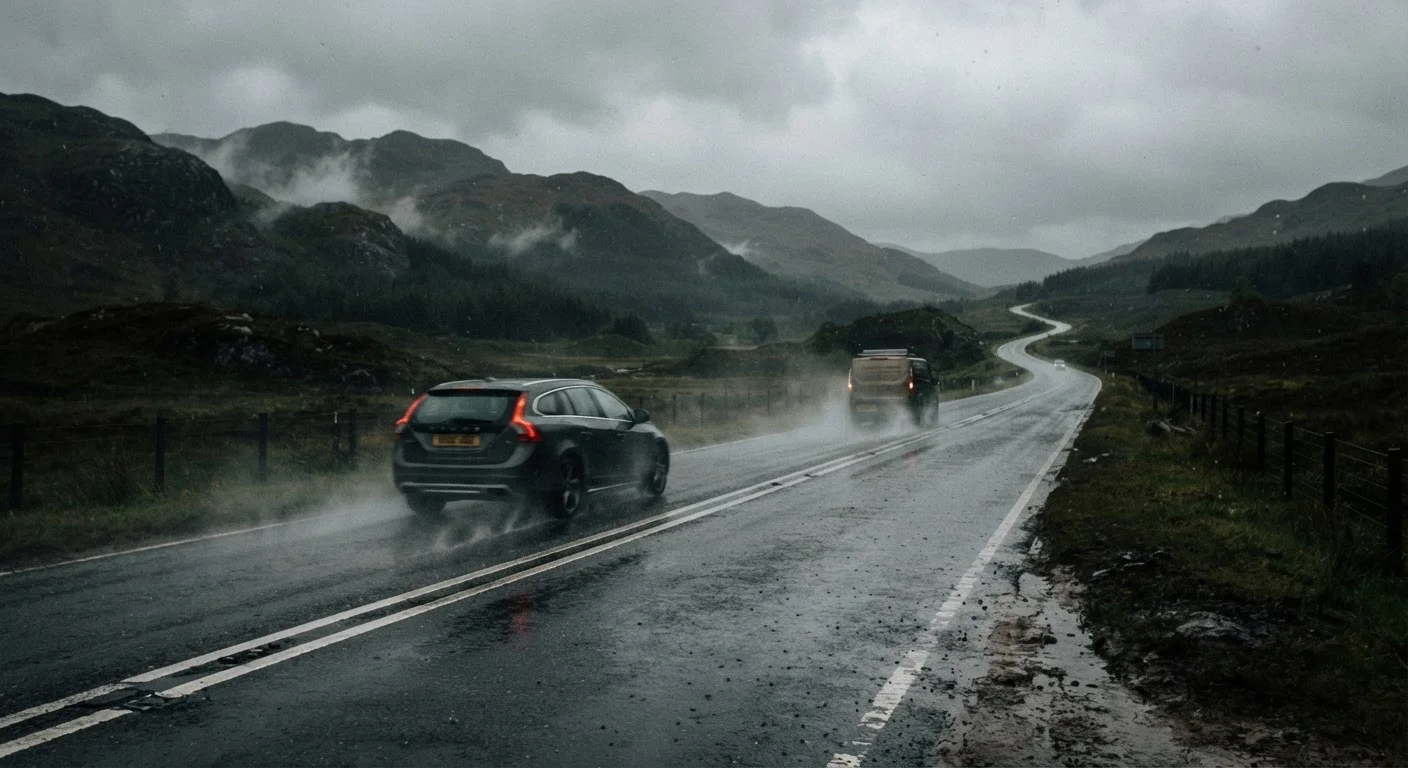
Following distance - the gap maintained between your vehicle and the one ahead - is measured in seconds, not car lengths. The commonly cited three-second rule (increase to four or more in adverse conditions) gives a driver time to perceive a hazard, react, and brake. Rain fundamentally changes these calculations; wet road driving adjustments covers the practical changes needed when grip is reduced.
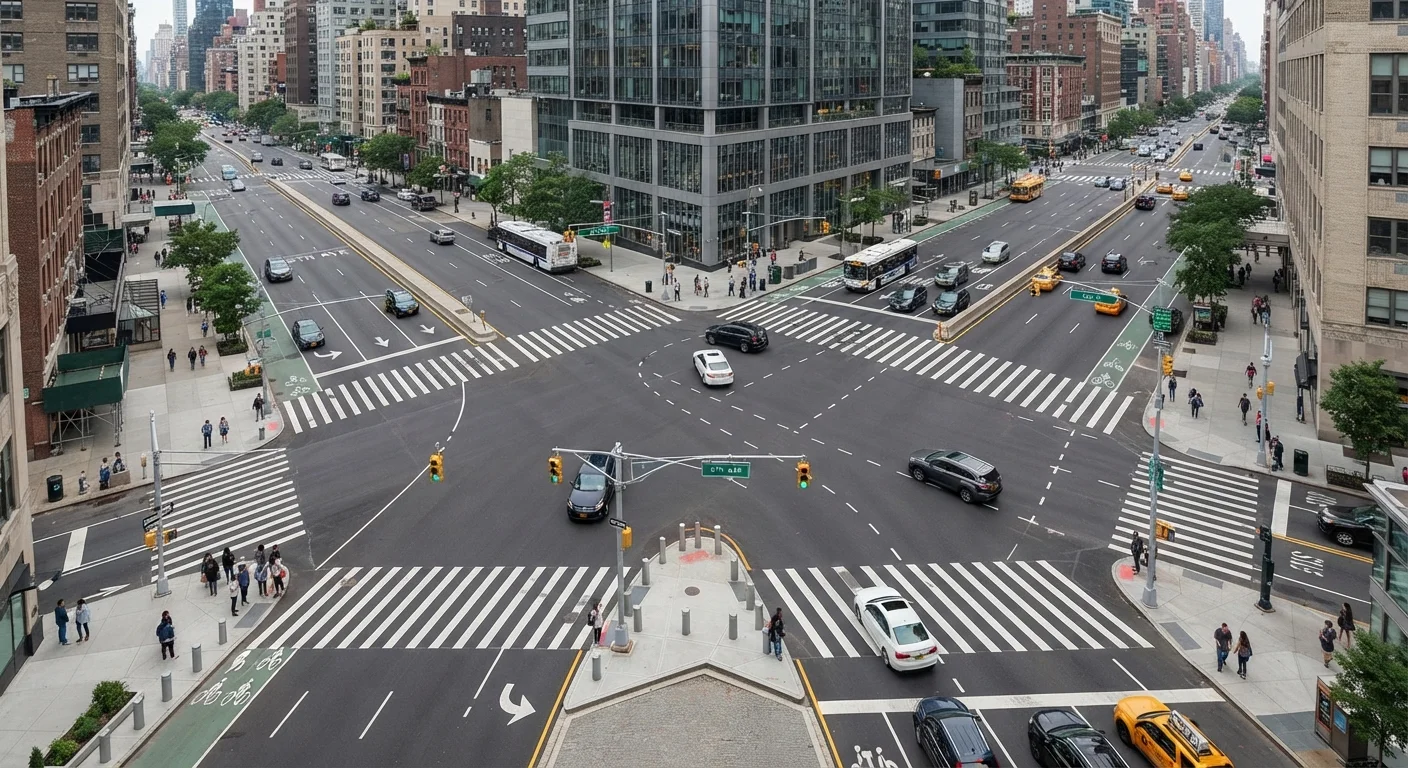
Situational awareness refers to a driver's ongoing, dynamic understanding of their environment - where other vehicles are, what they're likely to do next, and what hazards are emerging. It's a skill built through deliberate scanning patterns and practice. Drivers who want to develop this capability further can explore reading traffic before it moves.
Road camber is the slight sideways slope built into road surfaces to aid water drainage. On wet roads, camber affects how a vehicle handles, particularly in bends. Understanding it helps drivers anticipate handling behavior rather than being caught off guard.
Terminology Applies to All Vehicles
The terms defined in this guide apply broadly across passenger cars, SUVs, and light trucks - though the specific numbers (stopping distances, traction limits) vary by vehicle type, tire condition, and load. A fully loaded pickup truck, for example, requires considerably more stopping distance than an empty compact car under identical conditions. Always factor your specific vehicle's characteristics into how you apply these concepts.