The Real Reason Your Bag Is Always Too Heavy
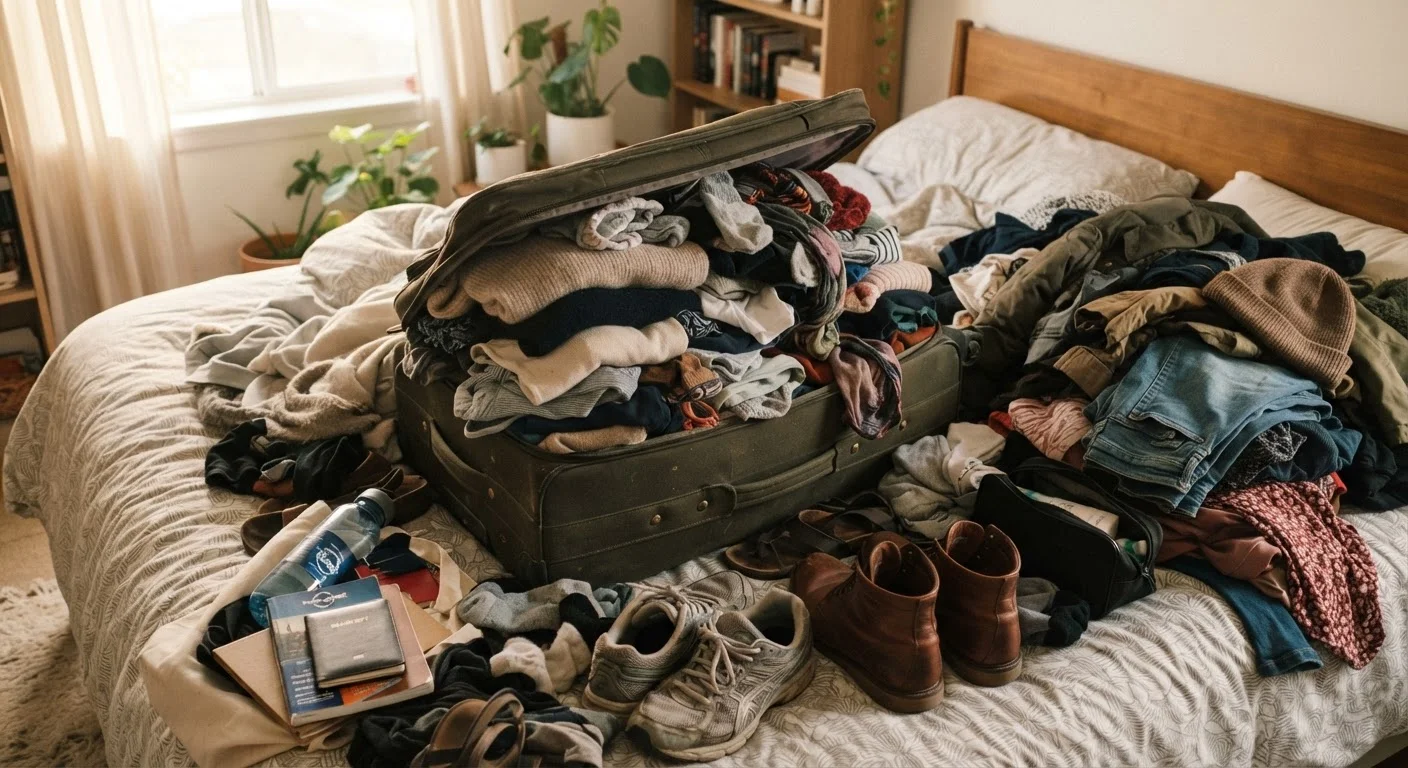
Overpacking is rarely about carelessness. It's about anxiety. When travelers face the unknown - unpredictable weather, unfamiliar cities, uncertain dress codes - the natural response is to bring more. Every extra item feels like a solution to a potential problem. The trouble is, most of those problems never materialize, and you end up hauling half your closet through airports and cobblestone streets for nothing.
Understanding why this happens is the first step to packing differently. The mistakes below reflect the most common mental traps travelers fall into - and each one has a straightforward fix. If you're also prone to over-planning, it's worth reading how overplanning can drain the joy from a trip - the two tendencies often travel together.
Packing for every possible scenario instead of your actual itinerary.
Why it happens: Uncertainty triggers anxiety, and packing feels like a way to control the unknown. Travelers mentally rehearse every hypothetical - a formal dinner, a sudden rainstorm, a gym session - and throw in gear for each one.
Bringing multiples of the same item "just in case" one gets ruined.
Why it happens: The fear of being stranded without a clean shirt feels very real when you're packing at home. Travelers add duplicates as insurance, which quietly doubles the weight of a bag.
Packing without a coherent clothing system or color palette.
Why it happens: Most people pack items they love individually, without checking whether they work together. The result is a bag full of clothes that don't mix and match - meaning travelers feel like they have nothing to wear even with a full suitcase.
Letting toiletries and tech accessories grow unchecked.
Why it happens: Small items feel harmless to add, so travelers include full-size bottles, redundant chargers, and every adapter they own. These accumulate quickly and often exceed the weight of clothing.
Packing days before departure with no final editing pass.
Why it happens: Early packers often add items liberally and then never revisit the bag. Without a review, nothing gets removed.
How to Pack With Actual Intention
The antidote to overpacking isn't minimalism for its own sake - it's purposeful packing. That means building your bag around what you'll genuinely do, not what you're afraid might happen.
Baggage Fees Can Derail Your Budget
Checked bag fees vary widely by airline and route, and they add up fast - especially on multi-leg trips or budget carriers that charge per segment. Before you decide to check a bag, calculate the round-trip cost. You may find that hidden travel costs like baggage surcharges quietly erase money you'd planned to spend on experiences.
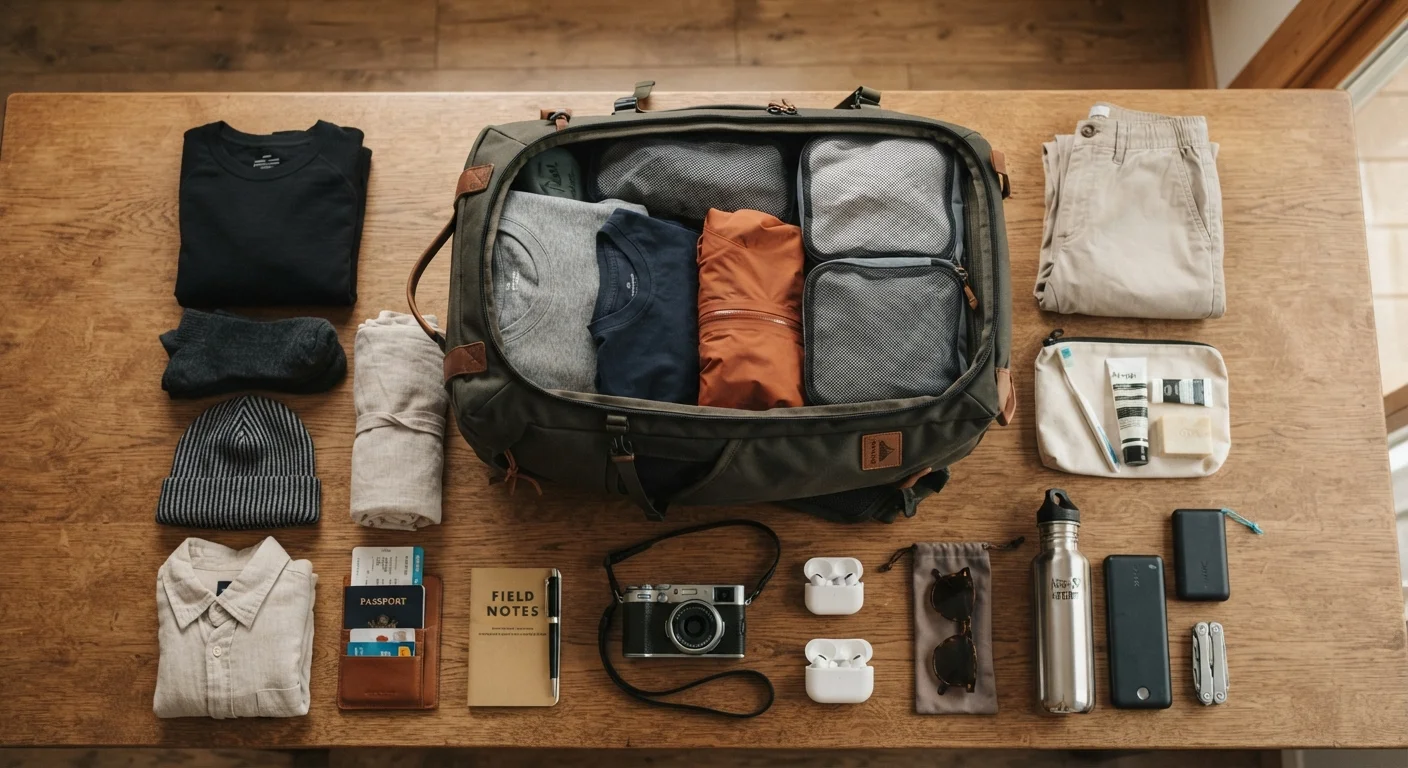
Start with a written list organized by activity, not by clothing category. Knowing you need three dinner outfits and two hiking sets is more useful than counting "pants" in the abstract. From there, apply the color-palette rule: limit yourself to two or three neutrals and one accent color so everything in your bag can be layered and combined. Travelers who nail this system often find they can manage a full week in a single carry-on - a realistic goal for most trips. Our carry-on only travel field guide walks through the logistics in detail.
It also helps to challenge common assumptions about what travel requires. Many first-timers over-prepare based on myths rather than realities - something our piece on common travel planning myths addresses head-on. The more confident you feel in your planning, the less you'll feel compelled to pack "just in case."
~50%
Packed items never used on a trip
Travel industry surveys consistently suggest roughly half of packed items go untouched, pointing to how much anxiety-driven packing inflates bag weight.
$30-$80+
Typical one-way checked bag fee (US domestic)
Checked baggage fees on major US carriers commonly range from around $30 to over $80 per bag one-way, depending on route and airline policy - costs that compound quickly on multi-leg itineraries.
Ultimately, a lighter bag isn't just a logistical convenience - it changes how you move through a destination. You're faster, freer, and far less stressed. That's worth a few intentional editing decisions before you zip up.