What a Capsule Wardrobe Actually Is
A capsule wardrobe is a compact, intentionally chosen set of clothing - typically between 25 and 40 pieces - where every item works with most others. The concept, popularized in the 1970s by London boutique owner Susie Faux, centers on a core of timeless, versatile pieces supplemented by a small number of seasonal items. The result is a closet with far fewer clothes that paradoxically makes it easier to put together a well-considered outfit every day.
This approach works because it removes the paradox of choice. When a closet is overcrowded, many people still feel they have "nothing to wear" - because the mental effort of sorting through options is exhausting. Scaling down to a deliberate selection cuts that friction dramatically.
If you've ever struggled with overpacking for a trip, the capsule logic will feel familiar. The same principle that helps travelers pack light - choosing items that do double or triple duty - applies directly to your everyday wardrobe. Our guide on why travelers overpack explores similar decision-making habits worth reflecting on.
What You'll Need Before You Start
Before pulling everything out of your closet, gather a few supplies and set aside an uninterrupted block of time. The process involves physical sorting, honest evaluation, and some light reorganization - so preparation helps.
What you will need
Sturdy uniform hangers
Matching hangers (slim velvet or wooden) create visual calm and make it immediately clear how much space the capsule takes up.
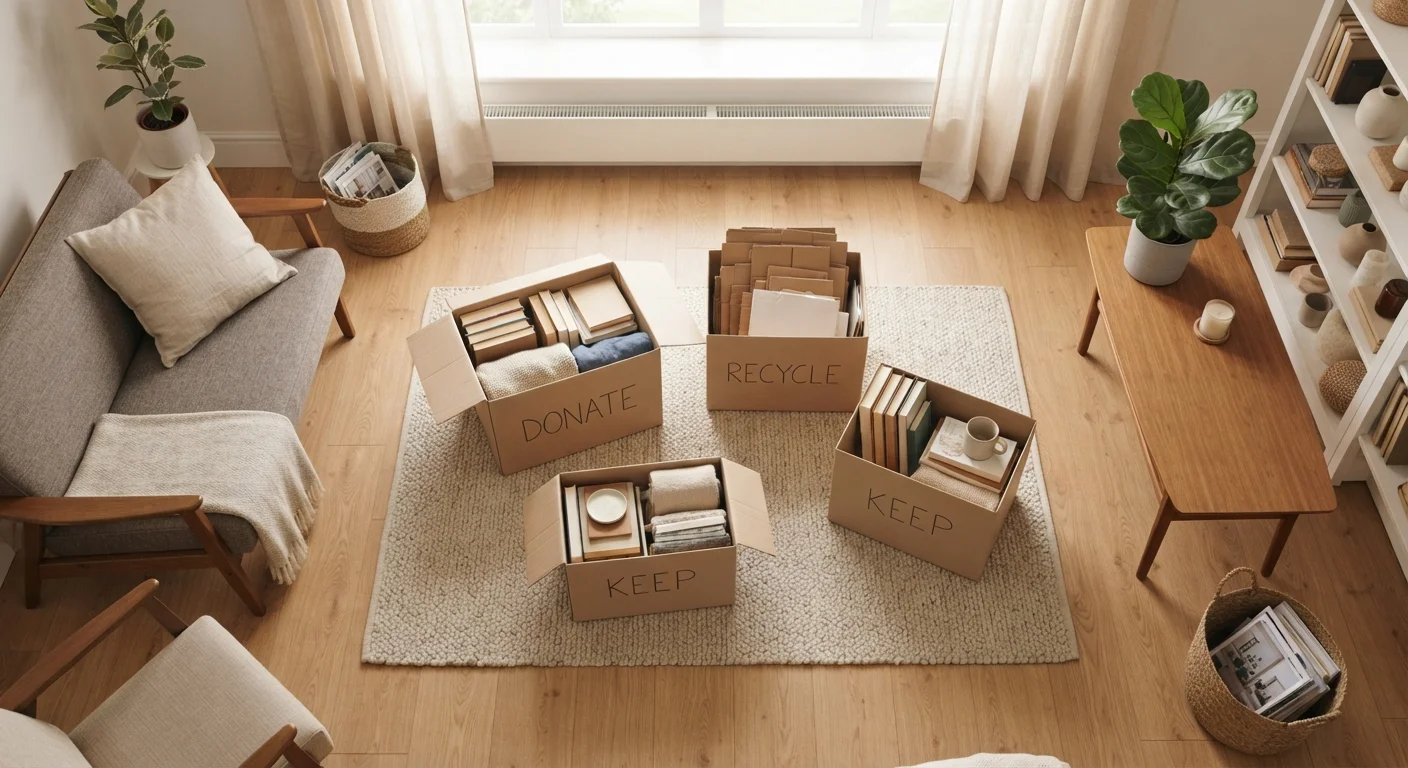
Donation bags or boxes
Ready containers make it easier to commit to removing items without second-guessing once decisions are made.
Clothing steamer or iron
Pressing kept items before returning them to the closet gives a clearer sense of their actual condition and wearability.
Shelf dividers or drawer organizers
Help maintain folded items in distinct categories so the capsule stays visually organized between wears.
How to Build Your Capsule Wardrobe Step by Step
Follow these steps in order. Rushing or skipping ahead - especially the editing phase - tends to produce a smaller but still-cluttered closet rather than a true capsule.
Pull everything out and do a full inventory
Remove every item of clothing from your closet, drawers, and any overflow storage. Lay it all out where you can see it together. Most people are surprised by the actual volume - seeing it spread out is a useful reality check. Sort loosely into categories: tops, bottoms, layers, shoes, and accessories.
Define your real lifestyle needs
Before deciding what to keep, get clear on how you actually spend your days - not how you imagine you might someday spend them. Identify the environments you dress for most: a home office, a client-facing job, weekend errands, social events, outdoor activities. Assign rough percentages to each. A wardrobe built for a life you don't lead will always feel wrong.
Choose a neutral color palette as your base
Select two or three neutral base colors - common choices include navy, white, grey, camel, olive, or black - that naturally work together. These will form the majority of your capsule. Neutrals coordinate easily, photograph well, and don't date quickly. You can add two or three accent colors in smaller quantities for personality and variety.
Apply the three-outfit test to each item
Pick up each item one at a time and ask: can I build at least three distinct outfits using only what's already in my capsule? If an item only works with one specific other piece, it's a specialist that may not earn its space. Items that combine freely with many others are the backbone of a functional capsule.
Edit down to your target number
With passing items identified, count them. Aim for a range of 25-40 pieces for most people, though the right number depends on your lifestyle complexity. If you're significantly over, do a second pass applying stricter criteria - condition, fit, and actual frequency of wear. Items that are worn out, poorly fitting, or haven't been touched in 12 months are strong candidates for removal.
Identify genuine gaps and fill them thoughtfully
After editing, review what's missing. Common gaps include a reliable layer for transitional weather, a single versatile dress shoe, or a well-fitted neutral bottom. Note each gap specifically, then fill deliberately - one item at a time, checking it against the three-outfit test before it enters the closet. Avoid buying multiple things at once, which recreates accumulation quickly.
Organize and return items to a clean closet
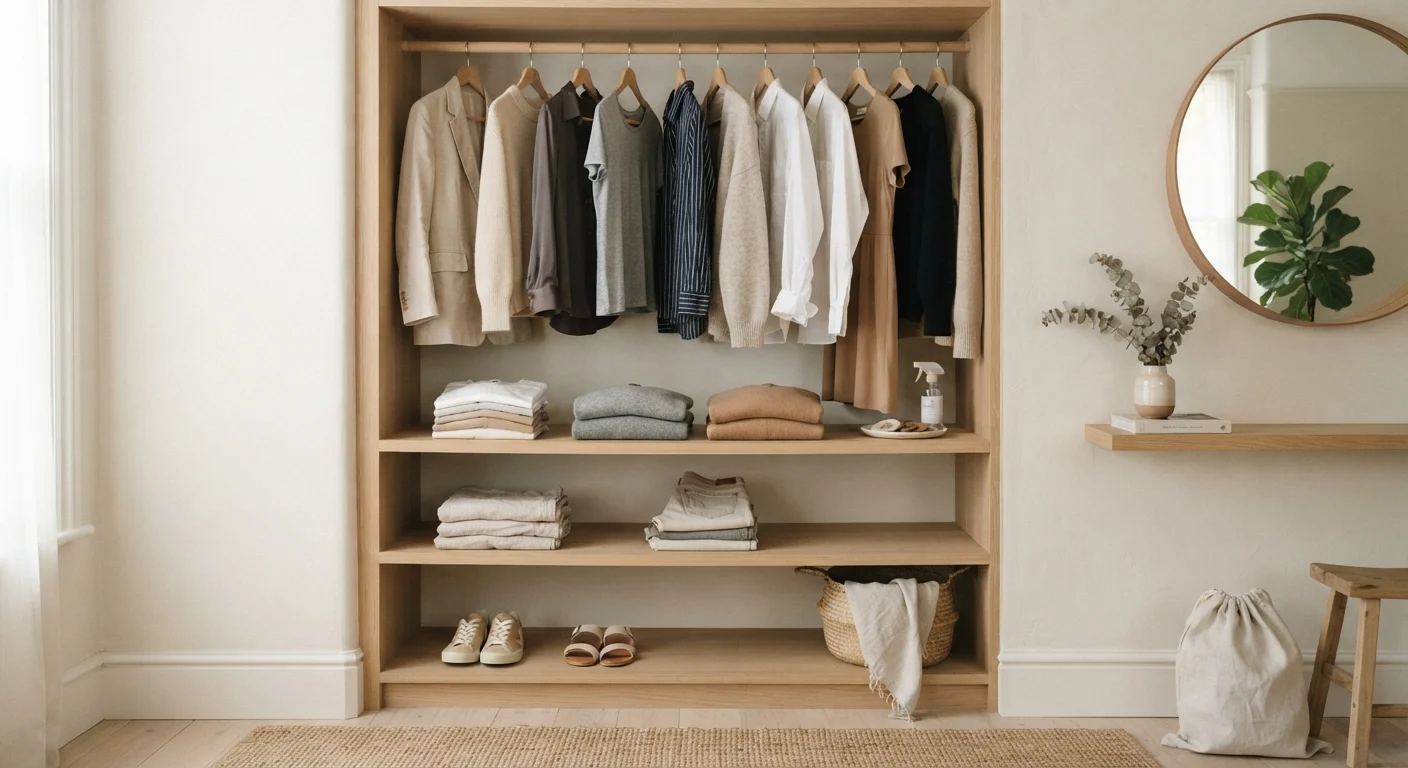
Return only the capsule items to your closet, organized by category and color within each category. Use uniform hangers throughout. Hang items with enough space between them that you can see each one at a glance. Folded items in drawers should be arranged so every item is visible - vertical folding (often called the file-fold method) works well for this.
Don't Discard Irreplaceable or Sentimental Items Hastily
The editing process can create momentum that feels like you should remove as much as possible. Pause before discarding anything irreplaceable - a well-made heirloom piece, formal wear for infrequent but meaningful occasions, or culturally significant garments. These can be stored separately from the active capsule rather than donated. The goal is a functional daily wardrobe, not the elimination of everything with personal meaning.
Maintaining and Evolving Your Capsule
A capsule wardrobe isn't a one-time project - it works best as an ongoing practice. Doing a brief review each season (roughly every three months) keeps the collection aligned with your actual life rather than who you used to be or hoped to be. Our seasonal declutter audit guide offers a practical room-by-room framework that pairs well with this habit.
When adding new pieces, apply the same criteria used during the original edit: Does it coordinate with at least three items already in the capsule? Does it suit the environments you actually move through? If the answer to either is no, the item probably doesn't belong.
Storing off-season items separately keeps the active closet clear and decision-making simple. If closet space is tight, creative storage strategies matter - see our guide to vertical vs. floor storage for practical ideas suited to small rooms.
Track Cost-Per-Wear Over Time
One benefit of a smaller wardrobe is that it naturally encourages tracking how often you reach for each piece. Items worn frequently justify higher upfront cost; items rarely worn reveal themselves as mismatches with your lifestyle. This awareness tends to make future clothing decisions more deliberate and often reduces overall clothing spending over time.