Why Extreme Climates Make Packing Harder - and How to Simplify
Packing for moderate weather is straightforward. Packing for a Patagonian wind storm, a Saharan summer, or a Southeast Asian monsoon season feels like an entirely different puzzle - one where the stakes feel higher and the instinct to overpack kicks into overdrive. The result is bags that are too heavy, trips that are more exhausting than they need to be, and clothes that never get worn.
The truth is, extreme climates actually benefit from more disciplined packing, not more volume. Every environment - no matter how severe - can be addressed with a structured layering system, the right fabric choices, and a clear-headed audit of what you genuinely need versus what you're packing out of anxiety. Whether you're planning a desert crossing or an arctic adventure, the framework is the same. A good place to start is your overall trip planning strategy, which shapes every downstream decision including your kit list.
What you will need
Travelers who struggle most with extreme-climate packing often haven't separated what the environment demands from what their anxiety imagines. This guide walks you through the practical steps to close that gap. For a broader look at wardrobe reduction principles that complement this approach, the capsule wardrobe guide offers useful parallel thinking.
Verify Conditions Before You Depart
Extreme climate conditions - from flash flooding in monsoon regions to sudden whiteouts at altitude - can shift rapidly. Always check official government travel advisories and local weather services close to your departure date. No packing list substitutes for real-time situational awareness.
The Step-by-Step System for Any Extreme Environment
Follow the steps below in order. Each builds on the previous - skipping the climate audit, for instance, makes the layering and fabric decisions far less precise. The total process takes 30-60 minutes for most trip lengths and pays dividends every day you're on the road.
Packing cubes
Compress and organize clothing by category, making it easier to find items without unpacking everything.
Compression stuff sack
Reduces bulk of insulating layers like down jackets by compressing air out of the fill.
Lightweight luggage scale
Confirms your bag stays within airline carry-on or checked weight limits before you reach the airport.
Reusable dry bags
Protect electronics and dry clothing in monsoon or wet environments without adding meaningful weight.
Run a Climate Audit for Your Destination
Before touching a single item of clothing, research the actual temperature range, precipitation patterns, and UV exposure levels for your destination during your travel window. A desert in the American Southwest can swing 40°F between noon and midnight. A tropical monsoon destination might be 90°F and saturated with rain simultaneously. Use sources like national meteorological services or established weather databases rather than vague seasonal summaries.
Create a simple two-column list: daytime conditions vs. nighttime or indoor conditions. This contrast reveals exactly how many layers you truly need rather than how many you fear you might need.
Build a Three-Layer System (And Nothing More)
The layering framework used by mountaineers and experienced expedition travelers applies to virtually every extreme climate:
- Base layer: Next-to-skin moisture management. Merino wool or synthetic moisture-wicking fabric. One or two pieces maximum.
- Mid layer: Insulation. A lightweight fleece or packable down piece that traps warmth when needed and compresses small when not.
- Outer layer: Wind and weather protection. A packable shell - waterproof for wet climates, wind-resistant for arid or polar zones.
For hot climates like deserts, the mid layer often becomes unnecessary; a breathable sun-protective outer layer replaces it. For monsoon conditions, the outer layer does the heaviest lifting. Resist the temptation to pack outside this system - extra sweaters and redundant jackets are where bags balloon.
Select Fabrics That Work Across Multiple Conditions
Fabric is your most powerful packing tool. The wrong material wastes space and fails you in the field; the right one does multiple jobs. Key principles:
- Merino wool: Temperature-regulating, odor-resistant, packs small. Effective from 40°F to 80°F+ depending on weight.
- Nylon or polyester blends: Quick-drying, lightweight, ideal for humid or wet climates where cotton becomes a liability.
- UPF-rated fabrics: Essential for desert and high-altitude environments where UV exposure is intense at any temperature.
- Avoid cotton in wet or cold climates: Cotton retains moisture and loses insulating value when damp - a genuine safety concern in cold or wet conditions.
Audit Every Item for Dual-Use Value
Each item you pack should serve at least two purposes or climate contexts. A lightweight merino long-sleeve is a base layer in the cold, a sun shirt in the desert, and sleepwear when needed. A packable rain shell doubles as a wind barrier in dry, cold conditions. Apply this lens to every item on your list and cut anything that serves only a single narrow purpose.
This principle extends beyond clothing. A wide-brimmed packable hat works in both desert sun and light rain. A lightweight neck gaiter handles cold wind, dust, and impromptu sun protection. See our guide on why travelers overpack for a deeper look at the psychology behind packing redundancy.
Pack Climate-Specific Accessories Strategically
Accessories are where extreme-climate packing gets both essential and dangerously heavy. Be precise:
- Desert: Electrolyte packets, high-SPF mineral sunscreen (small tube, refillable), packable sun hat, lightweight buff or scarf for dust and wind.
- Polar/cold: Liner gloves (not bulky ski gloves unless skiing), a knit beanie, merino wool sock liners, and hand warmers as backup.
- Monsoon/tropical: Compact umbrella or packable rain poncho, dry bags for electronics, quick-dry sandals that function as a second shoe.
For any extreme environment, consult official health and vaccination guidance - some regions require or strongly recommend specific preparations. Always verify current requirements with your country's official travel health authority well before departure.
Do a Final Weight and Space Check
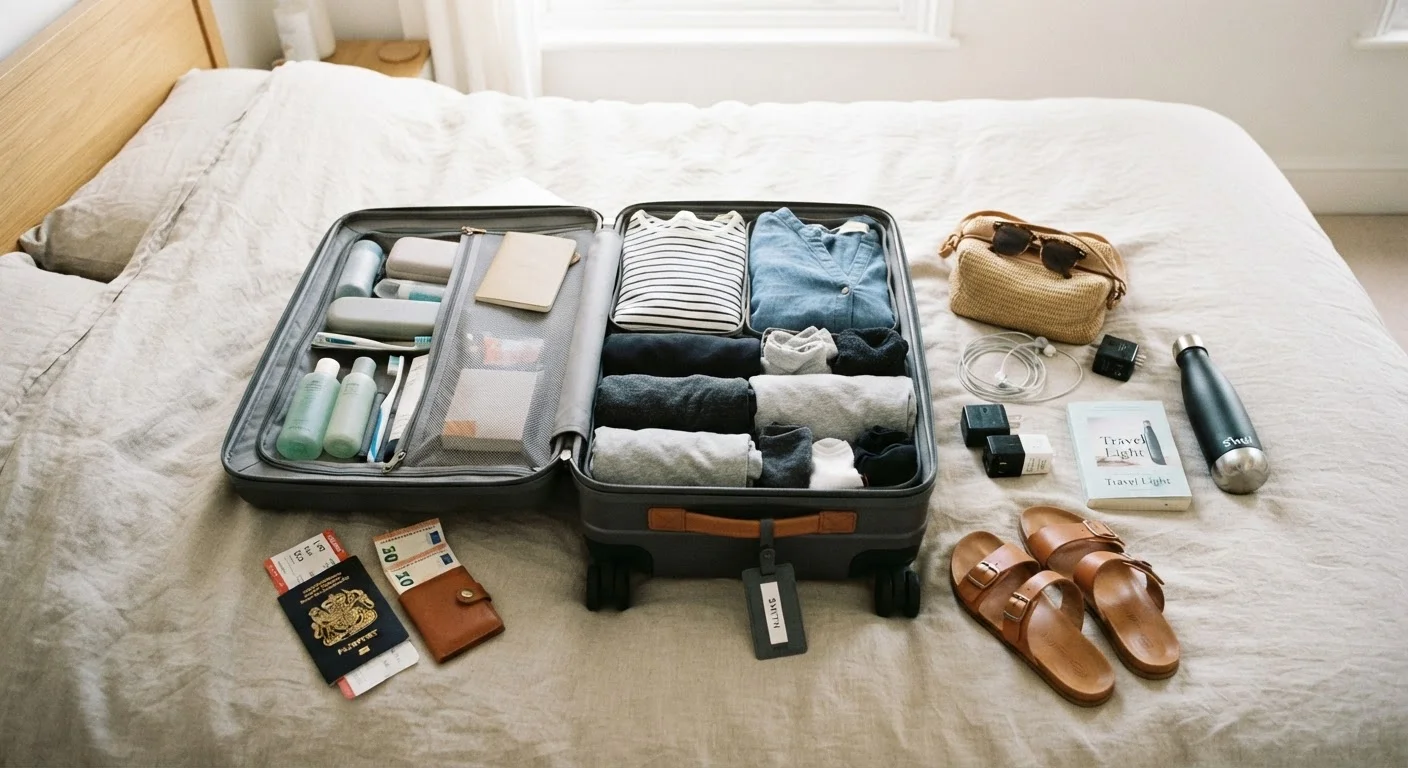
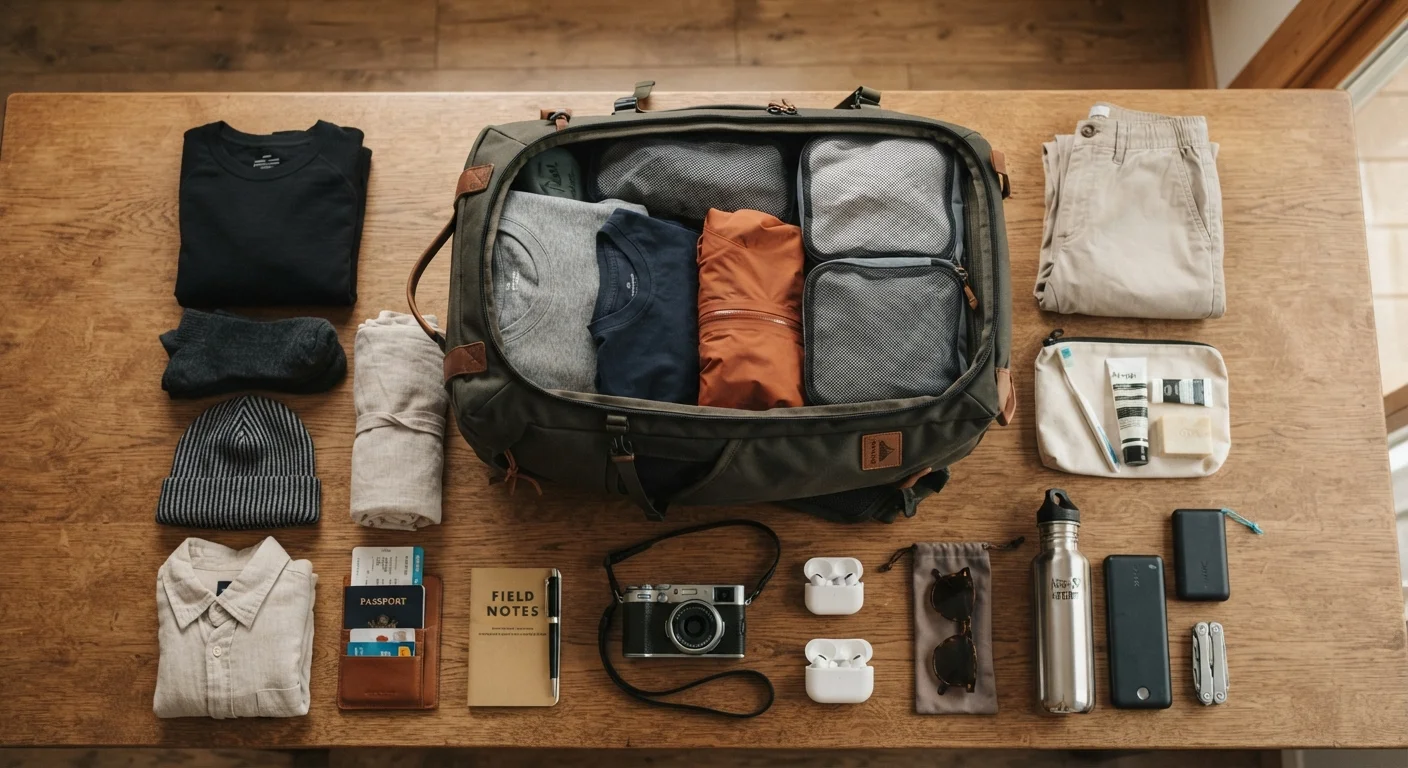
Before zipping up, use your luggage scale and confirm you're within your target limits. Then do a roll-and-pack test: roll each garment tightly and use packing cubes by category (tops, bottoms, layers, accessories). A 30-40L bag packed with intention holds more usable gear than a 60L bag stuffed chaotically.
If your bag won't close comfortably, don't force it - remove items rather than compress them into dysfunction. The carry-on only travel field guide covers airline size considerations in detail if you're aiming to avoid checked luggage entirely.
Merino Wool Works in Both Extremes
Merino wool is one of the few natural fibers that regulates temperature in both heat and cold, wicks moisture, and resists odor across multiple wears. A single merino base layer can serve you from a chilly mountain morning to a warm valley afternoon, cutting the number of pieces you need to carry significantly.
Don't Skimp on Protective Layers
Cutting weight by removing core protective items - a wind-proof shell in arctic environments or UV-blocking layers in desert terrain - creates genuine safety risk. Pack light strategically, but never sacrifice climate-essential protection for the sake of a lighter bag.
Once your bag is packed and verified, revisit it mentally against your itinerary day by day. If you can't picture using an item on at least three separate days, it almost certainly doesn't earn its place. This mindset - packing with genuine intention rather than fearful contingency - is explored in depth in why travelers overpack and what to do instead.