How the Debt Cycle Actually Works
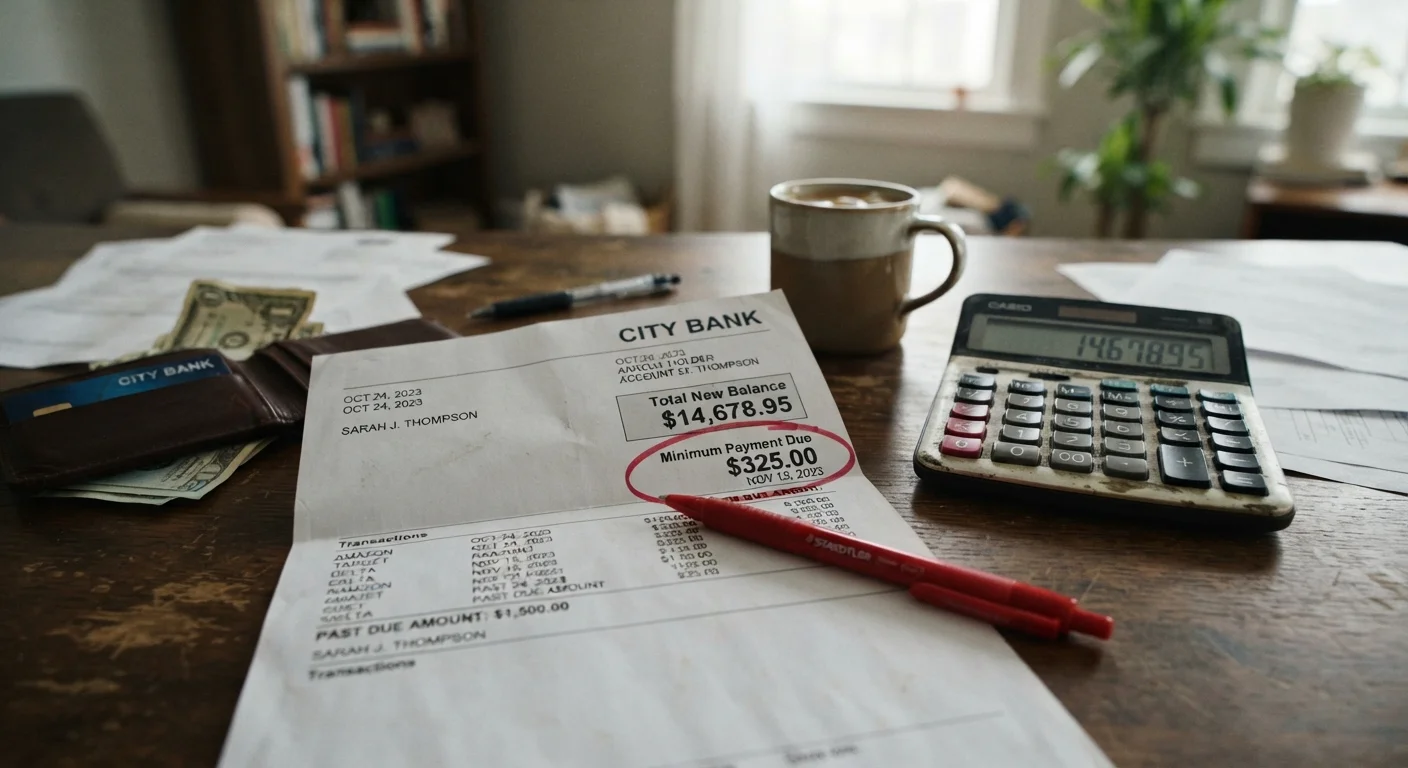
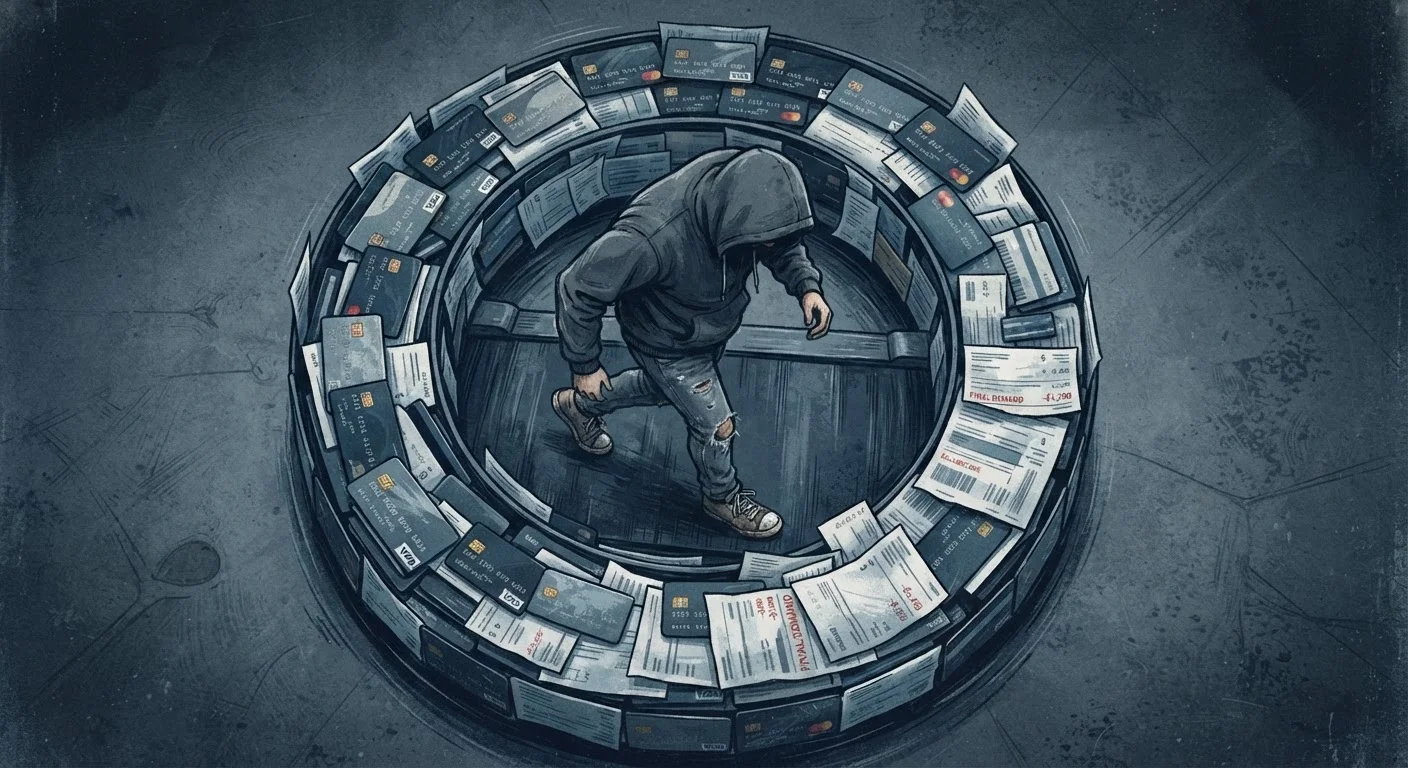
At its core, the debt cycle has a simple but brutal mechanic: interest charges grow faster than repayment progress when income is stretched thin. A borrower takes on debt, makes required payments, but finds the balance barely moves - or even grows - while life's ongoing expenses leave little room to pay more. Eventually, a new expense or income gap forces fresh borrowing, restarting the loop.
This isn't a sign of recklessness. The structure of consumer credit - particularly revolving products like credit cards - is built around sustained balances. Minimum payments keep balances high for far longer than most borrowers realize, because they're calibrated to cover interest plus just a fraction of principal. A $5,000 balance at 22% APR, paid at the minimum, can take over a decade to clear and cost thousands in interest charges.
$6,501
Average U.S. credit card balance per borrower
According to TransUnion's Q4 2023 consumer credit report, average credit card balances among borrowers reached a record high, reflecting widespread reliance on revolving credit.
22%+
Average credit card APR in the U.S.
Federal Reserve data has shown average credit card interest rates rising above 22% in recent years, sharply increasing the cost of carrying balances.
~37%
Americans carrying credit card debt month-to-month
Surveys conducted by the American Bankers Association and similar industry bodies consistently show roughly a third of U.S. cardholders carry a balance rather than paying in full.
The cycle becomes especially entrenched when there is no emergency fund. Without savings to absorb a car repair or a missed shift, the only available tool is more credit - which adds to the balance and increases the monthly interest burden. Each emergency that gets financed makes the next one harder to weather.
Structural Reasons the Cycle Is Hard to Escape
Many people in debt cycles are doing everything they were told to do - paying on time, avoiding luxury spending, working additional hours - and still not gaining ground. That's because several structural forces work against them.
- High interest rates on accessible credit: Borrowers with lower credit scores face rates that can exceed 25-30% APR, meaning a large share of every payment goes to the lender rather than reducing the balance.
- Income volatility: Gig workers, hourly employees, and part-time workers often have irregular paychecks that make consistent large payments difficult to plan.
- The savings paradox: Paying down debt aggressively and building savings simultaneously is mathematically difficult on a tight budget - yet without savings, any setback sends the borrower back into debt.
- Credit score gatekeeping: High balances lower credit scores, which raises the cost of future credit - trapping people in high-rate products even when they're actively repaying.
Start With One High-Rate Balance
If you're overwhelmed by multiple debts, don't try to tackle them all at once. Pick the single balance with the highest interest rate and direct any extra dollars there, even if it's only $15 or $20 per month. Momentum matters - a visible drop in one balance creates psychological traction and real interest savings over time.
Understanding these dynamics is not an excuse to stop trying - it's a reason to approach the problem strategically rather than blaming yourself for a slow pace of progress. For a deeper look at the emotional dimensions, see our article on the psychology of debt and how emotions shape financial decisions.
Practical Entry Points for Breaking the Cycle
Breaking the debt cycle is rarely a single action - it's a sequence of moves that shift momentum. The goal in the early stages is not to eliminate all debt immediately, but to stop the cycle from deepening while creating a small buffer against further borrowing.
- Identify the highest-cost debt first. Rank balances by interest rate, not size. Redirecting even $20-$50 extra per month to the highest-rate balance reduces the total interest paid and accelerates the payoff timeline.
- Build a micro emergency fund. Even $500-$1,000 set aside can prevent a car repair or utility bill from forcing new borrowing. This buffer doesn't need to be large - it just needs to exist.
- Negotiate with creditors. Many lenders will reduce interest rates or waive late fees for borrowers who call and ask, particularly those with a consistent payment history. Hardship programs are also available at most major issuers.
- Explore lower-cost debt options. Debt consolidation can lower your effective interest rate, but it carries risks and isn't appropriate for everyone - understand the mechanics before committing.
Not all debt is created equal, and not every borrowing decision feeds the cycle. Our explainer on what good debt and bad debt actually mean helps clarify which obligations deserve urgency and which can be managed more patiently. For a comprehensive framework covering both saving and debt repayment together, see the saving and debt management overview.
This article is for general informational and educational purposes only and does not constitute personalized financial advice. Consult a qualified financial professional regarding your specific circumstances before making significant financial decisions.