
What Envelope Budgeting Actually Is
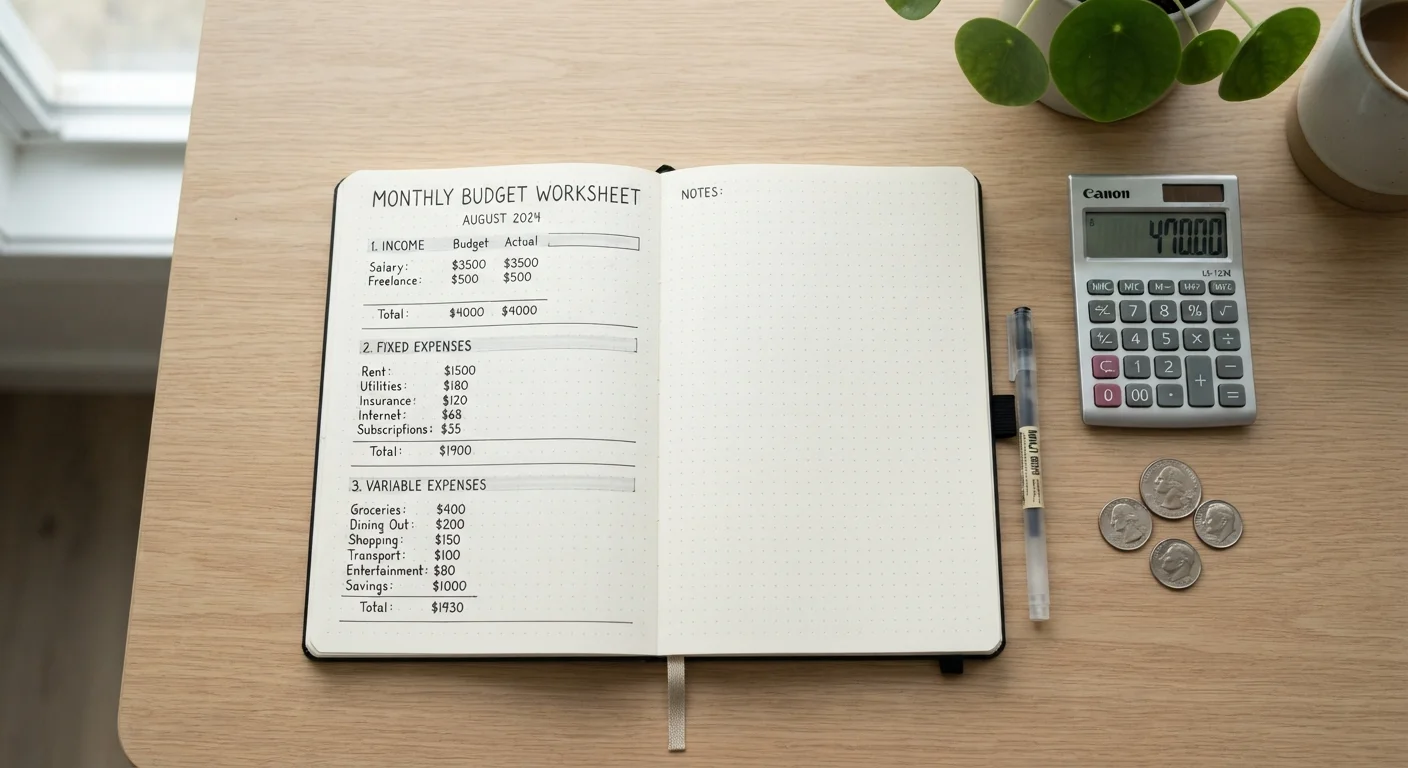
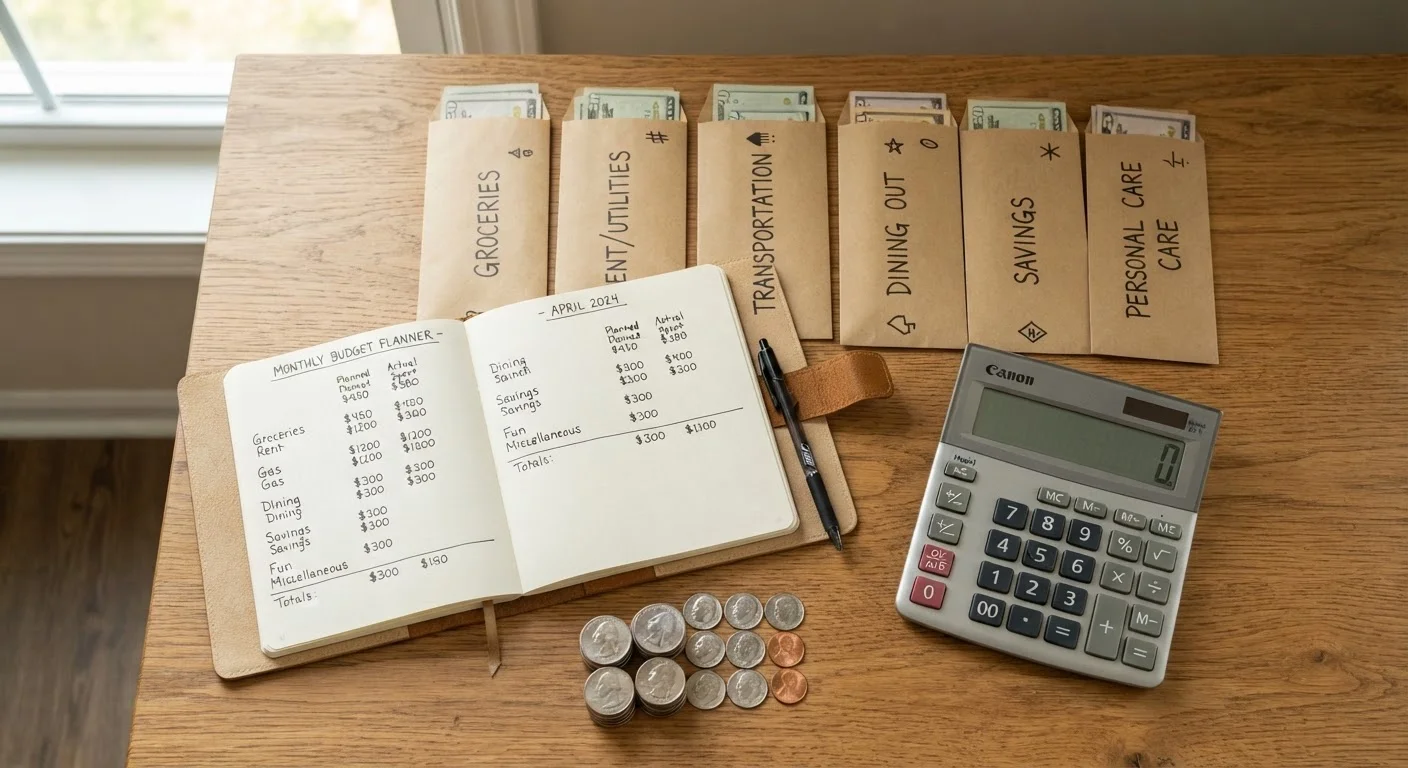
Envelope budgeting is straightforward: you divide your take-home pay into spending categories - groceries, gas, dining out, entertainment - and place a fixed amount of cash into a labeled envelope for each one. When the envelope is empty, spending in that category stops until the next pay period. No exceptions, no borrowing from next month.
The system was popularized long before digital banking existed, but its logic is timeless. By making money physical and finite, it eliminates the mental accounting tricks most people play when they swipe a card and promise to reconcile it later. You can read a fuller side-by-side comparison of this and other approaches in the budgeting approaches overview.
The system applies to discretionary, variable spending - not fixed bills. Rent, loan payments, and insurance premiums are paid directly from your account; only the categories where your behavior actually varies get the envelope treatment.
Pros and Cons of the Envelope Method
Like any budgeting system, envelope budgeting has real strengths and genuine limitations. Understanding both helps you decide whether it fits your situation or whether a different framework - such as the 50/30/20 rule - might serve you better.
Creates a hard, visible spending limit per category
Once an envelope is empty, the spending decision is already made. This removes willpower from the equation and reduces the likelihood of rationalizing overages.
Reduces impulse spending immediately
Physical cash or a clearly capped digital balance makes the cost of each purchase feel concrete, which research on payment psychology consistently links to more deliberate spending decisions.
Simple to understand and start quickly
There's no complex formula to learn. You estimate your spending by category, allocate accordingly, and track a balance - a process almost anyone can start the same day.
Builds awareness of spending patterns over time
Regularly funding and depleting envelopes reveals exactly where money goes, often surfacing categories that were previously invisible or underestimated.
Highly adaptable to digital tools
Multiple budgeting apps and sub-account banking features replicate the envelope structure without requiring cash, making the method viable for people who rarely use physical currency.
Cumbersome with a cashless lifestyle
Using physical envelopes requires planning cash withdrawals and carrying bills - an awkward fit for people who rely on debit cards, credit cards, or mobile payments for most purchases.
Doesn't handle irregular income well
Pre-funding envelopes assumes a predictable paycheck. Freelancers, gig workers, or anyone with variable monthly income may find it difficult to set reliable category amounts in advance.
Can feel rigid when unexpected costs arise
Life doesn't always fit neatly into pre-set categories. A car repair or medical co-pay can force awkward decisions about which envelope to raid, undermining the system's clarity.
Not designed for fixed bills and subscriptions
Mortgage payments, utility auto-pays, and insurance premiums sit outside the envelope framework entirely, meaning the system only partially addresses your overall financial picture.
Requires consistent upkeep to stay accurate
Digital envelopes in particular need regular reconciliation - forgotten transactions or delayed postings can make balances misleading if not checked frequently.
Does It Translate to Digital Banking?
Most Americans rarely carry cash, which raises a fair question: can envelope budgeting survive in an era of tap-to-pay and automatic transfers? The short answer is yes - with adaptation.
Digital Envelopes: What to Look For
When evaluating apps or banking features that mimic envelope budgeting, look for real-time balance updates, the ability to name and customize categories, and automatic transaction categorization. Some services sync directly with your bank accounts, while others require manual entry - both can work, but manual tracking tends to build stronger spending awareness. Always review the privacy policy before linking financial accounts to any third-party app.
Several budgeting apps now replicate the envelope concept digitally, letting users create virtual spending categories, set limits, and track remaining balances in real time. Some banks also allow multiple labeled sub-accounts that function identically to envelopes. You fund each sub-account at the start of the month and spend only from the relevant one.
The psychological effect is slightly weaker than cash - handing over physical bills creates a friction that digital transactions do not - but the structural constraint is equivalent. If your grocery sub-account holds $400 and you've spent $390, you know immediately. There's no need to guess or reconcile at month-end.
36%
Americans with a detailed monthly budget
According to a Gallup survey, only about one in three U.S. adults maintains a detailed household budget, suggesting most people lack a formal spending structure of any kind.
~$314
Average monthly discretionary overspend
A Ladder financial survey found that Americans underestimate their discretionary spending by roughly $314 per month on average, exactly the type of gap envelope budgeting is designed to close.
Be aware that certain small daily habits can quietly drain these digital envelopes faster than expected. The habits that erode a budget article outlines common leakage patterns worth accounting for when you set your category limits.
When to Use It - and When to Try Something Else
Envelope budgeting works best when overspending is driven by discretionary behavior, not income shortfalls. If the core problem is that you consistently spend more on food, entertainment, or clothing than planned, the system's hard limits are exactly what's needed.
It works less well if your income is irregular - a fluctuating paycheck makes it hard to pre-fund envelopes consistently. In those cases, a zero-based budgeting approach built around actual monthly income may give you more flexibility.
If you're newer to budgeting and feel held back by misconceptions about what the process requires, common budgeting myths is worth reading before you commit to any system. The goal is always finding the structure you'll actually maintain - not the one that looks best on paper.
This article is for general informational purposes only and does not constitute personalized financial advice. Consult a qualified financial professional for guidance specific to your situation.