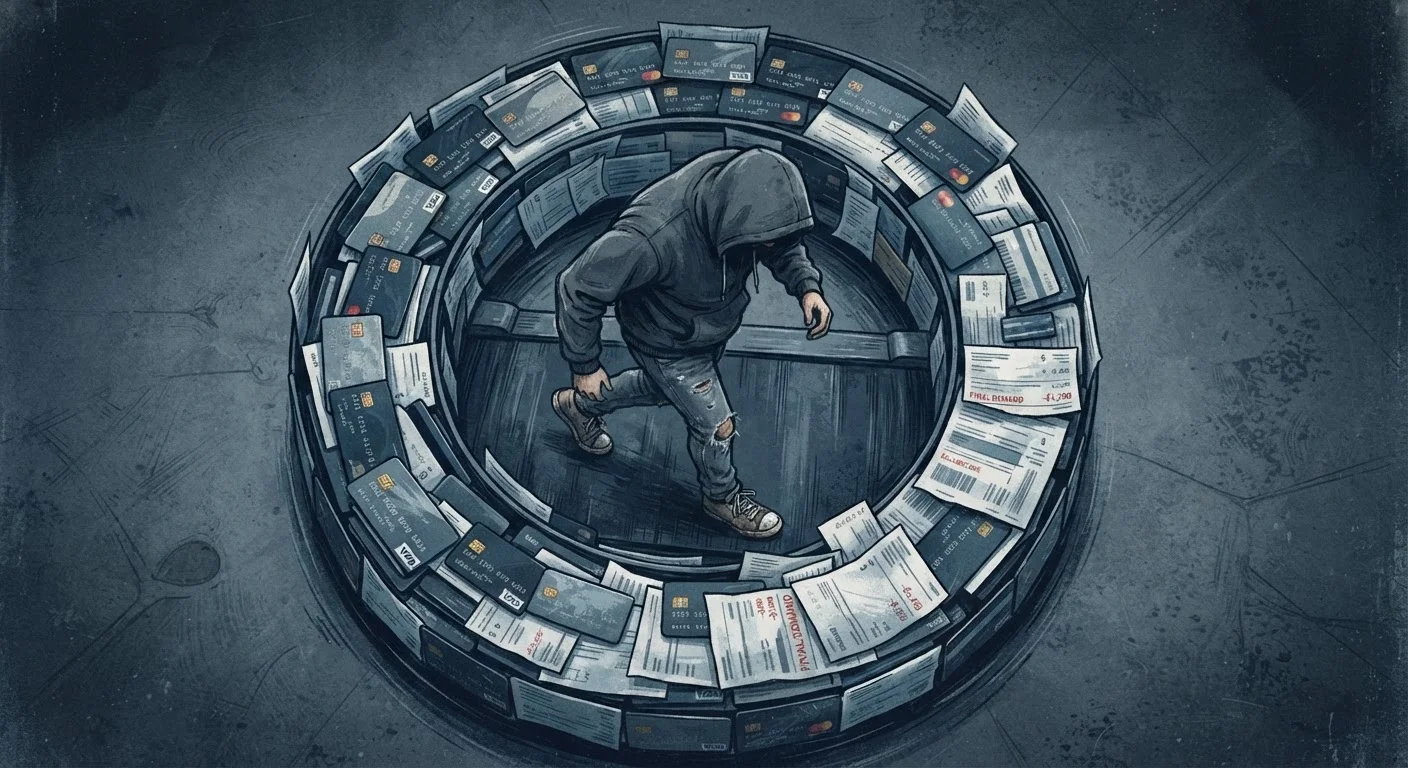

Why Debt Feels Like More Than a Money Problem
For many people, debt isn't just a line item on a spreadsheet - it's a source of persistent shame, anxiety, and self-doubt. That emotional weight is worth taking seriously, because it directly influences the financial decisions people make (or avoid making) every day.
Research in behavioral economics consistently shows that financial stress impairs decision-making. When people feel overwhelmed, they tend to focus on short-term relief rather than long-term strategy. In the context of debt, this can look like ignoring account statements, making only minimum payments, or resorting to new borrowing to cover existing obligations. Understanding why these cycles are so hard to escape requires looking beyond interest rates and repayment schedules.
77%
Americans experiencing financial stress
According to the American Psychological Association's Stress in America survey, a large majority of U.S. adults consistently cite money as a significant source of stress.
1 in 3
Adults who avoid checking financial accounts
Studies on financial avoidance suggest roughly one-third of adults regularly avoid looking at bank or credit card balances due to anxiety about what they might find.
~$7,000
Average U.S. credit card balance per cardholder
Federal Reserve and industry data indicate the average indebted U.S. cardholder carries a balance in this range, a figure that carries significant emotional as well as financial weight.
The Emotional Patterns That Keep People Stuck
Three emotional patterns appear repeatedly in people managing debt:
- Shame and self-blame: Many people internalize debt as evidence of personal failure rather than the result of circumstances, structural barriers, or past decisions made with incomplete information. Shame tends to push the problem underground - people hide it rather than address it.
- Denial: Denial functions as psychological protection. Refusing to calculate a total debt balance or avoiding conversations about money keeps the problem abstract and temporarily less painful. But it also prevents any realistic plan from forming.
- Avoidance behaviors: These range from not opening mail to closing banking apps to declining to speak with creditors. Avoidance temporarily reduces anxiety but consistently allows situations to worsen.
It's worth noting that emotional suppression - pushing these feelings down rather than acknowledging them - carries its own costs. Research links emotional suppression to heightened stress responses over time, which can further undermine the clarity needed to make financial decisions.
Start Small to Build Momentum
If confronting your full debt picture feels paralyzing, begin with a single account - ideally your smallest balance. Simply writing down the balance and minimum payment is a low-stakes action that builds the habit of engagement. Momentum matters: each small act of financial awareness makes the next one easier.
How Cognitive Distortions Sabotage Good Intentions
Beyond broad emotional states, specific thought patterns - known in psychology as cognitive distortions - can undermine genuine efforts to manage debt.
All-or-nothing thinking is particularly common. A person who sets up a repayment plan and then misses one payment may conclude the entire plan has failed and abandon it altogether. In reality, one missed payment rarely undoes meaningful progress.
Catastrophizing - assuming the worst possible outcome is inevitable - can cause people to disengage entirely. If someone believes they'll never be debt-free regardless of effort, taking any action feels pointless.
Comparison traps also play a role. Measuring one's financial situation against peers (or curated social media representations of financial success) amplifies shame and distorts a realistic sense of what's achievable.
Practical Steps That Address Both the Emotional and Financial Side
Addressing the psychology of debt doesn't require therapy as a prerequisite to taking action. It does require honest self-awareness about which emotional patterns are in play for you specifically.
Name the feeling first. Before opening a statement or calling a creditor, acknowledge what you're feeling and why. Research in behavioral science suggests that labeling an emotion reduces its intensity and improves decision-making capacity.
Start with visibility, not volume. Write down every balance, interest rate, and minimum payment. The act of seeing the full picture - however uncomfortable - removes the ambiguity that denial feeds on.
Break goals into smaller wins. Paying off a single small balance creates a tangible sense of progress. That psychological momentum is real and valuable. See our comprehensive overview of saving and debt management for a grounded framework on where to begin.
Separate decisions where possible. If you're unsure whether to build an emergency fund or pay down debt first, that's a concrete, solvable question. Our guide on emergency funds versus debt repayment walks through the trade-offs clearly.
This article is for general informational and educational purposes only and does not constitute personalized financial, legal, or mental health advice. Readers dealing with significant debt or financial distress should consider consulting a licensed financial adviser, nonprofit credit counselor, or qualified mental health professional for guidance tailored to their situation.