
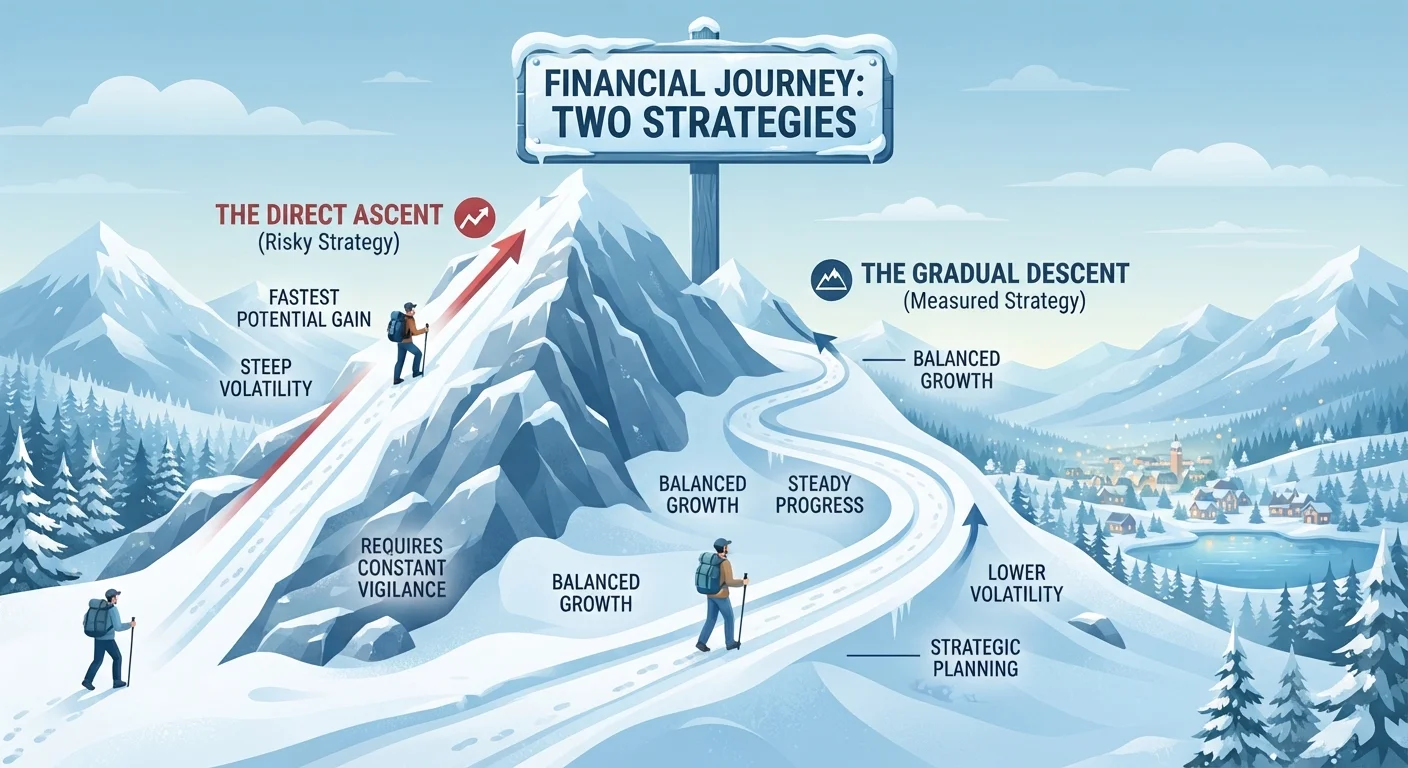
How Each Method Works
Both the avalanche and snowball methods share the same foundational mechanic: you make minimum payments on all your debts each month, then direct any additional funds toward one specific target debt. The methods differ only in how that target is chosen.
Debt Avalanche: You rank debts by APR from highest to lowest. Every extra dollar goes toward the highest-rate balance until it is cleared, then you roll that payment into the next highest, and so on. Because you are eliminating the most expensive debt first, less of your money is consumed by interest charges over time. For a plain-language refresher on terms like APR and compound interest, see the high-interest debt glossary.
Debt Snowball: You rank debts by outstanding balance from smallest to largest, regardless of interest rate. Extra payments attack the smallest balance first. Once it is paid off, that freed-up payment amount is added to the minimum payment on the next-smallest debt - creating a growing "snowball" of cash applied to each successive balance.
| Criterion | Debt Avalanche | Debt Snowball |
|---|---|---|
| Repayment order | Highest APR first | Smallest balance first |
| Total interest paid | Lower (mathematically optimal) | Potentially higher |
| Time to first payoff | Longer if high-rate debt is large | Faster - smallest balance cleared first |
| Motivational structure | Delayed gratification | Frequent early wins |
| Best when rates differ widely | Yes - larger mathematical edge | Less important |
| Research-backed adherence | Depends on discipline | Higher for behavior-driven borrowers |
| Complexity | Low - rank by APR | Low - rank by balance |
The Math vs. The Psychology
On a purely numerical basis, the avalanche method wins. Paying down high-interest debt first reduces the rate at which new interest accrues, meaning more of each dollar reduces principal rather than feeding interest charges. Depending on your debt mix and balances, the savings can be significant.
But personal finance research - including studies on consumer debt behavior - consistently shows that motivation and adherence matter more than optimal strategy. A 2012 study published in the Journal of Marketing Research found that consumers who focused on eliminating individual accounts (a snowball-like approach) were more likely to stay engaged and pay down debt faster than those who spread payments proportionally. The psychological reward of a fully cleared account keeps people on track.
~$1,000+
Potential interest savings with avalanche on mixed debt
Illustrative estimates based on common debt scenarios modeled by financial education organizations; actual savings depend on balances, rates, and payment amounts.
3 in 4
Americans carrying some form of debt
According to Federal Reserve survey data on household finances, the majority of U.S. adults hold at least one form of debt, including credit cards, auto loans, or student loans.
20%+
Average APR on new credit card offers
The Consumer Financial Protection Bureau has tracked average credit card interest rates rising above 20% APR in recent years, underscoring the cost of leaving high-rate balances unpaid.
The practical implication: the avalanche method only saves money if you actually follow it. If a string of slow progress on a large, high-rate balance leads you to abandon the plan, you may end up paying more overall than if you had chosen the snowball and stuck with it.
This is not a reason to dismiss the avalanche - it is a reason to be honest with yourself about your behavioral tendencies before you commit to either approach. If you want broader context on managing debt alongside saving, the saving and debt management overview covers both in depth.
Choosing the Right Method for Your Situation
Neither method is universally superior. A few practical considerations can help you decide:
- Interest rate spread: If your debts span a wide range of rates - say, a 24% APR credit card alongside a 6% personal loan - the avalanche's mathematical advantage is real and worth the patience it requires. If rates are clustered close together, that advantage shrinks considerably.
- Balance sizes: If your smallest debt is also your highest-rate debt, both methods point to the same starting point. If your highest-rate debt also carries the largest balance, be realistic about how long you can stay motivated before seeing a payoff.
- Your track record: Have you started debt repayment plans before and abandoned them? The snowball's early wins may be what keeps you in the game. See also common misconceptions about paying off debt early for context on what early payoff does and does not affect.
- Alternative strategies: Both methods assume you are managing separate debts individually. If you are juggling five or more accounts, debt consolidation may be worth understanding as a complementary option - though it carries its own risks and trade-offs.
A Hybrid Approach Is Also Valid
Some people combine both methods: they use the snowball to clear one or two small accounts quickly - freeing up mental bandwidth and a payment slot - then switch to the avalanche for remaining, higher-balance debts. This is not a textbook strategy, but if it helps you stay consistent, it can be entirely reasonable. The key is having an explicit plan and revisiting it regularly.
One thing both methods share: you must have money beyond your minimums to apply extra payments. If your budget is too tight to free up anything extra, addressing cash flow - or determining whether an emergency fund should take priority - is the first step. The emergency fund vs. paying off debt guide explores that trade-off directly.
This article is for general informational and educational purposes only and does not constitute personalized financial advice. Consult a qualified financial professional for guidance tailored to your individual circumstances.