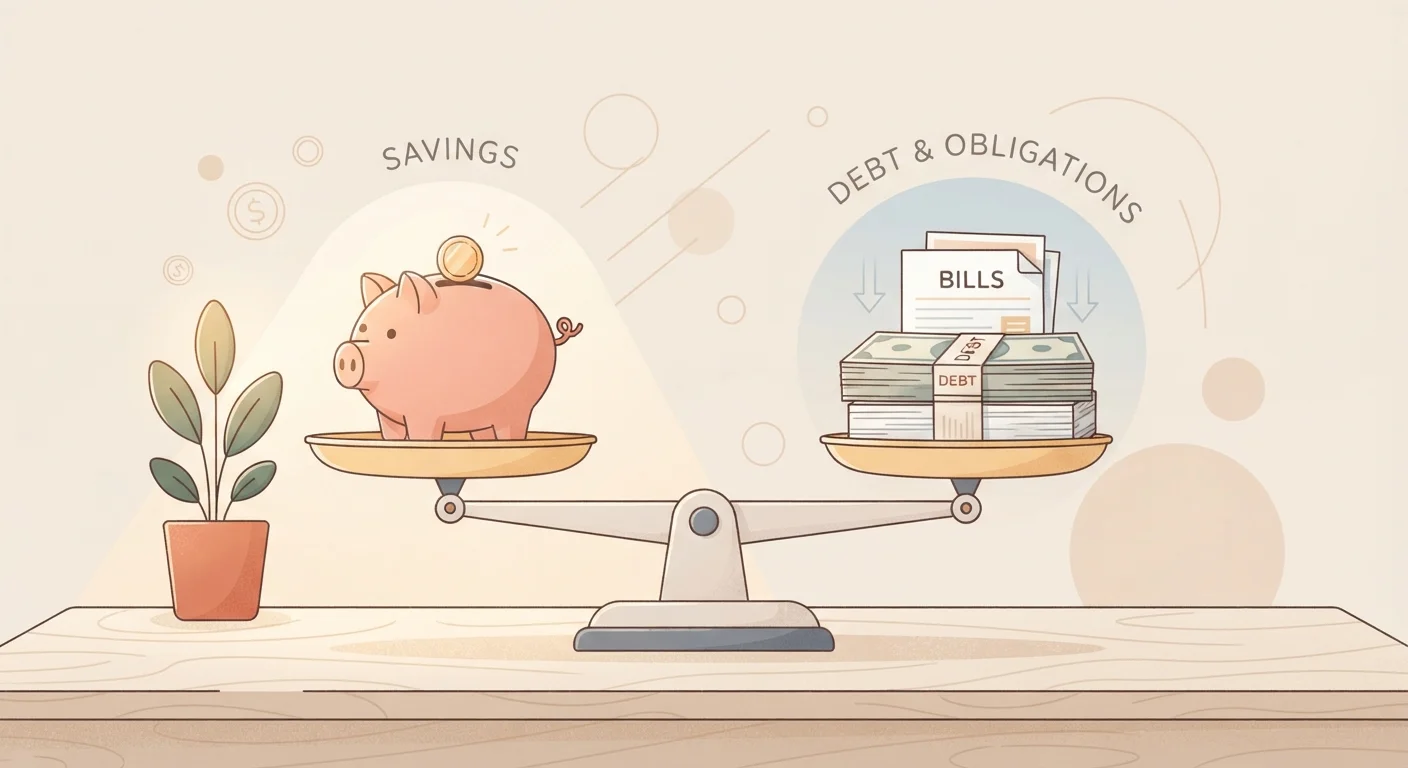

The Problem With Saving Last
Most people approach saving with the best of intentions - and a flawed sequence. The default approach looks like this: income arrives, bills get paid, discretionary spending happens, and whatever remains gets saved. The problem is that the remainder is often zero.
This isn't a character flaw. It's a structural problem. When saving is positioned as the final step, it competes against every other spending decision made during the month. Lifestyle costs expand, unexpected expenses arise, and the money earmarked for savings quietly disappears into everyday life.
Pay-yourself-first solves this by inverting the sequence entirely. Savings come out first - ideally before you've even seen the money - and the rest of your financial life is organized around what remains. It reframes saving not as a reward for discipline but as a prerequisite for spending. For a broader look at how spending habits quietly chip away at financial progress, see how small daily habits erode a budget.
Why the Sequence Matters More Than the Amount
Behavioral economics research consistently shows that people adapt to the income they perceive as available. When a savings transfer happens automatically before discretionary spending, most people adjust - without significant conscious effort - to living on the remainder. The same adjustment rarely happens when saving is attempted at the end of the month, because by then spending decisions are already locked in.
57%
Americans unable to cover a $1,000 emergency
According to a Bankrate survey, more than half of U.S. adults would struggle to pay for an unexpected $1,000 expense from savings, highlighting the gap between saving intentions and outcomes under a spend-first approach.
~14%
Average personal saving rate in early 1970s
The U.S. Bureau of Economic Analysis tracks the personal saving rate, which hovered around 12-14% in earlier decades before declining significantly - underscoring how saving habits have eroded over time without structural reinforcement.
6%
Median 401(k) contribution rate among savers
Vanguard's annual How America Saves report has consistently found that the median employee contribution rate to workplace retirement plans is around 6%, often the minimum needed to capture a full employer match.
This is why automation is central to the strategy. Scheduling a recurring transfer to a savings or investment account on payday removes the daily decision-making that erodes good intentions. Willpower is a limited resource; automation replaces it with a reliable system. For a detailed guide on setting up these transfers effectively, see automating your savings.
Start With Your Next Paycheck
You don't need to overhaul your finances to begin. Set up a single automatic transfer - even $25 - scheduled for the day your paycheck arrives. As you adjust to the reduced available balance, increase the amount gradually. Small, consistent increments over time build saving momentum without requiring dramatic lifestyle changes.
How to Put It Into Practice
Implementing pay-yourself-first doesn't require a financial overhaul. The core steps are straightforward:
- Choose a destination. Decide where the money will go - an emergency fund, a retirement account, or a dedicated savings account. If you carry high-interest debt, you may want to split contributions between saving and debt paydown. See the trade-offs explored in building an emergency fund vs. paying off debt.
- Set the amount. Pick a figure that's meaningful but not so large it forces you to rely on credit to cover essentials. A small, consistent amount beats an ambitious one that gets canceled.
- Automate the transfer. Schedule the movement of funds to coincide with your pay date. Many employers allow split direct deposits, which means the savings portion can go directly to a separate account before you receive the rest.
- Build the budget around what's left. Treat the post-savings amount as your real take-home pay. This is the number your spending plan should be built on. Building a budget from scratch is a practical next step if you don't already have a spending framework in place.
This is also the foundation described in core saving and debt management principles - prioritizing savings allocation before other financial decisions.
Common Misconceptions and Real Limitations
Pay-yourself-first is not a cure-all. If income barely covers essential expenses, forced savings can push people toward credit card debt to fill the gap - which is counterproductive. In those cases, even a token amount establishes the habit while the priority becomes increasing income or reducing fixed costs.
It also doesn't replace thoughtful budgeting. Knowing how your remaining income is allocated across needs and wants matters, especially once your savings rate grows. Think of pay-yourself-first as determining the size of the savings slice, while a budget determines how the rest of the pie is divided. The two are complementary tools, not competing ones. You can explore budgeting basics to understand how both fit together in a complete financial approach.
High-Interest Debt Changes the Calculus
If you're carrying high-interest credit card balances, directing every spare dollar to savings while paying only minimum debt payments may not be the most financially efficient path. Many advisors suggest a hybrid approach: build a small emergency cushion first, then redirect the majority of savings-designated funds toward high-interest debt elimination. Once that debt is cleared, the full savings allocation can resume. Discuss your specific situation with a licensed financial professional.
This article is for general informational and educational purposes only and does not constitute personalized financial, investment, tax, or legal advice. Consult a qualified financial professional before making decisions about your specific circumstances.