Why Budgets Fail Before They Start
Most first budgets fail not because the math is wrong, but because the mindset is. People approach budgeting the same way they approach a crash diet: cut everything, be strict, feel bad when they slip, and quit by week three. That cycle is predictable - and avoidable.
A budget is simply a spending plan. It tells your money where to go before the month begins, instead of wondering where it went afterward. Done well, it doesn't restrict your life - it makes room for the things that actually matter to you while ensuring your obligations are covered.
One of the most persistent myths is that budgeting is only necessary when you're in financial trouble. In reality, a spending plan is useful at every income level, because income alone doesn't create financial stability - intentional allocation does. See how common budgeting myths might be holding you back from even starting.
Budgeting Is Not One-Size-Fits-All
Your budget will look different from your neighbor's, your sibling's, or any template you find online - and that's expected. Household size, income, location, debt load, and personal goals all shape what a realistic spending plan looks like. What matters is that the numbers reflect your actual life.
The Building Blocks: Income, Expenses, and Categories
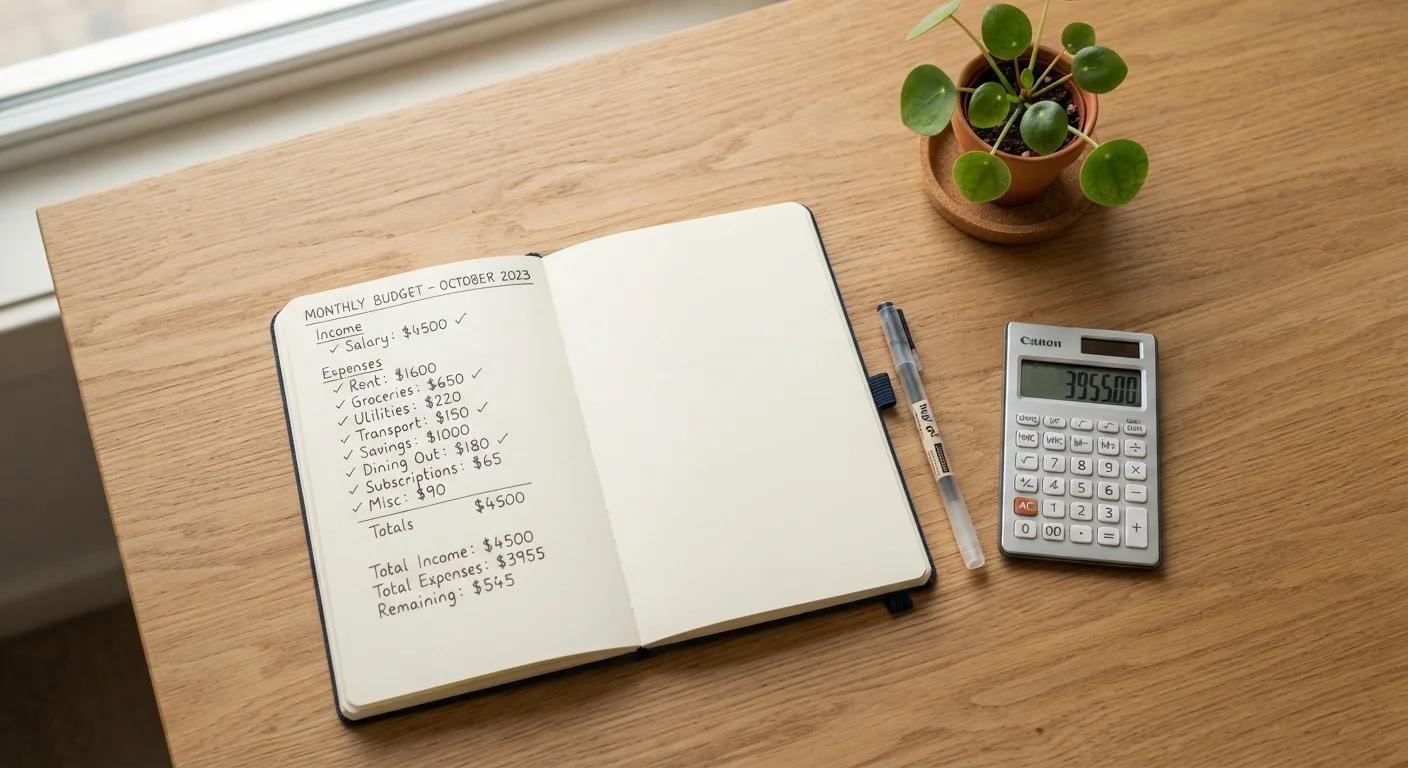
Before you can plan spending, you need two numbers: what comes in and what must go out. Start with your net (take-home) income - the amount that actually lands in your bank account after taxes and any automatic deductions. If your income varies, use a conservative monthly estimate.
Next, list your expenses in two groups:
- Fixed expenses: Amounts that stay the same each month - rent or mortgage, car payment, insurance premiums, minimum debt payments.
- Variable expenses: Amounts that fluctuate - groceries, gas, utilities, dining out, entertainment, clothing.
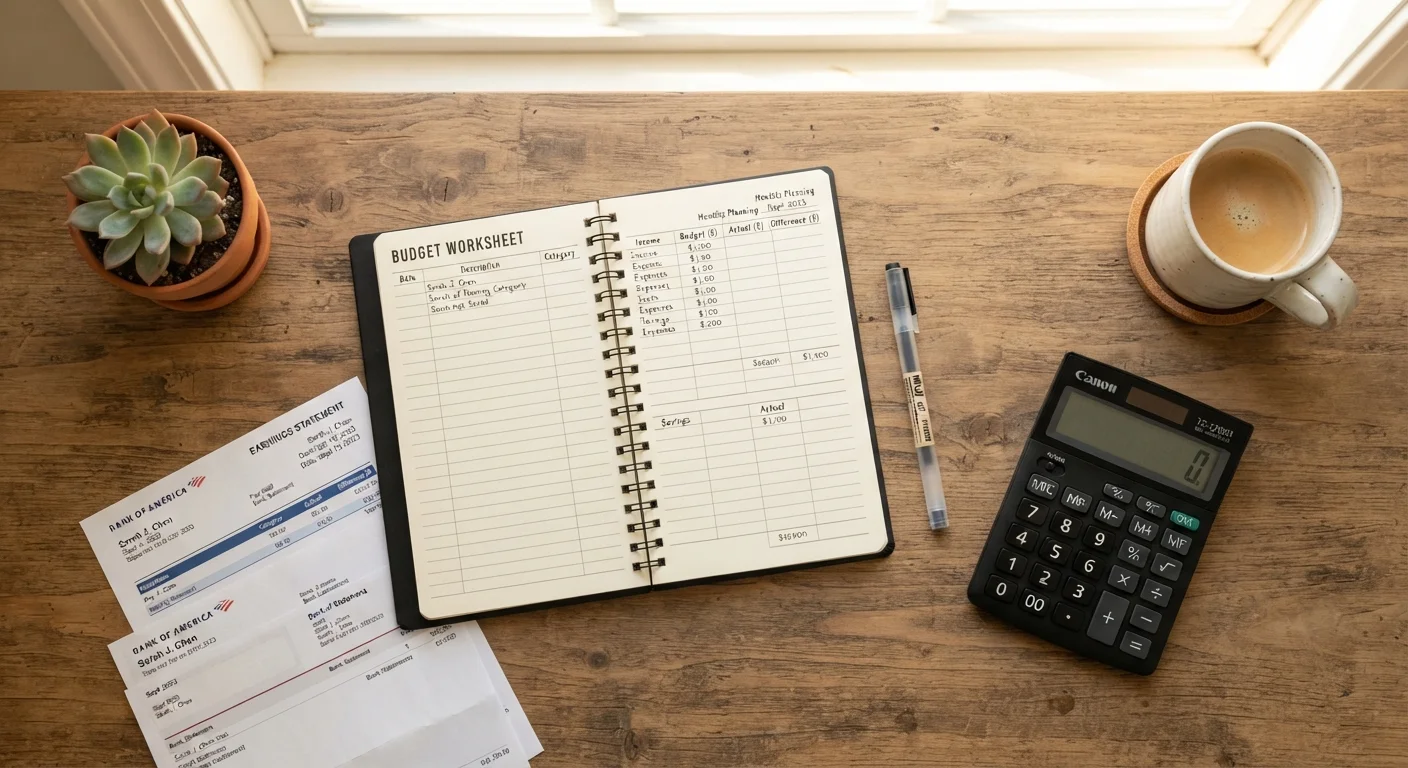
Don't guess at variable spending. Pull two to three months of bank and credit card statements and calculate real averages. Most people discover their actual spending differs meaningfully from what they assumed. The monthly budget setup checklist walks you through every document and figure to collect before you sit down to build your plan.
Net income
The amount of money you actually receive after taxes and other deductions are taken out of your paycheck - the figure your budget should be built around.
Fixed expense
A cost that stays the same every month, such as rent, a car loan payment, or an insurance premium. These are the easiest to plan for because the amount doesn't change.
Variable expense
A cost that changes from month to month, like groceries, gas, or dining out. These require tracking to understand your real average spending.
Zero-based budgeting
A method where you assign every dollar of income to a specific category - spending, saving, or debt - until there is nothing left unallocated.
Pay yourself first
A savings approach where you move money into savings immediately on payday, before spending on anything else, making saving automatic rather than an afterthought.
Irregular expenses
Real but infrequent costs - like car repairs, medical bills, or annual subscriptions - that can derail a budget if not planned for in advance.
Choosing a Budgeting Method That Fits You
There is no universally correct budgeting method. The right approach is the one you'll actually use. Here are three common frameworks worth understanding:
- 50/30/20
- Divide take-home income into three broad buckets: 50% for needs, 30% for wants, and 20% for savings and debt repayment. Simple and low-maintenance - a good entry point for most beginners.
- Zero-based budgeting
- Assign every dollar a job until income minus all allocations equals zero. More detailed and time-intensive, but leaves no money unaccounted for. Works well for people who want granular control.
- Pay yourself first
- Automatically transfer a set amount to savings on payday, then spend the remainder freely within reason. Prioritizes saving without requiring meticulous tracking. Learn more about why paying yourself first changes your financial trajectory.
For a detailed side-by-side comparison of these and other approaches, see budgeting approaches compared.
Start Simple, Then Refine
If you're overwhelmed by method choices, start with the 50/30/20 framework for your first month. You don't need the perfect system on day one - you need a starting point. Most people refine their approach significantly after seeing how their first real month plays out.
Small Habits That Make a Budget Stick
Systems beat willpower every time. Instead of relying on discipline to follow your budget, build small, low-effort routines that keep you connected to your money:
- Weekly ten-minute check-in: Once a week, review what you've spent against your plan. Catching a drift early is far easier than course-correcting after a full month.
- Name your savings goals: A savings account labeled "Emergency Fund" or "Car Repair" is easier to leave untouched than one labeled "Savings." Specificity creates psychological resistance to dipping in.
- Budget for irregular expenses: Car repairs, holiday gifts, and medical co-pays aren't surprises - they're predictable irregular costs. Estimate annual totals, divide by twelve, and set aside that amount monthly.
- Automate what you can: Schedule recurring transfers to savings on payday. Automation removes the need for willpower and ensures the priority items happen before discretionary spending begins.
For strategies on monitoring your money without it becoming a source of anxiety, see tracking spending without obsessing over every dollar.
When Your Budget Doesn't Go to Plan
Overspending in a category during a given month is not failure - it's information. The goal isn't a perfect budget; it's a useful one that you return to and adjust. When reality diverges from the plan, ask why before changing anything. Was it a one-off expense, or a sign that the original allocation was unrealistic?
Common adjustments first-time budgeters typically need to make:
- Increasing the grocery or dining budget after discovering estimates were too low
- Adding a "miscellaneous" category to absorb small irregular costs that don't fit neatly elsewhere
- Reclassifying a want as a need (or vice versa) based on actual behavior
Don't Set an Unrealistic Budget
A budget based on how you wish you spent - rather than how you actually spend - will fail within weeks. If your real grocery spending averages $500 a month, budgeting $200 isn't discipline; it's a setup for frustration. Build from reality first, then make gradual, intentional adjustments toward your goals.
Over time, your budget becomes a more accurate reflection of your real financial life - and that's when it starts to genuinely work. For a comprehensive end-to-end approach that accounts for life's changes, see building a budget that survives real life. Once your spending plan is stable, the natural next step is exploring saving and debt strategies to put your freed-up margin to work.
This article is for general informational and educational purposes only and does not constitute personalized financial advice. Consult a qualified financial professional for guidance specific to your circumstances.