Why the Direction of Your Storage Matters
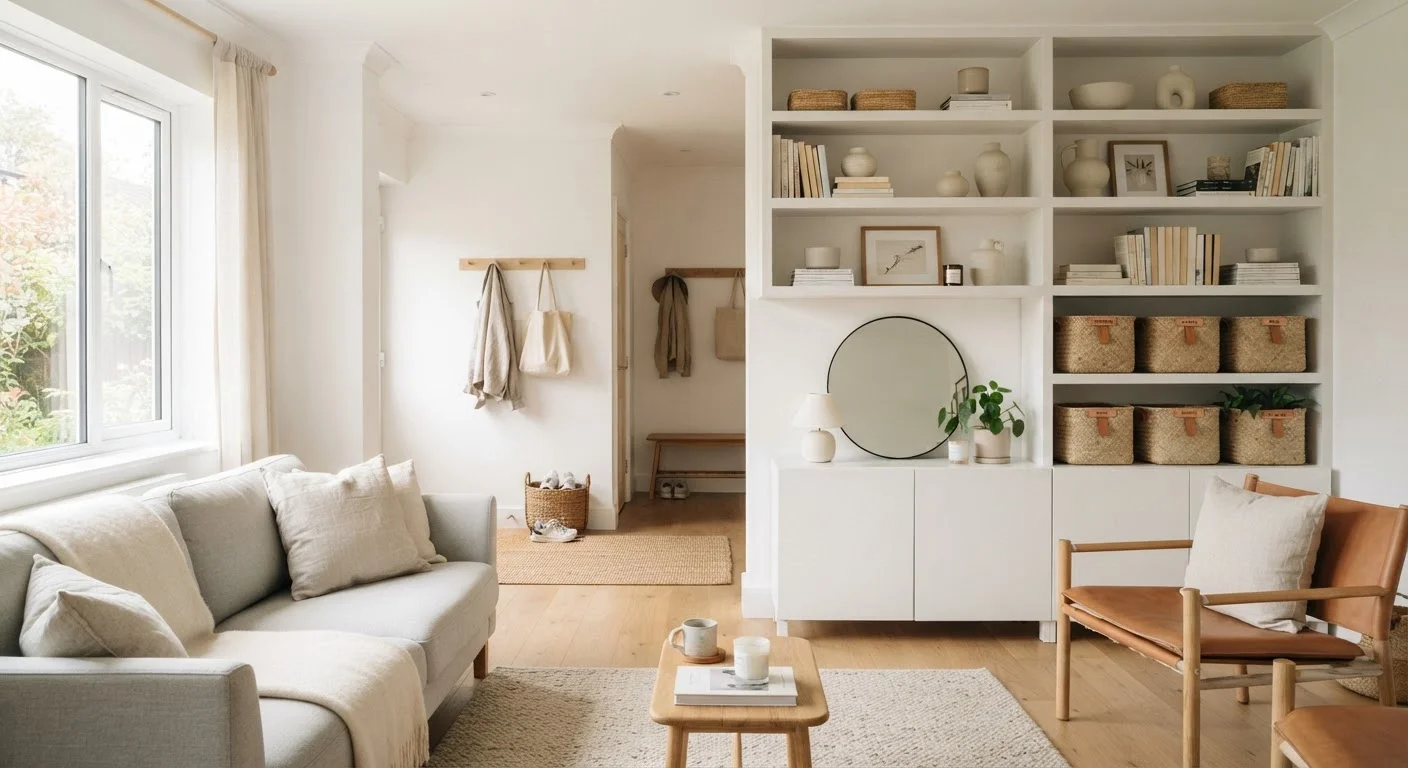
When a room feels perpetually cluttered despite repeated tidying, the problem is often not the volume of possessions - it's the direction the storage runs. Most people default to floor-level solutions: dressers, bins, baskets, and low shelving. These feel intuitive and accessible, but in a small room they compete directly with the space where you actually live.
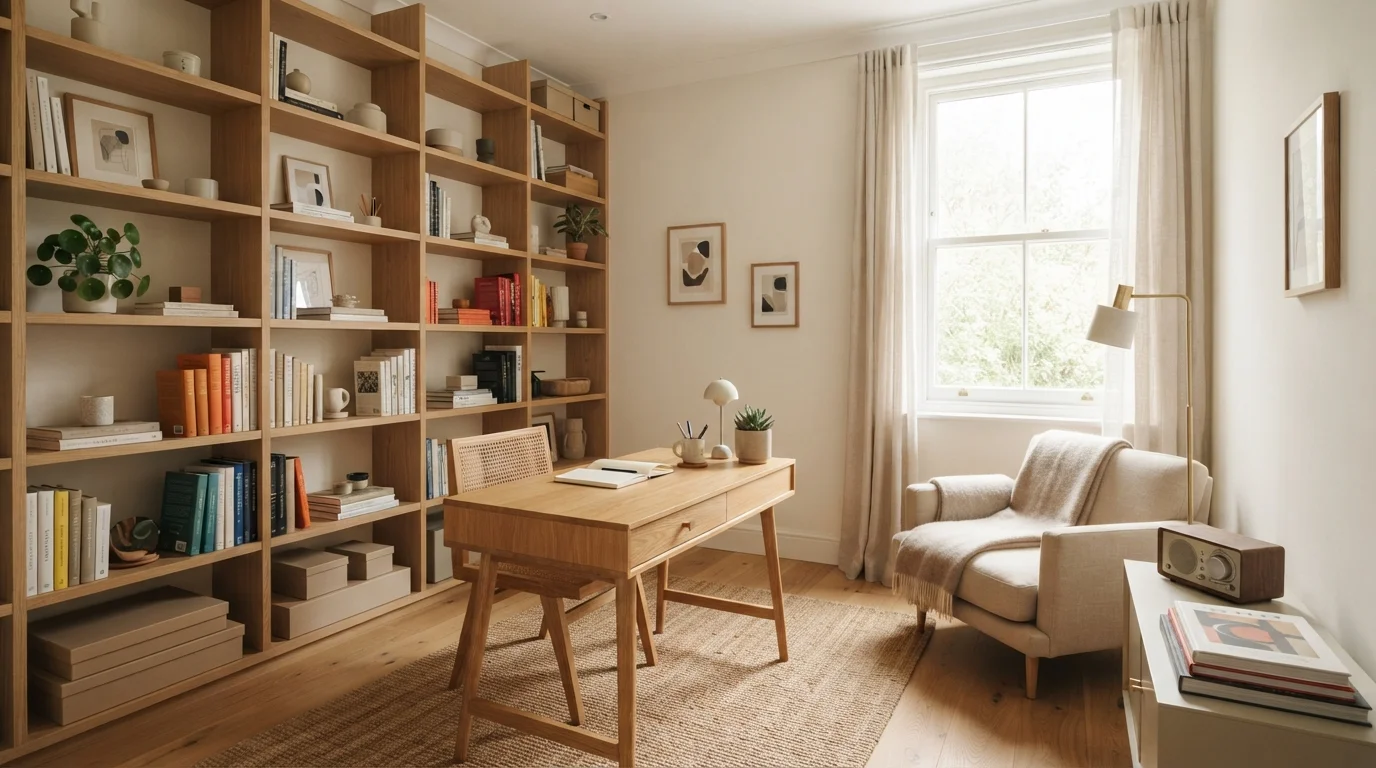
Vertical storage - shelving that runs toward the ceiling, wall-mounted cabinets, tall bookcases - works with a different resource: height. Many rooms have 8 to 10 feet of wall available yet use only the bottom four feet for storage. That unused zone is a real opportunity. The right choice between building up and spreading out depends on the room, its users, and what you're storing. See our room-by-room organization guide for a broader framework before you commit to a direction.
Head-to-Head: How the Two Approaches Compare
Neither strategy is universally superior. The table below breaks down how vertical and floor-level storage perform across the criteria that matter most in a small room.
| Criterion | Vertical Storage | Floor-Level Storage |
|---|---|---|
| Floor space used | Minimal - wall-mounted or slim footprint | Higher - occupies usable floor area |
| Ease of daily access | Limited above eye level; needs planning | Easy - everything within reach |
| Visual impact on room size | Opens floor, draws eye upward | Can feel space-shrinking if overdone |
| Safety considerations | Must anchor to wall; ladder may be needed | Stable and low-risk for most users |
| Suitability for children/elderly | Upper zones inaccessible without help | Generally more accessible for all ages |
| Storage capacity potential | High - uses full wall height | Moderate - limited by floor footprint |
| Best room types | Living rooms, offices, kitchens, studios | Bedrooms, children's rooms, entryways |
One pattern emerges clearly: vertical storage wins on space efficiency, while floor-level storage wins on practical accessibility. That tension is where most storage decisions live.
Getting the Most from Vertical Space
Tall shelving and wall-mounted systems work best when you organize intentionally by frequency of use. Store items you reach for daily at eye level and below. Reserve upper shelves - anything above about 72 inches - for seasonal items, backups, or things used only a few times a year. This keeps the convenience of floor-level access for everyday objects while still unlocking the upper zone.
A critical safety note: Any freestanding tall unit - bookcases, wardrobes, tall shelving - should be anchored to wall studs with anti-tip hardware. This is non-negotiable in homes with children and strongly recommended everywhere. Tip-over incidents involving unsecured furniture cause thousands of injuries annually in the US.
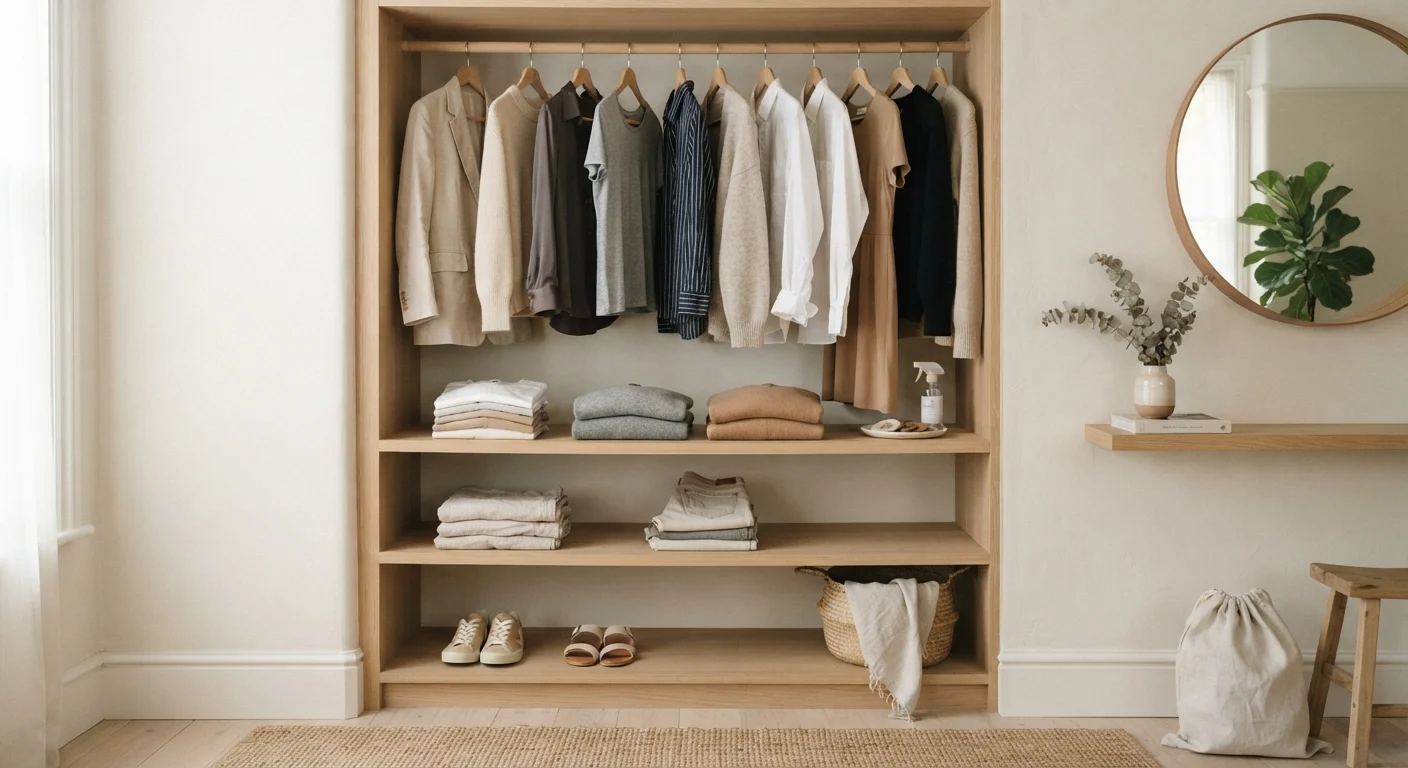
In rooms with limited natural light, avoid covering entire walls with solid cabinetry that goes to the ceiling. Open shelving or glass-fronted units keep the room feeling airy while still using vertical real estate. For closet-specific ideas, a capsule wardrobe approach can dramatically reduce what you need to store vertically in the first place.
~50%
Wall height typically left unused in average rooms
Interior design practitioners commonly note that most homeowners store items only in the bottom half of available wall height, leaving significant capacity untapped.
Top 4
Furniture type most involved in tip-over injuries
The U.S. Consumer Product Safety Commission has consistently identified dressers, chests, and bookcases among furniture types most frequently involved in tip-over incidents.
Making Floor-Level Storage Work Harder
The risk with floor-level storage isn't that it's a bad idea - it's that it tends to sprawl. Each new bin, basket, or low cabinet takes a slice of floor area that might otherwise serve as breathing room. The fix is discipline about what earns a floor-level spot.
Prioritize dual-purpose floor storage: ottomans with internal compartments, beds with built-in drawers, benches with lift-top lids. These store without adding visual bulk because they're furniture first. Under-bed storage is particularly underused - a standard bed frame offers meaningful square footage of hidden capacity. Our guide to hidden storage opportunities covers this and other overlooked zones in detail.
In shared living situations, floor-level systems often work better socially because they're equally accessible to everyone. If you're navigating different organization standards with housemates or family, the guide to organizing shared spaces offers practical approaches to building systems people will actually maintain.
Renting? Check Before You Mount
Wall-mounting shelves or anchoring tall furniture often means drilling into walls, which may require landlord approval under your lease. Before installing any wall-mounted storage system, review your rental agreement and ask your landlord in writing if needed. Many renters find freestanding tall units a workable alternative - just be sure to anchor them safely using furniture straps that connect to existing wall anchors or tension-rod systems designed for renters.
Combining Both for a Balanced Small Room
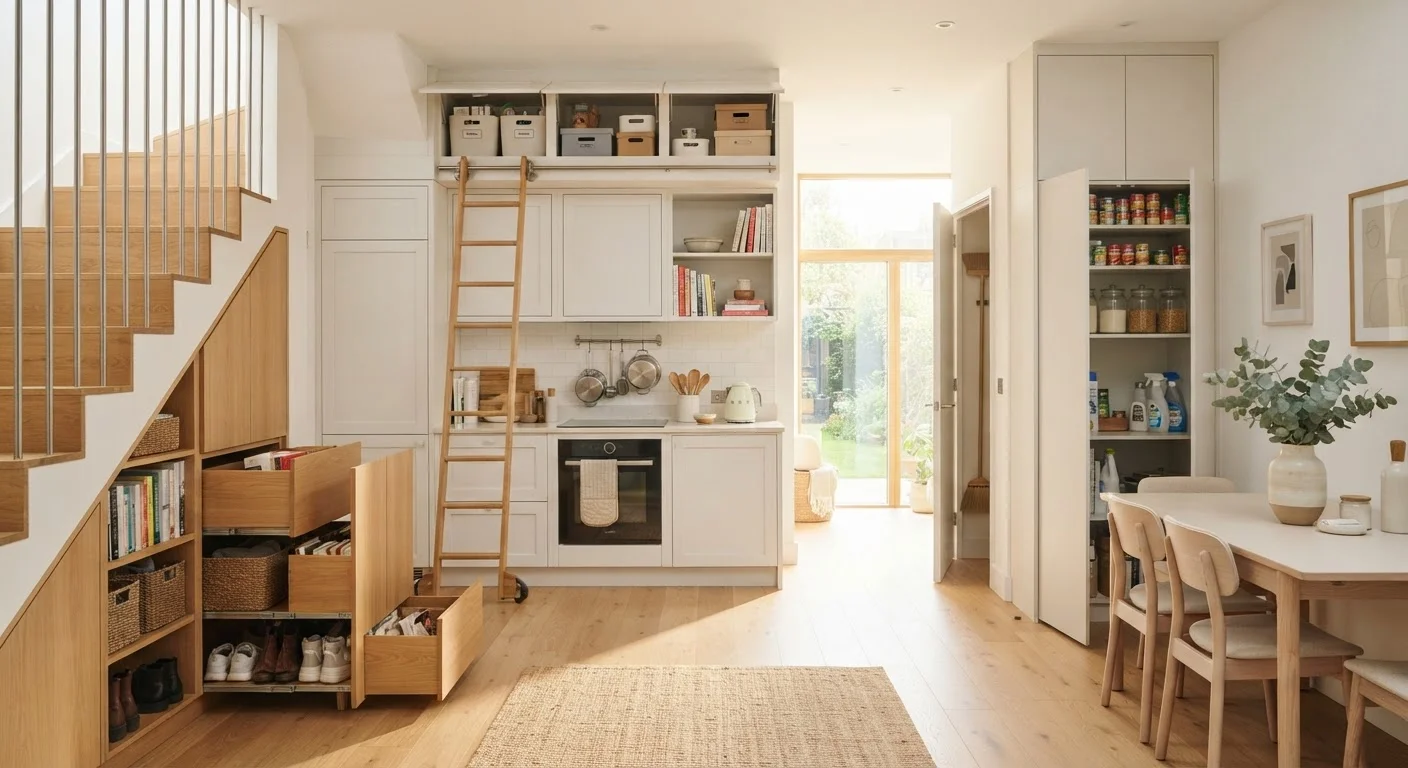
The most functional small rooms tend to use a layered strategy: concentrated vertical storage on one or two feature walls, supplemented by intentional floor-level pieces that double as furniture. Think of it as a vertical spine with a minimal floor-level base.
A practical starting point: map your walls and identify which ones have the fewest obstructions (doors, windows, outlets at working height). Those become candidates for tall shelving or wall-mounted systems. Remaining floor space is then reserved for only the furniture and floor-level storage that genuinely earns its place.
In kitchens, this balance is especially important. Organizing a small kitchen without losing counter space walks through how to apply both vertical and floor-level thinking in one of the most storage-constrained rooms in the home. The same logic scales to bedrooms, home offices, and studio apartments - the proportions shift, but the principle holds.