Your Home Has More Storage Than You Think
Most clutter problems aren't caused by too much stuff - they're caused by too few usable homes for that stuff. Before assuming you need a bigger home or a major renovation, it's worth a slow, deliberate walk through your existing space with fresh eyes. Homes of every size contain pockets of dead space that, with a small amount of intention, can quietly absorb the items that currently pile up on counters and floors.
The opportunities listed below are common to the majority of American homes. None require structural changes or significant expense to get started, and several can be tackled in an afternoon. If you're also working on building tidier everyday habits to keep the gains, the one-in, one-out rule and other long-term habits is a useful next read.
Start With What You Already Own
Before purchasing any storage products, take stock of baskets, bins, and containers you already own. Many hidden storage opportunities in your home can be activated immediately without spending a dollar - it's simply a matter of relocating items to underused zones. Buying more storage before evaluating existing containers can itself become a source of clutter.
Six Hidden Storage Spots Worth Reclaiming
The Space Above Kitchen Cabinets
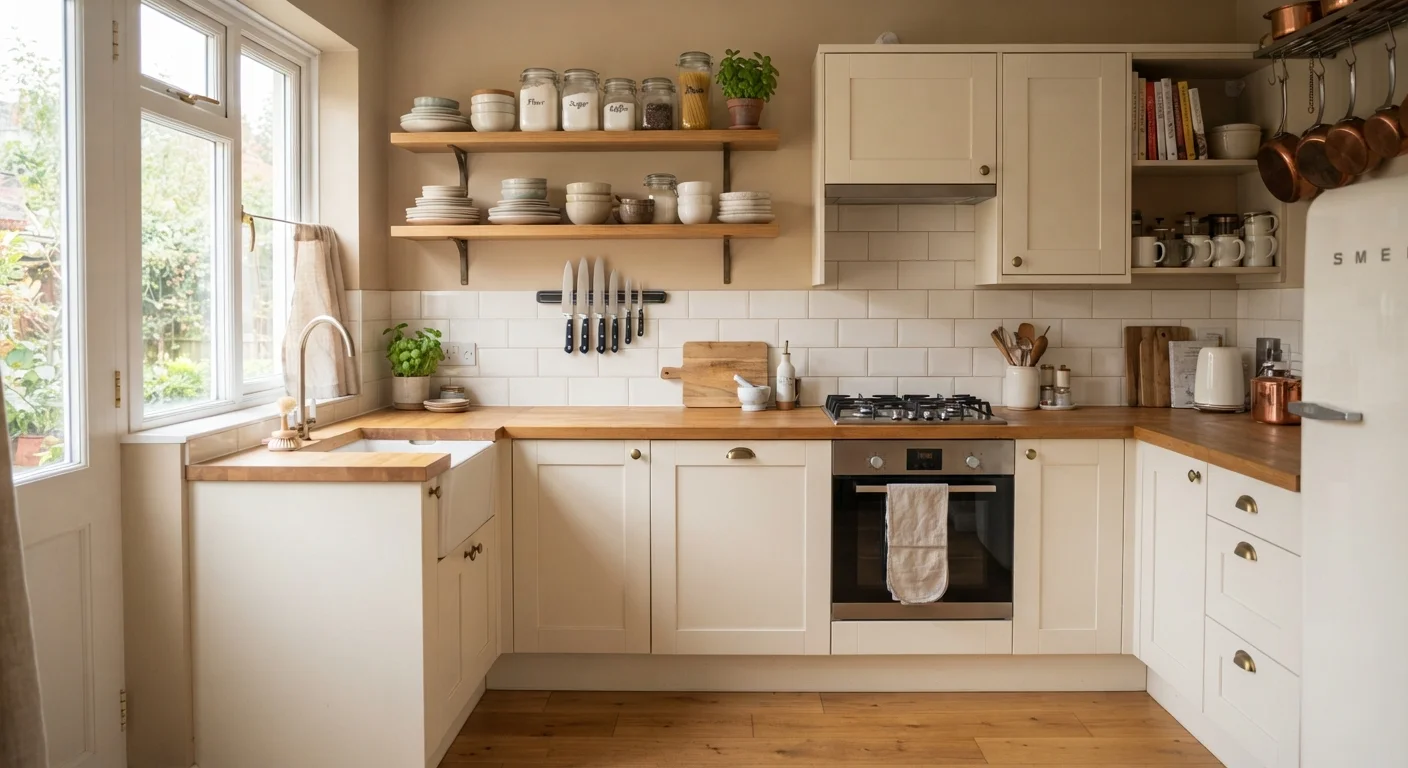
Most kitchen cabinets stop eight to twelve inches short of the ceiling, leaving a horizontal shelf of empty air that homeowners barely notice. This ledge can hold baskets for bulky, infrequently used items - think seasonal bakeware, oversized serving platters, or extra pantry overflow. Use uniform baskets or boxes to keep the look intentional rather than chaotic. If dust accumulation is a concern, lidded containers solve the problem immediately. This space works especially well for items you reach for only a few times a year.
That gap above your cabinets is a functional shelf hiding in plain sight.
Behind Interior Doors
The back of almost every interior door - bedroom, bathroom, pantry, laundry room - is a flat, unused vertical surface. Over-the-door organizers can hold cleaning supplies, shoes, jewelry, spice packets, craft materials, or toiletries depending on the room. Hooks rated for the door's weight work well for bags, robes, and frequently worn items. Because the storage disappears when the door opens inward, this solution has zero visual impact on the room itself. For bathroom doors especially, this can replace an entire under-sink cabinet's worth of clutter.
Behind every interior door is a flat, unoccupied vertical surface ready to work.
Under the Stairs
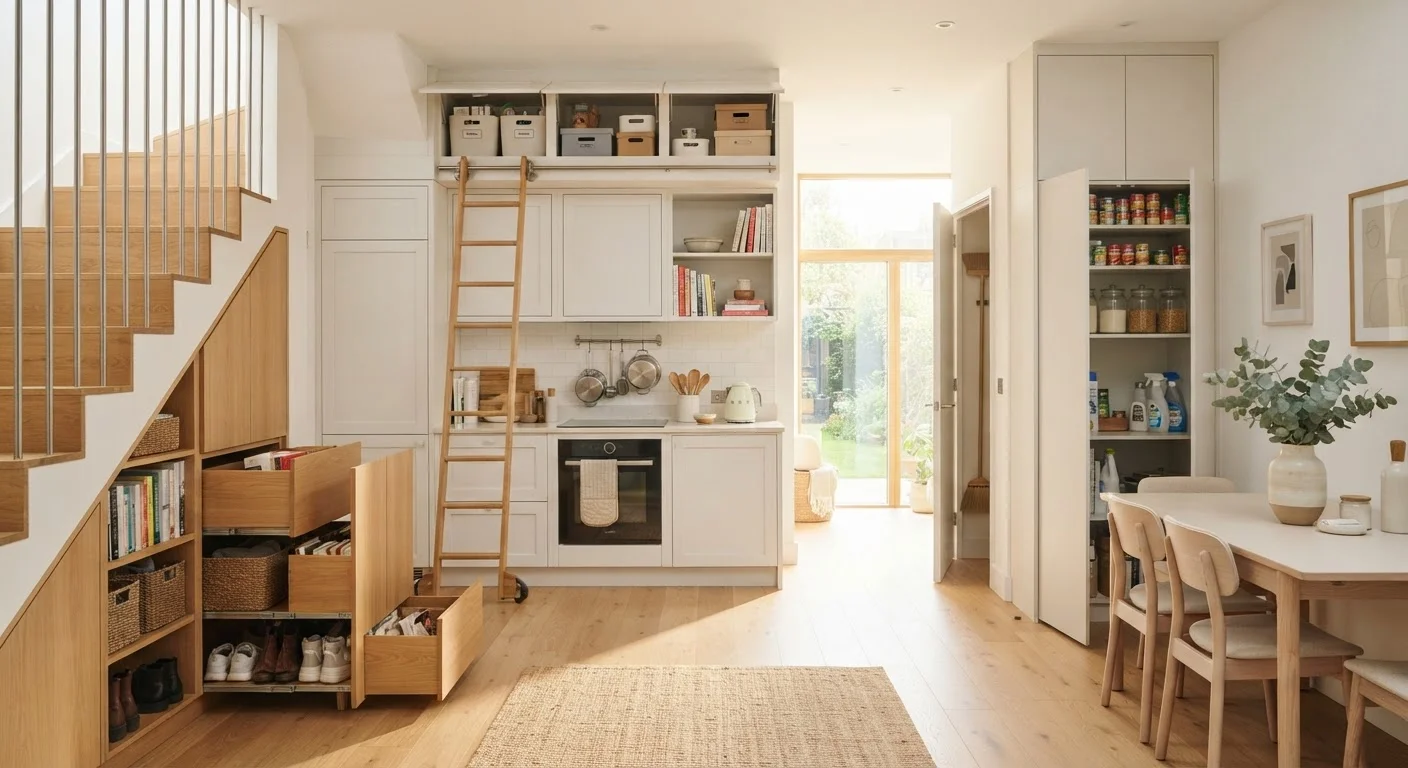
The triangular void beneath a staircase is one of the most frequently wasted spaces in multi-story homes. Even without custom built-ins, simple pull-out drawers, freestanding shelving units, or a combination of hooks and bins can transform this area into a functional storage room. It's naturally suited to shoes, sports equipment, cleaning tools, or a compact home office nook. Homeowners considering more involved built-in cabinetry should consult a contractor and verify any local permit requirements before modifying the structure around a staircase.
The triangular void beneath a staircase is one of the most-wasted spaces in any multi-story home.
Inside Furniture That Does Double Duty
Ottomans with lift-off lids, beds with drawers built into the base, benches with hinged seats, and coffee tables with lower shelves all add storage without occupying any additional floor area. This approach is especially effective in living rooms and bedrooms where dedicated storage furniture isn't practical. When choosing furniture, measuring the intended space carefully and considering what you actually need to store helps avoid pieces that look useful but don't fit your real-world needs. Our guide on rethinking storage in small rooms covers how to balance furniture choices with spatial constraints.
Storage furniture adds capacity without claiming a single extra inch of floor space.
The Narrow Gaps Between Appliances
The slim vertical gaps between a refrigerator and a wall, or between a washing machine and a cabinet, are often just wide enough for a slim pull-out pantry or tower of shelves. These roll-out units are widely available and can hold canned goods, cleaning products, or laundry supplies in spaces that were previously just dead air. Measuring carefully before purchasing any pull-out unit is essential - gaps that look similar can vary by several inches. This micro-storage approach is one of the easiest wins in a small kitchen; see our companion piece on organizing a small kitchen without losing counter space for more ideas in that room.
A slim pull-out unit can turn the gap beside your refrigerator into a functional pantry.
The Toe-Kick Space Beneath Cabinets
At the base of kitchen and bathroom cabinets, there is typically a recessed horizontal strip called the toe kick - usually three to four inches tall and several inches deep. This area is normally decorative, but shallow pull-out drawers designed specifically for toe-kick installation can slide into this space to hold flat items like baking sheets, placemats, or bathroom linens. Toe-kick drawer installation is a minor carpentry project; a skilled DIYer can often handle it, though anyone unfamiliar with cabinetry work may prefer to hire a carpenter for a cleaner result.
The recessed toe kick beneath your cabinets can be converted into slim, sliding storage drawers.
Label Everything You Tuck Away
Hidden storage only stays functional if you can find what you put there. Labeling baskets, bins, and boxes in out-of-sight locations saves the frustration of searching through multiple containers later. Simple adhesive labels or a basic label maker are enough - the habit matters more than the tool.
Making the Most of Found Space
Activating hidden storage is only half the equation. The other half is being intentional about what goes there. Dead zones work best for infrequently used items, overflow stock, or category-specific collections - not as a catch-all for things you haven't decided about yet. If a space becomes a dumping ground, it stops functioning as storage and starts functioning as a hiding place for clutter.
As you reclaim these spaces, keep in mind that the goal is a calmer, more functional home - not a perfectly optimized one. Small, consistent improvements add up over time. Organizing a single overlooked zone each month creates meaningful change without the overwhelm of a whole-home overhaul. For households navigating different preferences around tidiness, organizing a home when not everyone agrees offers practical strategies for finding common ground.