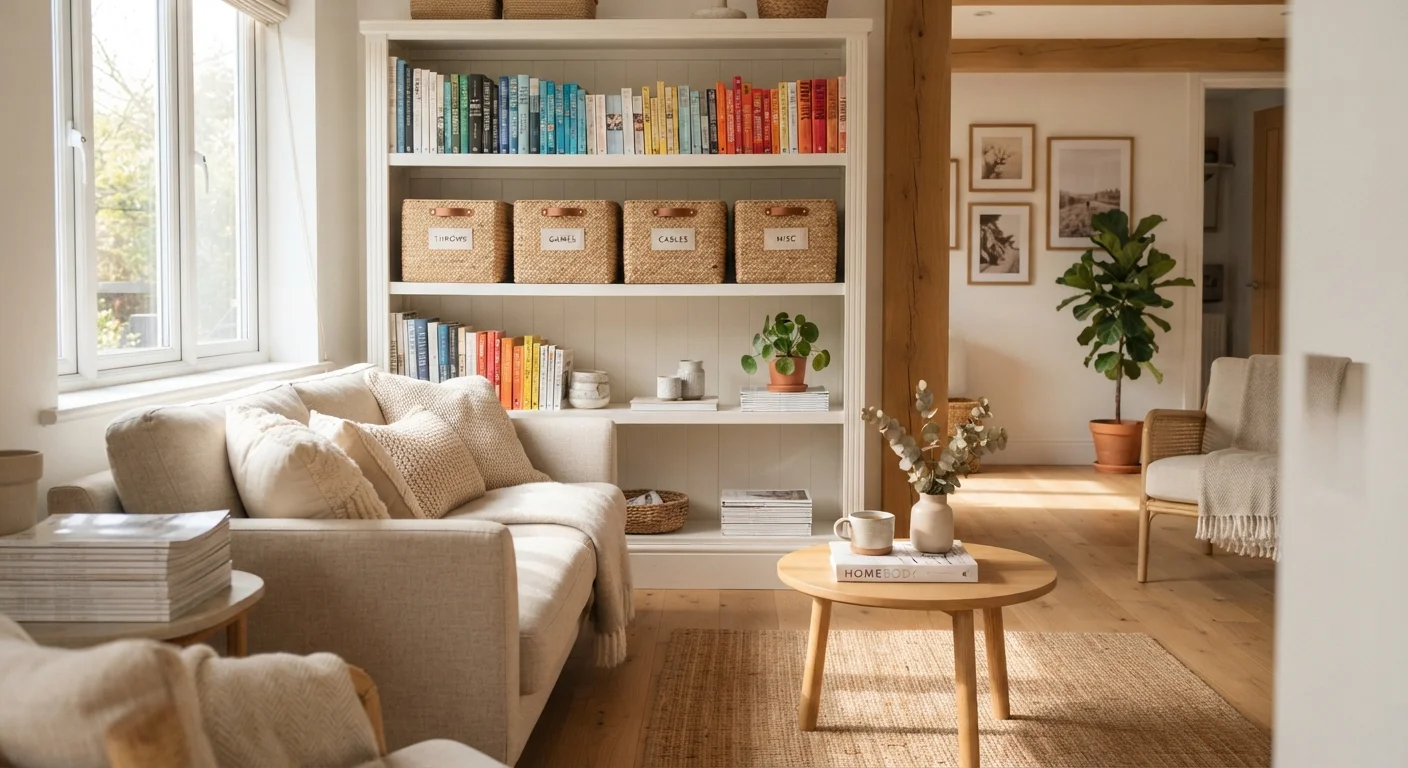
Why a Room-by-Room Approach Works
Organizing an entire home in a single weekend sounds motivating in theory. In practice, it leads to half-emptied drawers, decision fatigue, and a living room buried in displaced items. A room-by-room method sidesteps that trap by shrinking the scope to something completable in a single session.
Each room also has a distinct purpose and distinct clutter patterns. What works in a kitchen - grouping by task, keeping counters clear - doesn't translate directly to a bedroom or a home office. Treating each space on its own terms produces systems that actually hold up.
If you're still unsure where to start mentally, our plain-language introduction to home organization covers the foundational mindset shifts that make the whole process less daunting.
1 hour
Average time lost weekly searching for misplaced items
Estimates from time-use researchers suggest disorganized households lose roughly an hour per week locating everyday objects.
40%
Of housework eliminated by reducing clutter
Professional organizers frequently cite the widely referenced estimate that reducing excess items can cut cleaning and tidying time by roughly 40%.
3-4
Rooms most Americans identify as persistently disorganized
Consumer surveys on home organization consistently find kitchens, garages, home offices, and closets top the list of problem spaces.
Entryways: Your Home's First Line of Defense
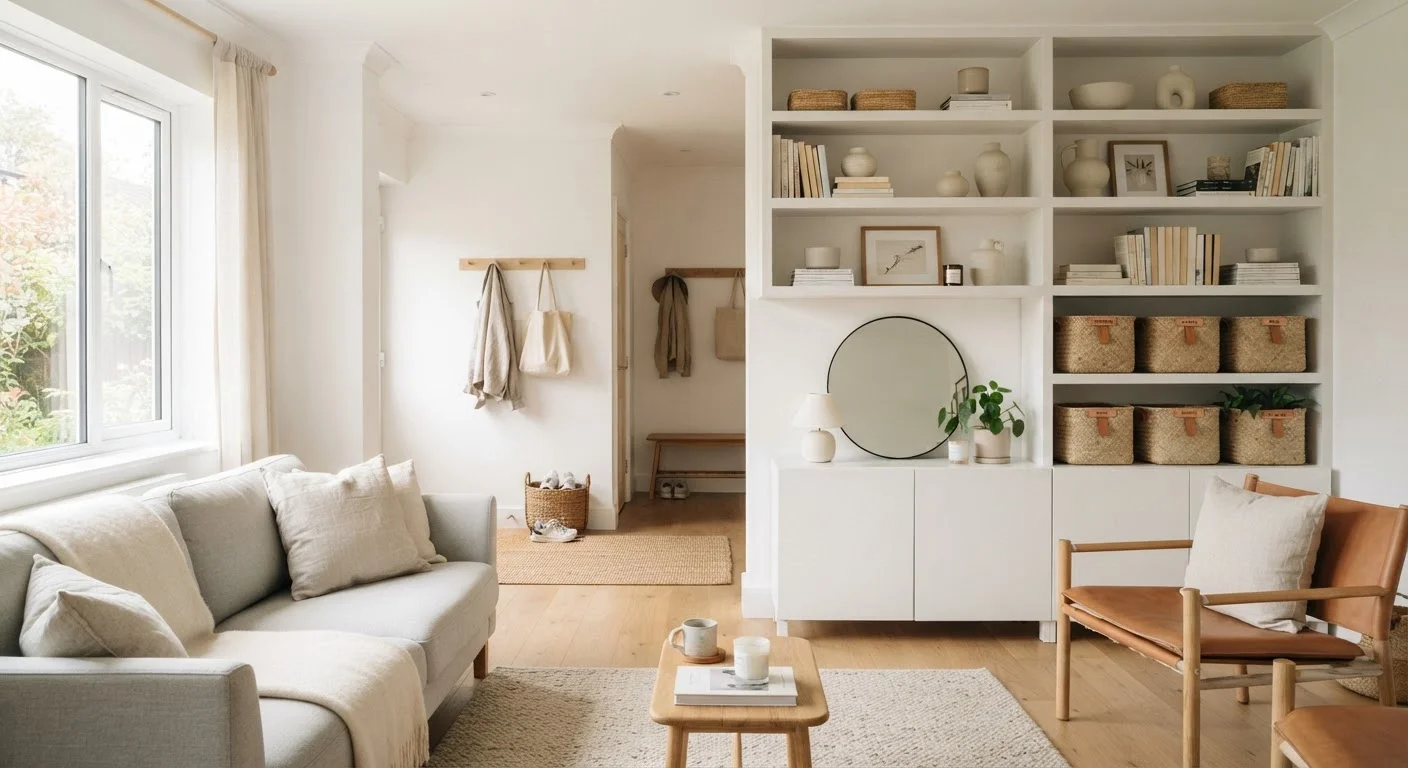
The entryway is where clutter enters the home. Shoes, bags, mail, keys, and outerwear all arrive here and, without a system, stay here indefinitely. A functional entryway intercepts that clutter before it spreads.
- Hooks at eye level for bags, coats, and dog leashes - one hook per household member prevents pile-ups.
- A tray or basket near the door for shoes keeps the floor clear and signals where footwear belongs.
- A single landing spot for keys and mail - a small dish or wall-mounted organizer eliminates the daily scramble.
If your entryway is tight, think vertically. A tall, narrow cabinet or over-door hooks can hold a surprising amount without consuming floor space. For a deeper look at maximizing tight areas, see our guide on vertical vs. floor storage strategies.
Install hooks at a height that works for every person in the household - including children. If a hook is inconvenient to reach, items land on the floor instead.
Friction is the enemy of any organizing system. Lowering the effort required to use a system is the single most effective way to ensure it actually gets used.
Before buying any storage product, measure the space and bring those measurements with you. A container that's one inch too wide is useless.
Buying storage before knowing exact dimensions is one of the most common and costly organizing mistakes - it results in returns, waste, and abandoned systems.
Kitchen: Function Over Everything
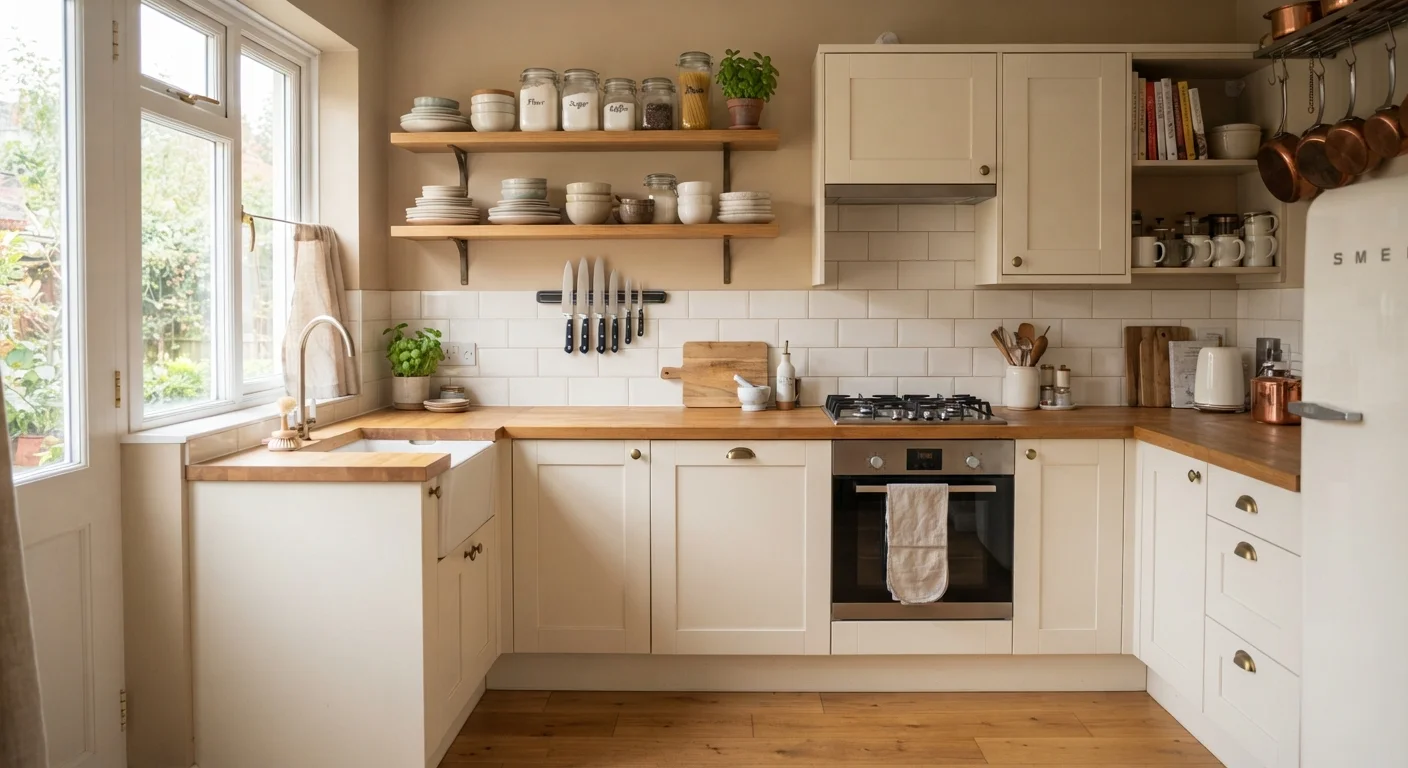
Kitchen organization is less about aesthetics and more about workflow. The goal is to store items where you use them: cutting boards near the prep area, pots near the stove, mugs near the coffee maker.
Counters
Counter space is prime real estate. Keep only daily-use appliances on the surface; everything else earns cabinet space. Our article on organizing a small kitchen without losing counter space offers specific strategies for keeping surfaces functional.
Cabinets and Drawers
Group items by category and frequency of use. Store everyday dishes at eye level; seasonal or rarely used items go high or low. Drawer dividers for utensils take minutes to set up and save significant daily friction.
Pantry or Food Storage
First-in, first-out rotation (older items at the front) reduces waste. Clear, uniform containers for dry goods aren't just visually tidy - they make inventory obvious at a glance.
Label Everything, Even the Obvious
Labels feel redundant when you first set up a system - you know where everything goes. Six months later, after the novelty has worn off, labels are what keep other household members (and your future self) on track. A simple label maker or even handwritten tape labels are sufficient.
Bedroom: Calm Starts With Clear Surfaces
Research in environmental psychology consistently links visual clutter in the bedroom with poorer sleep quality and higher stress. The bedroom benefits most from ruthless surface discipline - nightstands and dressers should hold only what's used nightly.
Closet
Organize by category (all tops together, all pants together) rather than outfit. This makes getting dressed faster and makes gaps - things you actually need - visible. Donate or store anything that hasn't been worn in a full year.
Under-Bed Storage
Flat bins under the bed are ideal for off-season clothing, extra bedding, or rarely used items. Label each bin so retrieval doesn't mean pulling everything out.
If you share a bedroom with someone whose organizational preferences differ from yours, our guide on organizing a home when not everyone agrees offers practical ways to build systems both people can maintain.
Bathroom: Small Space, Big Payoff
Bathrooms accumulate products quickly, and most have limited storage. A periodic purge - removing expired medications, nearly-empty duplicates, and items that drifted in from other rooms - is the essential first step.
- Under-sink space benefits from small bins or a two-tier shelf to prevent items disappearing into a dark corner.
- Inside cabinet doors can hold hooks for hair tools or small pockets for frequently reached products.
- The shower or tub area works best with a caddy that drains - standing water degrades shelves and encourages mold.
Don't Store Medications in the Bathroom
Despite the name 'medicine cabinet,' bathrooms are actually a poor storage location for medications. Heat and humidity from showers accelerate the breakdown of many drugs. A cool, dry, locked location - out of reach of children - is the safer choice. Check with a pharmacist if you're unsure about specific storage requirements.
Aim to store only what you use in a typical week at arm's reach. Bulk supplies and backstock belong in a linen closet or designated storage area, not crowding daily-use items.
Home Office: Protecting Your Focus
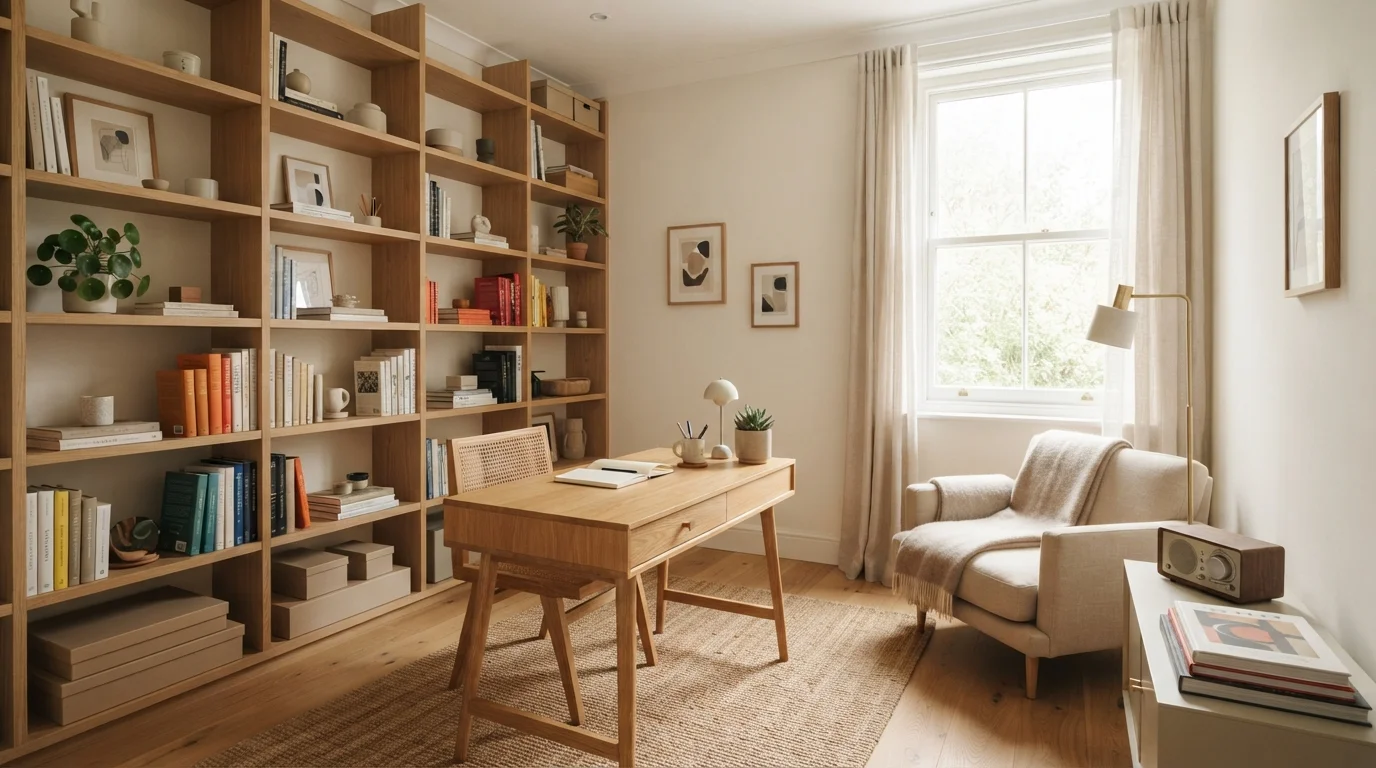
A disorganized workspace creates a disorganized mind. The home office has two distinct clutter challenges: physical (paper, cables, supplies) and digital (files, desktop icons, email). Both deserve attention.
Paper
Establish a simple three-category system: action needed, to file, and to shred/recycle. Process the action pile daily. File or scan important documents weekly. A single inbox tray on the desk prevents paper from spreading.
Cables and Equipment
Cable management - clips, velcro ties, or a small cable box - dramatically reduces visual noise and makes cleaning the desk easier. Label cables at both ends so unplugging becomes identifiable.
Supplies
Keep only daily-use supplies on the desk surface. Everything else goes in a drawer. A simple rule: if you haven't reached for it this week, it doesn't belong on the desk.
“The objective of cleaning is not just to clean, but to feel happiness living within that environment.”
— Marie Kondō, Professional organizer and author of books on tidying
Sustaining the Systems You Build
The most common frustration with home organization is watching a freshly organized space slowly revert to chaos. That's not a character flaw - it's a systems gap. Organized spaces stay organized when maintenance is designed into the routine, not bolted on as extra effort.
A few habits that make a measurable difference:
- Reset common areas for five minutes before bed - surfaces wiped, items returned to their homes.
- Adopt a one-in, one-out approach when bringing new items home: something leaves for everything that arrives.
- Schedule a brief seasonal review (30-60 minutes per room, four times a year) to catch drift before it compounds.
For a full look at the daily and weekly habits that prevent clutter from returning, see The One-In, One-Out Rule and other long-term tidiness habits.
Getting Started With Home Organization
A plain-language introduction covering core organizing ideas, tools, and mindset shifts - ideal if this article has you ready to dive deeper into the process.
Vertical Space vs. Floor Space: Storage in Small Rooms
Explores when to build storage upward versus outward, with practical guidance for making the most of compact living areas.
Shared Spaces, Different Standards
Covers how to build organizing systems that work for households where not everyone shares the same tidiness preferences or habits.