Two Distances, One Outcome
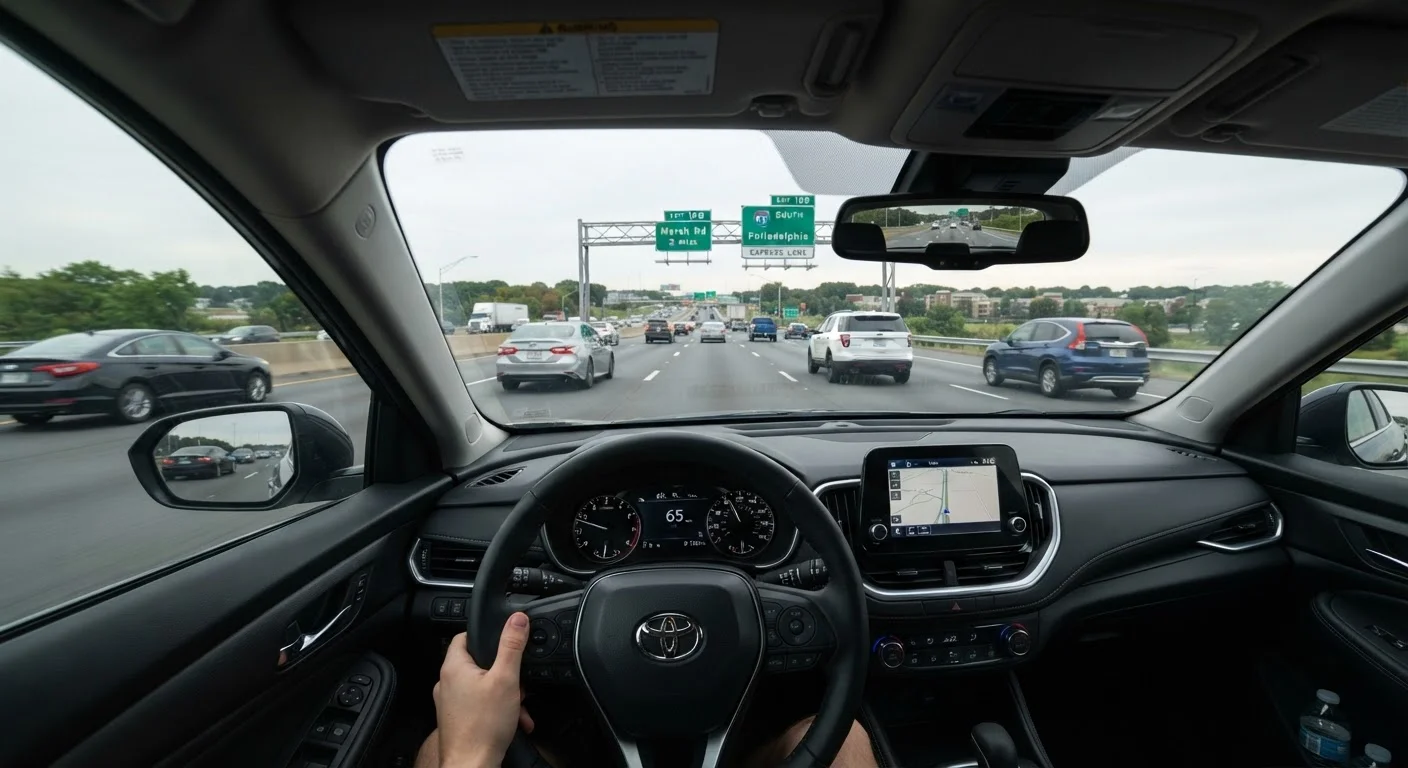
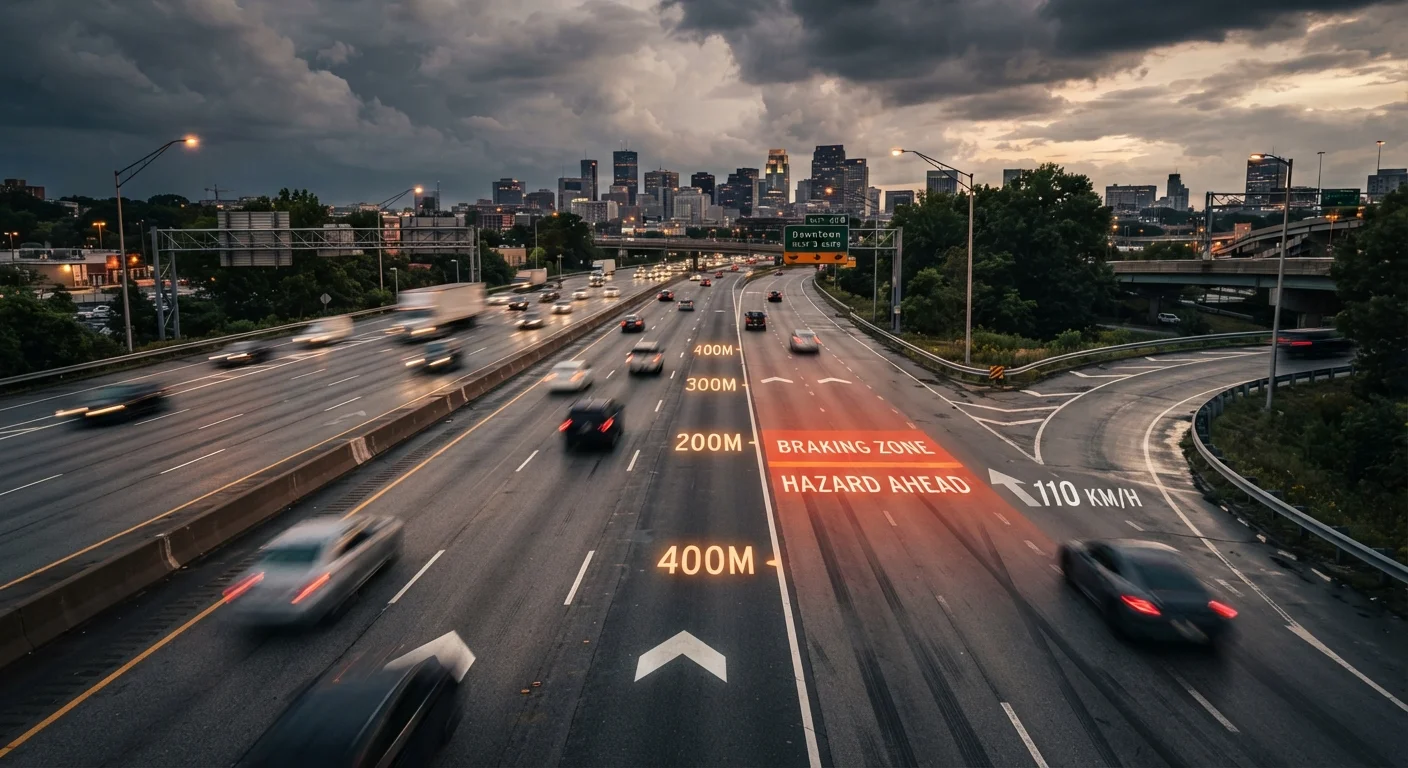
Every time you need to stop your car in an emergency, two separate distances play out in sequence - and most drivers only think about one of them. The first is reaction distance: from the moment your eyes register a hazard to the moment your foot presses the brake, your vehicle is still traveling at full speed. At an average reaction time of 1.5 seconds, a car moving at 60 mph covers roughly 132 feet before the brakes even engage.
The second is braking distance: the physical distance the car slides while decelerating to zero. On dry asphalt with a well-maintained vehicle at 60 mph, that's typically an additional 120 to 180 feet. Add them together and you're looking at 250 feet or more - nearly the length of a football field - before the car stops.
For a deeper look at how these terms are used in road safety contexts, see Road Safety Terminology Every Driver Should Understand.
132 ft
Distance traveled at 60 mph during reaction time
Based on a 1.5-second average reaction time before a driver applies the brakes - a standard used in traffic engineering calculations.
4×
Increase in braking distance when speed doubles
Because kinetic energy scales with the square of velocity, doubling speed quadruples the energy brakes must dissipate, extending stopping distance dramatically.
3×+
Longer stopping distance on ice vs. dry pavement
Ice dramatically reduces tire-road friction, meaning a vehicle traveling the same speed on ice may need three or more times the distance to stop compared to dry asphalt.
The Exponential Problem: Why Speed Isn't Linear
Most people think of speed as a linear risk factor - going 10 mph faster means 10% more danger. Physics disagrees sharply. Kinetic energy - the energy that brakes must overcome to stop a moving vehicle - is calculated as ½ × mass × velocity². The velocity is squared, which means risk escalates far faster than intuition suggests.
To put that in concrete terms: a car traveling at 40 mph carries roughly twice the kinetic energy of one traveling at 30 mph - but four times the energy of one at 20 mph. Each incremental speed increase demands exponentially more stopping force and, therefore, exponentially more distance.
This is precisely why speed limits aren't arbitrary numbers. Engineers set them based on road geometry, sight lines, pedestrian exposure, and - critically - the stopping physics for typical vehicles. Exceeding posted limits doesn't just invite a fine; it erodes the safety margin those limits are designed to provide.
Use the Three-Second Rule as a Baseline
Pick a stationary object ahead - a signpost or road marking. When the car in front passes it, count off three seconds. Your car should not reach that same point before the count ends. In rain, fog, or at night, extend this to at least five or six seconds. This simple habit keeps your following distance in line with the physics of stopping at speed.
Hidden Multipliers: What Else Extends Your Stopping Distance
Even at a legal speed, several factors can dramatically extend how far your car travels before stopping:
- Driver impairment and fatigue: A tired or distracted driver can have a reaction time two to three times longer than average. That alone can add 100 feet or more to stopping distance at highway speeds.
- Road surface and weather: Wet asphalt reduces friction significantly. Ice or packed snow can extend braking distance by a factor of three or more compared to dry pavement.
- Tire condition: Worn tread reduces grip, especially in wet conditions. A tire below the minimum tread depth offers meaningfully less stopping power than a new one.
- Vehicle weight and load: Heavier vehicles carry more kinetic energy at the same speed. A fully loaded SUV or pickup needs more distance to stop than an empty compact car under identical conditions.
- Brake condition: Degraded brake pads or rotors reduce the force your brakes can apply, directly lengthening braking distance. Aggressive driving habits also wear brakes faster - as covered in How Driving Habits Quietly Accelerate Vehicle Wear.
Understanding these multipliers is one reason that Defensive Driving emphasizes anticipation - because by the time you need to brake hard, several of these factors may already be working against you.
Translating Physics Into Driving Decisions
The practical implication of stopping-distance physics is straightforward: space is your most valuable safety resource. The more room you have between your car and the vehicle ahead, the more time you have for both reaction and braking to play out before a collision occurs.
A commonly cited rule of thumb is the three-second following distance - pick a fixed marker on the road and confirm that at least three seconds pass between the car ahead passing it and you reaching it. In poor weather, that minimum should double. At highway speeds, three seconds translates to roughly 250 feet at 60 mph - which is why this benchmark aligns with the physics of stopping distance.
For a detailed breakdown of how to judge and apply that space in real traffic, Why Your Following Distance Is Probably Too Short walks through the gap rules and the braking physics behind them.
Speed limits, following distances, and braking physics all connect to a broader picture of how risk differs by road type. Motorway Driving vs. Urban Driving explores how to adapt these principles to different environments.