Why the Sticker Price Is Just the Starting Point
Walk into a dealership, agree on a vehicle price, and assume the hard work is done - then watch the numbers climb during paperwork. This experience is common enough that consumer advocates have a name for it: the "out-the-door gap." The advertised or negotiated price rarely reflects what you'll actually pay once taxes, government fees, and dealer charges are folded in.
Understanding which fees are legitimate, which are inflated, and which are simply invented is the first line of defense for any car buyer. As our guide to the true cost of owning a car makes clear, the purchase transaction itself sets the financial tone for everything that follows.
Accepting the documentation fee without question.
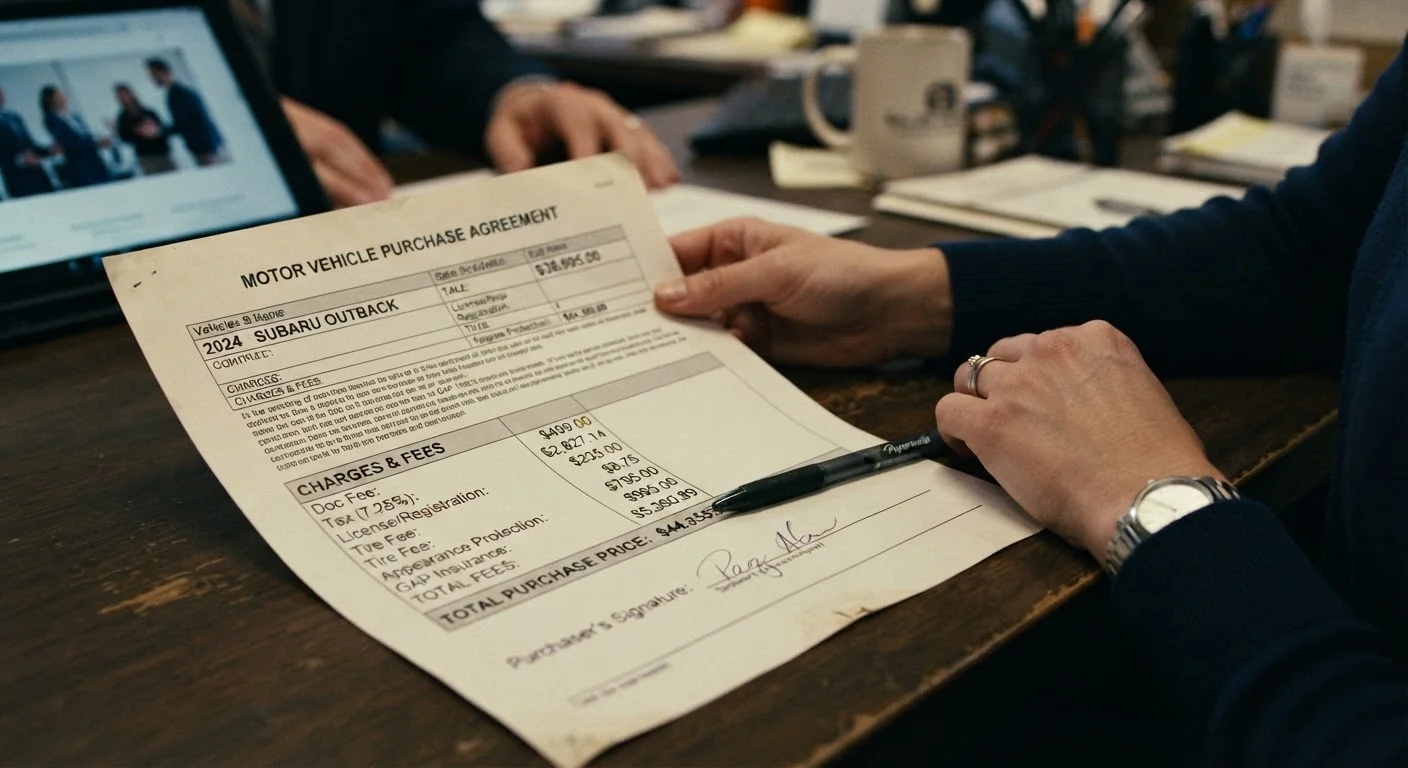
Why it happens: "Doc fees" sound official and unavoidable, so buyers assume they're fixed government charges. In most U.S. states, they're a dealer-set administrative charge with wide variation - sometimes exceeding $800.
Paying for dealer-installed add-ons you didn't request.
Why it happens: Dealers sometimes pre-install accessories - window tinting, all-weather mats, paint sealant - and present them as standard features of the vehicle on the lot. Buyers discover the charges only during paperwork.
Rolling all fees into the financed amount without checking the total interest cost.
Why it happens: When monthly payments are the focus, buyers lose sight of how financing fees compounds the total outlay. A $600 doc fee financed over 60 months at a typical interest rate costs meaningfully more than $600.
Agreeing to dealer-arranged financing without shopping alternative lenders first.
Why it happens: The convenience of one-stop financing feels efficient, and many buyers don't realize dealers can mark up the interest rate above the lender's base rate and retain the difference as profit.
Purchasing add-on insurance and warranty products without comparing prices.
Why it happens: Finance managers often present GAP insurance, extended warranties, and credit insurance as essential protections, and buyers are too fatigued from negotiations to scrutinize them carefully.
The Most Common Fee Mistakes - and How to Handle Them
The fees that inflate car prices most often fall into predictable categories. Some are legitimate costs passed along transparently; others are padding designed to recover margin that was conceded during price negotiation. Knowing the difference gives you the leverage to ask questions - and to push back when warranted.
$1,000+
Typical range of dealer fees beyond taxes
Consumer advocacy organizations have documented that dealer-originated fees - excluding government taxes - commonly total $1,000 or more on a single transaction.
~$500
Average U.S. documentation fee
Average doc fees vary significantly by state; some states cap them below $100, while others allow dealers to charge several hundred dollars or more.
Once you've taken delivery, the financial picture doesn't stop there. Running costs that catch new owners off guard - from registration renewals to unexpected repairs - deserve the same scrutiny you applied at the dealer's desk. Building those into your planning from day one is exactly what a realistic annual car budget is designed to help you do.
Always Demand the Out-the-Door Price in Writing
Never agree to a vehicle price without seeing the complete out-the-door figure that includes every fee, tax, and add-on. Verbal assurances mean nothing once you're in the finance office. If a dealer is unwilling to provide a written itemized total before you enter the closing process, treat that as a significant warning sign and slow down before signing anything.
If you're financing the purchase, the fee conversation extends to the loan itself. Dealer-arranged financing sometimes carries an interest rate markup above what the lender actually requires - a practice sometimes called a "dealer reserve." Always ask for the buy rate (the lender's base rate) and compare it against offers from your own bank or credit union before committing. For a fuller look at the trade-offs, see our piece on financing a car vs. paying cash.
How to Protect Yourself Before You Sign
The most effective move any buyer can make is to request a complete, itemized out-the-door price in writing before entering the finance office. This document should list every charge - taxes, government fees, dealer fees, and any add-on products - as separate line items with clear descriptions.
Finance Office Fatigue Is Real
By the time most buyers reach the finance and insurance office, they've spent hours negotiating and are emotionally ready to be done. Dealers know this. The finance office is where many of the most profitable add-ons are sold, often at a rapid pace. Give yourself permission to slow down, ask for time to read each document, and say no to anything you haven't researched in advance.
Challenge any line item you don't recognize by asking for a plain-language explanation. If a fee is described vaguely - "market adjustment," "lot prep," or "administrative processing" - ask specifically what service it covers and whether it can be removed or reduced. Government-mandated taxes and title/registration fees are fixed, but dealer-originated charges are almost always negotiable.
Decline add-on products at the point of sale unless you've had time to research them independently. Extended service contracts, GAP insurance (which covers the difference between what you owe and what the car is worth if it's totaled), and paint or fabric treatments can all be purchased later - often at lower prices - or sourced elsewhere. Making rushed decisions in a finance office is a pattern that costs drivers real money year after year.
This article is for general informational purposes only and does not constitute financial or legal advice. For guidance specific to your situation, consult a qualified financial professional.