Why Most Car Budgets Fall Short
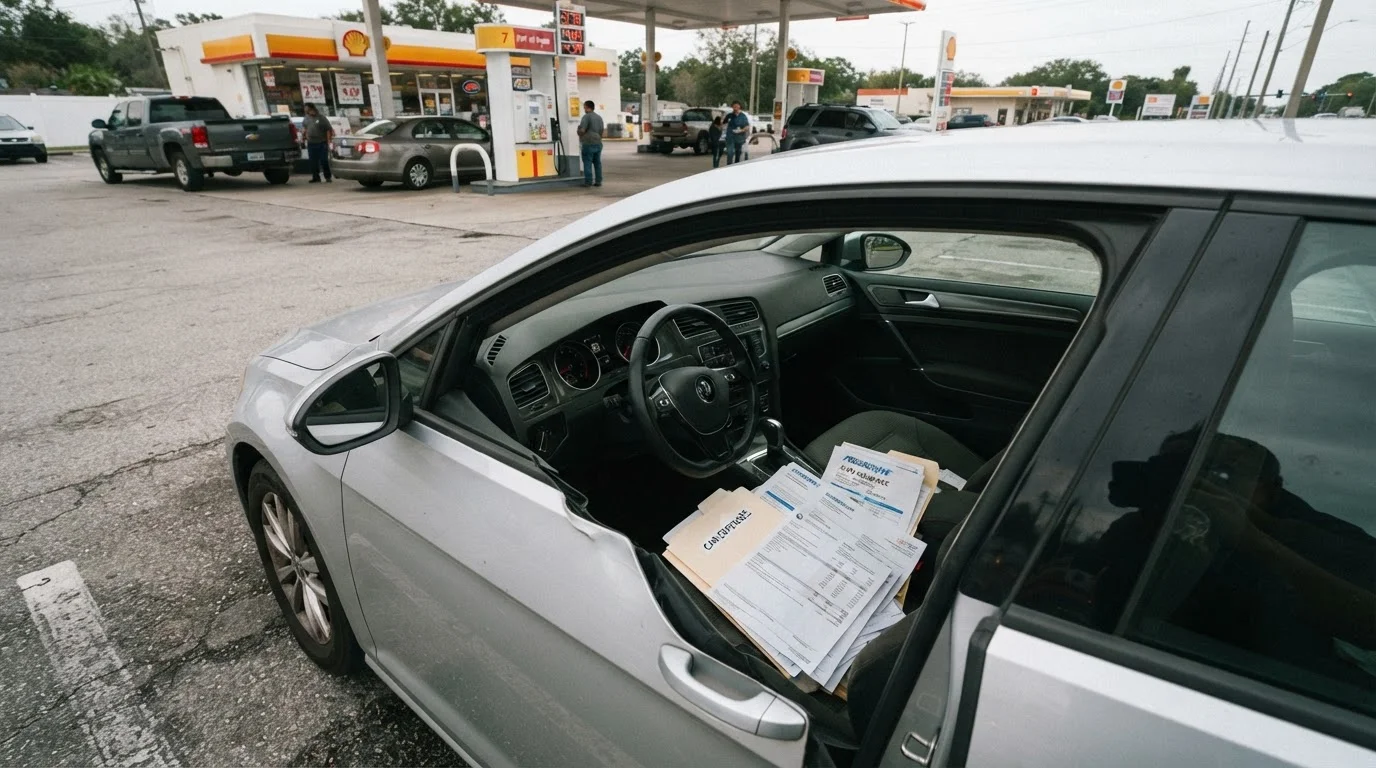
Most drivers have a rough sense of their monthly car payment and fuel bill, but little else. The result is a budget that looks manageable in January and feels impossible by October when tires, a battery, registration renewal, and a brake job all arrive in the same quarter. This pattern is not unusual - it reflects how car costs are structured: a handful of large, irregular expenses layered on top of predictable monthly ones.
Running costs that catch new car owners off guard often include registration fees, tire replacement, and inspection costs - expenses that feel like emergencies simply because they weren't anticipated. Building an annual budget changes that by converting irregular costs into predictable monthly savings targets.
What you will need
Before working through the steps below, gather the documents listed above. Having real numbers rather than estimates will make your budget significantly more accurate from the start.
Step-by-Step: Building Your Car Budget
Work through each step in order. Each category builds on the last, and skipping a category is what leaves most drivers caught off guard. You'll need your spreadsheet open alongside your financial documents.
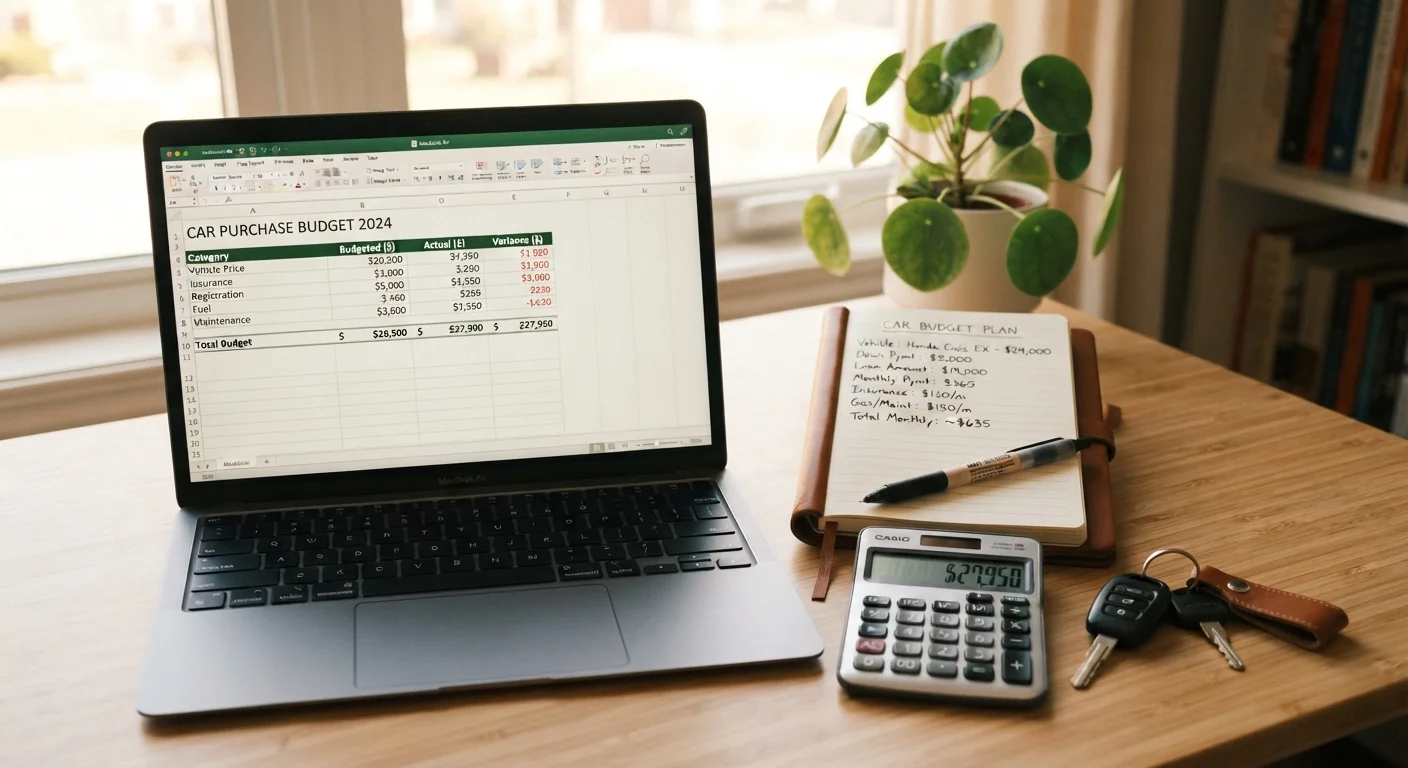
Spreadsheet application
Organize expense categories, enter figures, and automatically total your annual car costs.
Online fuel cost estimator
Calculate annual fuel costs based on your average mileage, fuel economy, and local prices.
Vehicle maintenance log
Review past service history to identify recurring costs and anticipate upcoming scheduled maintenance.
List every fixed annual cost
Start with the expenses that stay the same regardless of how much you drive. These typically include:
- Loan or lease payments: Multiply your monthly payment by 12.
- Insurance premiums: Use your annual premium total, not just one month's bill.
- Registration and state fees: Check your renewal notice - these vary significantly by state and vehicle value.
- Parking permits or garage fees: Include any regular monthly or annual parking commitments.
Fixed costs are the floor of your car budget. Once you know this number precisely, you can see how much room remains for the expenses that fluctuate.
Estimate your annual fuel expense
Fuel is variable but highly predictable if you work from your actual driving habits. Use this simple calculation:
- Estimate your annual mileage (check your odometer at the same date each year, or use 12 months of oil change records).
- Divide by your vehicle's real-world fuel economy (not the EPA window sticker - track your own fill-ups).
- Multiply by a realistic per-gallon price for your area, padding slightly upward to account for price swings.
The true cost of owning a car includes fuel as one of the largest recurring line items for most households, so accuracy here matters.
Budget for scheduled maintenance
Scheduled maintenance is both predictable and commonly underbudgeted. Pull out your owner's manual or check the manufacturer's maintenance schedule online. Identify which services fall due in the coming 12 months and get estimates for each. Common line items include:
- Oil and filter changes (frequency depends on your vehicle and oil type)
- Tire rotation and balancing
- Air filter, cabin filter, and spark plug replacements
- Brake fluid, coolant, or transmission fluid intervals
The seasonal maintenance calendar can help you map these tasks to specific months rather than facing them all as surprises.
Account for tires and unplanned repairs
Tires are a significant expense many drivers treat as a surprise when they should be anticipated. Most passenger tires last 40,000-60,000 miles depending on type, driving style, and road conditions. Estimate your replacement timeline and divide the cost across the years of tire life remaining.
For unplanned repairs, industry guidance generally suggests setting aside 1-2% of your vehicle's current market value annually as a repair reserve - more if the vehicle is older or higher mileage. If you'd like a deeper look at what older vehicles really cost to maintain, the financial realities of owning an older car covers this in detail.
Add depreciation as a real cost
Depreciation is the difference between what your car is worth today and what it will be worth in 12 months. While it doesn't leave your bank account as a direct payment, it represents real wealth leaving your household. Including it in your car budget gives you an honest picture of the vehicle's true annual cost and informs decisions about whether to keep, sell, or replace it.
You can estimate annual depreciation by checking your vehicle's current trade-in value against its projected value one year from now using publicly available valuation guides. Many drivers who track this figure find it is one of the spending categories Americans routinely underestimate.
Total, review, and adjust quarterly
Add every category: fixed costs, fuel, scheduled maintenance, tire reserve, repair fund contribution, and depreciation. Compare the total to your actual income and other budget commitments. If the number is higher than expected, identify which categories offer flexibility - driving fewer miles, adjusting coverage levels with your insurer (consult a licensed insurance professional), or extending a replacement timeline.
Set a calendar reminder to review actual spending against your budget every three months. Costs shift - fuel prices move, an unexpected repair can deplete your reserve - and a quarterly check keeps you in control rather than catching up at year's end.
One Number to Remember Each Month
Divide your total annual car budget by 12 and treat that monthly figure as a non-negotiable line item - just like rent or a utility bill. Transfer the maintenance and repair portion into a separate savings account each month so it's ready when needed. This single habit eliminates most budget-busting car surprises.
Once you've completed all six steps, your annual car budget should reflect the full financial footprint of your vehicle - not just the payment. For a broader look at how vehicle costs fit into total ownership, see the true cost of owning a car beyond the sticker price.
Don't Confuse Affordability With Cash Flow
A car can fit your monthly cash flow and still cost more than you can realistically afford annually. If your total car budget - including depreciation, maintenance, and reserves - exceeds 15-20% of your take-home income, consider whether adjustments to coverage, driving habits, or vehicle choice make sense. General budgeting benchmarks like this are educational starting points, not universal rules; your situation may differ, and a financial adviser can offer personalised perspective.
This article provides general financial information for educational purposes only. It is not personalised financial or investment advice. For guidance specific to your situation, consult a qualified financial professional.