Understanding the Difference: Peak vs. Shoulder
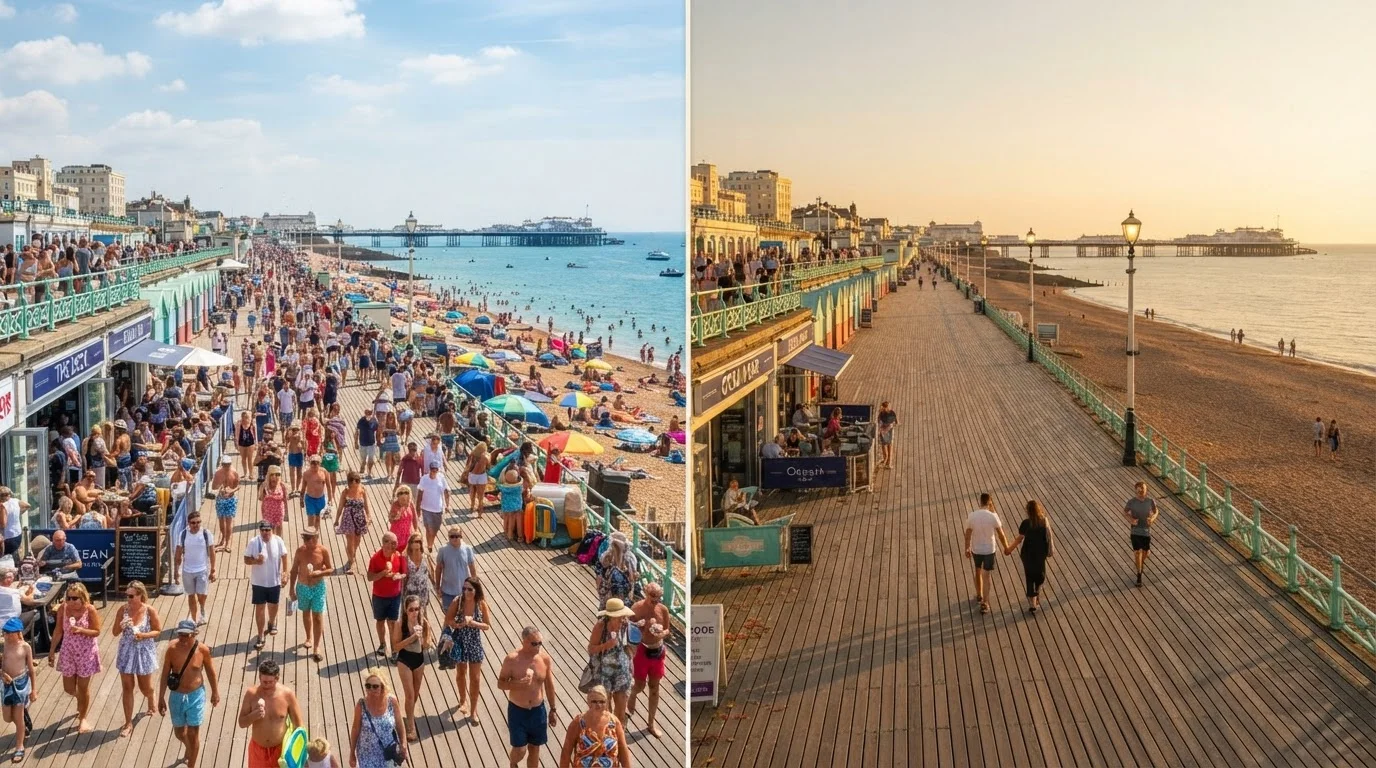
Peak season refers to the stretch when a destination sees its highest visitor volume - typically school holidays, summer months for beach destinations, or winter for ski resorts. Shoulder season is the window just before or after that surge, when crowds thin but conditions remain reasonably good.
These windows shift by destination. Coastal New England's peak is July through August; its shoulder falls in May-June and September-October. European capitals often peak in midsummer and again over December holidays, with shoulder periods in April-May and September-October. Before choosing a destination, it's worth mapping out when these windows actually fall for the specific place you have in mind - general rules rarely hold everywhere.
The Case for Travelling During Peak Season
Peak season exists because conditions genuinely are at their most appealing. Weather is typically most predictable, daylight hours are longer, and the full lineup of tours, restaurants, and attractions is open and staffed. For travelers with children, peak season often isn't a choice - school calendars make it the only realistic option.
There are also experiences that only happen at peak. Specific festivals, wildlife migrations, and seasonal landscapes are locked to particular windows. Watching the Northern Lights in Iceland, attending Mardi Gras in New Orleans, or hiking a high-altitude trail before winter closes it - these aren't interchangeable with a quieter visit a month later.
Peak Season Requires Early Planning
At the most popular destinations, peak-season accommodations can sell out three to six months in advance. Iconic tours, guided hikes, and restaurant reservations often go even faster. Waiting until a few weeks before your travel date significantly narrows your options and can push costs higher. If peak season is your window, treat early booking as essential, not optional.
The trade-offs are real: accommodations book out months in advance and command premium rates. Popular sites - think Yosemite Valley on a July weekend - can feel more like queuing exercises than nature escapes. If peak-season travel is unavoidable, booking as far ahead as possible and planning visits to major sites for early morning or late afternoon can meaningfully improve the experience.
The Case for Travelling in the Shoulder Period
Shoulder season is where savvy travelers often find the most satisfying balance. Accommodation rates frequently drop, sometimes substantially, compared to peak. Attractions are accessible without the longest queues. Locals are more visible in daily life, restaurants cater less exclusively to tourists, and the overall atmosphere often feels more authentic.
| Peak Season | Shoulder Season | |
|---|---|---|
| Typical accommodation cost | Higher; books out quickly | Noticeably lower; more availability |
| Crowd levels | High at major sites | Moderate to low |
| Weather reliability | Generally most predictable | Variable; destination-dependent |
| Attraction access | Full services; longer queues | Most open; shorter waits |
| Local atmosphere | Tourist-oriented, festive | More authentic, relaxed |
| Flight pricing tendency | Higher demand, less flexibility | Often lower; more seat options |
| Special events availability | Peak-specific events accessible | Events may not be running |
Weather is the main variable to research carefully. Shoulder season at a Mediterranean destination in May is typically mild and delightful. Shoulder season in Southeast Asia can coincide with the beginning of monsoon patterns - still manageable, but worth knowing. For a deeper look at when quieter timing really pays off stateside, off-season travel in the US explores the regional nuances in more detail.
How to Decide What Works for You
Three questions cut through most of the noise:
- Is your date flexibility real? If work or school constrains your window, peak season may simply be your reality, and the planning focus shifts to managing it well rather than avoiding it.
- What experience are you optimising for? Lively atmosphere, full-service access, and iconic moments lean toward peak. Slower pace, local texture, and lower spend lean toward shoulder. Slow travel philosophies tend to pair naturally with shoulder timing.
- Are there activities that require specific conditions? Some hiking routes, wildlife windows, and cultural events are non-negotiable - verify the timing before locking in dates.
Research Your Specific Shoulder Window
A destination's shoulder season is rarely the same as another's. Look up historical weather averages, check which attractions have seasonal closures, and read recent traveler accounts from that specific month. A few hours of research can prevent a trip built on assumptions that don't hold for your chosen location.
Neither window is inherently right. The most informed travelers treat timing as one deliberate variable in trip planning - not an afterthought - and match it to what they actually want from the journey. For practical guidance on broader trip decisions, the Travel Smart hub covers budgeting, logistics, and more.