
What Each Philosophy Actually Means
The term slow travel gets used loosely, but at its core it means choosing fewer destinations and spending meaningfully more time in each one - often a week or longer per location. The goal is to move at a pace that allows genuine familiarity: learning which bakery opens early, finding the park locals actually use, or catching a neighborhood event that no guidebook lists.
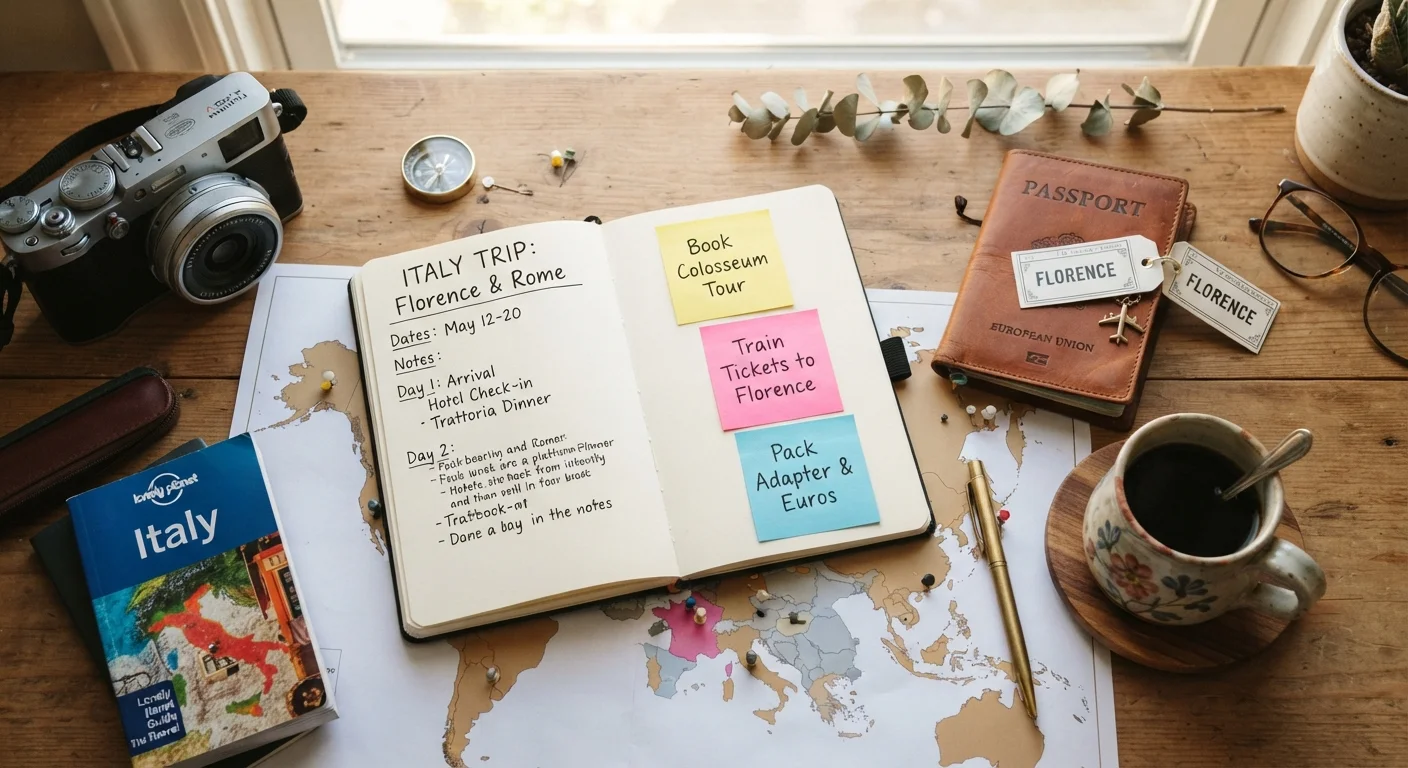
Itinerary-heavy travel, by contrast, is built around a structured schedule of sights, experiences, and logistics. It's the approach that ensures you don't land in Rome and accidentally spend your one free afternoon at a closed museum. It front-loads the thinking so that each day in the field runs smoothly. See our complete itinerary planning walkthrough for a practical breakdown of how to build one that actually holds up.
Both styles have real merit. The tension between them isn't about which is more sophisticated - it's about which serves your specific trip better.
| Criterion | Slow Travel | Itinerary-Heavy Travel |
|---|---|---|
| Destinations covered | Few - depth over breadth | Many - breadth over depth |
| Ideal trip length | 2+ weeks per region | 1-2 weeks, any length |
| Daily structure | Flexible, spontaneous | Scheduled, pre-planned |
| Daily cost | Often lower over time | Can be higher (transit, bookings) |
| Local immersion | High - routines develop | Lower - surface-level contact |
| Stress level | Low logistics stress | Higher coordination demands |
| Risk of missing priorities | Moderate without a plan | Low with advance booking |
| Best for first-time visitors | Less ideal - less overview | Well-suited - covers highlights |
The Real Trade-Offs
Slow travel's biggest advantage is depth. Spending ten days in one city rather than five cities in ten days changes the quality of what you absorb. You have room for the unplanned afternoon, the unexpected conversation, the second visit to a place that surprised you. The trade-off is coverage: you will see less of a country or region, and that requires genuinely making peace with that choice.
Itinerary-heavy trips address the coverage problem directly - but they introduce their own friction. Back-to-back scheduling leaves almost no buffer for delays, weather changes, or the spontaneous detour that turns out to be the highlight of your trip. If you've ever felt like you needed a vacation to recover from your vacation, an overpacked schedule is often why. Our piece on how travelers fall into the overplanning trap goes deeper on where structured trips tend to buckle.
59%
Travelers who say rest is a primary trip goal
A Skift Research survey found that more than half of leisure travelers cite relaxation as their top travel motivation, which often aligns more naturally with a slower pace.
3-4 days
Time before travelers feel settled in a new place
Travel researchers and destination studies generally suggest it takes several days in a location before travelers move past tourist-mode habits into more local rhythms.
Cost dynamics also differ. Slow travel typically reduces per-day spending - longer accommodation stays often allow negotiated rates or apartment rentals, and you're not paying for a new transit leg every day. Itinerary-heavy trips tend to front-load transportation costs and may require more pre-booked tickets, tours, and reservations to run on schedule.
When to Choose One Over the Other
Time is the most decisive factor. If you have fewer than eight days, slow travel is genuinely difficult to execute - you'll either feel underexplored in one place or end up rushing anyway. A focused, well-planned itinerary tends to serve short trips better, ensuring your priorities are protected. Thinking through the anatomy of a well-planned trip can help you identify which phase of planning deserves the most attention for your timeline.
Your travel personality matters just as much. Some people find open, unscheduled days energizing. Others find them stressful - the blank afternoon becomes a low-grade anxiety about whether they're making the most of their trip. Neither response is wrong; they just point toward different planning styles.
The Hybrid Approach Is Underrated
Many experienced travelers use a 'structured core, open edges' method: book the flights, first and last nights' accommodation, and any time-sensitive experiences in advance, then leave interior days open. This prevents the biggest logistical risks while preserving room for spontaneity. It's especially effective on trips of ten days or longer, where having a few unscheduled days doesn't feel like wasted opportunity - it feels like the point.
Seasonality and destination type also shape the equation. High-demand destinations during peak periods - think national parks in summer or popular European cities in July - often require advance reservations regardless of your travel philosophy. Traveling during shoulder season can ease that pressure considerably and may give slow travelers more genuine flexibility without the crowd overhead.
A practical middle path many travelers land on: anchor your trip with two or three confirmed logistics (flights, key accommodation, one or two time-sensitive bookings), then leave the rest genuinely open. You get the security of a skeleton structure without scheduling every hour.