
What's Actually Different Between eSIMs and Local SIMs?
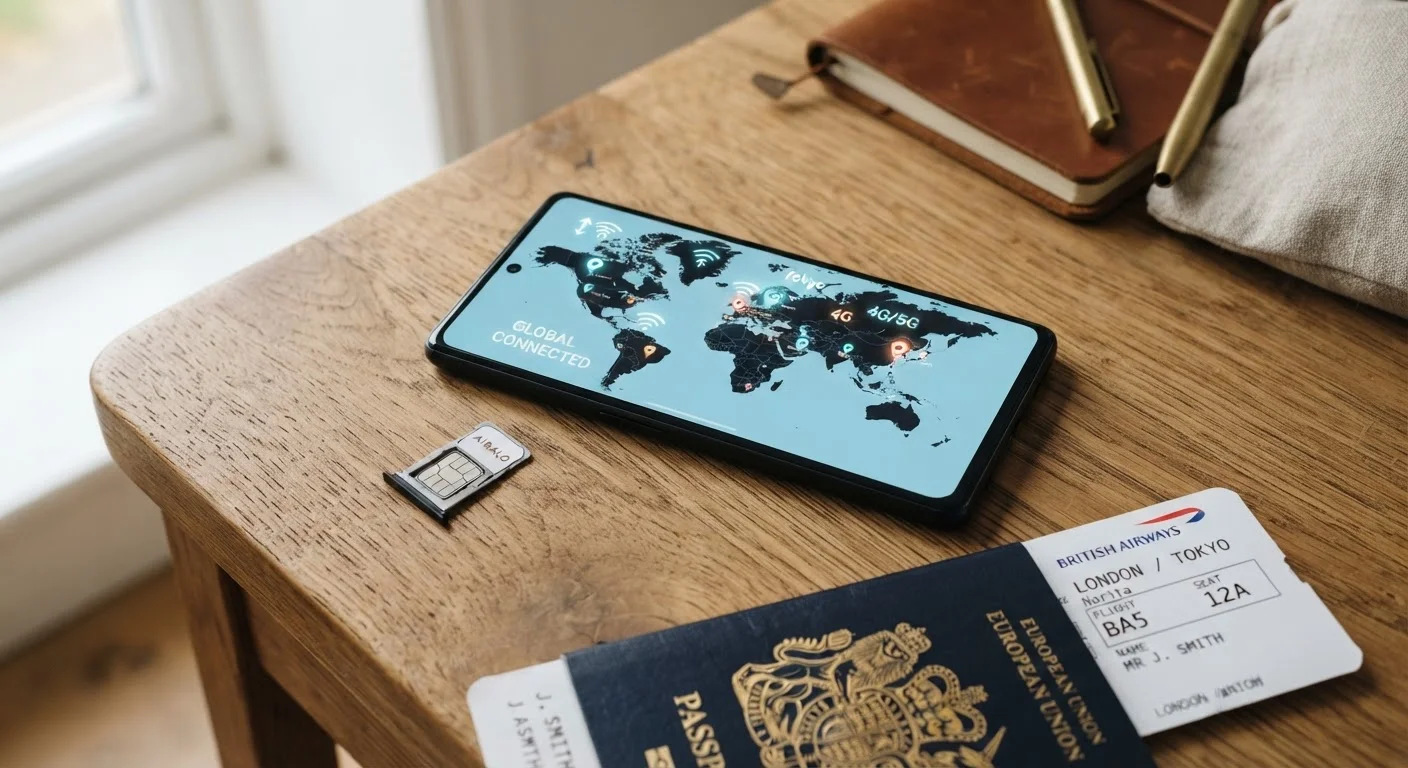
A SIM card (Subscriber Identity Module) is the small chip that connects your phone to a cellular network. Traditionally, it's a tiny physical card you slot into your handset. A eSIM (embedded SIM) is a built-in, reprogrammable chip that does the same job - but entirely through software. You download a carrier profile rather than handling any hardware.
For travelers, this distinction has real practical weight. With a local SIM, you buy a card in-country, insert it, and you're connected to that nation's network at local rates. With an eSIM, you purchase a plan online before you fly, scan a QR code, and your phone connects automatically when you land - sometimes before the plane's wheels touch the runway.
Both options beat standard international roaming, which can cost several dollars per megabyte with many US carriers. Whether one is clearly superior depends on your phone, your destination, your budget, and how much setup friction you're willing to tolerate.
| Criterion | Travel eSIM | Local SIM Card |
|---|---|---|
| Setup timing | Before departure, remotely | On arrival, in-person |
| Hardware required | None (software-based) | Physical card needed |
| Device compatibility | Modern smartphones only | Nearly all unlocked phones |
| Typical data cost | Moderate; varies by provider | Often lower, especially in Asia |
| Multi-country coverage | Single plan covers many countries | Separate SIM per country |
| Local network quality | Depends on roaming agreements | Full local network access |
| Keep home number active | Yes (dual SIM capable devices) | Replaces home number while in use |
| Risk of loss/damage | None (no physical card) | Small card can be lost or damaged |
Coverage, Cost, and Convenience: The Real Trade-Offs
Coverage is where local SIMs often win outright. A local carrier's SIM operates on that country's dominant networks, meaning you get the same signal locals do - critical in rural areas, mountainous terrain, or regions where eSIM providers rely on secondary roaming agreements. Research your specific destination's eSIM carrier partnerships before assuming coverage will be adequate.
Cost is more nuanced. In countries like Thailand, India, Japan, and across much of Europe, local SIM data packages can be remarkably affordable - sometimes delivering 10-20 GB for under $15. eSIM plans from international providers may charge a premium for the convenience factor, though prices have dropped as competition has grown. For multi-country trips, however, an eSIM covering several nations in one plan can actually undercut the cost of buying individual SIMs at each stop.
Convenience is eSIM's clearest advantage. There's no airport kiosk queue, no passport verification at a carrier store, and no risk of losing a tiny physical card mid-trip. You can also keep your home number active on your phone's primary line while the eSIM handles data - useful if you need to receive calls or two-factor authentication texts on your US number.
~50%
Global eSIM-capable device share by 2025
Industry analysts estimate roughly half of smartphones shipped globally support eSIM technology, a figure that has grown sharply since 2020.
$0.02-$2+
Per-MB international roaming cost range
Standard carrier international roaming rates vary enormously; travelers relying on home carrier plans abroad can face bills many times higher than local or eSIM alternatives.
190+
Countries with at least one eSIM-compatible carrier
Coverage has expanded rapidly, though quality and plan availability vary significantly by region and specific destination.
For broader trip-planning context - like timing your travel to minimize crowds and costs - see our guide on peak vs. shoulder season travel. And since connectivity and digital safety go hand in hand, our no-nonsense guide to online safety while traveling is worth reading alongside this one.
What to Check Before You Decide
Confirm eSIM compatibility first. iPhones from the XS series onward and many recent flagship Android devices support eSIM, but compatibility varies widely. Check your phone's settings or manufacturer specs - this single factor may make the decision for you.
Research your destination's eSIM landscape. Popular destinations in Western Europe, Japan, South Korea, and major US territories have strong eSIM provider options. Less-connected destinations - parts of sub-Saharan Africa, Central Asia, or remote island nations - may have limited or no eSIM-compatible carrier agreements, making a local SIM the only reliable path.
Think about trip length and structure. A whirlwind 10-day trip across five European countries likely favors an eSIM. A three-week deep dive into a single destination may reward the modest effort of sourcing a local SIM on arrival.
Consider your data needs realistically. Light users checking maps and messaging apps need far less data than travelers streaming video or working remotely. Match your plan size to your actual habits to avoid overpaying on either option.
Unlocked Phone? Essential for Local SIMs
A local SIM only works in an unlocked phone - one not tied to a specific carrier. Many US phones sold through carriers are locked, especially if purchased on a payment plan. Contact your carrier to confirm your device's status before travel. Unlocking policies and timelines differ by carrier and contract terms, so check well in advance of your departure date.
If you're weighing other travel efficiency decisions - like whether to book direct or connecting flights - our comparison of direct vs. connecting flights applies the same practical framework.