The Core Trade-Off: Time vs. Money
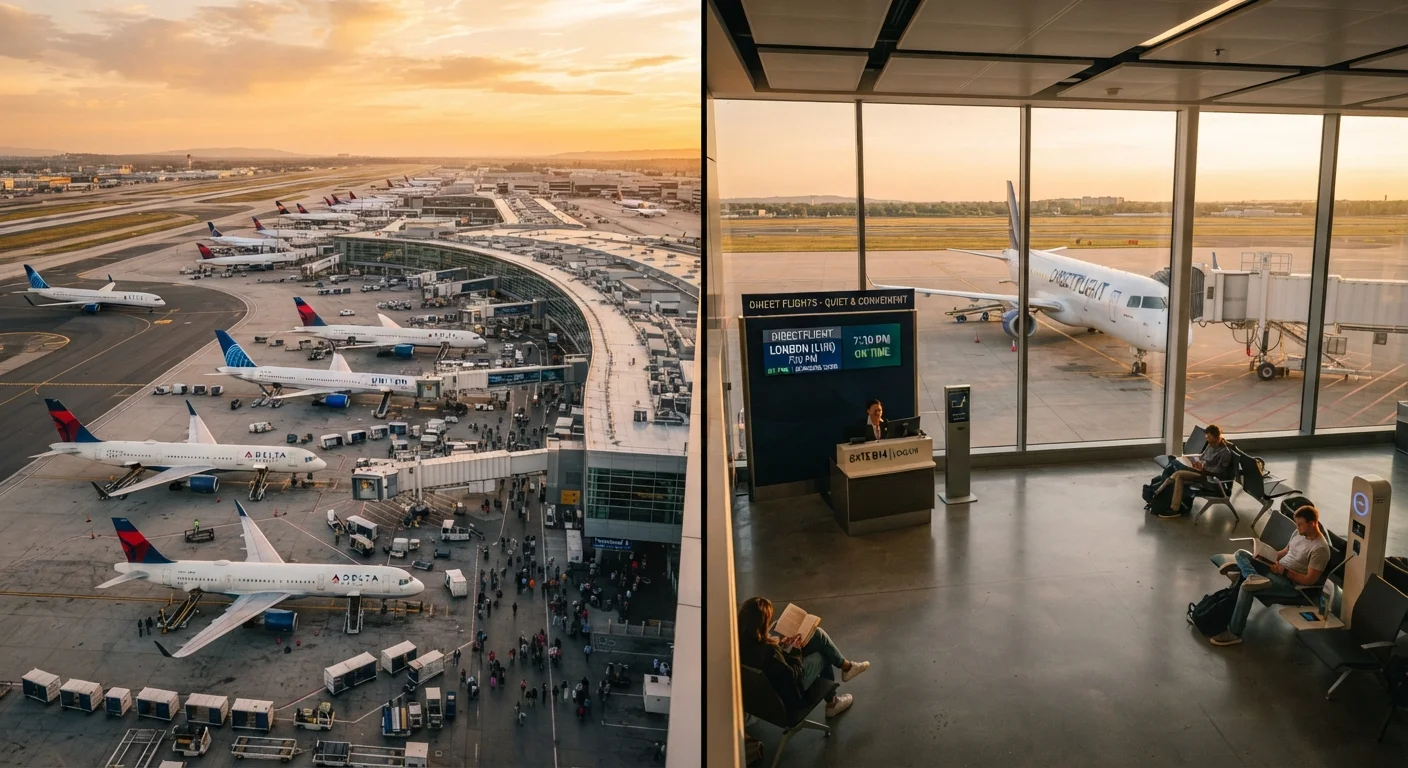
At its simplest, choosing between a direct and connecting flight is a negotiation between two things travelers value most: their time and their money. Direct flights eliminate intermediate stops, reducing total travel time and shielding you from the cascade of problems a missed connection can trigger. Connecting flights introduce a layover - sometimes one, sometimes two - in exchange for a lower fare and broader route access.
The price gap isn't trivial. On popular domestic routes, connecting fares can run noticeably lower than direct options, while on thinner international routes the difference can be more substantial. However, that fare gap narrows once you factor in meals, airport lounge costs, and the value of hours spent in transit. Part of smart trip planning is running that full calculation, not just comparing headline ticket prices.
| Criterion | Direct Flights | Connecting Flights |
|---|---|---|
| Typical cost | Higher fare, fewer variables | Often lower fare, more options |
| Total travel time | Shortest gate-to-gate time | Longer, including layover |
| Disruption risk | Low - one flight to manage | Higher - delays can cascade |
| Baggage risk | Minimal misrouting risk | Rises with each segment |
| Route availability | Limited to served city pairs | Opens almost any destination |
| Physical fatigue | Generally lower | Higher - more transitions |
| Layover opportunity | None | Potential mini stopover |
The Disruption Risk Most Travelers Underestimate
Flight delays are common enough that treating your connection as guaranteed is a planning mistake. When your inbound flight runs late, a tight layover evaporates fast - and rebooking on a busy travel day can mean waiting hours or even overnight. The risk compounds during winter weather, peak holiday periods, and at congested hub airports.
Minimum connection times (MCTs) vary by airport and airline, typically ranging from 45 minutes at smaller domestic hubs to 90 minutes or more for international transfers requiring customs and immigration. Always build in a buffer beyond the minimum. If a disrupted itinerary would genuinely damage your trip, that risk has a real dollar value that deserves weight in your decision - similar to how off-season travel trade-offs demand honest assessment before booking.
Book Connections on a Single Ticket When Possible
When both flights appear on one booking record, the airline is contractually responsible for rebooking you if a delay causes you to miss your connection. If you book two separate tickets to save money, that protection disappears - you're on your own. Before you complete a split-ticket purchase, weigh whether the savings justify that added exposure, especially on itineraries with tight layovers.
Baggage, Loyalty Points, and Hidden Considerations
Checked luggage is another variable that tips the calculation. Airlines transfer bags automatically on connecting itineraries booked under a single ticket, but misrouting happens more often with multiple segments. Carrying on whenever possible is the simplest hedge. If you must check bags, confirm your bags are tagged through to your final destination when you check in.
Frequent flyers should also consider how route choice affects mileage earning. Some connecting itineraries cover more physical distance, which can mean more miles credited - though airline loyalty programs have grown more revenue-based than distance-based in recent years. For a deeper look at how those miles actually accumulate, the guide to travel rewards programmes breaks it down clearly.
~20%
Average US flight delay rate
The Bureau of Transportation Statistics consistently reports that roughly one in five US flights arrives late, underscoring connection risk.
3-5×
Baggage mishandling increase per connection
Industry baggage reports indicate mishandling rates rise meaningfully with each additional flight segment on an itinerary.
2-4 hrs
Average added time for one connection
A single layover typically adds two to four hours to total door-to-door travel time, depending on connection duration and airport size.
Finally, consider the human cost: energy. A red-eye direct flight followed by a full day of activity is often less exhausting than a daytime connecting itinerary that stretches twelve hours due to layovers. Fatigue affects how much you enjoy the destination itself - a factor budget spreadsheets don't capture but seasoned travelers know well.