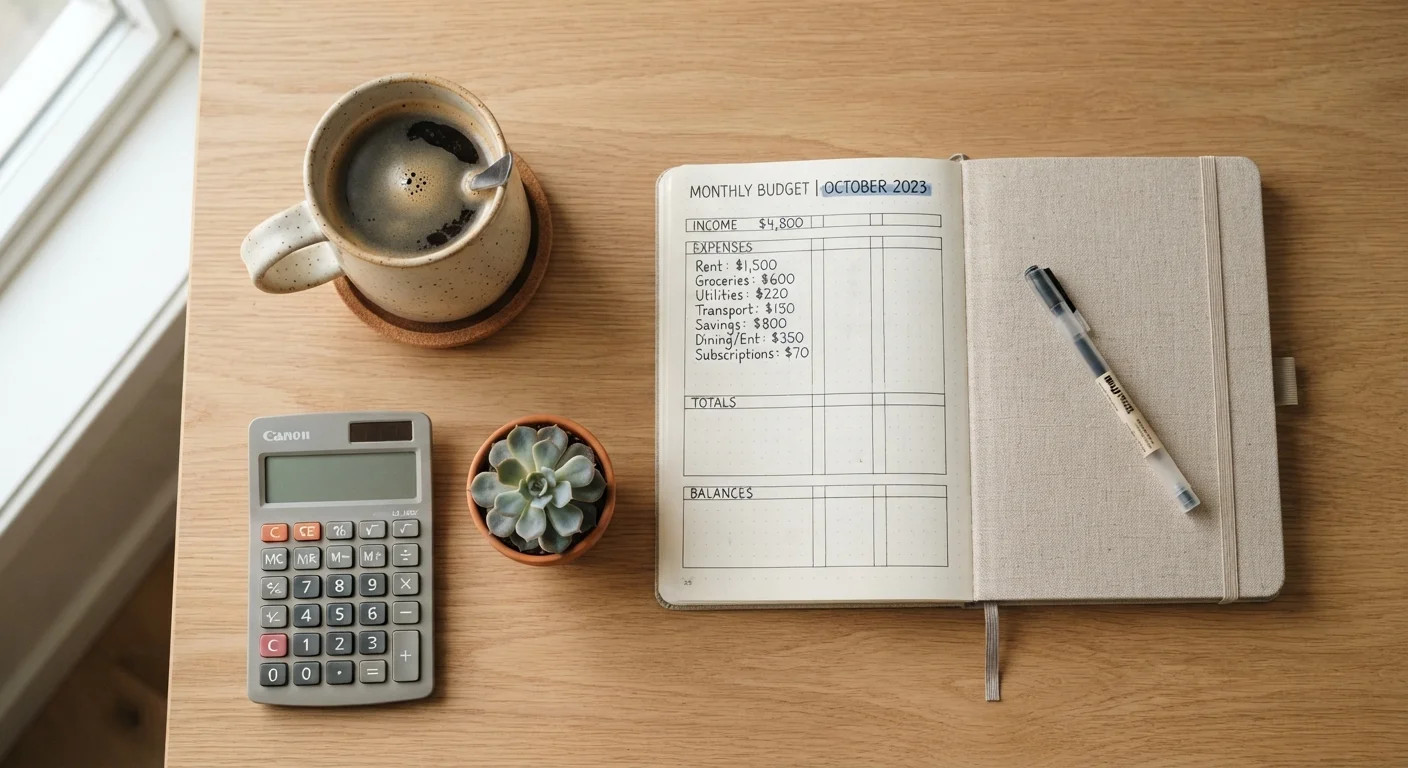
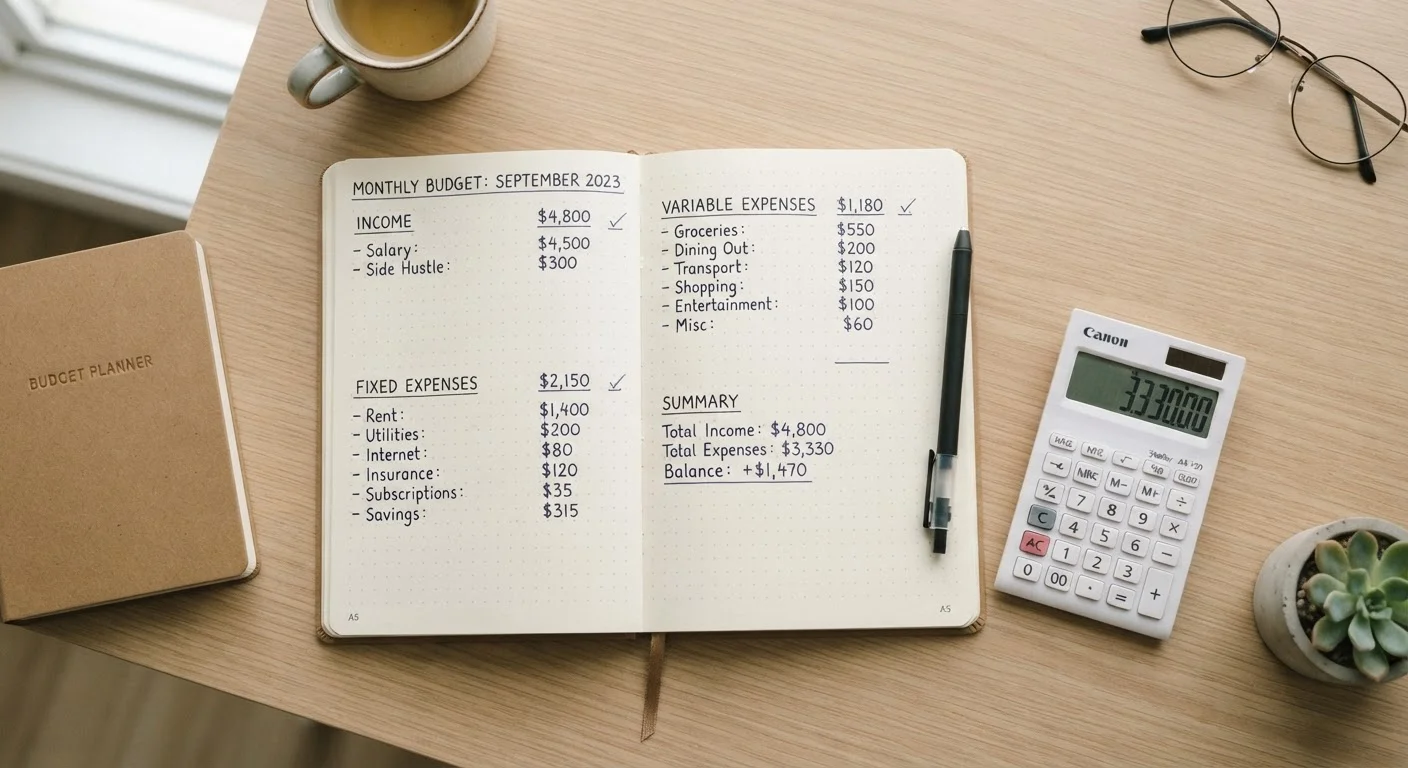
What a Budget Actually Is
Strip away the spreadsheets and apps, and a personal budget is simply a spending plan. It answers one question before the month starts: where is my money going? You look at what you expect to earn, subtract what you plan to spend and save, and make sure those numbers balance.
That's it. A budget is not a punishment, a form of self-denial, or proof that something has gone wrong with your finances. It's a decision made in advance - a way of choosing your financial behavior deliberately rather than reacting to whatever happens. The key vocabulary of budgeting reinforces this: terms like net income (your take-home pay after taxes), fixed expenses (rent, loan payments), and discretionary spending (dining out, subscriptions) all describe categories within your plan.
A budget covers a specific time frame - most often a month, because most bills and paychecks follow monthly cycles. At its core, a valid budget does three things: it accounts for all income sources, it assigns expected amounts to every spending category, and it ensures you're not planning to spend more than you earn.
~32%
Americans with a written budget or financial plan
A Gallup survey found that fewer than one in three Americans maintains a detailed household budget, suggesting most people manage money reactively rather than by plan.
$1,400+
Average monthly discretionary spending per U.S. household
Bureau of Labor Statistics Consumer Expenditure data indicates U.S. households spend a significant share of income on non-essential categories - an area a budget can redirect intentionally.
78%
Workers living paycheck to paycheck at some point
Multiple workforce surveys have found the majority of American workers have experienced paycheck-to-paycheck pressure regardless of income level, underscoring that income alone doesn't determine financial stability.
What a Budget Is Not
Misconceptions about budgeting are widespread, and they're one of the main reasons people avoid making one. Understanding what a budget is not is just as important as knowing what it is.
- A budget is not a ledger of past spending. That's expense tracking - a useful companion habit, but a different tool. A budget looks forward; a spending log looks backward.
- A budget is not only for people in financial trouble. Budgets are equally useful for people who are financially stable. Without a plan, even solid incomes can produce little in savings or net worth.
- A budget is not a static document. Life changes - income shifts, unexpected bills arrive, goals evolve. A budget that never gets updated stops being relevant. Expect to revisit yours regularly.
- A budget is not a moral judgment. Spending money on things you enjoy is not a failure. A realistic budget includes room for discretionary spending, because plans that ignore human behavior don't survive contact with real life.
If you've held off on budgeting because it seemed rigid or shame-inducing, the most common budgeting myths are worth examining directly.
Build In a Buffer Before You Start
New budgeters consistently underestimate irregular expenses - car repairs, medical bills, gifts. Before finalizing your first monthly plan, add a small miscellaneous category of $50-$100 to absorb surprises. This one adjustment dramatically improves the odds that your budget survives the first real month.
Why the Distinction Matters in Practice
When people misunderstand what a budget is, they often build one that fails - and then conclude that budgeting doesn't work for them. The most common failure mode: creating a plan so restrictive it ignores real spending patterns, abandoning it after the first overage, and never trying again.
A budget works when it reflects your actual life. That means including irregular expenses - car maintenance, medical copays, annual subscriptions - not just predictable monthly bills. It means building in a realistic amount for groceries rather than an aspirational one. And it means treating an overage in one category as information to adjust next month, not as evidence of personal failure.
“A budget is telling your money where to go instead of wondering where it went.”
— John C. Maxwell, Author and leadership speaker, widely cited on personal finance topics
The format of your budget matters far less than the consistency with which you use it. Some people track everything in a notebook; others use a phone app or a simple spreadsheet. If you're ready to build one from scratch, a step-by-step guide for complete beginners can walk you through the process. Or if you want a framework focused on making it sustainable, see building a spending plan that doesn't feel like a diet.
This article is for general informational purposes only and does not constitute personalized financial advice. For guidance specific to your situation, consider consulting a licensed financial professional.