What a Budget Actually Is (and Isn't)
A budget is simply a written plan that decides in advance how you'll use your money each month. That's it. It's not a punishment, a restriction on fun, or proof that you're bad with money. It's a decision-making tool - one that replaces reactive spending with intentional choices.
Many people avoid budgeting because they associate it with deprivation. The more useful frame: a budget is how you protect the things you actually care about - whether that's paying rent without stress, saving for a trip, or getting out of debt. Without a plan, money tends to disappear toward the path of least resistance rather than your real priorities.
Take-home pay
The amount of your paycheck you actually receive after taxes and other deductions are removed. This is the figure you should use when building a budget.
Fixed expense
A recurring cost that stays the same every month, such as rent or a car loan payment. These are generally difficult to reduce in the short term.
Discretionary spending
Money spent on non-essential wants - things like dining out, entertainment, or subscriptions. This category usually offers the most room to adjust.
50/30/20 guideline
A budgeting framework that suggests allocating roughly 50% of take-home income to needs, 30% to wants, and 20% to savings or debt repayment. It's a starting point, not a strict rule.
Irregular expense
A cost that doesn't occur every month but is predictable - like annual insurance or holiday gifts. Dividing the yearly total by 12 lets you save for it gradually.
For a deeper look at how budgeting fits into a broader financial strategy, Building a Budget That Survives Real Life covers the full picture from income to adjustments.
Step 1: Know Your Take-Home Income
Before you can plan spending, you need an accurate income figure. Use your take-home pay - the amount deposited into your account after taxes, Social Security, and any other automatic deductions. Budgeting against your gross salary (the number before deductions) is one of the most common first-timer mistakes and leads to plans that don't hold up.
- Salaried workers: Check a recent pay stub for your net pay per period, then multiply to get a monthly figure.
- Hourly workers: Use an average of your last two to three months of deposits if your hours vary.
- Variable income: Choose a conservative baseline - your typical lower month - so you plan within a real floor.
Include all reliable income sources: wages, side work, regular freelance payments, or benefits. Windfalls like tax refunds or bonuses shouldn't anchor your monthly plan, but they're useful for one-time savings goals.
Start With One Month of Real Data
Rather than guessing at your spending, pull actual bank and credit card statements before writing a single budget number. Real data - even one month's worth - produces a far more accurate starting plan than estimates. The goal in month one is accuracy, not optimisation.
Before you sit down to build your plan, our Monthly Budget Setup Checklist walks you through every document and figure worth having on hand first.
Step 2: List and Categorise Your Expenses
Pull up three months of bank and credit card statements and list every expense you see. Then sort each one into three buckets:
- Fixed expenses
- Costs that are the same each month - rent or mortgage, car payments, insurance premiums, loan minimums. These are hard to change quickly.
- Variable necessities
- Essential costs that fluctuate - groceries, utilities, gas, prescriptions. You control the amount but not whether you spend.
- Discretionary spending
- Non-essential choices - dining out, streaming subscriptions, clothing, entertainment. This category holds the most flexibility.
Don't overlook irregular expenses: annual memberships, car registration, holiday gifts. Divide their annual total by 12 and include that amount monthly so they don't ambush your budget.
Don't Forget Annual and Irregular Costs
One of the most common reasons first budgets fail is forgetting expenses that don't hit every month. Car registration, annual subscriptions, back-to-school costs, and holiday spending can derail an otherwise solid plan. Add them up, divide by 12, and include that monthly amount as a dedicated savings line.
Once you're stable with a basic budget, building a financial safety net is the logical next step. See Building Your First Emergency Fund From Scratch for a step-by-step approach.
Step 3: Build Your First Spending Plan
With your income and expense categories in front of you, you're ready to assign dollar amounts. A widely used starting framework is the 50/30/20 guideline:
- ~50% of take-home income toward needs (housing, food, utilities, minimum debt payments)
- ~30% toward wants (dining, hobbies, subscriptions)
- ~20% toward savings and extra debt repayment
These are proportions, not rigid rules. If you live in a high cost-of-living city, housing alone may consume 40% or more of your income, and that's reality - not failure. Adjust other categories accordingly rather than forcing your life into a formula that doesn't fit.
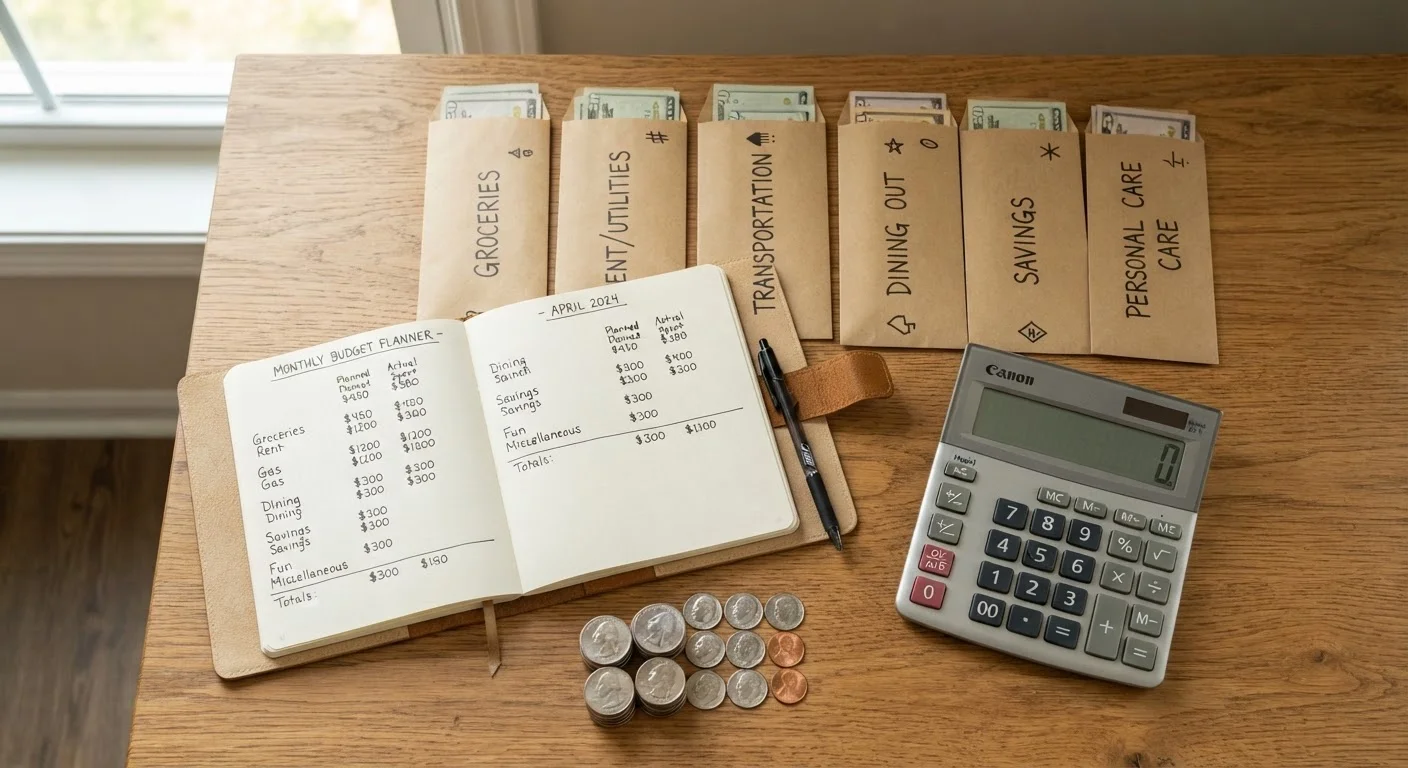
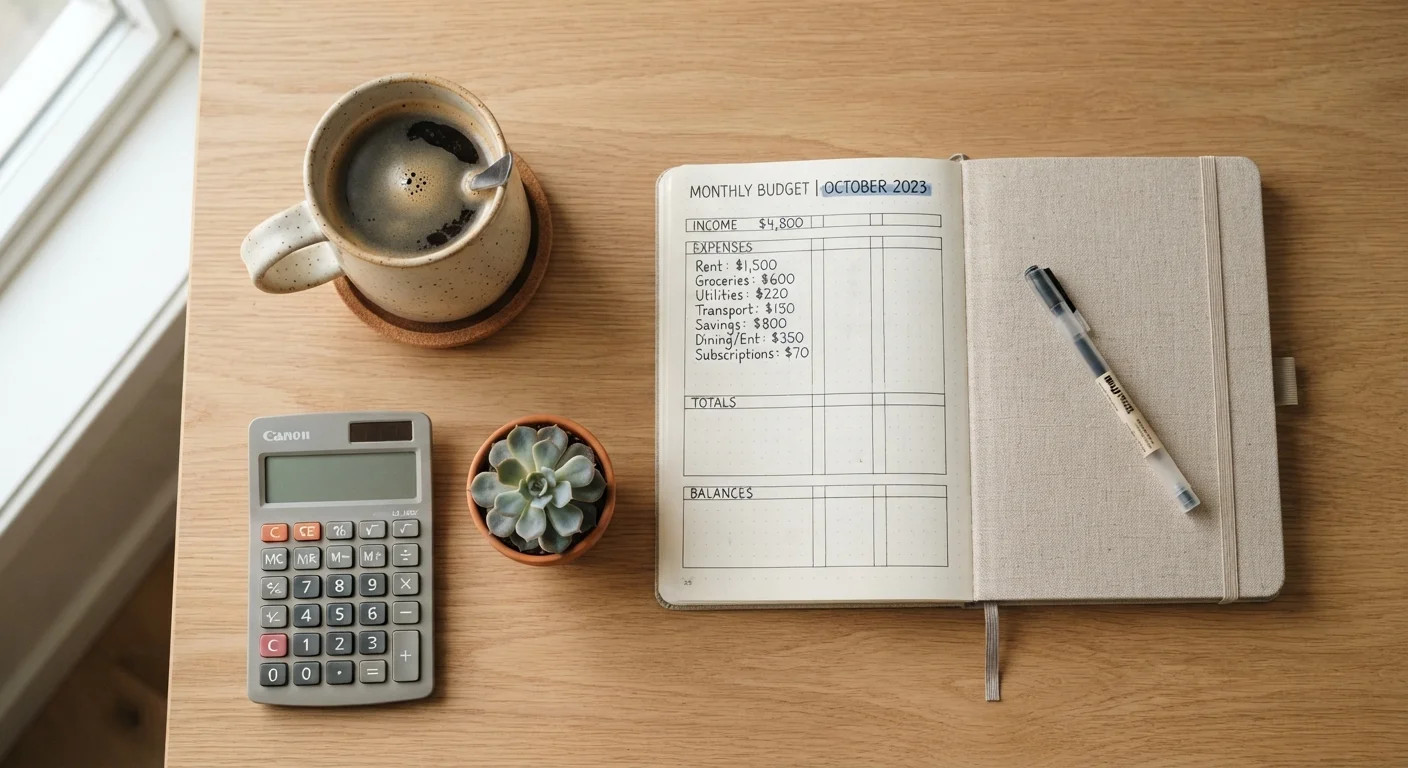
Write your planned amount next to each category. Then subtract total planned spending from take-home income. If the result is zero or positive, your plan is balanced. If it's negative, you're planning to spend more than you earn - go back to discretionary categories first and trim until the numbers align.
There are several structured approaches to consider once you're comfortable with the basics. Budgeting Approaches Compared lays out the trade-offs between popular methods so you can find a structure that suits your habits.
Monthly Budget Setup Checklist
A practical checklist of every document, account, and figure to gather before you build your budget. Helps you start with complete and accurate information rather than estimates.
Budgeting Approaches Compared
A side-by-side look at popular budgeting methods - envelope, zero-based, pay yourself first, and more - to help you choose the structure that fits your habits and lifestyle.
CFPB Budget Worksheet
The Consumer Financial Protection Bureau offers a free, straightforward budget worksheet that walks you through income and expense categories in a structured format.
Step 4: Review, Adjust, and Keep Going
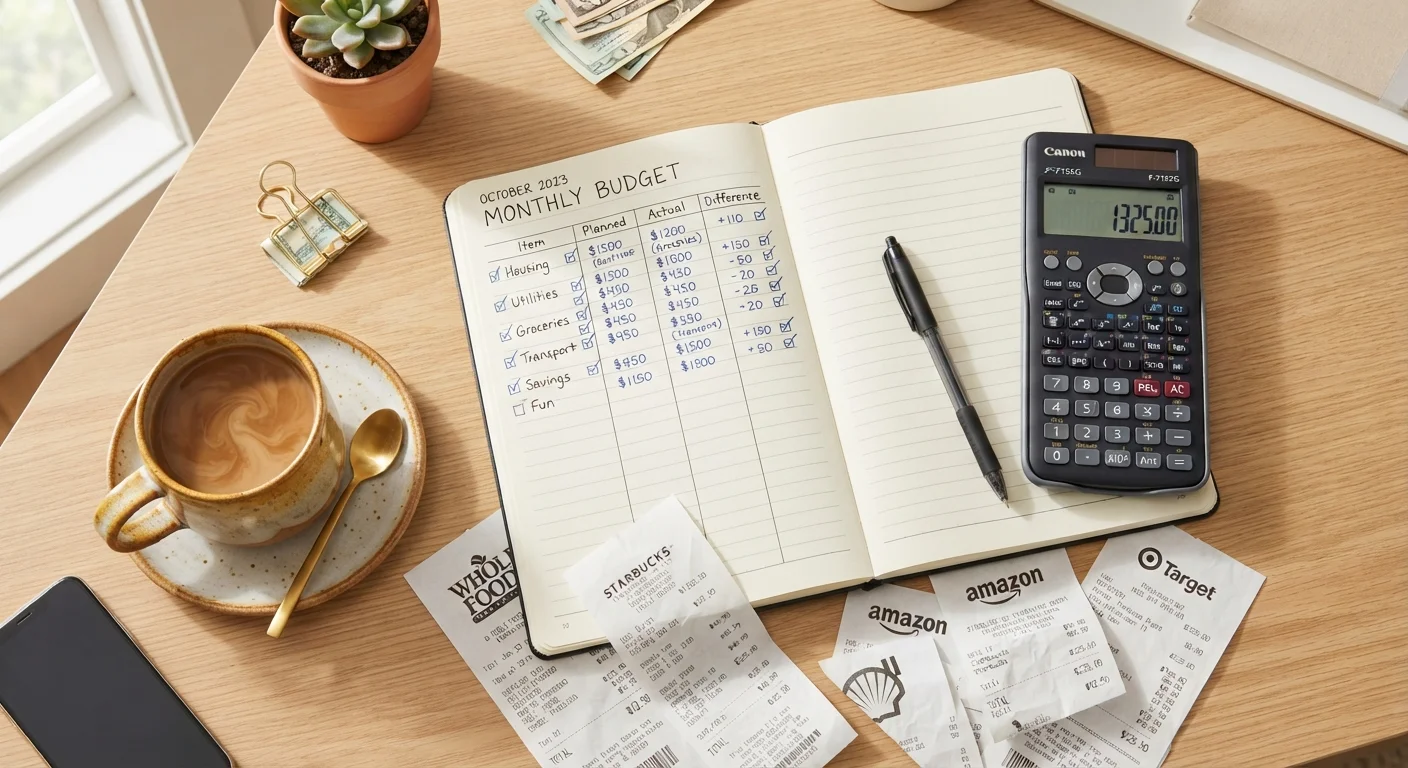
At the end of your first month, compare what you planned against what you actually spent. Expect gaps - most first budgets are more wish than reality. That's not failure; it's data. Use it to refine your numbers for the next month.
A productive monthly review takes about 15 minutes:
- Add up actual spending in each category.
- Compare to your planned amounts and note the differences.
- Identify one or two categories that drifted most, and decide whether to adjust the budget or adjust the behavior.
- Set your amounts for next month.
Budgeting is a skill that improves with repetition. Your third month will be more accurate than your first. Within a few months, you'll have a realistic baseline that reflects your actual life - and that's when a budget becomes genuinely useful rather than aspirational.
For broader habits that support your plan day to day, Everyday Money Moves covers the small financial decisions that compound over time.
This article is for general informational and educational purposes only and does not constitute personalised financial advice. For guidance tailored to your specific situation, consider consulting a qualified financial professional or nonprofit credit counselor.