
Why Obsessive Tracking Backfires
Logging every dollar sounds disciplined, but in practice it often becomes a source of stress that people abandon quietly after a few weeks. The irony is that perfect tracking can undermine the actual goal - building lasting awareness of where your money goes.
The problem isn't the tracking itself; it's the granularity. When a system demands too much time and mental energy, it competes with other priorities and loses. A spending awareness habit you maintain imperfectly for years will serve you far better than a flawless system you quit in month two.
The solution is to find the minimum effective dose of tracking - enough detail to spot patterns and catch problems, without turning your financial life into a second job. For most people, that means category-level awareness and a short weekly review. See how a weekly money check-in works for a practical structure to build around.
Practical Spending Tracking Approaches That Stick
There is no single right method - the best approach is whichever one you'll actually maintain. Below are four techniques that balance usefulness with sustainability.
- Track categories, not line items. Group spending into 6-10 broad buckets (housing, food, transportation, personal, entertainment, health, savings). Review totals weekly, not individual transactions.
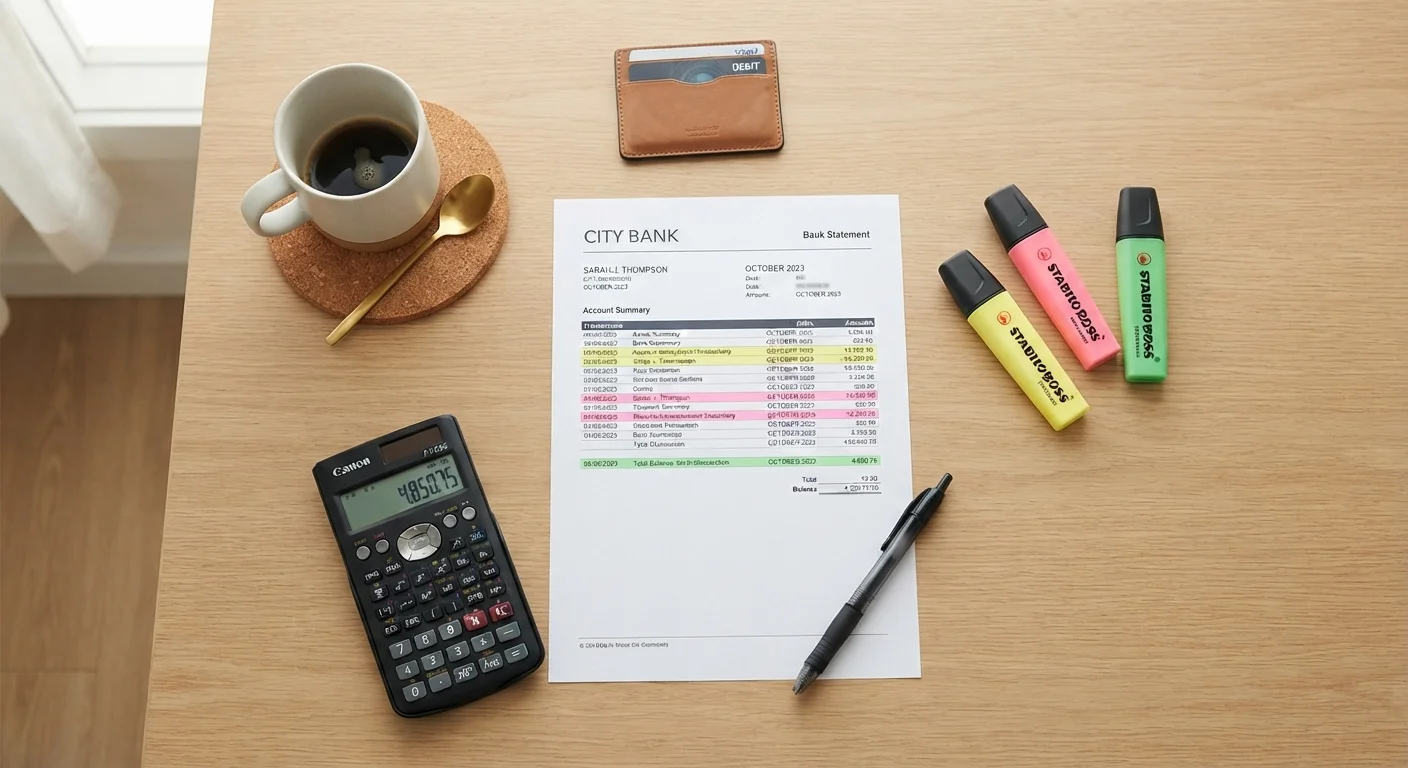
- Use bank statements as your data source. Rather than logging transactions in real time, review your statement once a week. Most digital banking apps already sort purchases into categories automatically.
- Set category spending targets, not rigid limits. A target gives you a reference point without triggering the guilt spiral that comes with hard rules. If dining runs $50 over target one week, you simply adjust the following week.
- Automate fixed expenses so they disappear from active tracking. Rent, loan payments, insurance premiums, and utility auto-pays don't need weekly attention. Your energy goes toward variable spending - where behavior actually changes.
- Do a monthly category audit, not a daily one. Once a month, compare your actual category totals against your targets. That's where adjustments happen. Daily reviews create anxiety without adding proportional insight.
If you're still building your overall spending plan, this introduction to building a first budget explains the foundational choices before you layer in tracking habits.
Use the 'Good Enough' Rule for Tracking
Aim for awareness, not accounting precision. If your tracked totals are within 5-10% of actual spend, you have enough information to make good decisions. Chasing exact figures is where most people burn out and abandon the habit entirely.
The Areas Worth Watching Most Closely
Not all spending categories carry equal behavioral weight. Research on household finances consistently shows that a small number of variable categories account for most budget surprises. Concentrating your attention there - rather than spreading it thin across everything - gives you the best return on your tracking effort.
65%
Americans who don't track spending consistently
According to a widely cited NFCC (National Foundation for Credit Counseling) consumer financial literacy survey, roughly two-thirds of U.S. adults do not actively monitor their monthly spending.
~$1,500
Estimated annual spend on unplanned discretionary purchases
Consumer behavior research consistently finds that unplanned, low-awareness spending on food, subscriptions, and impulse purchases adds up to significant annual totals for most American households.
Dining and food: This is the category most people underestimate. Grocery creep, takeout frequency, and work lunches accumulate quickly. Even a rough monthly total is revealing.
Subscriptions and recurring charges: These are easy to forget precisely because they're automatic. A quick quarterly scan of your statements for recurring charges often surfaces services you no longer use. Auditing your recurring costs is a practical companion exercise to run alongside your regular tracking.
Small-frequency, high-impulse purchases: Online shopping, app purchases, and convenience spending are the modern equivalent of cash leakage. Small daily habits that quietly erode a budget explores this pattern in depth.
This Is General Financial Information
This article provides general education about personal budgeting and spending habits. It is not personalized financial advice. For guidance tailored to your specific situation, consider consulting a licensed financial professional.
Once your tracking habit is stable, the logical next step is putting that awareness to work through automation. Automating your savings explains how to move money toward goals before discretionary spending gets a chance to absorb it.
“A budget is telling your money where to go instead of wondering where it went.”
— Dave Ramsey, Personal finance author and radio host
Building the Habit Without Burning Out
Spending awareness becomes durable when it's woven into a short, regular routine rather than treated as an intensive project. Here are immediately actionable ways to start today:
The overarching principle is that awareness precedes change. You don't need a perfect budget to benefit from tracking - you need enough information to recognize patterns, catch drift early, and make deliberate choices. That's achievable with far less effort than most people expect.
For a broader view of how tracking fits into your overall financial picture, Everyday Money Moves covers the full range of daily habits that shape financial outcomes over time.
This article is for general informational and educational purposes only. It does not constitute personalized financial advice. Consult a qualified financial professional for guidance specific to your circumstances.