How the Three Categories Work
The 50/30/20 rule breaks your monthly after-tax income into three buckets, each with a specific job to do.
50% - Needs
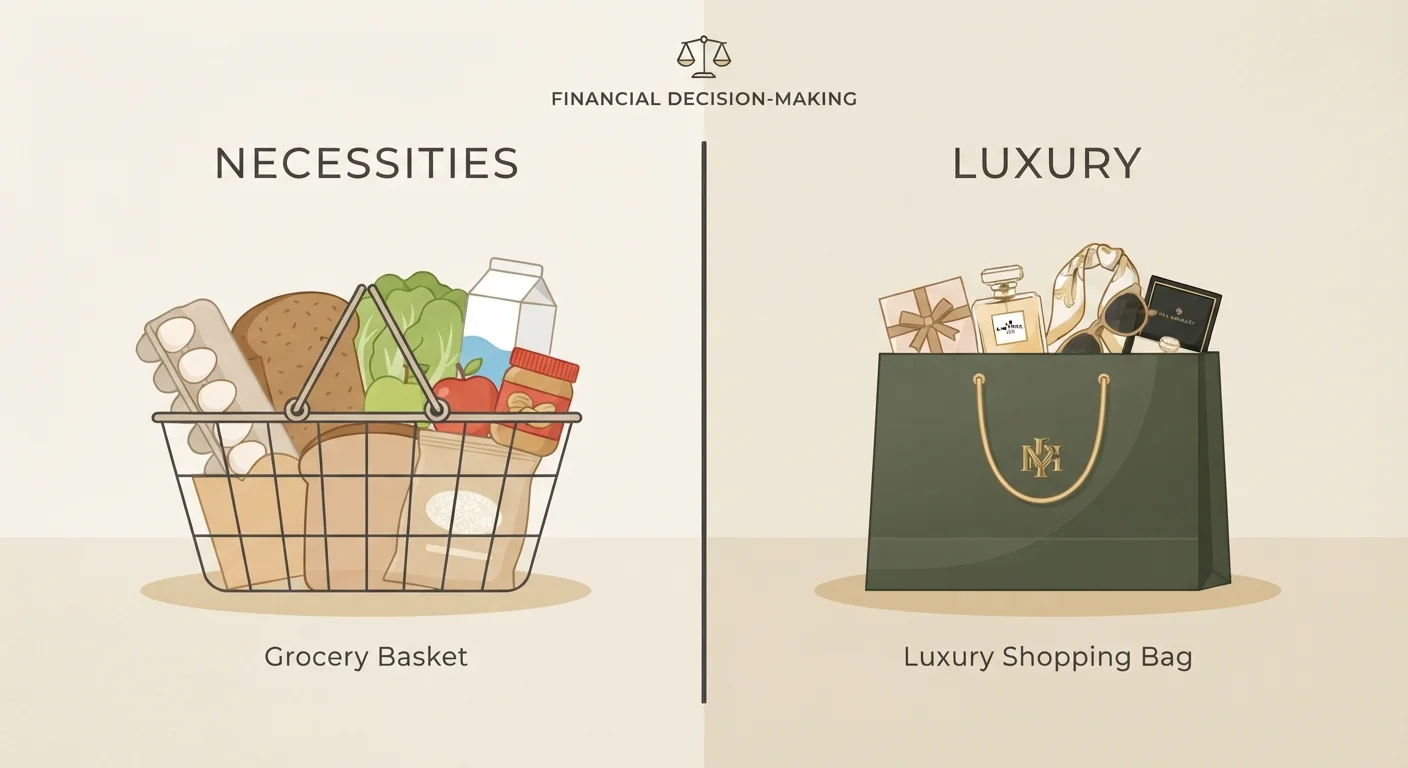
Half your income is allocated to essentials: housing, utilities, groceries, health insurance, transportation needed for work, and minimum required debt payments. These are expenses that carry real consequences if left unpaid. The challenge is that many people misclassify wants as needs - a cable package, a premium phone plan, or a gym membership might feel necessary, but they're discretionary. Getting this category right matters because overspending here squeezes both your lifestyle and your financial future. Our article on drawing the line between needs and wants explores this distinction in detail.
30% - Wants
This bucket covers everything that improves quality of life but isn't strictly required: dining out, entertainment subscriptions, travel, hobbies, clothing beyond the basics, and similar discretionary spending. The 30% ceiling is meant to protect your financial health without eliminating enjoyment - a budget you can't sustain long-term isn't useful.
20% - Savings and Debt Repayment
This slice goes toward building financial security: emergency fund contributions, retirement account deposits, and any debt payments above the required minimum. Tackling high-interest debt aggressively here can be just as valuable as investing, since eliminating 20% APR credit card debt is a guaranteed 20% return. The Saving & Debt hub offers practical guidance on prioritizing these goals.
34%
Americans with no budget of any kind
A NFCC (National Foundation for Credit Counseling) survey found roughly one-third of U.S. adults do not follow any budget, underscoring the value of even a simple framework.
~30%
Median housing cost burden for renters
U.S. Census Bureau data consistently shows median rent payments consuming close to 30% of renter household income - illustrating how housing alone can strain the 50% needs target.
$1,000
Savings target for a basic emergency fund
Financial educators broadly recommend a starter emergency fund of at least $1,000 before aggressively paying down non-emergency debt - a goal the 20% bucket is designed to support.
Applying the Rule to a Real Budget
To put the rule into practice, start with your monthly take-home pay after all taxes, health insurance premiums, and retirement contributions deducted from payroll. Multiply that figure by 0.50, 0.30, and 0.20 to get your three spending targets.
For example, if your household brings home $5,000 per month after taxes:
- Needs: Up to $2,500
- Wants: Up to $1,500
- Savings/Debt: At least $1,000
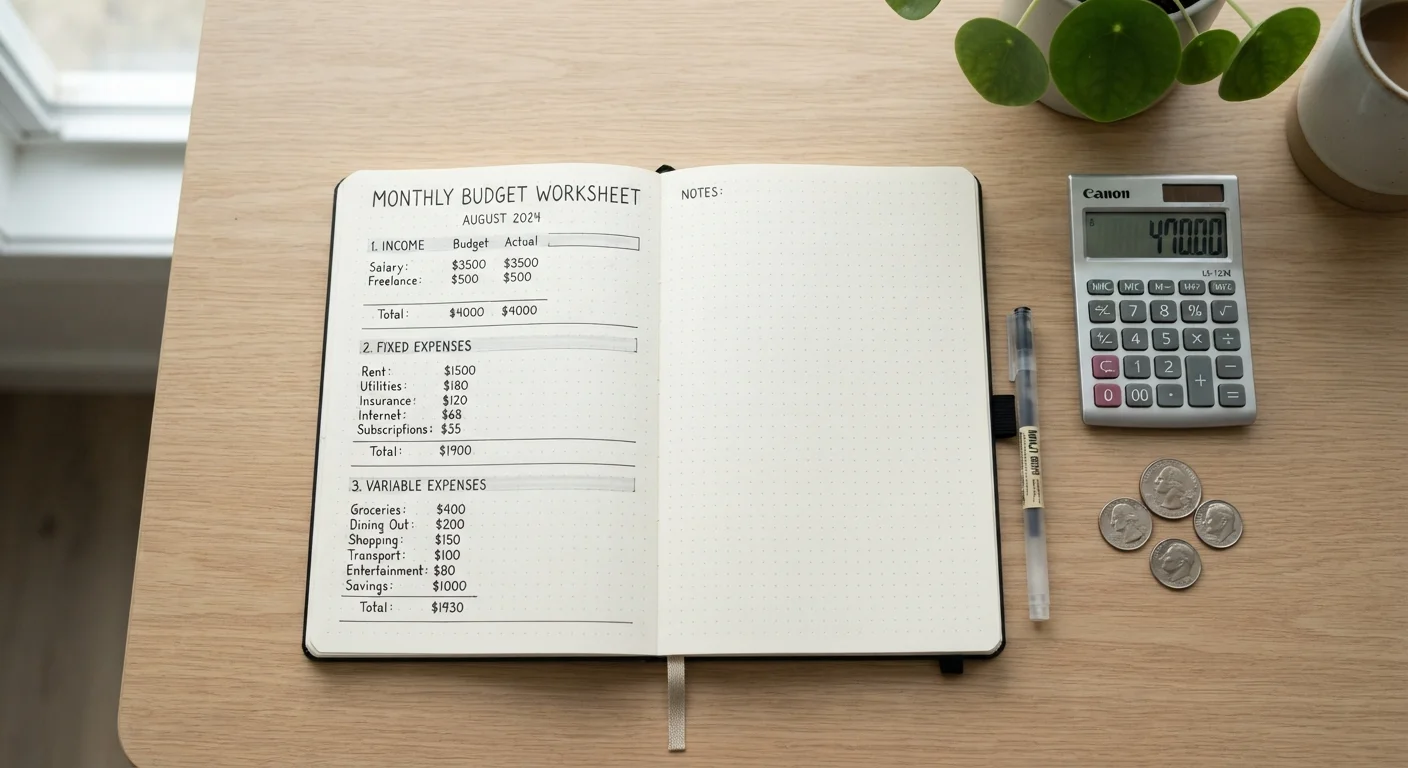
Next, list your current monthly expenses and sort each one into a category. Most people find the exercise itself revealing - categories they thought were balanced turn out to be noticeably skewed. If your needs routinely exceed 50%, look for the largest individual expenses first; housing and transportation are the most common culprits.
Automate the 20% First
Set up an automatic transfer to your savings or retirement account on payday, before you spend anything else. Treating savings as a non-negotiable bill rather than whatever's left over is one of the most effective behavioral habits in personal finance. Even a small automated amount builds the habit and compounds over time.
For households managing shared finances, the same math applies to combined net income. Our guide on managing money as a household walks through how couples and housemates can structure this fairly.
Where the Rule Works - and Where It Doesn't
The 50/30/20 rule works best for people with stable, predictable income and moderate living costs. It rewards simplicity: instead of tracking dozens of line items, you monitor three numbers. That low overhead makes it easier to maintain consistently.
However, the rule has real limitations worth naming honestly:
- High-cost markets: In cities where housing alone consumes 40-50% of a median income, the framework's proportions become nearly impossible to hit without significant trade-offs elsewhere.
- Variable income: Freelancers, gig workers, and commission-based earners find percentage-based rules harder to apply month-to-month when income swings substantially.
- Aggressive debt payoff or savings goals: If you're working to pay down significant debt quickly or accelerate retirement savings, 20% may not be enough - and that's fine to acknowledge. The rule is a floor, not a ceiling.
- Early-career budgets: Someone earning $32,000 a year may find that 50% barely covers necessities, leaving the 30% wants category functionally empty.
If you prefer more granular control over every dollar, zero-based budgeting may be a better fit. And if you're weighing multiple methods side by side, our budgeting approaches comparison lays out the trade-offs clearly.
“A budget is telling your money where to go instead of wondering where it went.”
— Dave Ramsey, Personal finance author and radio host
This article is for general informational and educational purposes only and does not constitute personalized financial advice. Consider consulting a licensed financial professional for guidance specific to your situation.