Why Home Organization Feels So Overwhelming
Most people don't struggle with organization because they're lazy or lack willpower. They struggle because the task feels shapeless - there's no clear beginning, and every drawer or corner seems connected to a dozen others. When you don't know where to look first, the easiest option is to look away.
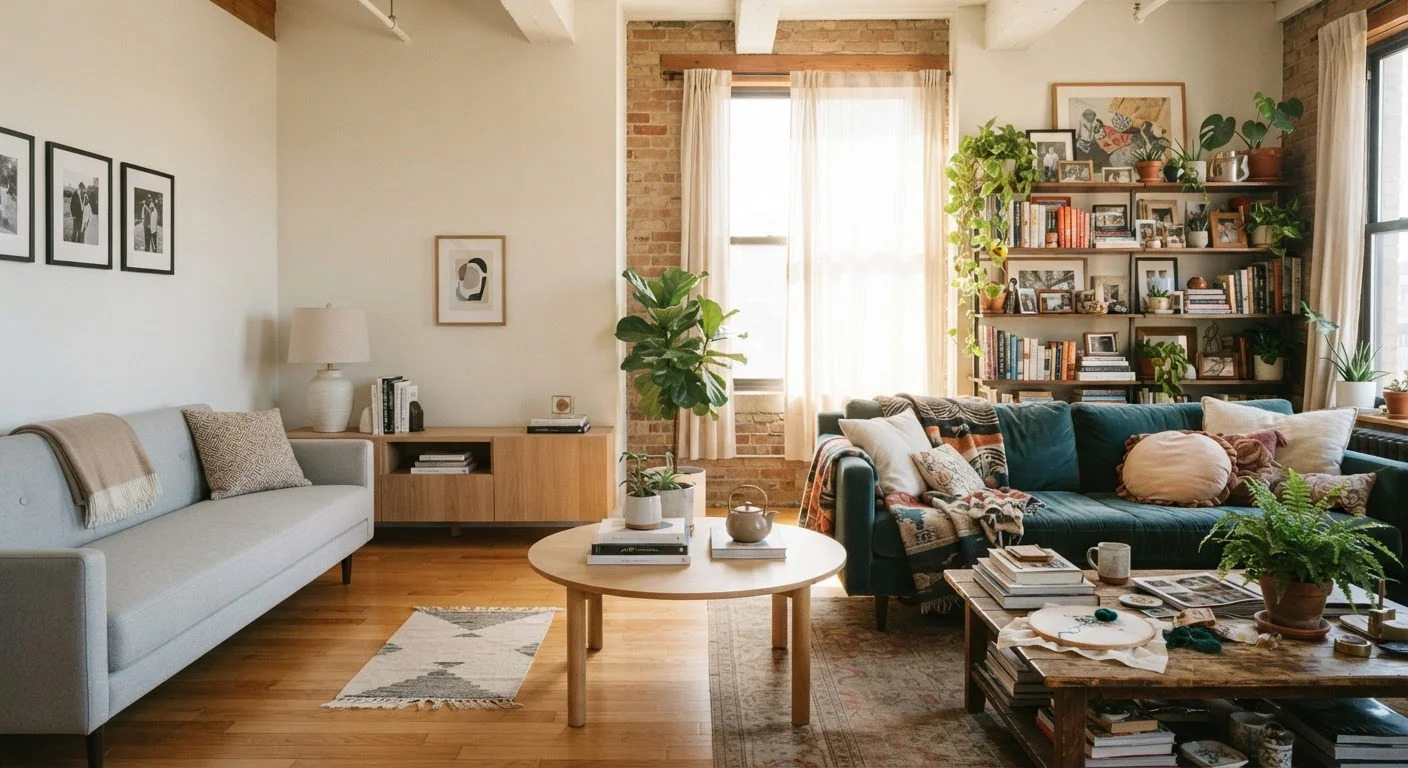
A second layer of difficulty is the gap between real homes and the polished interiors we see in media. Those images often depict spaces that few people actually live in. Holding your home to that standard sets up a comparison that almost no one can win, which makes the whole project feel pointless before it starts.
The most useful reframe: organization isn't a state you achieve once. It's a set of small decisions repeated over time. Starting with that understanding removes a lot of the pressure.
Start With What Bothers You Most
Rather than following a prescribed room-by-room order, let your own frustration guide you. The spot that causes you the most daily stress will deliver the most noticeable relief once organized. That early win makes it much easier to keep going.
Core Concepts Every Beginner Should Know
A few foundational ideas will serve you in every room of your home, regardless of its size or your budget.
Decluttering
The process of going through your belongings and removing items you no longer use, need, or want - through donation, recycling, or disposal. It always comes before organizing.
Designated home
A specific, consistent place where a particular item is always stored. Giving every object a designated home is the foundation of any organizing system.
One in, one out
A simple habit where you remove one existing item from your home whenever a new item comes in. It keeps the total volume of belongings from steadily growing.
Zones
Sections of a room or storage area dedicated to a specific type of activity or category of item - for example, a 'mail zone' near the door or a 'snack zone' in the pantry.
Maintenance reset
A short, regular tidying session - often just a few minutes - focused on returning items to their designated places rather than deep cleaning or reorganizing.
Declutter before you organize. Sorting through belongings and removing what you don't use, need, or want should always happen before you buy a single basket or label maker. Organizing clutter just hides it temporarily - it will resurface.
Every item needs a home. When an object doesn't have a designated place, it drifts to whatever surface is nearest. Assigning a specific location to each category of item - even if that location is a single shelf or drawer - dramatically reduces everyday mess.
Easy in, easy out. The best storage solutions are the ones people will actually use. If putting something away requires too many steps, it won't get put away. Prioritize accessible, low-friction storage over elaborate systems.
How to Choose Your Starting Point
The room that causes you the most daily stress is usually the best place to start - not because it's easiest, but because organizing it will deliver the most immediate relief. Common candidates include the kitchen (where mornings often feel chaotic), the entryway (where everything gets dropped), or a bedroom (where clutter affects sleep quality).
If even identifying a starting room feels overwhelming, try this: walk through your home and note which space you avoid or feel vaguely tense in. That's your signal.
Once you've chosen a room, narrow it further. Don't organize the whole kitchen - start with the junk drawer, or one cabinet, or the counter next to the stove. Finishing a small area completely is more valuable than making partial progress across many areas at once.
You Don't Need to Buy Anything Yet
It's tempting to start an organizing project by shopping for bins, baskets, and drawer dividers. Resist that impulse until after you've decluttered. You may find that removing unused items frees up enough space that you need far less storage than you expected - and you'll be able to measure accurately for what you do need.
Simple Systems That Actually Stick
Sustainable organization relies on systems that are easy to maintain, not just easy to set up. A few principles help here.
- Group like with like. Store items in categories - all batteries together, all medicine together, all craft supplies together. This makes it easier to find things and easier to notice when you're running low.
- Use the 'one in, one out' rule. When a new item enters your home, an old one leaves. This keeps volume manageable over time without requiring periodic purges.
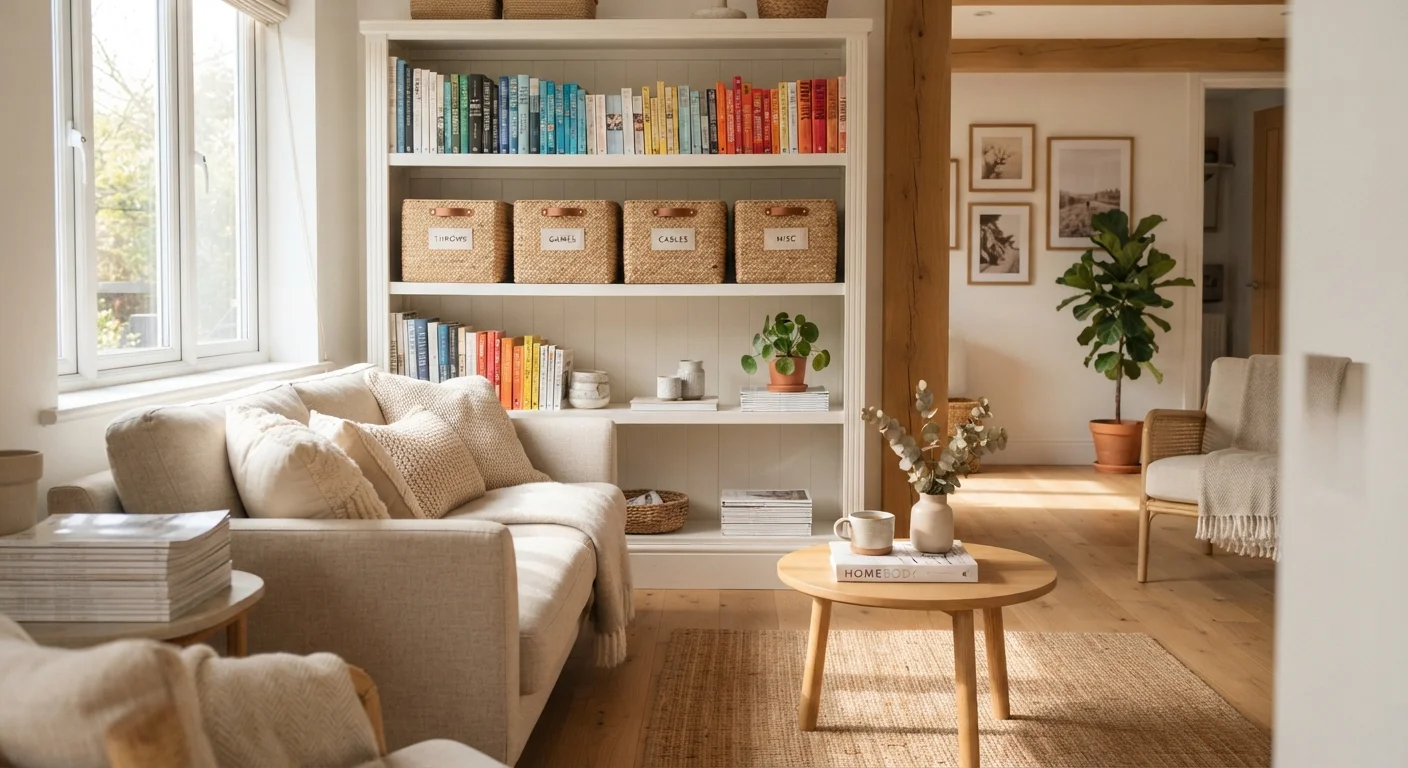
- Label everything possible. Labels work for everyone in the household, not just the person who organized the space. Even simple handwritten labels on boxes or bins dramatically reduce the time it takes to find and return items.
- Reset daily, not weekly. A five-minute end-of-day tidy - returning stray items to their homes - is easier to sustain than a full Saturday session. Small resets prevent the accumulation that leads to feeling overwhelmed again.
None of these strategies require special products. They require deciding where things belong and then building the small habit of returning them there.
Organizing With Others at Home
Organization gets more complicated when you share a home. Different people have different tolerances for clutter, different workflows, and different ideas about what counts as 'put away.' Imposing a system on housemates or family members without their input rarely works - they didn't design it, so they don't feel invested in it.
A more effective approach is to involve everyone in decisions about shared spaces. Ask what bothers them most, what they need quick access to, and what storage solutions actually fit their habits. Systems built around how people already behave tend to outlast systems built around how someone thinks they should behave.
For deeper strategies on navigating different tidiness standards under one roof, see our article on organizing shared spaces when not everyone agrees.
Avoid Organizing on Behalf of Others
Going through another person's belongings without their knowledge or consent - even with good intentions - tends to create conflict rather than solve it. Shared spaces are best tackled collaboratively. For personal spaces belonging to a housemate or family member, wait for an invitation before getting involved.