Why the Collection Day Inspection Matters
Picking up a used car is one of the most financially significant transactions most people make outside of real estate - yet the collection day is often rushed. Excitement, social pressure from the seller, and the assumption that issues were already caught during negotiation can all lead buyers to skip the final inspection. That's a costly mistake.
The checks outlined in this checklist are not about distrust. They're a structured way to confirm that what you agreed to buy is exactly what you're receiving - in condition, documentation, and legal standing. Running through them systematically protects you whether you're buying from a private seller or a dealer.
For a broader view of what used-car ownership involves financially, see our article on the financial realities of owning an older car. If this is your first vehicle purchase, everything first-time car owners need to know covers the broader obligations awaiting you after the keys change hands.
VIN Mismatch Is a Serious Warning Sign
If the VIN on the dashboard plate, door jamb sticker, and title do not all match exactly, stop the transaction immediately. A mismatch may indicate a stolen vehicle, title fraud, or major undisclosed repair. Do not accept explanations and do not hand over payment until you have independently verified the vehicle's identity through your state's DMV or law enforcement.
What You Need and How to Use This Checklist
Before you arrive to collect the vehicle, assemble a few basic tools and print this checklist. Arrive in daylight if possible - good lighting is irreplaceable when examining paint condition, rust, and fluid leaks. Budget at least 30 to 60 minutes and do not let anyone rush you.
Tread depth gauge or quarter
Measures remaining tyre tread to determine whether tyres are safe or need immediate replacement.
Flashlight
Illuminates the undercarriage, engine bay, and dark interior areas for a more thorough visual inspection.
Vehicle history report (VIN-based)
Reveals accident history, prior ownership, title issues, and odometer discrepancies before collection.
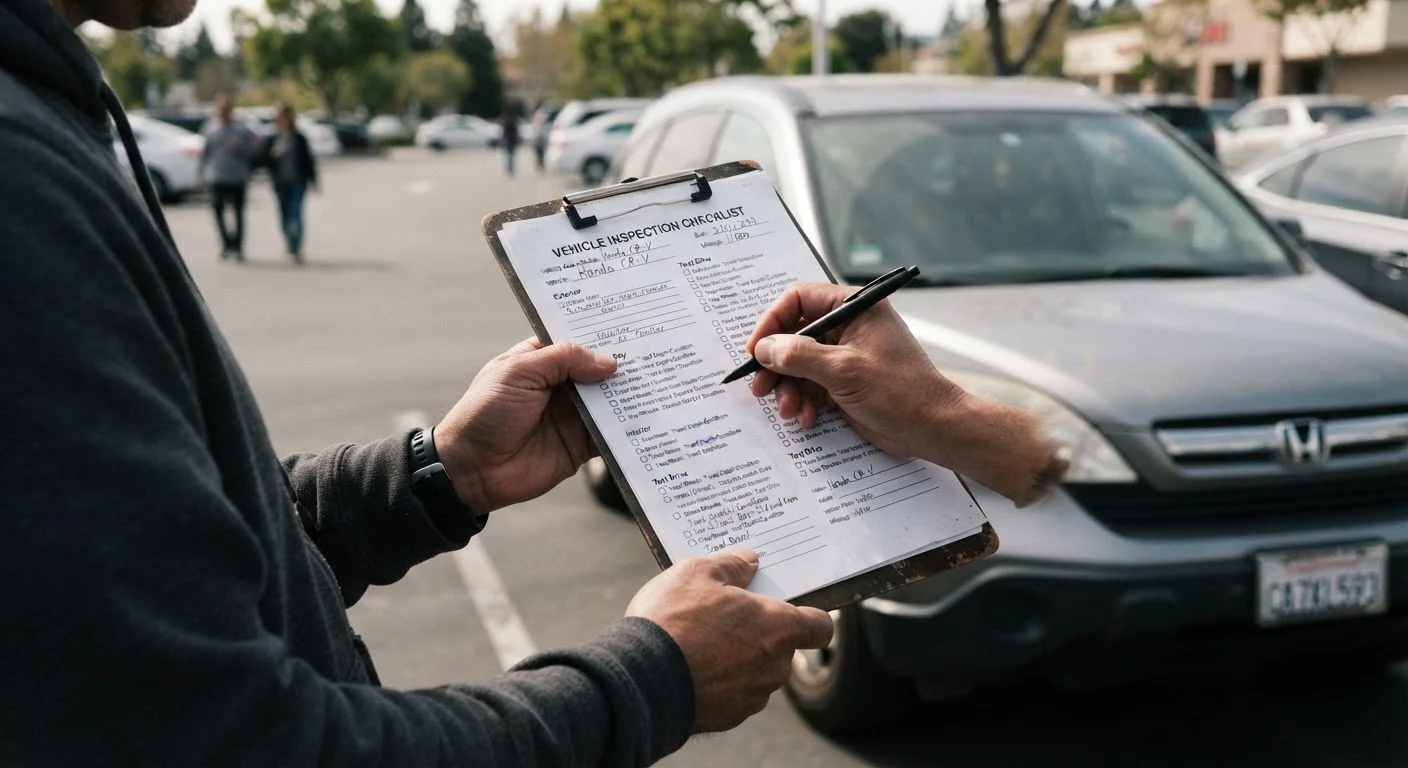
Pre-printed checklist (this one)
Keeps your inspection systematic so excitement or seller pressure doesn't cause you to skip steps.
Independent mechanic inspection
A pre-purchase inspection by a trusted mechanic can identify mechanical issues invisible to untrained eyes.
Work through each group in order. Documentation comes first because a title or VIN problem may mean the transaction should not proceed at all - there's no point inspecting the engine of a car you can't legally own. Once paperwork is confirmed, move through the exterior, under the hood, the interior, and finally the test drive.
Documentation
Insurance & Registration
Exterior & Tyres
Under the Hood
Interior & Controls
Test Drive
After the Inspection: What Comes Next
If the car passes your inspection cleanly, you're in a strong position to drive away with confidence. File all documents - title, bill of sale, odometer disclosure - somewhere secure and start the registration process with your state DMV promptly. Registration deadlines vary by state, but most require completion within 30 days of purchase.
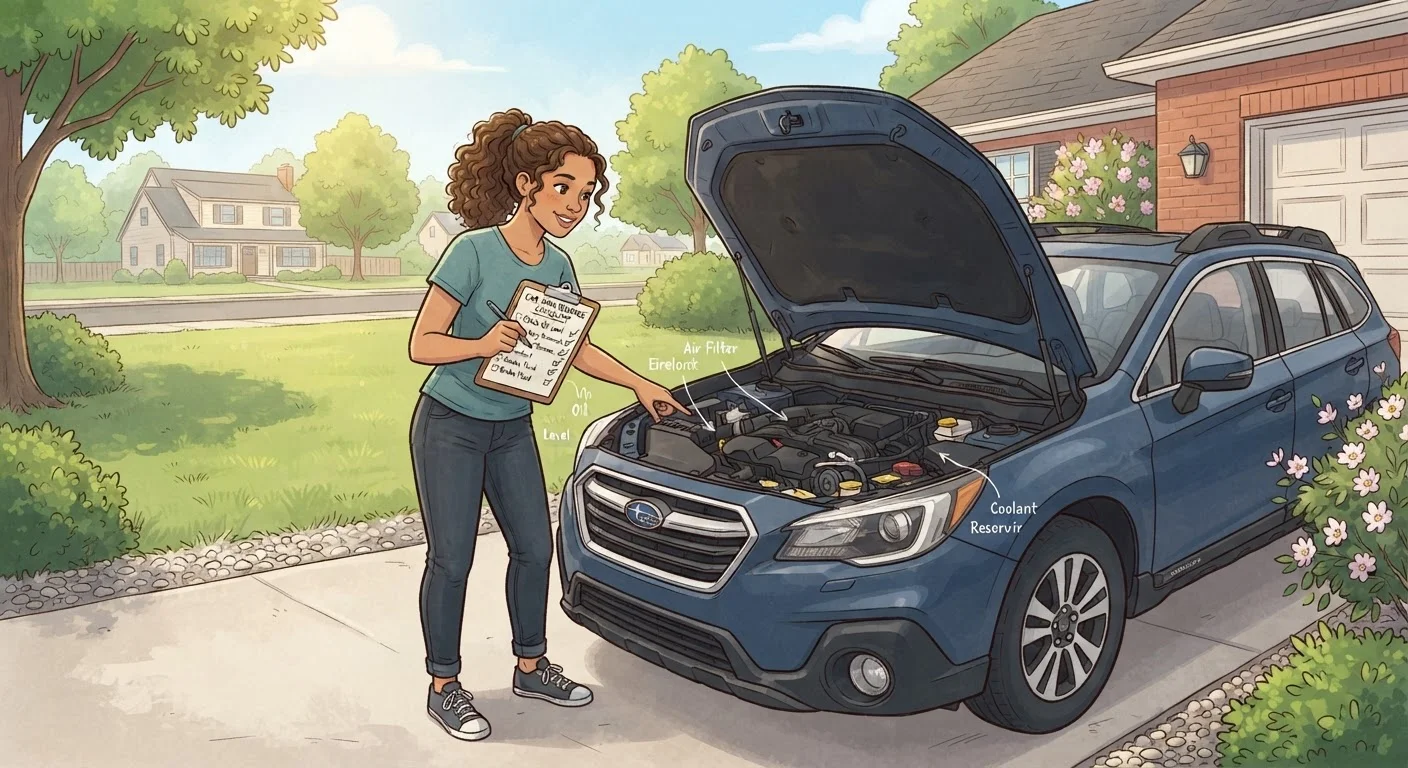
Even if everything checks out on collection day, build good habits immediately. Getting started with car maintenance as a new driver will help you understand which service intervals apply to your vehicle and what to prioritize in the first weeks of ownership. Once you're on the road regularly, make a quick pre-trip safety walkthrough part of your routine - a habit that takes under five minutes and significantly reduces avoidable incidents.
Do Not Drive Without Active Insurance
Every US state requires minimum liability insurance before operating a vehicle on public roads. Do not assume your existing policy automatically covers a newly purchased vehicle - confirm coverage with your insurer before leaving the seller's location. Driving uninsured, even briefly, exposes you to fines, license suspension, and personal financial liability.
Watch for Title Red Flags
A salvage, rebuilt, or flood-damaged title significantly affects a vehicle's safety profile and resale value. If the title is marked with any of these designations, proceed with extra caution and consult a qualified mechanic before completing the purchase. Sellers are legally required to disclose title brands - ask directly and verify against the vehicle history report.
If the inspection uncovers issues you weren't aware of, you have options: renegotiate the price, request repairs before completion, or walk away entirely. A deal that doesn't hold up to scrutiny on collection day is a deal worth reconsidering. The safe driving and car maintenance guidance on this site can help you make informed decisions at every stage of ownership.