Why Emergency Numbers Differ Around the World
Most American travelers assume dialing 911 will work anywhere. It won't. Emergency numbers vary significantly by country, and in a genuine crisis - a medical collapse, a fire, a theft - fumbling for the right digits costs precious time. Before departure, treat emergency contact research the same way you treat packing your documents. See our travel safety checklist for a full pre-departure framework.
The good news: a handful of numbers cover most of the world. The European Union standardized 112 across all member states; it also works in many non-EU countries including Switzerland, Turkey, and parts of Latin America. In the United Kingdom, 999 remains the primary number, though 112 is accepted. Australia uses 000, New Zealand 111, and Japan separates police (110) from fire and ambulance (119).
| EU & widely accepted | 112 (European Commission) |
| United States | 911 (FCC) |
| United Kingdom | 999 (112 also accepted) (UK Government) |
| Australia | 000 (Australian Government) |
| Japan (police / fire & ambulance) | 110 / 119 (Japan National Police Agency) |
| New Zealand | 111 (New Zealand Government) |
| US embassy lookup | travel.state.gov (US State Department) |
| US traveler registration | STEP (free enrollment) (US State Department) |
When in doubt, 112 is your most globally reliable single option - it functions on GSM networks even without a SIM card or cell service in many regions. Still, always verify the specific numbers for each country on your itinerary before you travel.
Your Embassy and Consulate: The Most Important Contact You're Not Saving
Your country's embassy or consulate abroad is a legal lifeline - especially if your passport is stolen, you're detained, or you face a medical emergency without insurance coverage. US citizens can look up the nearest embassy or consulate through the State Department's travel website (travel.state.gov), which also hosts country-specific safety advisories updated in near real-time.
Before leaving home, enroll in the Smart Traveler Enrollment Program (STEP), a free State Department service that registers your trip with the nearest US embassy. In the event of a natural disaster, civil unrest, or family emergency back home, officials can locate and contact you far more efficiently.
Embassy Hours vs. Emergency Lines
Embassy main numbers typically operate during business hours and may route to voicemail after hours. Always save the after-hours emergency duty officer number separately - it's listed on most embassy websites under 'Emergency Services for US Citizens' or equivalent. This distinction can matter enormously in a middle-of-the-night crisis.
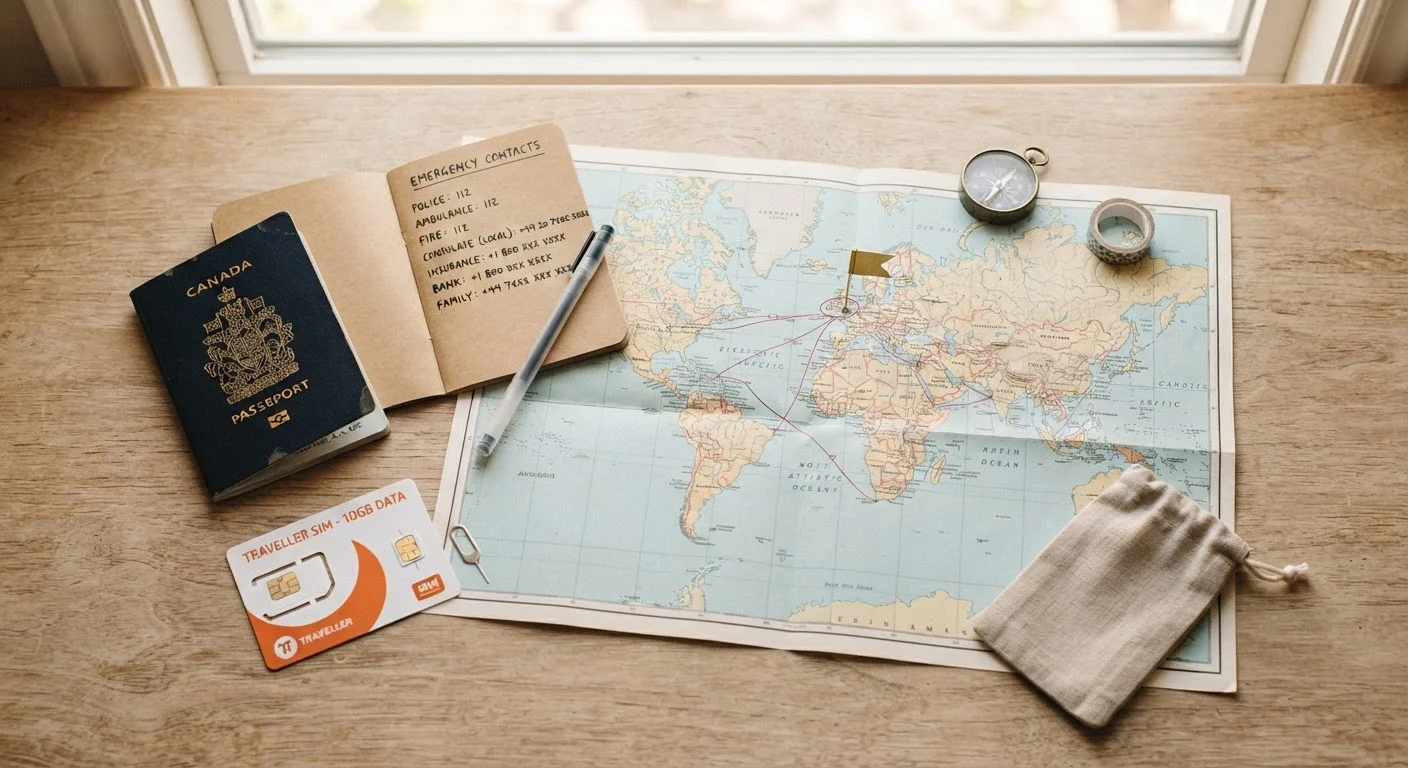
Keep a printed card - not just a phone screenshot - with the embassy's after-hours emergency line. Embassy main lines often go to voicemail outside business hours; the emergency number routes to duty officers around the clock.
Non-US travelers should identify the equivalent service in their home country (e.g., Canada's Registration of Canadians Abroad, the UK's FCDO Travel Aware) before departing. The principle is the same: register, save the number, carry it on paper. Pair this habit with the broader preparation steps in our pre-trip planning checklist.
International Assistance Resources Worth Knowing
Beyond emergency services and embassies, several international organizations provide traveler assistance that many people only discover after they need it.
- International SOS (isos.com): A global medical and security assistance network. Often included in corporate travel policies and some travel insurance plans. Members can reach 24/7 multilingual medical advice by phone from virtually anywhere.
- The International Association for Medical Assistance to Travellers (IAMAT): A nonprofit that maintains a directory of English-speaking physicians worldwide. Free membership is available and provides access to their vetted doctor network.
- WHO Country Offices: During public health emergencies, the World Health Organization's country-level offices are a reliable source of outbreak information and referrals.
- Travel insurance emergency hotlines: If you carry travel insurance - which is strongly advisable - the insurer's 24-hour emergency line should be saved separately from your policy documents. Keep it on your phone and written down.
Digital safety is an often-overlooked layer of emergency preparedness - losing access to your accounts abroad can amplify any crisis. Our guide on staying safe online while travelling covers how to protect yourself before and during your trip.
112
The pan-European emergency number standardized across EU member states and accepted in many additional countries globally. It functions on GSM mobile networks, often without a SIM card.
STEP (Smart Traveler Enrollment Program)
A free US State Department service that registers American travelers' trips with the nearest US embassy, enabling contact during emergencies, evacuations, or crises.
Consulate
A government office in a foreign city that provides services to citizens of the home country, such as passport replacement and emergency assistance. Distinct from an embassy, which is typically in the capital.
International SOS
A global organization providing 24/7 medical, security, and travel assistance services. Access is typically provided through employer travel policies or certain travel insurance plans.
IAMAT
The International Association for Medical Assistance to Travellers - a nonprofit that maintains a worldwide directory of English-speaking, vetted physicians available to international travelers.
This article provides general travel information for educational purposes. Always verify emergency numbers, embassy contacts, and entry requirements with official government sources before you travel, as details can change.