Why Currency Myths Are So Expensive
Money is already stressful to manage at home. Add an unfamiliar currency, a foreign country, and the time pressure of travel, and it's easy to default to whatever feels safest or most familiar - even if it quietly drains your spending budget. The good news is that most costly currency mistakes stem from a handful of stubborn myths, and understanding the facts can make a real difference to how far your money goes abroad.
Whether you're heading to Europe, Southeast Asia, or South America, the principles below apply broadly - though specifics always vary by destination, so verifying details before you go is always worthwhile. If you want to see how similar misconceptions show up in everyday spending, the grocery spending myths article is a useful companion read.
Myth
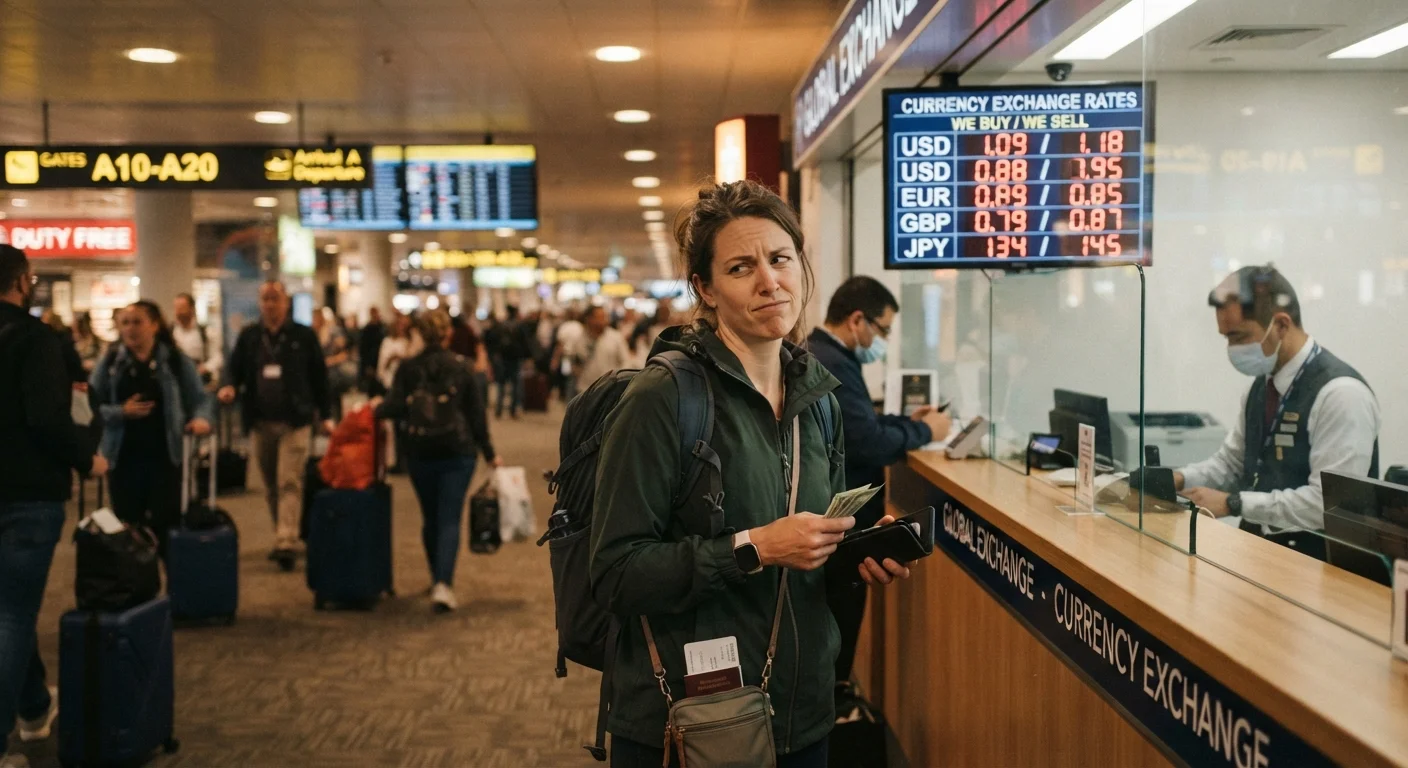
Airport currency exchange kiosks are the safest and most convenient place to get foreign cash, so the rates must be reasonable.
Fact
Airport kiosks are consistently among the most expensive places to exchange money, with wide spreads between buy and sell rates and sometimes additional fixed fees.
The captive audience at an airport allows exchange bureaus to charge a premium that simply wouldn't survive in a competitive high-street environment. While the convenience is real, the cost can be significant - sometimes 10-15% worse than mid-market rates, depending on the currency and operator. If you need local cash immediately on arrival, exchanging only a small emergency amount at the airport and sourcing the rest elsewhere is a commonly recommended approach.
Myth
Using your home country's currency when a foreign ATM or merchant offers the option saves you from confusing conversion math.
Fact
Choosing your home currency through dynamic currency conversion (DCC) means accepting the merchant's rate, which is typically far less favorable than your bank's rate.
Dynamic currency conversion is a service that sounds helpful but is widely regarded by consumer finance experts as one of the easiest ways to lose money abroad. The conversion is handled by the merchant's payment processor, not your card issuer, and the rate usually includes a markup. Paying in the local currency passes the conversion to your bank or card network, which tends to use rates much closer to the interbank mid-market rate - even after your card's foreign transaction fee is factored in.
Myth
Withdrawing cash from an ATM abroad always costs more than using a prepaid travel card.
Fact
ATM withdrawals abroad can be cost-competitive or even cheaper, depending on your bank, the ATM operator, and how the prepaid card charges fees.
Many banks offer accounts specifically designed for international travel that waive or reimburse foreign ATM fees. Even standard accounts can be cost-effective if you withdraw larger amounts less frequently to minimise per-transaction charges. Prepaid travel cards, meanwhile, vary enormously - some charge loading fees, inactivity fees, and poor conversion rates. Comparing the full fee structure of any card before you rely on it is essential. The hidden costs of travel article explores how these fees can quietly erode your budget.
Myth
You'll always get the best exchange rate if you exchange money before you leave home.
Fact
Rates at home, abroad, and online vary by provider and timing - no single approach is universally best for every currency or destination.
Pre-trip exchange at your home bank can be convenient and sometimes competitive for major currencies like euros or pounds. However, for less commonly traded currencies, home-country banks may offer limited availability or poor rates. In some destinations, local ATMs or in-country exchange offices provide stronger rates for their own currency. Researching your specific destination's currency landscape - including whether it's freely exchangeable - is a smarter approach than assuming any single strategy is universally superior.
Myth
Carrying mostly cash is the safest strategy because cards can be skimmed or declined abroad.
Fact
Both cash and cards carry risks abroad; a balanced approach and proactive communication with your bank tend to reduce problems more than relying on either alone.
Card skimming is a genuine concern, particularly at standalone ATMs in tourist-heavy areas - using ATMs inside bank branches during business hours is a widely recommended precaution. That said, carrying large amounts of cash introduces its own risks: loss, theft, and the difficulty of replacement. Notifying your bank of travel dates before departure significantly reduces the chance of cards being blocked for suspicious activity. A mix of a no-foreign-transaction-fee card, a backup card, and a modest amount of local cash covers most scenarios effectively. For broader trip planning context, see common travel planning myths.
Building a Smarter Currency Strategy
No single method works perfectly for every traveler or every destination. The most effective approach is usually a combination: a card with low or no foreign transaction fees for most purchases, a second backup card kept separately, and enough local cash for small vendors, markets, or places that don't accept cards.
Dynamic Currency Conversion Is Almost Never in Your Favour
When a merchant or ATM abroad asks whether you want to pay in your home currency rather than the local one, declining is nearly always the smarter move. The conversion rate applied is set by the merchant's payment processor, not your bank - and the markup can be substantial, sometimes exceeding 5%. Always select the local currency to let your own card handle the conversion.
Before you travel, take 20 minutes to review your bank's international fee schedule, set up travel notifications on your cards, and look up whether your destination is primarily cash-based or card-friendly. That small investment of time can easily save you more than the cost of a nice dinner abroad.
Up to 15%
Potential markup at airport exchange kiosks
Consumer finance research has found airport exchange bureaus can charge margins of 10-15% above the mid-market rate, depending on currency and operator.
3-5%
Typical dynamic currency conversion surcharge
Industry analysis suggests DCC markups commonly range from 3 to 5% above interbank rates, though some processors charge more.
Currency strategy is just one piece of the travel budget puzzle. Our guide on hidden travel costs covers the other expenses that often catch travelers off guard - from visa fees to tipping norms. And if you use travel rewards cards, understanding how those programmes actually work can help you maximise value; see travel rewards programmes explained for a clear breakdown.
Always Verify Rates Before You Travel
Exchange rates and fee structures change frequently and vary by provider. The information here is general and educational - always confirm current rates and terms with your bank, card issuer, or official financial sources before making decisions for your trip. This article is not personalised financial advice.