Why Household Hazards Are So Easy to Overlook
Most pet owners are aware that chocolate is harmful to dogs, yet a surprising number of equally dangerous hazards go unnoticed in homes every day. The problem isn't lack of care - it's that everyday objects don't look dangerous. A pill dropped on the floor, a vase of lilies, or an open cabinet under the sink rarely registers as a threat until something goes wrong.
Pets explore the world primarily through their mouths and noses. Dogs and cats will chew, lick, and investigate items that humans would never think to touch. This behavioral difference is precisely why hazard-proofing a home for animals requires a different lens than general household safety.
Some widely shared assumptions about what is and isn't safe for pets are also incorrect - the pet ownership myths that can actually harm your animal piece covers how misinformation compounds the risk. The foundation of protection is knowing which hazards exist and then making systematic changes to reduce access to them.
~400,000
Pet poisoning cases reported annually in the US
The ASPCA Animal Poison Control Center receives hundreds of thousands of calls each year related to potential pet poisonings.
Top 3
Human medications rank among most common pet toxin exposures
Human prescription and over-the-counter medications consistently rank among the leading categories of animal poisoning reported to veterinary poison centers.
~700
Plant species toxic to pets
The ASPCA's toxic plant database lists hundreds of species that can cause harm ranging from mild irritation to organ failure in dogs and cats.
Kitchen and Food Dangers
The kitchen is one of the highest-risk rooms in any pet-owning household. Beyond the obvious heat hazards from stovetops and ovens, the foods prepared and stored there include several that are toxic to common companion animals.
- Grapes and raisins: Can cause acute kidney failure in dogs; the toxic compound is not yet fully identified, making any amount potentially dangerous.
- Alliums (onions, garlic, leeks, chives): Damage red blood cells in both dogs and cats, leading to anemia.
- Xylitol: An artificial sweetener found in sugar-free gum, some peanut butters, and baked goods; causes rapid insulin release and can lead to liver failure in dogs.
- Macadamia nuts: Associated with weakness, hyperthermia, and vomiting in dogs.
- Alcohol and caffeine: Even small amounts can be dangerous, particularly for smaller animals.
- Cooked bones: Splinter easily and can cause internal punctures or obstructions.
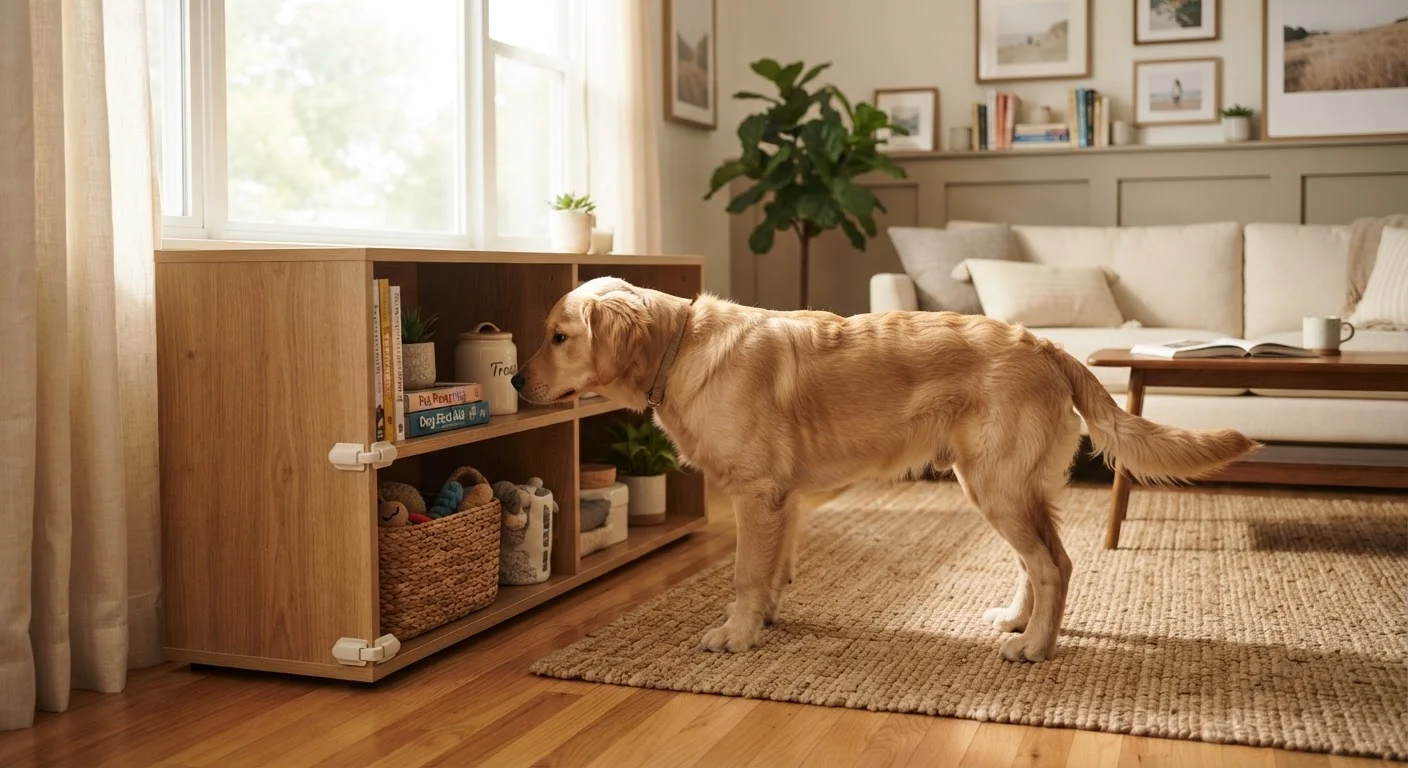
Practical steps include keeping food preparation areas clear when pets are present, using child-proof latches on lower cabinets, and being cautious about food scraps - including what guests may offer without realizing the risk.
Read the ingredient list on any peanut butter or nut butter before offering it as a treat - xylitol appears in a growing number of brands and is highly toxic to dogs even in small amounts.
Xylitol poisoning is a genuine and increasing risk as the sweetener becomes more widespread in commercial food products that owners may assume are pet-safe.
After any spill of a liquid medication or household chemical, treat the area as contaminated and clean it thoroughly before allowing pets back in - animals will groom residue off their paws.
Grooming behavior means that dermal exposure quickly becomes oral ingestion; many toxic exposures in cats and small dogs occur this way rather than through direct consumption.
Toxic Plants Inside and Outside the Home
Houseplants and garden plants add beauty to a home but represent a serious, often underestimated danger for pets. The ASPCA maintains an extensive database of toxic and non-toxic plants, and many of the most popular decorative species appear on the hazardous list.
Some of the most dangerous plants for cats and dogs include:
- Lilies (Lilium and Hemerocallis species): Highly toxic to cats - even small ingestions or contact with pollen can cause kidney failure.
- Sago palm: Toxic to both dogs and cats; all parts of the plant are dangerous, with seeds being the most concentrated source. Can cause liver failure.
- Oleander: Contains cardiac glycosides that can affect heart rhythm.
- Autumn crocus: Can cause multi-organ damage.
- Dieffenbachia (dumb cane): Causes intense oral irritation and swelling if chewed.
Before purchasing any plant, check whether it is safe for the specific animals in your home. If you are unsure about something already in your space, your veterinarian or the ASPCA Animal Poison Control Center (1-888-426-4435) can provide guidance. The room-by-room home setup checklist is a useful resource for auditing your space before or after a new pet arrives.
Lily Toxicity in Cats: No Safe Threshold
All parts of true lily plants (genus Lilium and Hemerocallis) are considered toxic to cats - including the pollen, the water in a vase, and even small nibbles of leaves. Kidney failure can develop within 24 to 72 hours of exposure. If you have cats, veterinary guidance generally recommends avoiding these plants entirely rather than trying to keep them out of reach.
Cleaning Products, Medications, and Chemicals
Household chemicals are a leading cause of pet poisoning cases reported to veterinary poison control centers. These include not only obvious substances like bleach and drain cleaners, but also products that seem mild - certain fabric softener sheets, essential oil diffusers, and some disinfectants can be harmful, particularly to cats, whose livers lack key enzymes needed to metabolize certain compounds.
Human medications pose an equally serious risk. Ibuprofen, acetaminophen (Tylenol), and certain antidepressants are among the most commonly ingested medications by pets. Even a single standard adult dose of some of these can be lethal to a small dog or cat. Always store medications in closed, elevated locations - a pill dropped and not retrieved immediately should be treated as a potential emergency.
Garage and storage areas present additional hazards: antifreeze (ethylene glycol) has a sweet taste that attracts animals but causes rapid kidney failure in small amounts; rodenticides may be ingested directly or through eating a poisoned rodent (secondary poisoning); and fertilizers or pesticides left accessible in garden sheds are also high-risk.
Act Immediately if Poisoning Is Suspected
Do not wait for symptoms to appear before contacting a veterinarian or poison control center. With many toxins, early intervention is far more effective than treatment after clinical signs develop. Keep the ASPCA Animal Poison Control Center number (1-888-426-4435) and your local emergency vet contact readily accessible. Do not attempt to induce vomiting unless specifically directed to do so by a veterinary professional.
Physical and Environmental Hazards
Not all household hazards involve ingestion. Physical dangers are equally important to address, particularly for younger or more curious animals.
- Electrical cords: Puppies and kittens frequently chew cords, risking electrocution and burns. Cord covers or tucking cables out of reach are effective solutions.
- Open windows and balconies: Cats can and do fall from heights - a phenomenon documented enough that veterinarians refer to it as high-rise syndrome. Window screens should be secured and balcony access supervised.
- Small objects: Coins, rubber bands, hair ties, and small toys are swallowing hazards that can cause intestinal obstructions requiring surgery.
- Reclining furniture and rocking chairs: Small pets can be seriously injured if they are inside or underneath furniture that is moved or reclined.
- Washing machines and dryers: Cats may climb into these appliances seeking warmth. Make it a habit to check before starting a cycle.
- Standing water: Toilets, buckets, and decorative ponds can pose drowning risks for small pets or very young animals.
For households with both outdoor access and indoor living, understanding the full range of tradeoffs is important - see our guide on indoor vs outdoor pets for a broader look at how environment shapes risk.
Building a Safer Home Routine
Hazard-proofing a home is not a one-time project. Pets grow, become more mobile, and may develop new behaviors over time. A puppy that ignored the kitchen counter at four months may learn to jump at twelve. A regular walkthrough with fresh eyes - ideally from your pet's height and perspective - helps catch newly accessible risks.
Key routine habits include:
- Always secure food scraps, medications, and chemicals immediately after use.
- Do a floor sweep before leaving a room where chemicals, medications, or small objects have been in use.
- Keep the ASPCA Animal Poison Control Center number and your local emergency veterinary clinic's contact saved and visible.
- Inform houseguests about what pets cannot eat or access.
- Review any new product, plant, or pet food ingredient before bringing it into the home.
It is also worth keeping the pet health hub bookmarked for guidance on recognizing early signs of illness, since prompt response is often the difference between a manageable situation and a serious one. For additional everyday care guidance, the grooming at home guide addresses another area where well-intentioned care can go wrong without the right information.
This article is for general informational purposes only and does not constitute veterinary medical advice. If you believe your pet has been exposed to a toxic substance, contact your veterinarian or an animal poison control center immediately.