Why the DIY vs. Professional Question Matters
Grooming is far more than aesthetics - it directly affects your pet's skin health, comfort, and your ability to detect early warning signs of illness. Just as some car maintenance tasks are safe to do yourself while others need specialist equipment, the same logic applies to pet grooming.
Done well at home, regular grooming builds trust between owner and pet, reduces stress at the vet, and can catch lumps, parasites, or skin changes early. Done incorrectly, certain tasks cause pain, infection, or injury. The key is knowing where your skill level and your pet's tolerance genuinely meet the task's demands.
This article provides general educational information about pet grooming. It is not a substitute for guidance from a licensed veterinarian or certified professional groomer for your individual pet's needs.
Tasks That Are Generally Safe at Home
The following routines are well within reach for most owners, provided the pet is comfortable being handled and the correct tools are used.
Brushing and Coat Maintenance
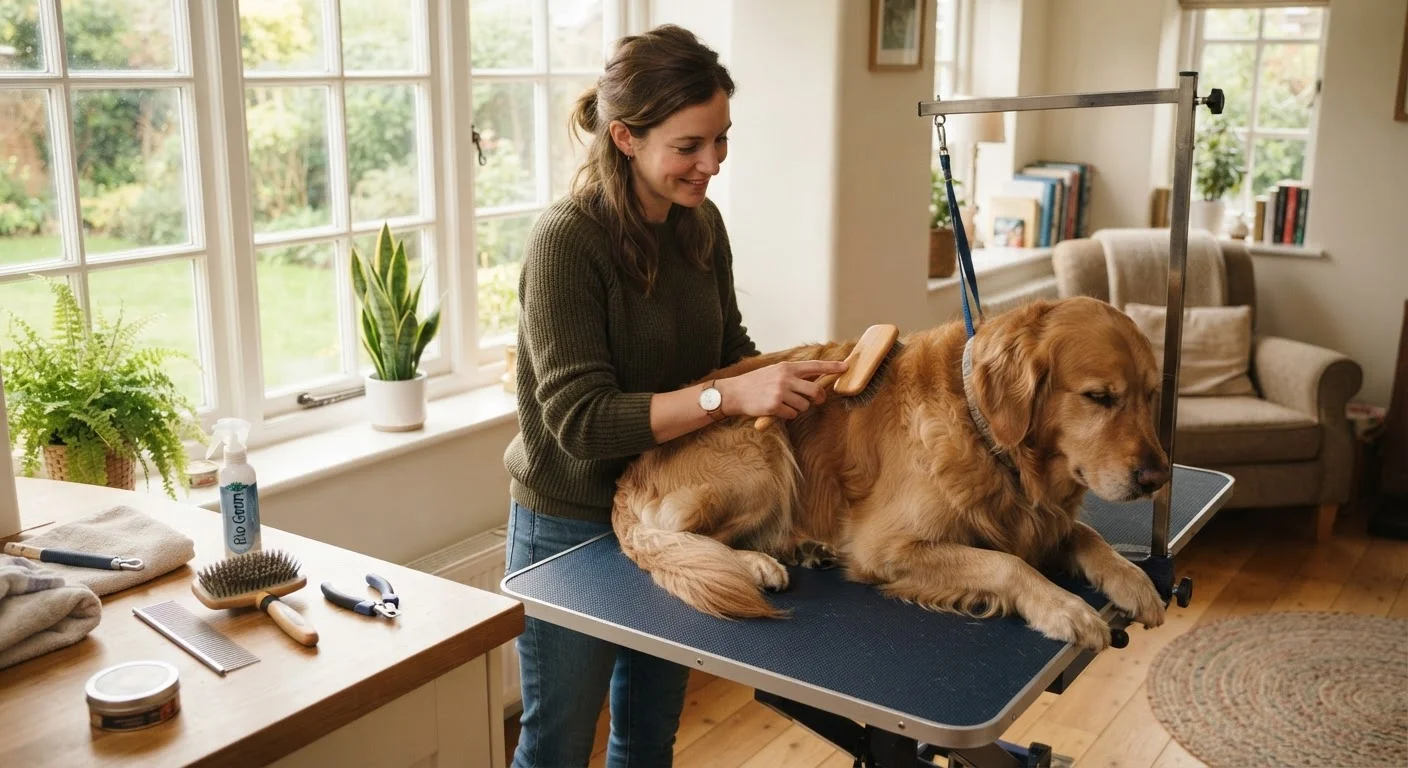
Regular brushing suits most pet owners. It removes loose hair, distributes natural oils, and prevents early mat formation. Match your brush type to your pet's coat - slicker brushes for longer coats, rubber grooming mitts for short-haired dogs and cats. Brush in the direction of hair growth and stop if your pet shows signs of distress.
Bathing
Most healthy adult dogs and cats can be bathed at home using a species-appropriate, mild shampoo. Avoid human shampoos, which can disrupt your pet's skin pH. Rinse thoroughly - residue is a common cause of skin irritation. Frequency depends on coat type and lifestyle; over-bathing strips natural oils.
Routine Ear Checks and Light Cleaning
Inspecting your pet's ears weekly costs nothing and catches problems early. If ears look clean and smell neutral, a gentle wipe with a vet-recommended ear cleaner and cotton ball is usually sufficient. Do not insert anything into the ear canal. If you notice discharge, odor, redness, or your pet is scratching its ears persistently, stop and consult a veterinarian.
Build Grooming Into a Routine Early
Introducing grooming handling - touching paws, ears, and mouth - during puppyhood or kittenhood dramatically increases tolerance later in life. Even brief, positive sessions a few times per week help pets accept handling as normal. Pair handling with rewards to build a positive association over time.
Incorporating these at-home tasks into a consistent schedule pays off over time. See how to structure a realistic monthly pet care routine that keeps grooming from slipping.
Tasks That Carry Real Risk Without Training
Some grooming jobs look simple but involve enough anatomical complexity or risk of pain that professional handling is often the safer choice.
| Grooming Task | At-Home Grooming | Professional Groomer/Vet | |
|---|---|---|---|
| Brushing | Safe for most owners | Useful for complex coat types | |
| Bathing | Generally safe at home | Preferred for skin conditions | |
| Ear cleaning (light) | Safe with correct technique | Required if infection suspected | |
| Nail trimming | Possible but carries risk | Safer option for most pets | |
| Anal gland expression | External only, with guidance | Internal expression - always professional | |
| Dematting severe mats | Risk of skin cuts - avoid | Correct tool and skill set |
Nail Trimming
Cutting nails too short severs the quick - the blood vessel inside each nail - causing pain and bleeding. Dark nails make the quick nearly invisible. While nail trimming can be learned at home with proper instruction and the right clippers, many owners find the risk-to-reward ratio favors leaving it to a groomer or vet tech, particularly for anxious pets or those with very dark nails.
Anal Gland Expression
Dogs' anal glands occasionally require manual emptying. External expression can be taught, but internal expression - which is sometimes necessary - must only be done by a veterinarian or trained groomer. Improper technique risks rupture or infection. If your dog is scooting frequently, consult your vet before attempting anything at home.
Dematting Severely Matted Coats
Light tangles can be worked out gently at home. Severe mats, however, sit close to the skin, trap moisture, and can harbor parasites or hide skin lesions. Attempting to cut them out with scissors risks cutting the skin, which is often tented upward into the mat. A professional groomer with clippers is the appropriate person to handle serious matting.
Factors That Should Shift Your Decision
Your pet's individual profile matters as much as the task itself. Consider these variables before deciding:
- Temperament: An anxious or reactive pet can turn a routine nail trim into a stressful, unsafe situation. Groomers and vets have techniques and environments designed to reduce this stress.
- Coat complexity: Double coats, curly coats, and long show coats require specific knowledge and tools that go well beyond basic brushing.
- Underlying health conditions: Pets with skin conditions, ear problems, or arthritis may find certain handling painful. Always check with your vet about appropriate grooming approaches for pets managing chronic conditions.
- Your own confidence and experience: There's no shame in starting simple and building skills over time, or in deciding that certain tasks are better left to professionals permanently.
Regular at-home grooming also gives you a reliable opportunity to notice changes in your pet's body - new lumps, coat thinning, or skin redness. These observations feed directly into proactive pet health monitoring. Similarly, being aware of what products you store and use around your pet matters - see common household hazards that affect pets for related guidance.
Never Use Human Grooming Products on Pets
Human shampoos, conditioners, and ear drops are formulated for human skin pH and can cause irritation, allergic reactions, or toxicity in pets. Some ingredients common in human products - including certain essential oils and preservatives - are harmful to dogs and cats. Always use products specifically labeled as safe for your pet's species.