
Why Scientists Take Play Seriously
For decades, animal play was treated as a charming curiosity - something young animals simply did before getting down to the serious business of survival. That view has been overturned. Researchers across ethology, neuroscience, and developmental biology now recognize play as a biologically driven behaviour with measurable effects on brain architecture, stress response systems, and social competence.
Studies in mammals show that play activates reward circuits in the brain and promotes the release of neurotrophic factors - proteins that support neuron growth and connectivity. In simple terms, playing literally helps build a better brain. Animals deprived of play during sensitive developmental periods show lasting deficits in emotional regulation and social skill - findings that apply directly to the domestic pets in our homes.
3 Types
Recognized categories of animal play
Ethologists classify play as locomotor, object, or social - each serving distinct developmental and cognitive functions.
~15 min
Minimum daily interactive play often cited for cats
Animal welfare organizations commonly recommend at least two to three focused interactive sessions daily for indoor cats to support mental health.
80%+
Of mammal species observed engaging in play
Research reviews suggest play behaviour has been documented in the vast majority of mammal species studied, indicating deep evolutionary roots.
This matters for owners because it reframes play from a luxury to a welfare need. A pet that doesn't get enough play isn't just bored - it may be missing critical inputs for healthy psychological development. You can explore related animal behaviour myths that often cause owners to underestimate what their pets actually need.
The Language of Play: How Animals Communicate Intent
One of the most fascinating aspects of animal play is the elaborate signalling system animals use to frame it. Because many play behaviours - chasing, biting, wrestling - overlap with genuine aggression or predation, animals have evolved reliable signals that declare: this is play, not a threat.
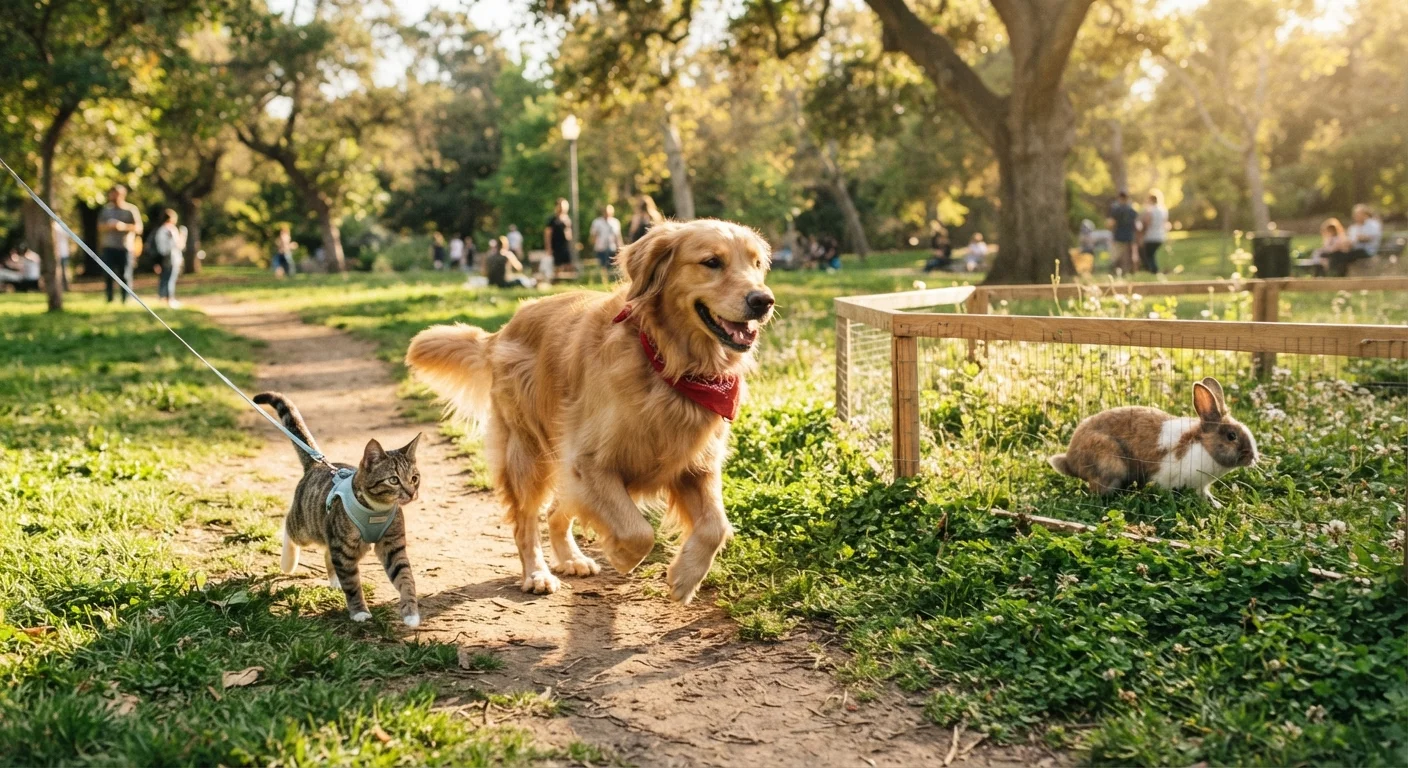
The dog's play bow - front legs extended, rump raised - is among the most studied of these signals. It functions as both an invitation and a reset, used mid-play to re-establish the playful frame after an interaction intensifies. Cats use a similar softening of posture and a bouncy, exaggerated gait. Even rats emit ultrasonic calls during play that are distinct from stress vocalisations.
Watch for the Play Reset Signal
If your dog's play with another animal suddenly intensifies - faster movement, less pausing - watch for a play bow immediately afterward. That bow is your dog's way of saying 'still just playing.' Its absence during escalating interaction is worth monitoring, as it may signal the shift from play to genuine conflict.
These signals also reveal emotional state. A pet that frequently initiates play, uses clear play signals, and engages in role reversals - taking turns being chaser and chased - is generally displaying good social confidence and emotional wellbeing. Owners who learn to read these signals gain a genuine window into their animal's inner state, which pairs well with understanding what's normal versus concerning in everyday pet behaviour.
Play Across the Lifespan: What Changes and Why
Play peaks in juveniles for good reason - the brain is most plastic during early life, and play delivers the social and motor experiences that shape lasting competence. The socialisation period, explored in depth in our article on socialising puppies and kittens, is also when play-based learning is most impactful.
As animals mature, play doesn't disappear - it evolves. Adult dogs often shift toward more structured social play with familiar partners. Adult cats may prefer object play over social wrestling. These shifts are normal. What owners should watch for is abrupt disinterest in play that was previously enjoyed, which can be an early indicator of pain, illness, or psychological distress.
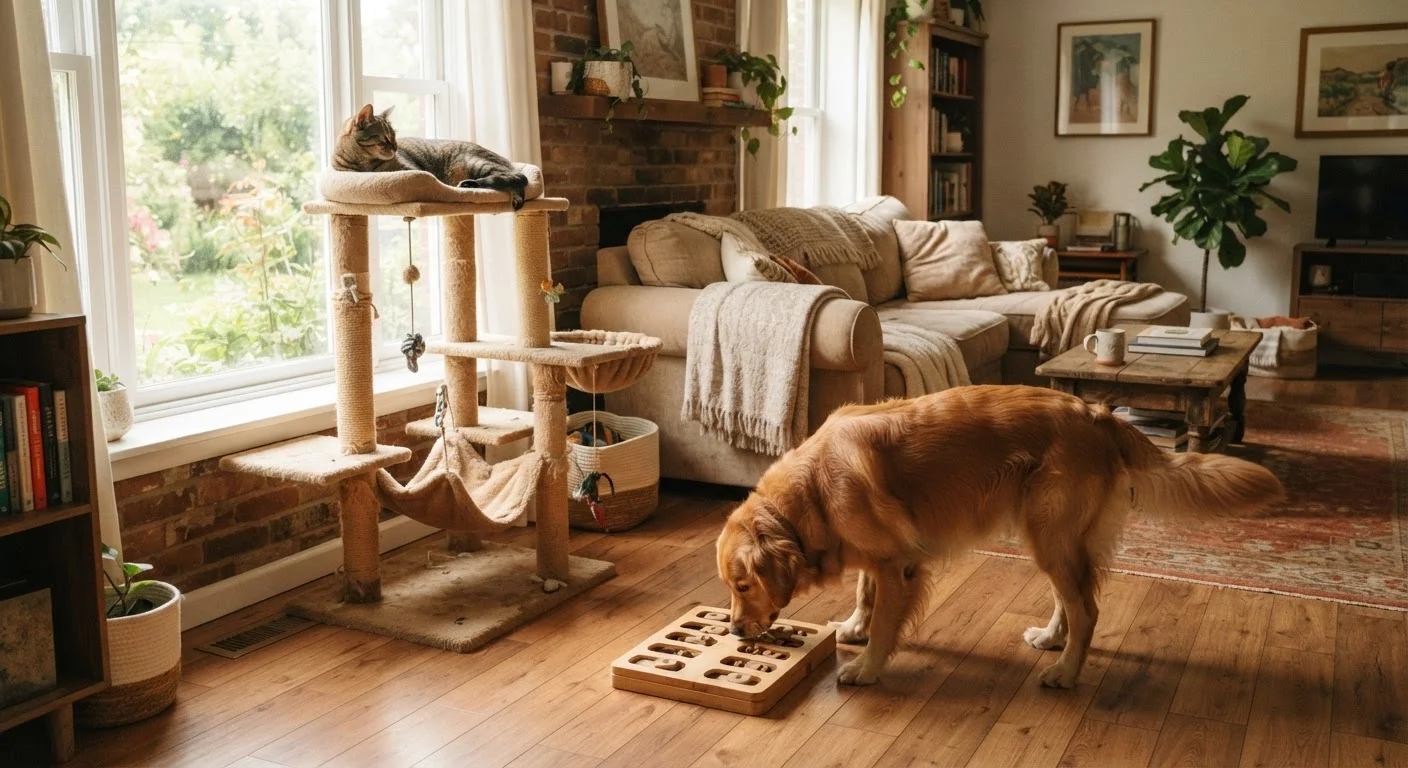
Supporting play throughout a pet's life - adapting activities to their current physical ability and preferences - is one of the most practical contributions an owner can make to long-term wellbeing. Combined with strong nutrition (see our overview of the foundations of a healthy pet diet), appropriate play is a cornerstone of a thriving life for domestic animals.
This article is for general informational purposes only and does not constitute veterinary advice. Always consult a qualified veterinarian if you have concerns about your pet's health or behaviour.