Why Mental Stimulation Matters as Much as Exercise
Pet owners often focus on physical activity - walks, playtime, running - and overlook the equally important dimension of mental engagement. In the wild, animals spend significant portions of their day solving problems: finding food, navigating territory, reading social cues. Pets living in home environments rarely face those challenges, which can leave cognitive needs unmet even in animals who get adequate physical exercise.
The result is often what behaviorists describe as boredom-related behavior: destructive chewing in dogs, compulsive over-grooming in cats, feather-plucking in birds, and repetitive movements in small mammals. These behaviors are communication. They indicate that a pet's brain is not getting the input it needs. Addressing them through enrichment - rather than punishment - tends to produce lasting, positive change.
Research in animal welfare science consistently identifies environmental enrichment as a key factor in reducing stress hormones and improving overall wellbeing in companion animals. A mentally stimulated pet is generally calmer, more confident, and easier to live with. If you're in the process of preparing a home for a new arrival, setting up your home before a new pet arrives covers the foundational steps to build enrichment into your space from day one.
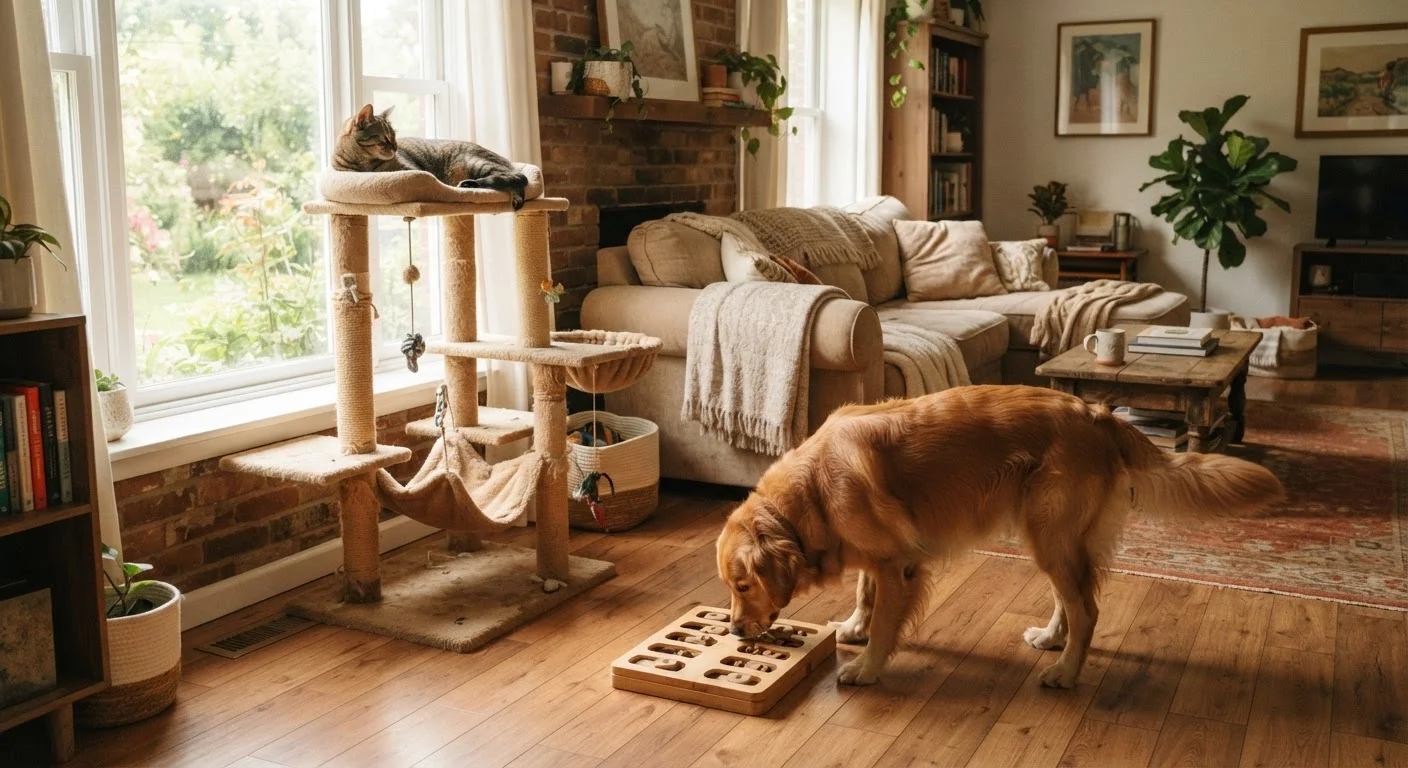
Puzzle feeders or food-dispensing toys
Encourage pets to problem-solve for food, mimicking natural foraging behavior.
Cardboard boxes and paper bags
Create low-cost exploration tunnels, hiding spots, and foraging opportunities.
Snuffle mat or scatter feeding tray
Stimulates a dog's or small mammal's sense of smell through nose-work feeding activities.
Window perch or cat shelving
Provides cats with elevated vantage points and visual stimulation from outdoor activity.
Foraging toys or skewers (birds and small mammals)
Mimics wild food-finding behavior to reduce boredom in caged or aviary animals.
Rotating toy bin
Store toys out of sight so they feel new and exciting when reintroduced.
How to Build Enrichment Into Your Home
Building a mentally stimulating environment doesn't require a large budget or a complete home overhaul. The steps below walk you through a practical, species-flexible approach - beginning with an honest audit of what's already in place and building from there. Whether you have a dog, cat, bird, or small mammal, the same core principles apply: engage natural instincts, introduce novelty, and make the environment an active participant in your pet's daily life.
What you will need
Audit your pet's current environment
Before adding new items, assess what enrichment is already present and where the gaps are. Walk through each area your pet occupies and ask: Does this space offer anything to sniff, explore, climb, or manipulate? A dog with only a water bowl and a flat floor has almost no cognitive stimulation. A cat in a room with one toy and no vertical space is similarly understimulated.
Note any problem behaviors you've observed - destructive chewing, over-grooming, repetitive pacing, or excessive barking. These often signal unmet mental or sensory needs rather than disobedience. See our guide on normal vs. concerning pet behavior for help interpreting what you observe.
Match enrichment to your pet's natural instincts
Every species has a behavioral repertoire built over thousands of years. Enrichment works best when it taps into those instincts rather than working against them.
- Dogs are scent-driven foragers - nose-work games, scatter feeding in grass, and snuffle mats all engage this drive powerfully.
- Cats are ambush predators - wand toys with unpredictable movement, hidden treats, and multilevel climbing structures satisfy their hunting sequence.
- Birds spend much of their wild day foraging - wrapping food in paper, using foraging toys, or hiding pellets inside shreddable materials works well.
- Small mammals (rabbits, guinea pigs, hamsters) are explorers and grazers - tunnels, digging boxes filled with safe substrate, and scattered hay feeding are highly effective.
Understanding the science behind animal play can help you choose activities that genuinely engage rather than overwhelm.
Set up feeding as an enrichment opportunity
Meals delivered in a plain bowl are a missed opportunity. Switching to enrichment-based feeding requires minimal investment but delivers significant cognitive stimulation.
- For dogs: use a food-dispensing toy, lick mat, or slow-feeder bowl at least once daily.
- For cats: place food portions in three or four small dishes hidden around a room to simulate hunting and foraging.
- For birds: skewer soft foods, hide seeds in paper twists, or stuff foraging toys.
- For small mammals: scatter pellets through hay, hide vegetables in cardboard tubes, or use puzzle feeders designed for small animals.
Mealtime enrichment also slows eating, which can support digestive health - though consult your veterinarian if your pet has specific dietary needs or conditions.
Add sensory variety to the physical environment
Enrichment isn't only about toys - it's about the entire sensory landscape your pet inhabits. Small adjustments to your home can make a meaningful difference.
- Place a bird feeder outside a window to give cats and birds visual stimulation.
- Rotate the position of perches, beds, and resting spots periodically so familiar spaces feel fresh.
- Introduce safe scents - dried herbs like lavender or chamomile for cats, novel objects from outdoors for dogs to sniff (ensure they're hazard-free).
- Play nature soundscapes or species-appropriate audio at low volume for birds or small mammals left alone during the day.
Before making environmental changes, review common household hazards for pets to ensure new materials won't pose a risk.
Build social and training-based enrichment into daily routines
Interaction with you is one of the most potent forms of enrichment available. Short, positive training sessions - even five minutes of practicing known cues or learning something new - engage a pet's problem-solving brain and strengthen your bond. Dogs particularly benefit from daily training variety.
For cats, structured play sessions with a wand toy twice daily closely mimic the predatory sequence (stalk, chase, catch) and dramatically reduce restless or destructive behavior. End sessions with a small food reward so cats experience the full hunt-and-eat cycle.
Pets showing persistent anxiety despite enrichment improvements may benefit from the strategies covered in vet-recommended approaches for anxious pets.
Rotate enrichment items regularly
Novelty is what makes enrichment work. A toy left out all day loses its appeal within hours. Store most enrichment items out of reach in a designated bin and rotate them every few days. When a toy reappears after a week away, many pets engage with it as if encountering it for the first time.
Keep a simple log or phone note of what you rotate in and when. Over time, you'll also learn which formats your individual pet responds to most - this helps you prioritize what to invest time in.
Start Small and Observe Closely
You don't need to implement every enrichment idea at once. Introduce one or two changes at a time and watch how your pet responds over several days. Some pets - particularly those that are older, anxious, or new to your home - may initially approach new items with caution. Give them time to investigate at their own pace rather than pushing engagement.
This article is for general informational and educational purposes only and is not a substitute for veterinary advice. If your pet is displaying significant behavioral changes, persistent anxiety, or signs of distress, consult a licensed veterinarian or a certified animal behavior consultant.