How Each Payment Method Actually Works
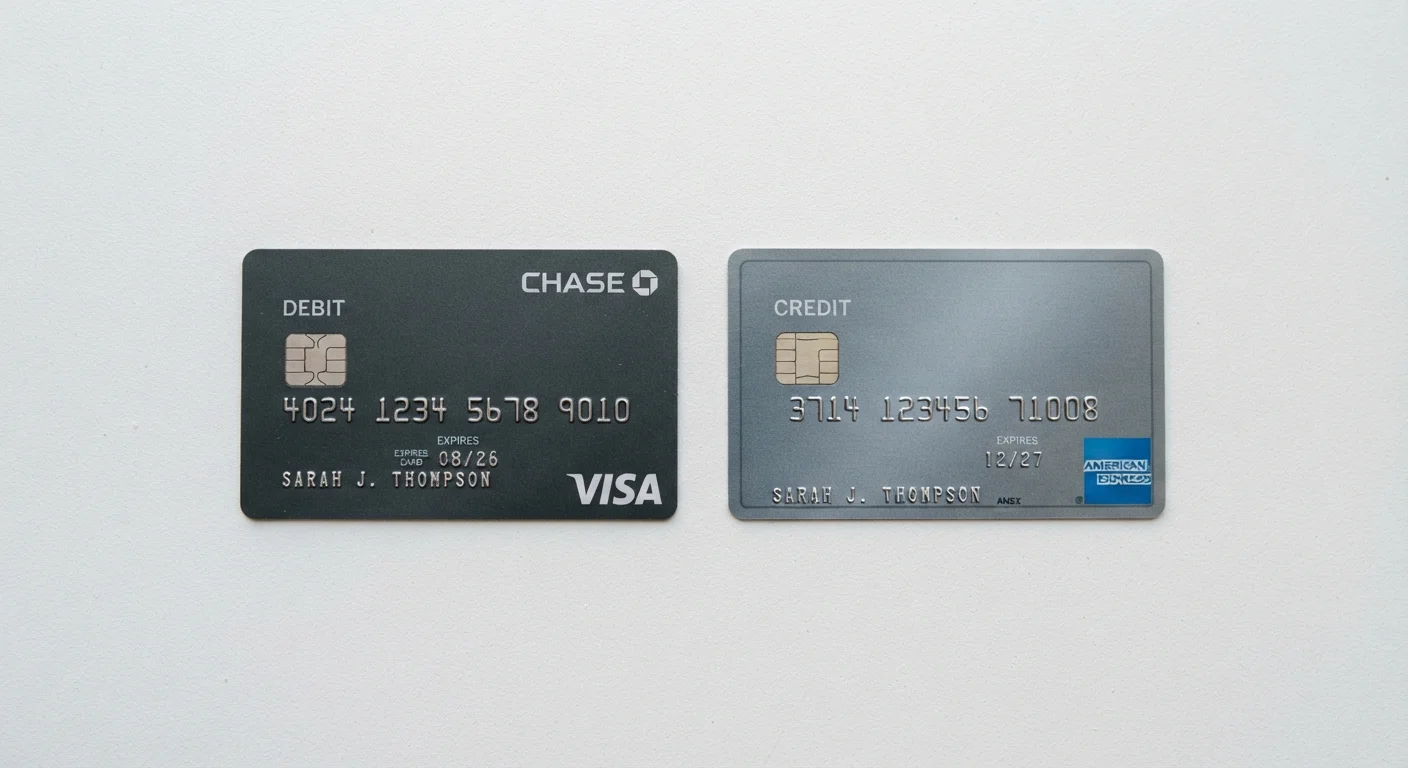
A debit card pulls money directly from your checking account at the moment of purchase. Spend $60 on groceries and that $60 leaves your account immediately. A credit card, by contrast, lets you borrow from the card issuer up to your credit limit, with repayment due later - typically on a monthly billing cycle.
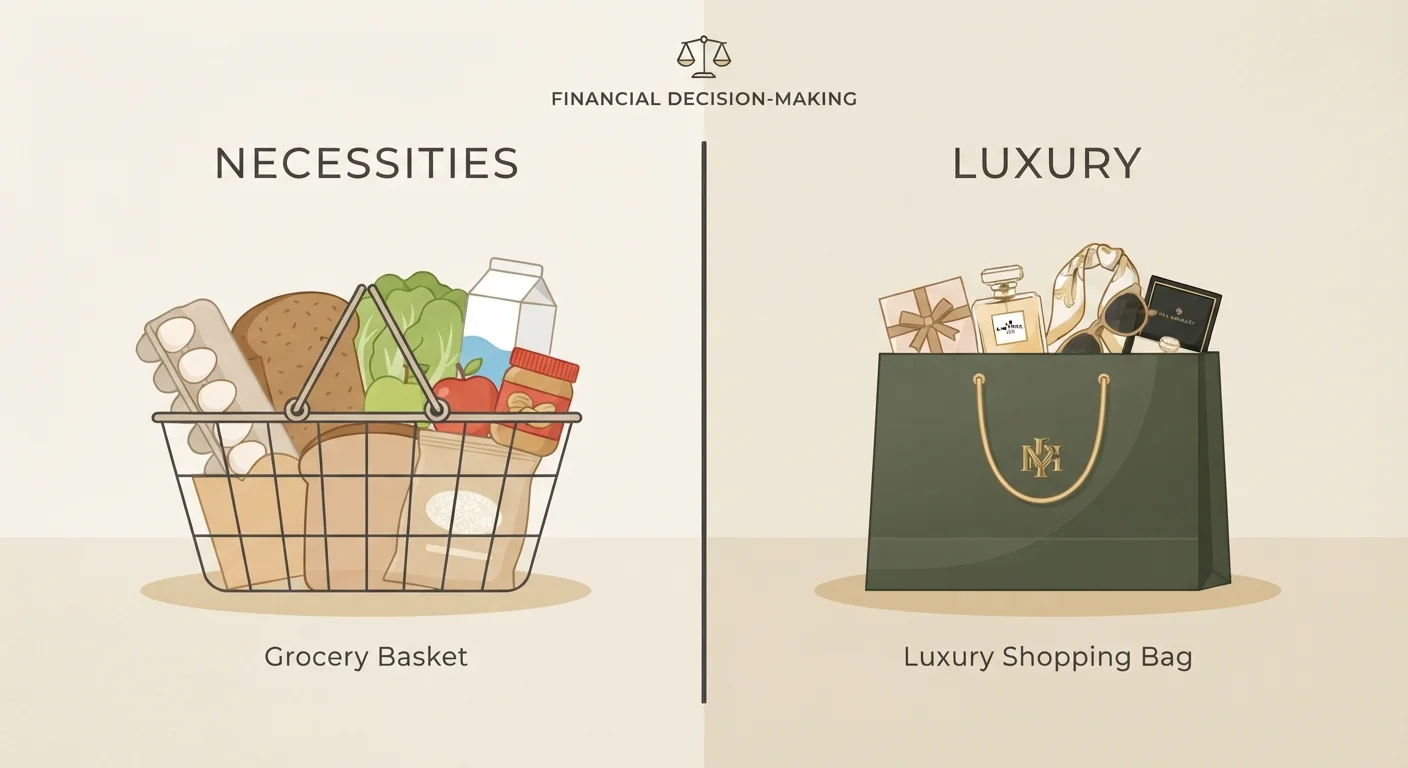
This structural difference has cascading effects on protection, spending behaviour, and long-term financial health. It also means the two cards interact with your budget in fundamentally different ways. For a deeper look at how spending categories affect your budget, see our guide on how needs vs. wants shape spending decisions.
| Debit Card | Credit Card | |
|---|---|---|
| Funding source | Your checking account balance | Borrowed from card issuer |
| Fraud liability (if reported promptly) | Up to $50 within 2 days (EFTA) | Generally $0 while disputed (FCBA) |
| Fraud recovery | Money already withdrawn; recovery takes time | Charge disputed before payment leaves account |
| Overspending risk | Limited to account balance; overdraft fees possible | Credit limit may enable overspending; interest accrues |
| Rewards potential | Minimal or none | Cash back, points - only if paid in full |
| Impact on credit score | None (no credit reporting) | Builds credit history when used responsibly |
| Cost if balance carried | No interest charges | High APR - typically 20%+ nationally |
Consumer Protections: A Meaningful Gap
This is where the difference between debit and credit is most concrete. Under the Fair Credit Billing Act (FCBA), credit card holders can dispute unauthorized charges and are generally not liable for fraudulent purchases while the dispute is resolved. Your money stays in your account during that process.
Debit cards fall under the Electronic Fund Transfer Act (EFTA), which does offer protections - but with important timing conditions. If you report a lost or stolen debit card within two business days, your liability is capped at $50. Wait between two and 60 days, and exposure rises to $500. Beyond 60 days, you could lose everything taken from the account before you reported it.
Debit Fraud Can Disrupt Real Cash Flow
When a debit card is compromised, fraudulent charges drain your actual bank balance before any dispute is resolved. This can cause legitimate automatic payments - rent, utilities, loan installments - to bounce or fail. If you use debit as your primary card, consider keeping a separate account for automatic payments so fraudulent activity on your spending account doesn't cascade into missed bills.
The practical distinction: with credit fraud, you're disputing a charge. With debit fraud, you're recovering money that has already left your account - which can disrupt rent payments, utilities, or other essentials in the meantime.
For a plain-language breakdown of terms like credit utilisation, APR, and overdraft, the financial terms glossary is a useful companion reference.
Spending Behaviour and Budget Control
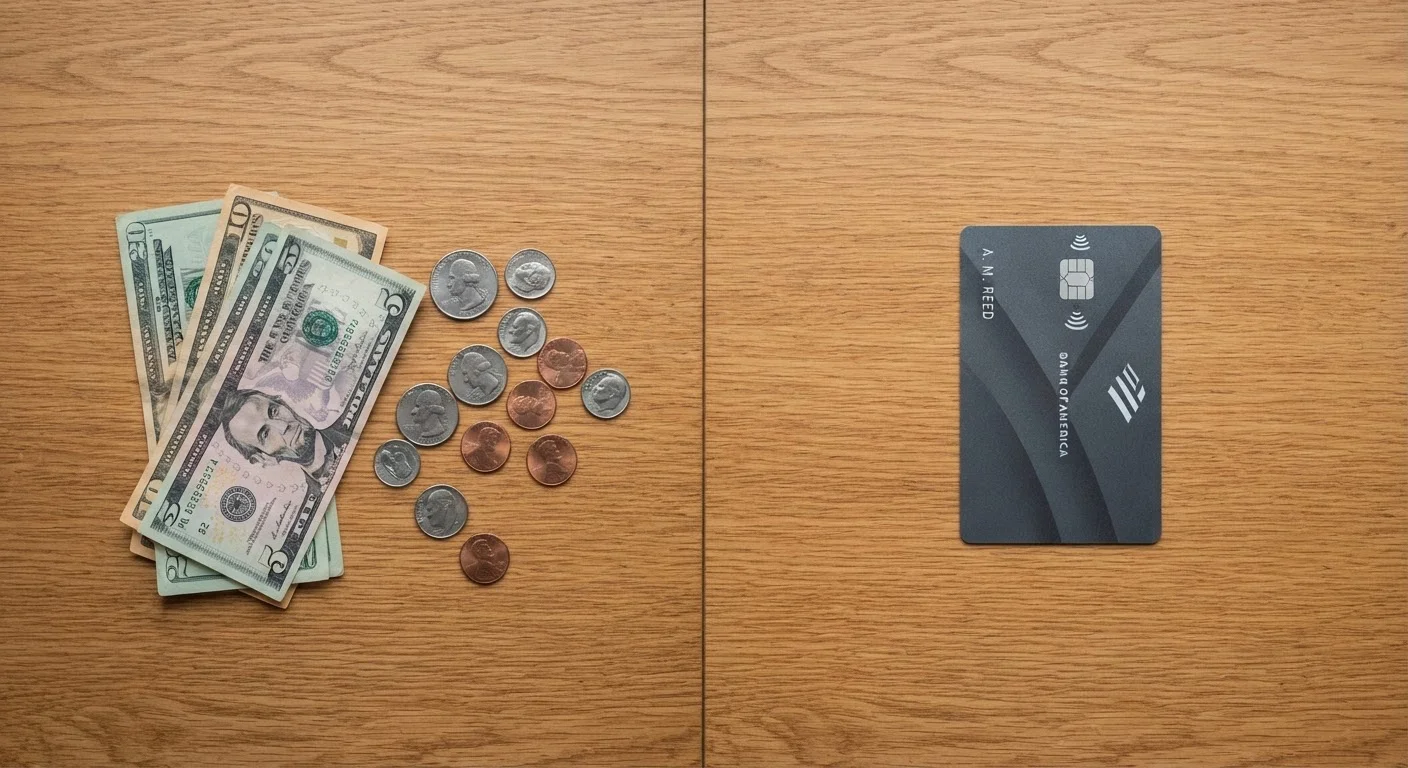
Behavioral research consistently finds that payment friction influences how much people spend. Cash creates the most friction; contactless cards the least. Debit cards occupy a middle ground - they feel more "real" to many users because the money visibly leaves the account, which can act as a natural spending check.
Credit cards introduce a psychological distance between spending and paying. For disciplined users who review statements carefully, that gap is manageable. For those prone to underestimating monthly totals, it can lead to balances that accumulate interest charges. The national average credit card APR has exceeded 20% in recent years, meaning even modest revolving balances become expensive quickly.
Set Low-Balance Alerts on Your Checking Account
Most banks allow you to set automatic alerts when your checking account drops below a threshold you choose - say, $200 or $300. This takes less than five minutes to configure and can prevent overdraft fees entirely. If you primarily use a debit card, this single habit significantly reduces your biggest risk with the payment method.
Debit cards also carry their own risk: overdraft fees. If you spend beyond your account balance without overdraft protection, fees typically range from $25 to $35 per transaction at many institutions. Monitoring your balance regularly or setting low-balance alerts is essential if debit is your primary tool. For broader context on how payment method choices fit into larger financial decisions, cash vs. card spending evidence offers a useful companion perspective.
Rewards, Perks, and the Real Cost of Carrying a Balance
Credit cards frequently offer rewards - cash back, travel points, or purchase protections like extended warranties. These benefits are real, but they come with an important condition: they only add value if you pay your statement balance in full each month.
Consider the math: a card offering 1.5% cash back on a $500 monthly spend returns $7.50 per month. A single month of carrying a $500 balance at 22% APR costs roughly $9 in interest. The rewards model inverts immediately once a balance carries over.
20%+
Average U.S. credit card APR
Federal Reserve data has shown average credit card interest rates exceeding 20% in recent years, making carried balances costly.
$500
Max debit fraud liability after 60 days
Under the EFTA, debit cardholders who report fraud between 2 and 60 days after discovery face up to $500 in personal liability.
Debit cards rarely offer meaningful rewards, though some checking accounts include limited cash-back programs. If rewards are a priority, the focus should be on whether your spending habits support paying in full - not on which rewards program looks most attractive on paper. This connects to broader trade-off thinking explored in our piece on what good debt and bad debt actually mean.
This article provides general financial information for educational purposes and does not constitute personalised financial advice. Consult a qualified financial professional for guidance specific to your situation.