What Makes an Expense 'Fixed'?
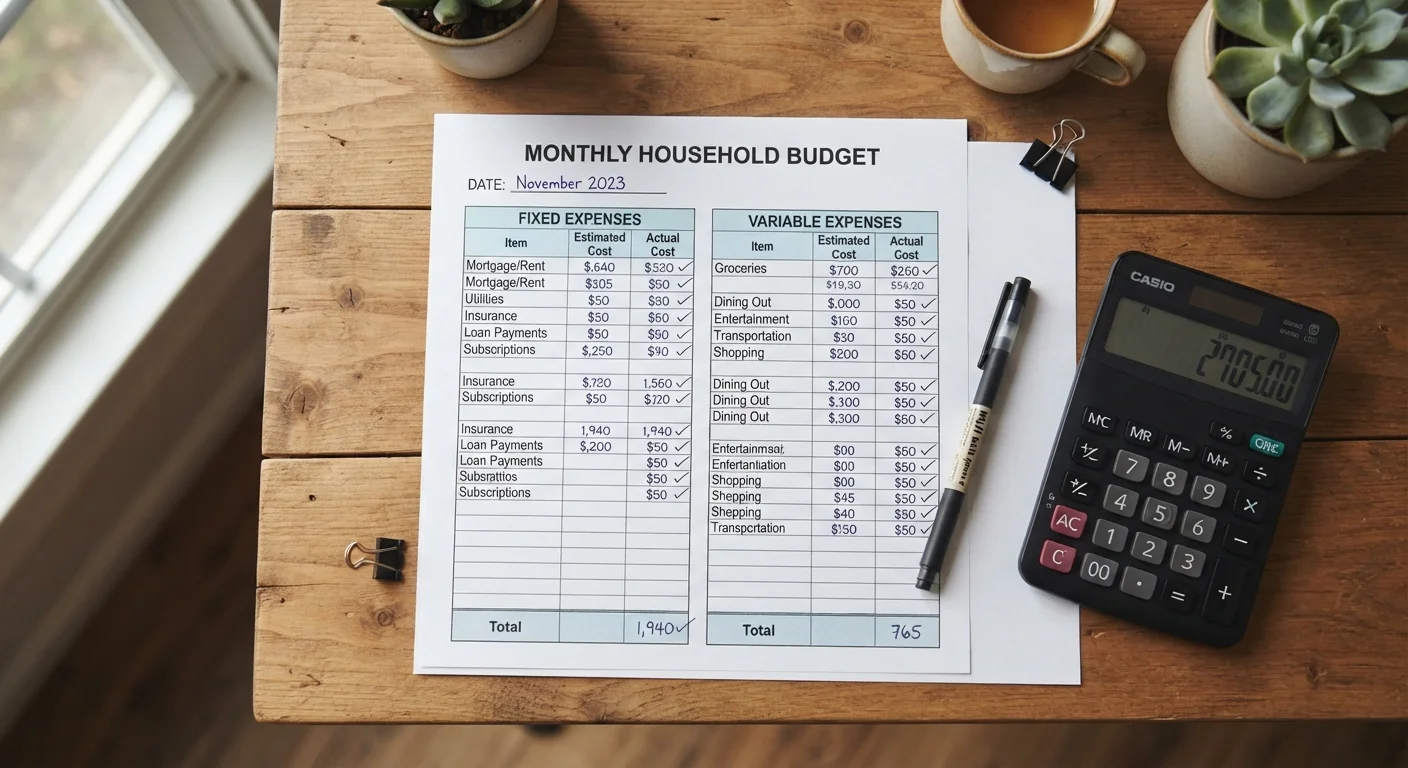
A fixed expense is any cost that remains the same amount every billing period, regardless of how you use a product or service. Rent or mortgage payments, car loan installments, insurance premiums, and loan minimum payments all fall into this category. You owe the same dollar amount whether you had a busy month or a quiet one.
Fixed expenses are generally contractual or recurring obligations - meaning you've agreed to pay a specific amount for a defined period. This predictability is useful for planning: once you list all your fixed costs, you know the absolute minimum income needed to keep your financial commitments intact.
That said, fixed doesn't mean permanent. You can renegotiate rent, refinance a mortgage, or cancel a subscription - but these changes take time, paperwork, or penalties. In the short run, fixed expenses are largely immovable.
For a fuller glossary of terms like these, see Essential Budgeting Terms Every American Should Know.
What Makes an Expense 'Variable'?
A variable expense changes from month to month based on your behavior, usage, or circumstances. Groceries, gas, dining out, entertainment, clothing, and utilities often fall here. The amount you spend depends on choices you make week to week.
Variable expenses are where most day-to-day financial decisions happen - and where a budget either succeeds or unravels. Because these costs shift, they're harder to predict but much easier to adjust. Spending $80 less on restaurants this month is a decision you can act on immediately.
Some expenses blur the line. A utility bill, for example, has a fixed base charge but a variable usage component. In practice, treating utilities as variable (and setting a spending target rather than a fixed amount) gives you more accurate budgeting data.
| Criterion | Fixed Expenses | Variable Expenses |
|---|---|---|
| Amount each month | Stays the same | Changes based on behavior |
| Examples | Rent, car loan, insurance | Groceries, gas, dining out |
| Ease of adjustment | Difficult in short term | Can change immediately |
| Predictability | High - easy to plan around | Low - requires tracking |
| Where to look when cutting costs | Refinancing, renegotiating, canceling | Spending habits and daily choices |
| Budget role | Sets your minimum monthly floor | Defines your discretionary zone |
Why This Distinction Matters in a Real Budget
Understanding which expenses are fixed and which are variable isn't just academic - it changes how you respond to financial pressure. When income drops or an unexpected expense hits, you need to know quickly which costs are non-negotiable and which have flexibility built in.
~33%
Average share of income spent on housing
The U.S. Bureau of Labor Statistics Consumer Expenditure Survey consistently shows housing as the largest single fixed expense for American households.
~15%
Average share spent on food (fixed + variable)
BLS data shows food - split between groceries and dining out - represents a significant variable budget category with meaningful room for adjustment.
If you identify that 60% of your take-home pay is already committed to fixed expenses, you know your variable spending must cover everything else - including savings. That clarity prevents the common mistake of over-spending on variable costs early in the month and scrambling to cover fixed obligations later.
This framework also exposes a subtler problem: lifestyle creep. Variable expenses tend to grow gradually and invisibly. Tracking them by category over several months often reveals patterns that simple bank balance checks miss entirely.
For an example of how fixed and variable categories apply outside everyday life, Travel Budget Fundamentals walks through the same logic applied to trip planning.
Putting It Together: Building Your Expense Map
Start by pulling two to three months of bank and credit card statements. Label each transaction as fixed or variable. Total each category. You now have an expense map - a picture of what your money actually does, not what you assume it does.
From there, your fixed expenses form a hard floor: that amount leaves your account every month no matter what. Your variable expenses represent a soft ceiling you can adjust. The gap between your income and your fixed floor is your true discretionary zone.
This foundation makes choosing a budgeting method much more straightforward. Whether you prefer a zero-based approach or a percentage-based framework, both require knowing this distinction first. See Budgeting Approaches Compared for a side-by-side look at popular methods.
One more note: don't overlook irregular fixed costs - annual insurance premiums, vehicle registration, or property taxes that don't show up monthly but are entirely predictable. Divide them by 12 and treat them as a monthly fixed obligation in your plan. For vehicle-specific cost mapping, Building a Realistic Annual Car Budget offers a detailed framework.
Watch for 'Fixed-ish' Expenses
Some costs feel fixed but aren't truly contractual - streaming subscriptions, gym memberships, or annual software renewals recur reliably but can be canceled without major penalty. Review these periodically to confirm each still delivers value. The needs vs. wants framework is a useful lens for this kind of audit.
This article is for general informational and educational purposes only and does not constitute personalized financial advice. Consult a qualified financial professional for guidance specific to your situation.