
Why Labelling Is Worth the Effort
A labelling system does one core job: it removes the guesswork of where things live. When everyone in a household can find - and return - items without asking, daily friction drops noticeably. But not all labelling approaches work the same way, and choosing one without considering your home's habits can mean relabelling everything six months later.
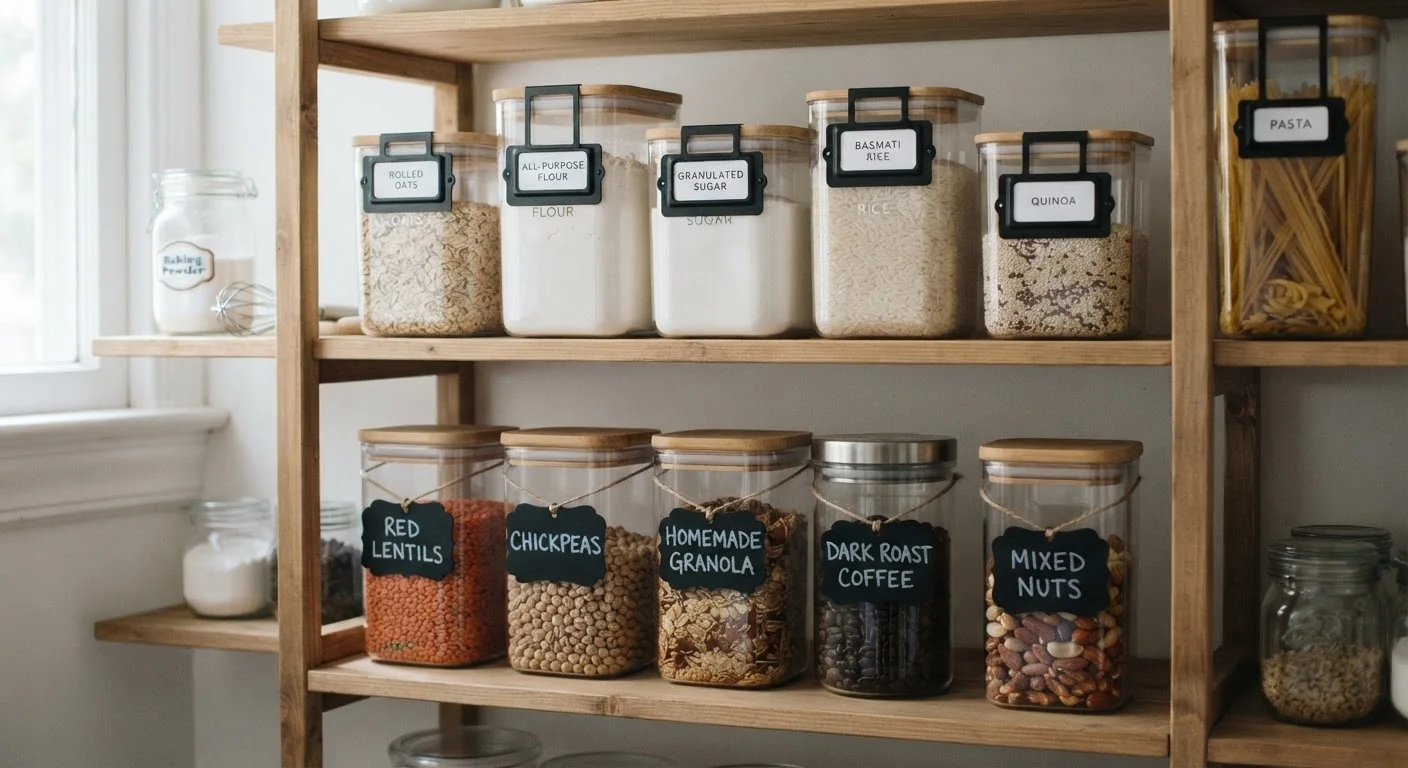
The choice generally comes down to two philosophies. Rigid labelling uses permanent or semi-permanent labels tied to fixed categories - think printed adhesive labels or label-maker tape that stays put. Flexible labelling uses erasable, writable, or removable formats - chalkboard tags, dry-erase holders, or repositionable stickers - that can change as storage contents shift.
If you're just beginning to organize your home, understanding this tradeoff before buying supplies can save you time and money.
Advantages and Drawbacks of Rigid Labelling
Rigid labelling works by committing a location to a single, clearly named purpose. A container labelled Dried Pasta holds dried pasta - full stop. This clarity pays off in households where multiple people share storage and consistency matters.
Instantly clear for all household members
Permanent labels leave no ambiguity about where something belongs, reducing the likelihood that items are misplaced or stored inconsistently by different people.
Reduces daily decision fatigue
When categories are fixed and visible, putting things away becomes automatic rather than a judgment call, which lowers the mental load of maintaining order.
Visually consistent and easy to scan
Uniform printed labels create a cohesive look that makes scanning shelves faster, especially in large pantries or storage rooms with many containers.
Durable and low maintenance once set up
High-quality adhesive or laminated labels hold up to handling, moisture, and light - requiring little attention once the initial setup is complete.
The limitations become clear when your needs change. If the pasta container now holds rice, or the office supplies bin has been repurposed for craft materials, a permanent label becomes misleading rather than helpful. Outdated labels are arguably worse than no labels at all - they erode trust in the system and make people stop using it.
Becomes outdated as storage needs change
Life events - a new baby, a change in diet, a hobby taken up or dropped - can make rigid labels misleading, requiring time-consuming relabelling sessions.
Can leave adhesive residue on containers
Many permanent labels leave sticky residue when removed, which can damage container surfaces or make repurposing bins frustrating and messy.
Locks in categories before a system is tested
Labelling too early - before you know how a space actually gets used - means you may be committing to categories that don't reflect real household habits.
Rigid systems work best for storage that is genuinely stable: seasonal items, pantry staples you always keep on hand, or archived files. For anything that cycles in and out - think kids' gear by age, hobby supplies, or rotating pantry stock - consider whether permanent labelling sets you up for a relabelling job every year.
The Case for Flexible Labelling
Flexible labelling trades pinpoint permanence for adaptability. Chalkboard labels can be wiped clean when a bin's purpose changes. Erasable label holders let you slide in a new card without residue or damage. This suits households where storage contents shift seasonally, or where you're still figuring out the right system.
1 in 4
Adults say they can't find items at home daily
Consumer research on household habits consistently finds that a significant share of adults lose time daily searching for misplaced items, underscoring why any labelling system outperforms none.
~6 months
Typical time before storage needs shift noticeably
Organization specialists often note that household storage patterns can shift within two seasons, making adaptable labelling worthwhile for non-static storage zones.
The risk is drift. Without a firm label anchoring a container to one use, it's easy for a bin to gradually absorb whatever needs a home - until it becomes a catch-all that nobody can efficiently search. Flexible systems work well only when someone in the household is willing to update labels as contents change, rather than leaving outdated or blank labels in place.
They're also well-suited to shared spaces where multiple people need input. If you're navigating organizing a home with people who have different tidiness standards, a flexible system lets categories be renegotiated without a full overhaul.
When Blank Labels Are a Problem
A flexible labelling system only works if blank or outdated labels are updated promptly. A container with no label - or one that says 'Summer Gear' but holds Halloween decorations - creates the same confusion as no system at all. Build a quick seasonal review into your routine: check whether labels still match contents every time you reorganize an area, not just during a major cleanout.
Building a Hybrid Approach That Holds
Most homes don't need to choose one method entirely. A practical rule of thumb: apply rigid labelling to storage zones that haven't changed in over a year, and flexible labelling to anything that shifts with seasons, life stages, or household size.
For example, a pantry shelf for baking staples - flour, sugar, baking powder - is a strong candidate for a printed label. A bin labelled Current Projects or In Progress is better served by a chalkboard or erasable tag you can update as work cycles through.
Filing systems often benefit from this split too. Taming paper clutter typically calls for firm category folders - Insurance, Tax Records - paired with flexible staging areas for papers currently in use.
Before labelling anything, spend a moment questioning whether that storage zone is truly stable. Common organization myths often push people toward over-systematizing areas that actually need breathing room. Match the label type to the storage reality, not the ideal version of it.